
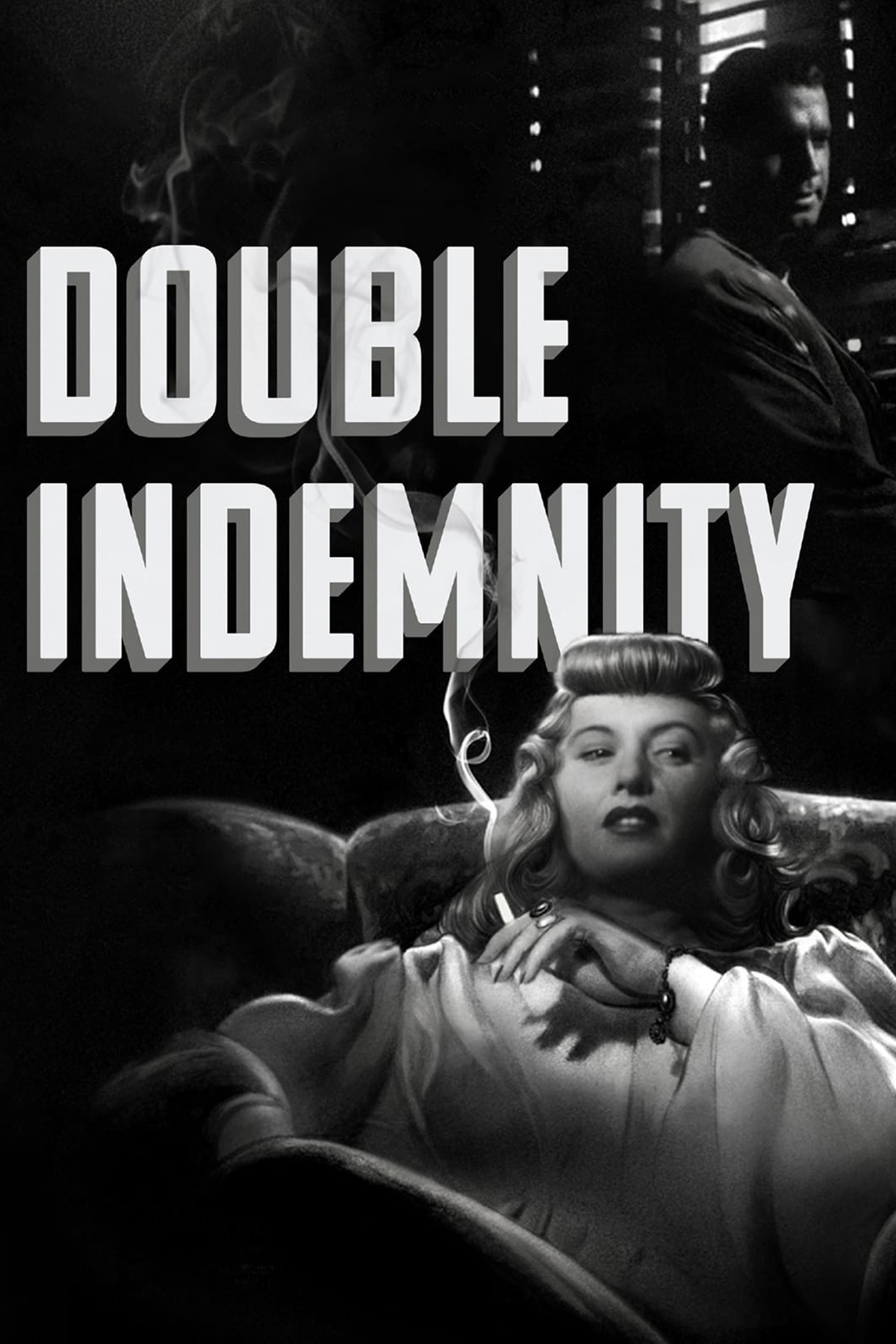
What the Film Is About
Double Indemnity always strikes me as a feverish plunge into the murkier folds of desire and consequence—a story that thrives not on what happens, but why people do the things that ultimately undo them. Every time I watch it, it’s less about the mechanics of insurance fraud or crime, and more an examination of what happens when two people—hungry, restless—allow their impulses to eclipse their sense of self. The central conflict is a psychological chokehold: Walter Neff and Phyllis Dietrichson become not just partners in crime, but accomplices in their own undoing.
I see the film as a slow dance of suspicion and seduction, where the emotional journey becomes tighter and more intimate as the trap these two set for someone else starts to snap shut around them. The sense of dread compounds, not because of justice looming overhead, but because of the profound emptiness that greed exposes in the human soul. It isn’t simply a noir about murder; to me, it’s about how easy it is for ordinary people to slip into darkness when they convince themselves they’re exceptional—when they believe they’ll be the ones who get away with it.
Core Themes
What continues to fascinate me about Double Indemnity is its relentless and unflinching gaze into the nature of temptation and moral compromise. At its heart, the film is wrestling with fate—how much control do we truly possess, and at what point does our desire seal our destiny? The idea of moral inertia keeps coming up for me: once Walter and Phyllis set their plan in motion, they struggle in vain to regain agency, but the choices they’ve made have already started to remake them from the inside out.
For me, another central theme is the seductiveness of evil made ordinary. Billy Wilder’s Los Angeles isn’t a city of monstrous gangsters but of everyday professionals—men and women who look respectable and sound clever, yet harbor destructive secrets. The film implicates me not only in the act of watching, but in nervously pondering what boundaries I might cross if the stakes were high enough. I feel how paranoia and mistrust slowly poison relationships: the partnership between Phyllis and Walter never seems sustainable not only because of the outside threat of discovery, but because they can’t truly trust each other. Every declaration of loyalty is undercut by a glimmer of doubt or self-preservation.
Watching it in the present day, I notice how these themes never stop feeling timely. Power, complicity, and the high-wire act of self-justification are as germane now as in 1944. When Double Indemnity debuted, its world reflected wartime anxieties—the lingering sense that surface normalcy could conceal rot. Moral codes were shifting, and audiences then, as now, were captivated by stories that make invisible anxieties visible. Its message—how dreams of advantage and shortcuts to happiness can lead to an inescapable downfall—never gets old.
Symbolism & Motifs
I always return to the film’s use of light and shadow—those razor-sharp contrasts that slice through rooms, faces, and even the characters’ souls. Every Venetian blind that stripes Walter in his apartment, or the thick pools of darkness that seem to swallow Phyllis, speak to duality: public versus private, what we want versus what we hide from ourselves. These shadow patterns aren’t just smart cinematography—they’re visual metaphors for the secrets that suffocate the characters’ ability to act freely.
One symbol I can’t shake is the recurring motif of fate’s machinery. The office doors closing, the elevator’s implacable descent, and the ticking of clocks all echo the film’s fascination with events set in motion that can’t be stopped. Even the insurance company itself is rendered as a cold, bureaucratic organism—one that reduces tragedy to neat forms and formulas, yet ironically is as powerless as anyone to truly prevent disaster. The train—especially the speeding locomotive that Walter leaps from—underlines this sense of onrushing fate, all the more chilling because it’s driven by human hands yet ultimately unstoppable.
Another pattern that fascinates me is the language of constraint. The film is filled with characters boxed in—literally, by doorways and awkward angles, and figuratively, by their own double-dealing. The persistent motif of locked or closing doors embodies the growing claustrophobia—not just in the plot, but in these people’s lives. As the net tightens, Free Will, so often championed in American myth-making, feels like an illusion, each character increasingly at the mercy of momentum and mistrust. Symbols like Phyllis’s anklet tease with their promise of glamour and allure, only to reveal the chains of doom for those who follow their glitter.
Key Scenes
Key Scene 1
I always find Walter and Phyllis’s first encounter electrifying—not just for its verbal sparring, but because it establishes the erotic grammar of the entire film. Phyllis’s cool, flirtatious demeanor paired with Walter’s breezy confidence sets off an emotional chain reaction. The entire movie’s thesis hides in their banter: attraction becomes intertwined with the lure of forbidden power. I believe it’s here that I see how easily love—if it’s really love at all, and not simply mutual self-interest—can be warped into manipulation. Their chemistry is intoxicating, but I feel unease grow with each clipped phrase and lingering glance; I’m convinced that the seeds of their doom are sown in this initial spark, when neither can admit how quickly they’re ready to compromise themselves for what the other offers.
Key Scene 2
No scene gnaws at me quite like the moment Walter learns that Barton Keyes, his boss and friend, suspects there’s more to the death than meets the eye. Instead of relief, I sense a deepening dread as Walter realizes he’s outmatched morally and intellectually by the one person he respects most. What stings me here is the irony of Keyes’s affection—Keyes admires Walter’s decency, trusting him implicitly, even as Walter hides the most damning truth. This dynamic—loyalty curdling into silent betrayal—puts a fine point on the film’s guilt motif. To me, this is where Walter’s journey subtly pivots: from elation at outwitting the system, to dawning horror that he can’t escape the judgment of someone whose good opinion matters. The true punishment, I think, is knowing that you’ve soiled the respect and trust of the rare person who gives you dignity.
Key Scene 3
The film’s climax always leaves me haunted. When Walter, wounded and exhausted, slumps into his office and confesses everything into the Dictaphone, I’m struck by how counterfeit his defiance sounds. He’s not talking to Phyllis anymore, nor even to the law, but to Keyes—hoping to retrieve a scrap of lost honesty. I experience this scene as a confession not for absolution, but for the record: an admission that once set in motion, his actions could only turn hollow, violent, and unredeemable. The emotional punch isn’t in whether justice will be served, but in the sense that Walter’s soul, like Phyllis’s, was always at war with itself. This ending always convinces me that Double Indemnity isn’t a morality tale offering tidy answers, but a meditation on how easy, and how ruinous, it is to surrender your choices to desire and fear.
Common Interpretations
My conversations with other cinephiles and re-readings of classic criticism suggest Double Indemnity is almost universally recognized as an examination of moral rot lurking within civilized facades. Most viewers, including myself, see the film as noir’s ultimate statement on the vulnerability of “regular people” to extraordinary evil. Rather than painting its villains in broad strokes, it draws them subtly—everyday faces, office habits, human weaknesses—blurring where good intentions shade into criminality.
Some critics I admire argue that Double Indemnity is the definitive indictment of the American Dream gone sour: its characters’ pursuit of prosperity springs from a peculiarly American faith in gaming the system, shortcutting sweat for cunning. I see this reading as particularly sharp, since the film’s Los Angeles setting and insurance industry backdrop cast the quest for security as futile; no system can protect us from our own temptations. Others, focusing on Phyllis, interpret her as both a product and a victim of a patriarchal culture—using her limited agency to claim power, albeit destructively. While I don’t absolve her actions, I’m struck by the film’s willingness to explore her motives, however obliquely. To me, its refusal to make villains one-dimensionally evil deepens its resonance.
Still others view Walter’s trajectory primarily through the lens of existential tragedy—his downfall inevitable not because of Phyllis’s seduction, but because of a core void in himself. I find this perspective compelling: his confession is less a defeat, and more a final, desperate act of self-assertion, as if he hopes honesty at the end might repair all that’s been lost. Across interpretations, what remains is the film’s capacity to haunt; there isn’t just one answer as to what it’s “about,” but a multitude of echoes radiating from that central mystery: how do we learn to live with the dark knowledge of our own capacity for harm?
Films with Similar Themes
- Sunset Boulevard (1950) – For me, Wilder’s Hollywood tragedy pairs naturally with Double Indemnity, exploring self-delusion and the toll of compromise. The thematic kinship lies in its examination of corrupted dreams and the personal unraveling that comes when one trades conscience for ambition.
- Body Heat (1981) – I often see this as a neo-noir updating of Double Indemnity, complete with steamy fatal attraction and the illusion of control. It’s another profound dissection of lust colliding with duplicity, driven by the idea that allure can be a trap disguised as opportunity.
- The Postman Always Rings Twice (1946) – I connect deeply with this film’s meditation on desire and consequence—a similarly shadowed narrative of lovers plotting for gain and finding only oblivion. Its sense of inescapable doom resonates strongly with Double Indemnity’s premise.
- Chinatown (1974) – I group this movie with Double Indemnity for its fatalistic worldview; both films show Los Angeles as a site where personal ambition is devoured by forces far beyond any individual’s control. They challenge us to consider where corruption starts—outside, or within?
Whenever I revisit Double Indemnity, I walk away reminded of how narratives about crime and punishment are seldom about law alone. This film, for me, ultimately asks how much distance truly separates the respectable from the doomed, and whether integrity survives in a world where even love can be transactional. Created in the shadow of war and uncertainty, its warning wasn’t just for the 1940s: it’s a mirror for any age that prides itself on sophistication while ignoring the quiet seductions of self-destruction. If there’s one truth I keep discovering, it’s that the film’s real indictment isn’t against “evil” outsiders, but the subtle betrayals we all risk by believing, just for a moment, that we’re immune to the darkness our choices can let in.
After learning the historical background, you may also want to explore how this film was received and remembered.