
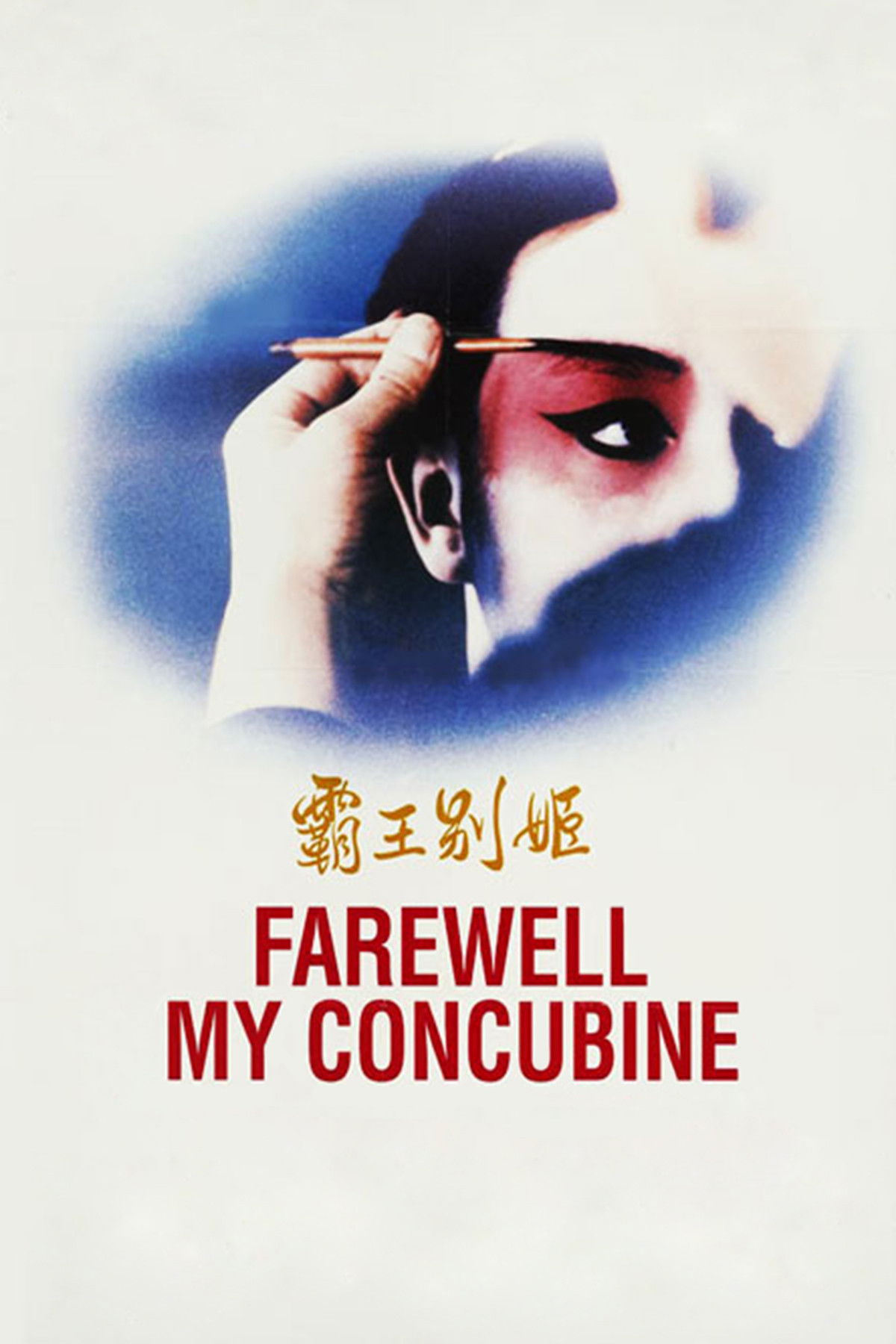
What the Film Is About
Few films have haunted me in quite the same way as “Farewell My Concubine.” I left my first viewing feeling as if I’d been swept into the turbulent currents of twentieth-century China—pulled between the tenacity of art and the brutality of history. What lingers is not a detailed memory of its many plot turns, but an ache for the characters’ emotional entanglement and the cost of loyalty in a world where everything shifts, sometimes overnight.
For me, the film is ultimately about love in all its ambiguous, painful forms—platonic, romantic, and self-sacrificing—set against the aging traditions and abrupt political change that define its era. Although the physical action circles the lives of two Peking Opera performers, the true story is an internal one: the search for identity, and the unsteady ground between reality and performance. Each character’s journey is a battle between personal longing and the larger, inescapable forces of history.
Core Themes
Whenever I return to “Farewell My Concubine,” I’m struck by the sheer density of its themes. On its surface, the film is drenched in the aesthetics of Chinese opera, but beneath that beauty I find the aching exploration of identity and the pain of being unable to reconcile self with expectation. The film’s central triad—Cheng Dieyi, Duan Xiaolou, and Juxian—embodies the price of devotion, the fracture of tradition, and the struggle to retain one’s voice amid external upheaval.
Identity, for me, is the thematic gravity center. Dieyi’s life is defined by his stage persona—the concubine—and that role, assigned and reinforced since childhood, becomes inseparable from his own sense of self. I feel his suffering, and his inability to escape the expectations placed upon him, as a metaphor for anyone forced by society into an unwilling role. That performance-based existence speaks powerfully about gender, desire, and the masks we wear, whether in 1920s Beijing or anywhere people are compelled to suppress their truths.
Loyalty is a recurring ache throughout the story. The film probes what happens when unwavering devotion—whether to a friend, a lover, or an art form—runs up against betrayal, jealousy, or survival. When I think about the era during which the story is set, decades in which China reeled from war, revolution, and ideological purges, I understand why these questions mattered so much at the time of release. The film is not only a tragic history; it’s a meditation on the impossibility of remaining unchanged when the world insists that you must bend—or break—to survive.
Another resonance for me is the relationship between art and society. Peking Opera, with its rigid conventions, becomes a sanctuary for Dieyi and Xiaolou but is simultaneously a prison. Art, the film suggests, can be both lifeline and trap—a place to bury trauma, but never fully transcend it. I believe this theme still matters today. Whether through politics, social change, or personal crisis, many of us confront questions about fidelity to our origins and the cost of adaptation.
Finally, the nature of love itself is eviscerated and questioned. What kind of love endures when tested by jealousy, ambition, and fear? Is it even possible to separate love from dependency, or do they always blur at the edges? “Farewell My Concubine” asks that question not just between people, but between artists and their vocations, between individuals and their homeland.
Symbolism & Motifs
The richness of the film lies in its tapestry of recurring images and patterns, each beckoning me to read further beneath the surface. One symbol towers above all others: the opera itself. I see it as a living metaphor, both shelter and snare. The stage is a liminal zone—a place of transformation, but also of entrapment. The boundary between performance and reality dissolves, especially for Dieyi, whose entire existence becomes an unending performance. I cannot help but see the opera as a stand-in for all rigid social roles, where one’s essence is both shaped and mangled by expectation.
The titular concubine—taken from the story within the opera—serves as another powerful motif. The concubine’s loyalty to her king, even unto death, directly mirrors Dieyi’s self-effacing devotion to Xiaolou, and, by extension, China’s fractious relationship to its past. Each repetition of the story on stage echoes the real-world betrayals and sacrifices happening offstage. I see the concubine’s fate as a recurring omen, forecasting the destruction that unexamined loyalty can bring.
The motif of mirrors and doubling also resonates with me. Dieyi’s identity fractures between Cheng Dieyi the man and the Consort Yu he portrays. These doublings—between actor and role, between lover and rival, between past and present—underscore the impossibility of remaining whole in a world that compulsively divides and categorizes. Each glance into a mirror is a quiet reminder of the artificial boundaries that define us.
I am often drawn to the recurring use of costumes and makeup, expressive of both beauty and concealment. The intricate, almost ritualized act of donning opera garb transforms the performers, blurring their private pain beneath stylized perfection. For me, this motif stands in for all the invisible masks that people wear—whether for survival, acceptance, or out of habit—especially under the watchful eyes of a judgmental society.
Finally, the motif of time—stretching from childhood abandonment to the grand sweep of historical cataclysm—imbues the film with tragic inevitability. The passage of years is marked by shifting political banners, changing regimes, and irrecoverable loss. I feel the weight of every clock tick, perceiving history as not merely backdrop, but as an implacable force that devours and reshapes lives without mercy.
Key Scenes
Key Scene 1
For me, one of the most haunting moments comes when Dieyi, as a young boy, is finally accepted into the opera troupe after years of grueling training and abuse. This moment is not the triumph it appears to be; it is, rather, the moment his fate is sealed—the beginning of a life led in someone else’s image. The scene’s emotional power arises not from happiness, but from a sense of profound loss. I see in Dieyi’s acceptance not the realization of a dream, but the silencing of his childhood self. It encapsulates the film’s question of how identity is consumed and rewritten by external authority. No matter how much he succeeds, a part of Dieyi has been sacrificed forever.
Key Scene 2
An indelible scene for me is the devastating Cultural Revolution sequence, when the two opera stars are forced to denounce one another publicly. The spectacle of Dieyi and Xiaolou, once bound by love and camaraderie, now entrapped on opposite sides by a desperate need for survival, perfectly distills the core theme of betrayal. This public humiliation and coerced confession strips them not just of dignity, but of the last vestiges of genuine connection. I find the emotional violence more wrenching than any physical brutality. It’s a sequence that lays bare the consequences of ideological zealotry: how systems of power can pulverize private bonds and reduce individuals to mere pawns in a larger drama they cannot control.
Key Scene 3
The film’s final moment lingers with me like a wound that refuses to heal. When Dieyi reenacts the opera’s legendary suicide—his own farewell, echoing the concubine’s—the boundary between art and life collapses tragically and completely. This act is not only a gesture of grief but also a refusal to continue living in a world where his identity and love have no place. In that devastating silence after Dieyi’s death, I sense the film’s ultimate reckoning with loss—the cost of fidelity to art, to love, or to a self that can no longer survive in the modern world. For a film about performance, the last act is brutally, inescapably authentic.
Common Interpretations
In literary salons and quiet late-night conversations, I’ve found that “Farewell My Concubine” draws an unusually passionate array of responses. The most resonant interpretation, and the one that I personally align with, sees the film as a lament for the erosion of traditional culture in the face of relentless political and social upheaval. The decline of Peking Opera is not simply stagecraft nostalgia—it mirrors the broader disintegration of old forms of meaning, connection, and beauty in a world that prizes ideological purity and progress above all else.
Other viewers, and some scholars I’ve read, focus more closely on the film’s exploration of gender and sexuality. For them, Dieyi’s life of enforced femininity, of never quite being allowed to exist as either wholly man or woman, offers a pointed meditation on what it means to be “outside” in any society—pushed into a role considered acceptable, but unable to express an authentic self. These readings see the film as a subtle plea against the violence of compulsory gender norms.
Still others view it through the lens of personal loyalty under pressure. The love triangle—Dieyi, Xiaolou, and Juxian—becomes a microcosm for all relationships warped by jealousy, fear, and the desperate need to belong. I have often heard it described as a tragedy not just of political betrayal, but of emotional cowardice and the impossibility of pure altruism in a world governed by instability.
One more interpretation that I keep encountering relates to the destructiveness of ideological fervor. Particularly among Chinese critics, the Cultural Revolution scenes are cited as a searing indictment of the ways in which collective hysteria can rip apart families, friendships, and traditions with a single accusation. These readings resonate with me because the pain in those scenes feels so personal, as if the film is warning us about the thin veneer separating civilization from chaos.
Films with Similar Themes
- “The Last Emperor” – This film, like “Farewell My Concubine,” explores the individual’s helplessness before historical forces, and the painful cost of a vanished tradition. Both center around figures shaped—and ultimately broken—by their roles in a changing China.
- “Brokeback Mountain” – I often return to this film for its meditation on forbidden love and the destructive potential of social norms. Both films ache with longing for a happiness denied by outside pressure.
- “The Blue Kite” – Here is another drama that navigates the cataclysmic effect of political turbulence on intimate lives, particularly during the Mao era. The focus on family rupture echoes the friendship and betrayal at the heart of “Farewell My Concubine.”
- “Black Swan” – Though set worlds apart, both films grapple with the blurring of performance and identity, and the perilous pursuit of artistic perfection. Each protagonist is ultimately undone by their roles, real or imagined.
For me, “Farewell My Concubine” will always be about the things people are asked to give up—sometimes quietly, sometimes with violence—by the worlds they inhabit. I see it as a mournful tapestry, woven through with impossible love, the persistence of beauty amid brutality, and the lingering question of whether anyone can fully escape the roles assigned to them. The film doesn’t offer simple answers, but it does ask me to look at the moments, both gentle and terrible, when art and life become indistinguishable. In doing so, it has something urgent to say about the sacrifices, betrayals, and small salvations that define both individuals and the eras they must endure.
After learning the historical background, you may also want to explore how this film was received and remembered.