
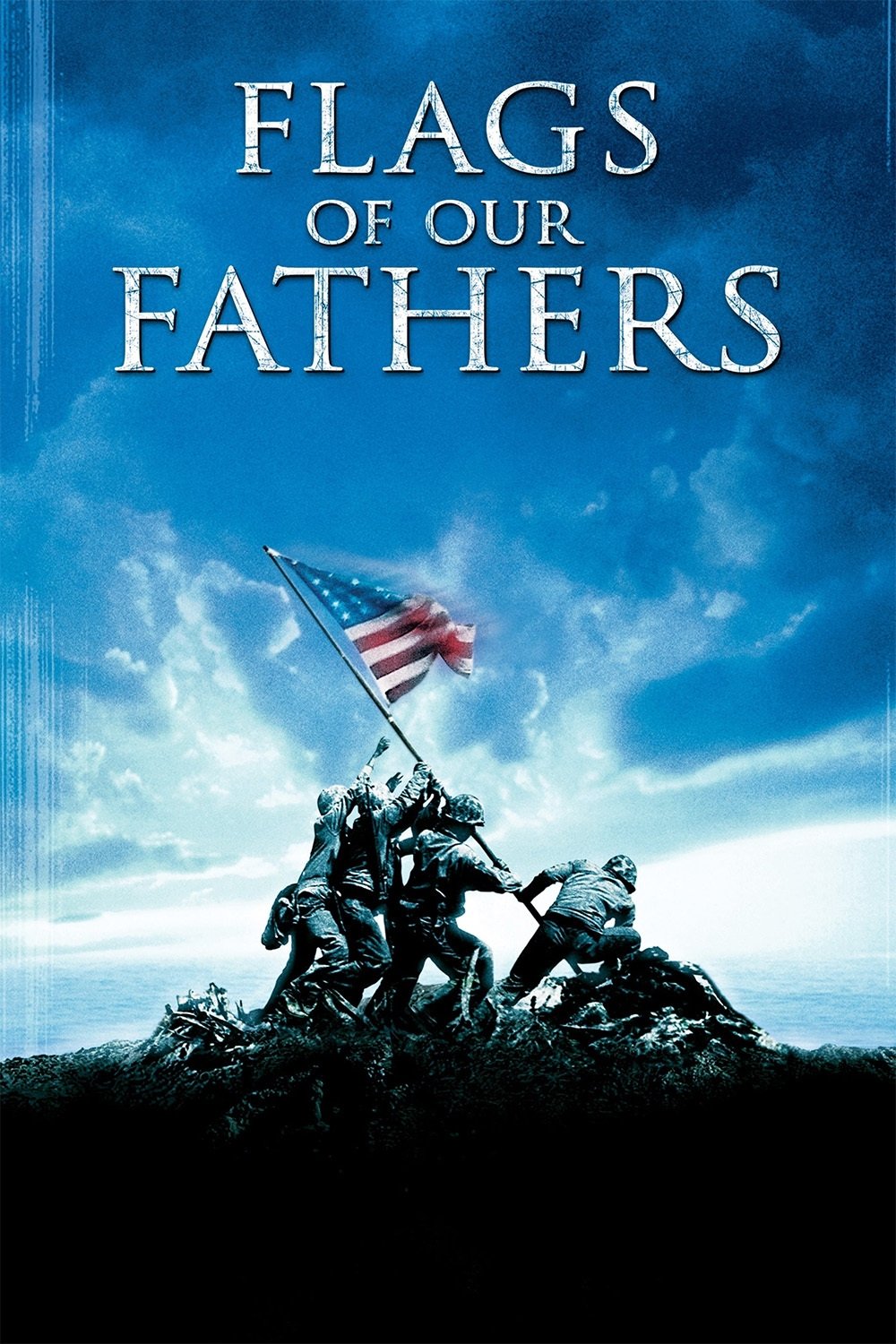
What the Film Is About
When I watch Flags of Our Fathers, I am reminded instantly of how personal and complicated national myths can be, especially those surrounding war and heroism. For me, the film is less about the battlefield and more about the psychological terrain navigated by those who become unwilling symbols. The story orbits around three young men thrust into national spotlight after their participation in the iconic flag-raising at Iwo Jima. Though the camera occasionally returns to blood-streaked sand and frantic combat, what lingers is an emotional journey through memory, trauma, and forced performance—of patriotism, masculinity, and legend.
I felt the crux of the film was rooted in the internal conflict each character faces, not just between survival and sacrifice, but between the reality of their actions and the way those actions will be immortalized by others. As the characters are whisked away from warzones into parades and campaign rallies back home, their isolation grows. This emotional distance from both their private selves and public perception propels them on a journey of self-reckoning, blurring the line between who they really are and who the world needs them to be.
Core Themes
Every time I revisit this film, I’m struck by its relentless interrogation of what heroism truly means. The movie dismantles the tidy narrative of “the hero” by exposing the contradictions and burdens inherent in adopting that label. I see a film not about claiming valor, but about the fallout of being reduced to a symbol, especially when fame has little relation to the grit and horror actually experienced. Patriotism, to me, is treated as a double-edged sword—capable of rallying a weary public but also complicit in the commodification of human pain for political needs.
One of the themes I find most resonant is the notion of constructed memory. The film foregrounds how stories, especially those that become icons, are essentially shaped by fleeting moments, selective truths, and collective desire. For the survivors, media and government constantly craft and re-craft their experiences, extracting meaning that often obliterates nuance. I also see the film wrestling with survivor’s guilt and how unresolved trauma can fracture one’s sense of self. This exploration feels especially urgent, both at the time of the film’s release, when American culture was deeply engaged in debates about the Iraq War, and today, as we continue to examine whose stories history chooses to amplify or silence.
I also read a distinct commentary on masculinity and vulnerability throughout. The men at the center are expected to embody stoicism, yet the film refuses to flinch away from the pain, confusion, and need for connection they privately admit. By exposing the flaws, flaws, and contradictions of its heroes, I found Flags of Our Fathers to be a meditation on how societies hunger for easy myths—often at the expense of actual human beings.
Symbolism & Motifs
What’s remarkable for me is how carefully the film constructs its imagery to reinforce these ideas. The flag itself serves as the most persistent symbol. Watching it raised, celebrated, and ultimately commercialized, I become keenly aware of how a single photograph can both unify and falsify. The flag is not just cloth, but an emblem of sacrifice and, paradoxically, of erasure—because its clear contours simplify the chaos, pain, and individual suffering that led to its hoisting. For me, every instance of the flag points to the tension between representation and reality.
I noticed motifs of water and sand—recurring elements that seem to blur and bury the truth. Water is often turbulent, sometimes red with blood or eerily calm, suggesting both purification and the inability to ever fully “wash away” the past. Sand covers footprints, swallows artifacts, and absorbs the cries of the dying, constantly reminding me of the transitory nature of both memory and history.
The prosthetic hand worn by one of the flag raisers is another motif I can’t help but dwell on. More than a symbol of loss, it’s a constant, visible reminder of lasting wounds—both physical and emotional. The hand is artificial, yet it’s all that remains, mirroring the way public narratives replace real experience with sanitized, palatable versions. Photographs also haunt the film; they freeze moments in time and force characters to relive a version of the past that’s never quite accurate. This visual motif of image-making and image-worship reveals how history is ultimately an act of selection—what we choose to remember, and what we collectively agree to forget.
Key Scenes
Key Scene 1
One scene that sharply defines the film’s intentions, at least for me, is the depiction of the war bond tour. As the flag raisers are paraded around the United States, overwhelmingly disconnected and alienated from the adoring crowds, the film shifts from the mud and mayhem of combat to the garish lights of staged patriotism. I find this whiplash emotionally jarring, which seems to be the point. It’s here that I most feel the disconnect between the “reality” of war and the “story” the public needs—the spectacle overtakes the truth, and the men are transformed into commodities supporting a cause far bigger (and less honest) than they ever signed up for. Their unease is palpable; they are both honored and used, heaped with gratitude and stripped of agency. For me, watching this play out crystallizes the film’s point: that heroism can be a burden, and those we define as heroes are often anything but victorious in their private moments.
Key Scene 2
Another scene that stays with me long after the credits roll is the moment when one of the central characters, haunted by what he’s seen and done, quietly refuses the role he’s assigned. I see this as a subtle yet profound rejection of simplistic narratives—he cannot, and will not, perpetuate a myth that costs him his sense of self. In his confession, there’s both pain and deep integrity. The film’s worldview becomes clear to me: while nations long for neat, uplifting stories, the truth is almost always more fractured. Here, the film refuses to blame individual characters for participating in the war machine—instead, it lays bare the impossible bind in which history and society place these survivors. The portrayal of mental anguish, as much as physical injury, becomes a declaration that wounds unseen can be the hardest to bear, and that refusing to be a symbol requires quietly monumental courage.
Key Scene 3
Late in the film, as aging veterans reflect on their experiences, the story shifts tone. What I found most moving is the acknowledgment that even with time and distance, the past lingers, unresolved. The “heroic” photograph that galvanized a nation becomes, for those who lived it, a constant touchstone for regret, confusion, and alienation. For me, this scene makes a bold statement about the unreliability of official memory. The survivors try to make sense of not only what happened but how it has been retold, recast, reinterpreted by others. It’s a turning point in the film’s message—a poignant recognition that the simplest, most celebrated moments in history are often the least understood by those who lived them, and that real honor often lies in surviving and remembering, not just in being celebrated.
Common Interpretations
As I’ve engaged with the film over time, I’ve noticed a central split in interpretation. Many critics read Flags of Our Fathers as a powerful indictment of wartime propaganda—the idea that governments, especially in moments of crisis, will mold individual sacrifice into collective mythology, often at the expense of truth. For these viewers, the film is a carefully constructed deconstruction of hero-worship and the emotional toll it takes. This interpretation is reinforced by the film’s refusal to grant us clear-cut heroes; instead, we see doubt, confusion, and the lingering heartbreak of war’s aftermath.
Others, both in the critical community and among audiences, have seen the film more as a eulogy to the “good war”—an elegy acknowledging the sacrifices made by an entire generation, even if those sacrifices were manipulated for national purposes. Whereas some might argue that the movie is overtly cynical or skeptical about patriotism, I think many viewers find in its ambivalence a deep empathy for the real men beneath the headlines. The film’s ambiguous stance, to me, is its greatest strength. It can be seen as a critique of myth while also recognizing why societies need myths in the first place—to process trauma, to bind a fractured public, and to locate meaning amid chaos.
There’s also an ongoing conversation about the film’s perspective on race and representation. Some viewers note how the narrative centers on a selective version of history, raising important questions about whose stories are told and whose are sidelined even within anti-mythmaking efforts. While the film gestures toward these complexities, I always felt it leaves open the question of what true recognition looks like once the cameras are gone. That openness continues to draw impassioned, sometimes divergent readings.
Films with Similar Themes
- Saving Private Ryan – I can’t help but draw connections here, as Spielberg’s film also grapples with the gap between myth and reality, exploring the cost of heroism both for individuals and nations, though perhaps with a more conventional arc.
- The Deer Hunter – This film delves deeply into the lingering psychological wounds of war, especially how individual trauma is refracted through community and ritual, echoing much of what I find moving in Flags of Our Fathers.
- Born on the Fourth of July – Like Eastwood’s work, this film interrogates the American penchant for constructing heroes and explores the devastating price paid by those who survive, only to find themselves alienated at home.
- The Thin Red Line – Malick’s take on World War II similarly dissolves the idea of glory, focusing instead on the existential and spiritual crises engendered by violence and the struggle to assert personal meaning amid the demands of collective memory.
Reflecting on what Flags of Our Fathers ultimately expresses, I believe the film offers a bracing examination of how societies manufacture, consume, and even require mythic narratives to sustain a sense of purpose during times of crisis. For me, its most lasting message lies in its insistence that history is never static—always refracted through layers of trauma, memory, and necessity. The characters’ struggle to reclaim their stories from the machinery of glory points to something deeply human: our need to be seen and understood on our own terms, even as society pushes us into roles we never chose. In this way, the film remains a vital work—not just as a commentary on a single war, but as a painful, necessary meditation on the ways we process loss, enforce meaning, and seek solace in storytelling long after the cannons have quieted.
To explore how this film has been judged over time, consider these additional viewpoints.