
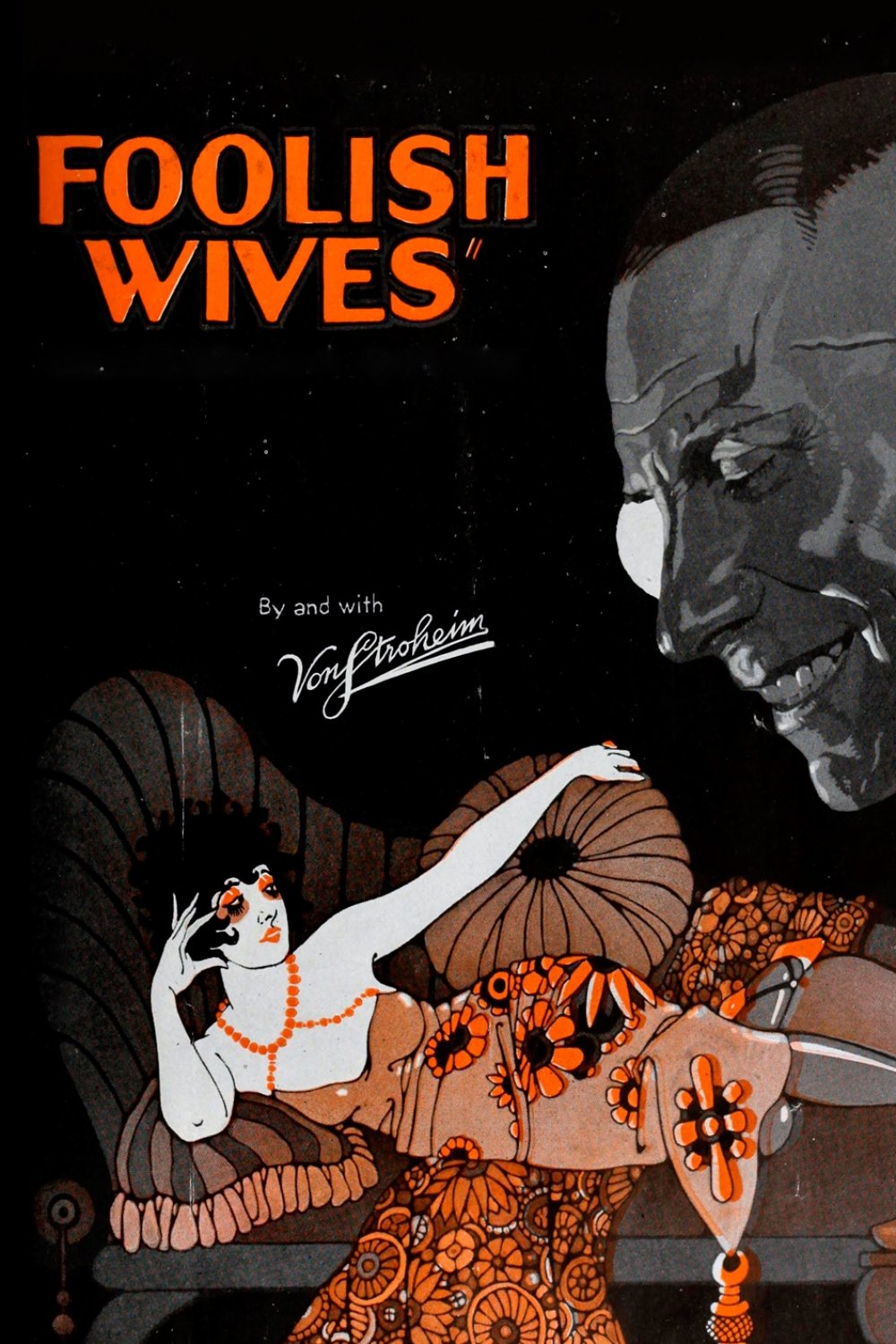
What the Film Is About
Watching Foolish Wives is like wandering into a moral labyrinth, where every corridor is lined with mirrors reflecting both the decadence and vulnerability of the human soul. I’ve always been struck by its audacious layering of seduction, deception, and the raw hunger for significance that thrums beneath its surface. What unfolds is not merely a story of schemes and desires gone awry, but an exploration of alienation within a world intoxicated by appearances and status. The central conflict, for me, isn’t just the conniving Count Karamzin versus his unsuspecting victims. It’s a spiritual clash between genuine virtue and the seductive, corrupting forces that thrive in a society obsessed with spectacle.
Emotionally, the journey feels uncomfortable and enthralling in equal measure. I find myself caught between morbid fascination and sincere pity as these fragile, often deluded characters bruise themselves against the glittering façade of Monte Carlo’s high society. The film lures me into its uncertain morality: are its characters victims, perpetrators, or both? Ultimately, Foolish Wives challenges me to see how cultivated sophistication masks both greed and longing, forcing me to ask whether anyone truly escapes the consequences of their own illusions.
Core Themes
For me, the most potent idea at the heart of Foolish Wives is the disintegration of authenticity in a world governed by appearances. The film lingers on questions of moral duplicity and emotional hunger, rendering both as inescapable facets of the human experience. I see its central themes as:
- Moral Hypocrisy: I’m fascinated by how the film skewers not just individual vice, but systemic hypocrisy. The so-called “respectable” are just as complicit as the overtly decadent. Von Stroheim’s Monte Carlo is less a playground and more a trap—a place where virtue is performative, and self-interest wears the mask of politeness. Even those who claim moral authority often capitulate to temptation.
- Pursuit of Power and Validation: I find the characters’ endless posturing—a dance of status, wealth, and seduction—to be eerily familiar even today. The hollow pursuit of validation through manipulation feels universal, a kind of existential loneliness weaponized to gain attention or resources. Karamzin’s actions aren’t merely criminal; they’re acts of desperation to be seen, to matter, to dominate.
- Gender and Social Boundaries: The film confronts the precariousness of female agency in a patriarchal world. The women Karamzin targets aren’t simply naïve—they’re isolated, circumscribed by invisible boundaries of propriety. Their vulnerability sits at the intersection of social expectation and sexual repression, a theme that, for me, still resonates in modern conversations about victimhood, consent, and power.
- Illusion Versus Reality: I see Von Stroheim’s world not as a historical curiosity, but a mirror reflecting perennial anxieties: how much of life is just performance? The glamorous settings and ornate costumes create an atmosphere of artificiality that underscores the deep loneliness and longing within the characters.
When Foolish Wives was released, the early 1920s was a time of upheaval: the aftershocks of war, disillusionment with traditional values, and the rise of consumerist modernity. To me, the themes of false promises and moral decay were an open provocation to audiences of the day, and they speak just as sharply to our era’s obsession with surface and spectacle, leaving us to wonder how much we have really changed.
Symbolism & Motifs
Every time I revisit Foolish Wives, I’m struck by how laden it is with recurring symbols that enrich its critique of social and personal delusion. Monte Carlo’s casino—gleaming, noisy, relentless—serves as more than a backdrop. For me, it symbolizes the hazards of living by chance, of letting fate and superficial desire dictate one’s destiny. The spinning roulette wheel, for example, feels like the pulsing heart of the film: everyone’s fortunes and virtues are left to a capricious universe that rewards luck over substance. Whenever I see those wheels, I’m reminded of the emptiness of seeking purpose through luck alone.
Mirrors appear throughout the film and, in my experience, stand in for the film’s obsession with self-image and duplicity. Characters are forever gazing at themselves or caught in reflection, as if searching for meaning in their own surfaces. These mirrors remind me that everyone wears a mask, and that self-deception is as much a survival tool as a failing. I can’t help but notice that moments of vulnerability occur against these reflective surfaces, turning them into silent witnesses of private despair.
Uniforms, military medals, and aristocratic garb also circulate as motifs. I see these as hollow signifiers of status and legitimacy—wrappings that promise moral superiority but conceal rot. The film’s visual attention to clothing, to badges of “respectability,” is, in my reading, a merciless indictment of how society privileges appearance over substance.
Finally, the motif of water—whether it’s the crashing waves of the sea or the fountains of Monte Carlo—suggests both cleansing and drowning. For me, water becomes a metaphor for the impossible desire to wash away guilt or start anew. In the hands of Von Stroheim, these images achieve a dual meaning: water both seduces and threatens, offering solace that always proves ambiguous.
Key Scenes
Key Scene 1
There’s a scene early on where Count Karamzin, dressed in immaculate finery, orchestrates his first major seduction attempt. The moment he steps into a private setting with one of the women, the atmosphere is charged with both possibility and trepidation. I find this scene essential because it lays bare the anatomy of manipulation—not just sexual or emotional, but existential. Karamzin’s words drip with false sincerity, and yet, I feel the woman’s yearning to believe in gentle intentions. This interplay of vulnerability and predation acts as a microcosm for the entire film. It leaves me bracingly aware of how people, desperate for connection, can surrender reason in pursuit of fleeting affirmation. The emotional turbulence here is never resolved; instead, it echoes throughout the film, coloring every subsequent betrayal.
Key Scene 2
Midway through, there’s a haunting confrontation between Karamzin and one of his collaborators—two predators briefly dropping their masks. Here, the dialogue shifts from seduction to disillusionment; the illusion of solidarity evaporates. I see this as the film laying bare its core argument: even among the unscrupulous, there are no lasting alliances. Self-interest rules all, and the pursuit of pleasure is a lonely road. The scene invites me to reflect on how communities built around exploitation inevitably cannibalize themselves. It’s not merely a robbery or blackmail gone wrong—instead, it’s a meditation on the tragic cost of community built on mutual deceit. The tone here is chilling but also deeply sad, holding a cracked mirror to any society built on transactional relationships.
Key Scene 3
Near the film’s end, Karamzin faces public disgrace. The spectacle of his unmasking is both humiliating and cathartic, a culmination of accumulated lies and betrayals finally toppling their architect. I’m deeply moved by how the film refuses to shy away from the messy aftermath of exposure; there’s no triumphant restoration of order, only a lingering sense of loss and uncertainty. Rather than granting catharsis, the scene haunts me with unanswered questions: Is justice possible, or merely another illusion? Can ruined reputations lead to genuine self-knowledge, or just further alienation? The emotional gravity of this moment provides the film’s final, ambiguous verdict on human folly, leaving me to ponder whether any amount of suffering truly purges the soul.
Common Interpretations
In every classic film course or conversation I’ve encountered, Foolish Wives seems to ferment controversy—and for good reason. Some critics, in my observation, view the film as a caustic condemnation of postwar decadence, reading Karamzin’s relentless schemes as a parable about the dangers of unchecked hedonism and the hollowness of upper-crust society. They see Von Stroheim’s direction as almost surgical in its dissection of class hypocrisy, revealing the deep rot lurking beneath ornate surfaces.
I’ve also met scholars who approach the film through a more psychological lens. For them, the narrative’s focus on masks, mirrors, and theatrical gesture isn’t just a social commentary—it’s an exploration of identity itself. They point out that every character, from the predator to the prey, is locked in a struggle with self-perception and the desperate wish to be valued, even if only through another’s gaze. In this reading, the film’s “foolishness” isn’t just the naïveté of the victims—it’s the universal, complicit longing to be loved, admired, or envied.
Another current in criticism, one I’ve found persuasive, highlights the film’s proto-feminist qualities. While Von Stroheim’s gaze is undeniably male, the film’s empathy lies with its female characters: their isolation, their yearning for escape, their ultimate exploitation. This reading puts the women’s restricted agency and doomed longing center stage, arguing that the film exposes the poisonous fruit of a society intent on policing female desire while simultaneously exploiting it.
The tension between moral condemnation and psychological empathy is what keeps Foolish Wives alive in modern discourse. It can be seen as a harsh cautionary tale, a noirish melodrama, or—as I often experience it—a deeply modern meditation on the contradictions animating human behavior and societal structure.
Films with Similar Themes
- Sunrise: A Song of Two Humans (1927) – Like Foolish Wives, this film uses visual symbolism and stark contrasts (city vs. countryside, temptation vs. redemption) to probe the fragility of love and the perilous allure of moral transgression.
- La Dolce Vita (1960) – Whenever I watch Fellini’s exploration of postwar European decadence, I’m reminded of Von Stroheim’s critique of empty spectacle and desperate yearning for validation within glamorous environments.
- The Great Gatsby (1974 and 2013) – Both adaptations, like Foolish Wives, revolve around social climbing, illusory romance, and the inexorable price of chasing status in a world governed by surface over substance.
- The Earrings of Madame de… (1953) – I see a direct parallel in its meditation on the emotional cost of appearances and the destructive impact of societal expectations, especially for women trapped by their own social milieus.
So what, ultimately, does Foolish Wives have to say about who we are, or who we wish we could be? For me, the film is an unblinking diagnosis of the perils posed by an existence built on performance and posturing. It lays bare the corrosive effects of lies, both private and communal, and exposes our willingness to trade authenticity for fleeting pleasure or approval. In a world where status and desire twist people into caricatures of themselves, Von Stroheim’s vision reminds me that genuine connection and self-understanding remain perilously out of reach when truth is always subordinate to spectacle. The era’s anxieties find new resonance every time I watch it, making Foolish Wives both a product of its turbulent age and an enduring mirror for our own.
To explore how this film has been judged over time, consider these additional viewpoints.