
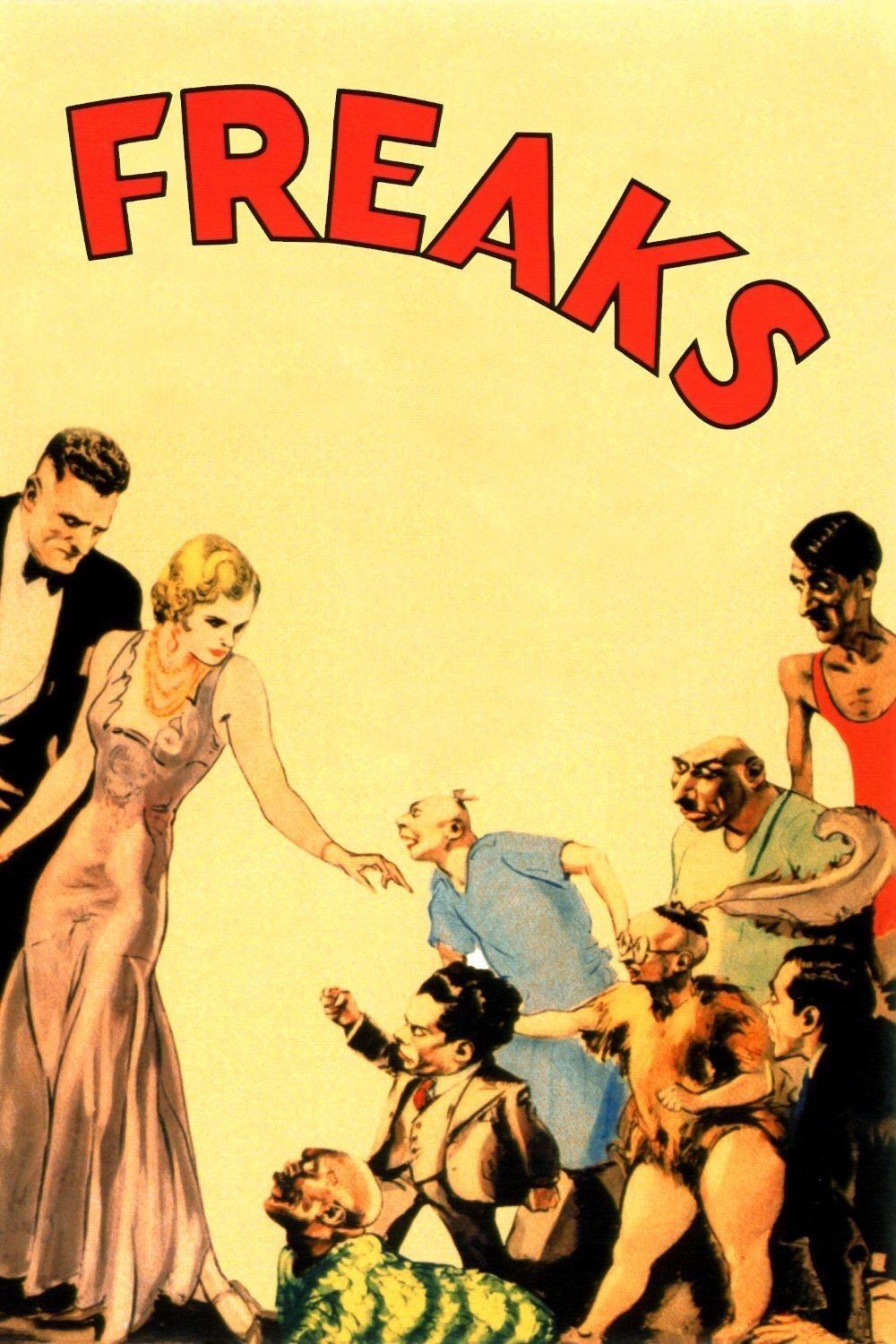
What the Film Is About
Watching “Freaks” for the first time, I was struck less by the plot’s twists and more by a gnawing feeling of discomfort—the kind that lingers and demands self-reflection. For me, “Freaks” is a film about the boundaries we draw between ourselves and others, and what happens when those boundaries turn into weapons. It’s an emotionally volatile journey, starting with a sense of curiosity and even delight in the carnival world, but spiraling quickly into unease as cruelty and betrayal creep in. At its core, I felt myself being forced to question my own sympathies and prejudices—an experience that’s as psychologically bracing now as when the film first shocked 1930s audiences.
The central conflict isn’t just good versus evil, but rather normalcy versus otherness, safety versus threat, and, most of all, who gets to decide who belongs. As the story unfolds, what began as an exploration of the odd and the fringe quickly reveals a deeper narrative about trust, community, and the social costs of exclusion. I found the emotional arc of the film to be as much about the audience’s journey as the characters’: it cleverly manipulates who I root for, who I recoil from, and ultimately who I understand to be “human.”
Core Themes
Reflecting on “Freaks,” the film’s interrogation of identity, empathy, and power dynamics emerges as its most provocative mission. I kept returning to the ways it challenges our notions of beauty, ability, and “the norm.” The so-called “freaks,” often physically othered by society, cultivate a found family that values loyalty and mutual protection. Meanwhile, the nominally beautiful and able-bodied outsiders weaponize their “normalcy” as a mask for violence and greed. What I find so telling is how the film asks: who are the real monsters here?
Themes of alienation run deep. The circus is both haven and purgatory—a liminal realm where societal misfits craft their own codes and rituals. I see “Freaks” as questioning whether exclusion is inherently violent, and whether perceived difference must equate to danger. In the early 1930s, these questions sat uneasily in a culture obsessed with eugenics and “improving” the human race. The film’s brutal honesty about the grotesqueries of so-called civilization resonates even more urgently today, where conversations about identity, disability, and otherness continue to shape public debate.
Perhaps most enduring for me is the way “Freaks” explores vengeance and justice. The group’s final collective response to betrayal is at once horrifying and exhilarating—the ugly catharsis of watching the oppressed revolt. The film seems to argue that exclusion not only harms—it provokes. I felt the ambiguity of the film’s ending lingers not because it shocks, but because it refuses simple moral answers.
Symbolism & Motifs
What keeps pulling me back to “Freaks” are the film’s recurring images and devices that quietly accumulate force. The “wedding feast” scene, for instance, stands as a centerpiece of symbolism: outsiders chanting unity in the face of betrayal, only to be spurned. The repeating phrase “One of us, one of us!” is far more than a carnival chant—it’s a desperate incantation for acceptance and a chilling reminder of what happens when hospitality is violated.
Mirrors feature subtly but powerfully, reflecting both physical atypicality and the distorted moral world of the circus. I’m continuously struck by the way the camera lingers on the bodies of the performers—not as objects of pity, but as living refutations of the viewers’ expectations. The freaks’ physicality becomes a symbol for what society would rather not see, yet cannot look away from, implicating the audience in the act of voyeurism.
Rain and mud in the climactic chase operate as elemental motifs, turning the world of the circus into a primal, lawless zone where the usual social strata evaporate. By pushing its villains literally into the muck, I sense the film makes a final, raw statement about where true depravity lies. Nature itself appears to side with the outcasts, obscuring the line between humanity and monstrosity.
Key Scenes
Key Scene 1
For me, the pivotal “wedding banquet” exposes the film’s central tension with startling clarity. As the performers offer a toast of inclusivity and gratitude, chanting “One of us! We accept her!” there’s an uneasy current—an attempt at bridging worlds, met with disgust and humiliation from the outsider. The scene’s emotional violence lingers, making it clear how deep the wounds of exclusion can run. I think this moment makes the stakes personal for both characters and viewers: the pain of rejection, the yearning for belonging, and the dangerous energy that isolation can release.
Key Scene 2
Later, the film’s portrayal of the freaks banding together in vengeful unity stands out as a powerful subversion. What’s often discussed as a “horror sequence” felt to me like a revelation—a reversal of power in which vulnerability becomes weaponized. Watching the outcasts move as a single, implacable group, their silence more menacing than any speech, I was forced to reconsider my own reactions: why do I flinch here? The scene doesn’t just serve narrative suspense, but rather interrogates my discomfort with seeing marginalized people claim agency, especially in violent ways.
Key Scene 3
The film’s final “reveal” is both repulsive and magnetic. The transformed antagonist, once so physically “normal” and socially dominant, is now rendered as another sideshow oddity—a grotesque product of her own making. To me, this moment ties together all the film’s thematic threads: the dangers of dehumanization, the slipperiness of the boundaries we draw, and the poetic irony of othering. What I took away was a sense that monstrosity isn’t inherent—it’s the final revenge of those forced to the margins.
Common Interpretations
Throughout the decades, I’ve noticed two main strands of interpretation. Many critics argue “Freaks” is a pointed attack on societal prejudice and hypocrisy. They see the film as a radical act of empathy: by insisting that the so-called “monsters” are more humane, loyal, and loving than their “normal” oppressors, the film asks us to rethink what it means to be monstrous at all. This reading traces back to the film’s fraught reception; vilified on release, then reclaimed as a cult classic with a progressive edge.
Others, however, have pointed out the film’s exploitative qualities. Despite its subversive intentions, some viewers feel uneasy with how “Freaks” places real disabled bodies in a sensationalist spotlight, and argue that the film never fully transcends the gaze of its time. I see value in this discomfort—it’s a challenge to my impulse to read the film solely as a triumph of the marginalized. That ambiguity is, for me, part of its enduring provocation.
There’s also a contingent who regard the film as a dark fairy tale—one where victims rise up and subvert their place in the story, but at a terrible cost. Here, the film resonates as a cautionary tale: warning not just against cruelty to the outsider, but also about the cyclical nature of violence born from oppression. I find myself returning to this interpretation more than any other, seeing “Freaks” as a story of betrayal and reckoning that leaves no one unchanged.
Films with Similar Themes
- The Elephant Man (1980) – I see a profound kinship in its exploration of physical difference, societal cruelty, and the ache for dignity; both films force me to confront my own gaze as an audience member.
- Tod Browning’s Dracula (1931) – Though more overtly supernatural, its atmosphere of alienation and the fear of the outsider links it directly with “Freaks”; each film wrestles with the fear of the other creeping into our midst.
- Edward Scissorhands (1990) – I find Tim Burton’s modern fairy tale echoes the pain of exclusion and the perils of difference, all while demanding empathy for those deemed “monstrous” by the mainstream.
- Night of the Living Dead (1968) – While a horror staple, I’m drawn to its use of marginalized identities (racial, physical) to critique social panic and paranoia, reclaiming the “monstrous mass” as victims of circumstance.
When I step back and ask, “What is this film really trying to say?”, I keep circling back to its insistence on the dangers of dividing the world into insiders and outsiders. “Freaks” is never just a film about the grotesque—it’s about whose pain matters, whose voice is silenced, and how the lust for purity or superiority always curdles into violence. I leave each viewing reminded that any society can create monsters, not by birth or by body, but by the casual cruelties it inflicts and justifies. Watching it through my own lens, I find “Freaks” is less a relic of its era and more a persistent, uncomfortable mirror—one that asks whether we’ve really changed at all.
To explore how this film has been judged over time, consider these additional viewpoints.