
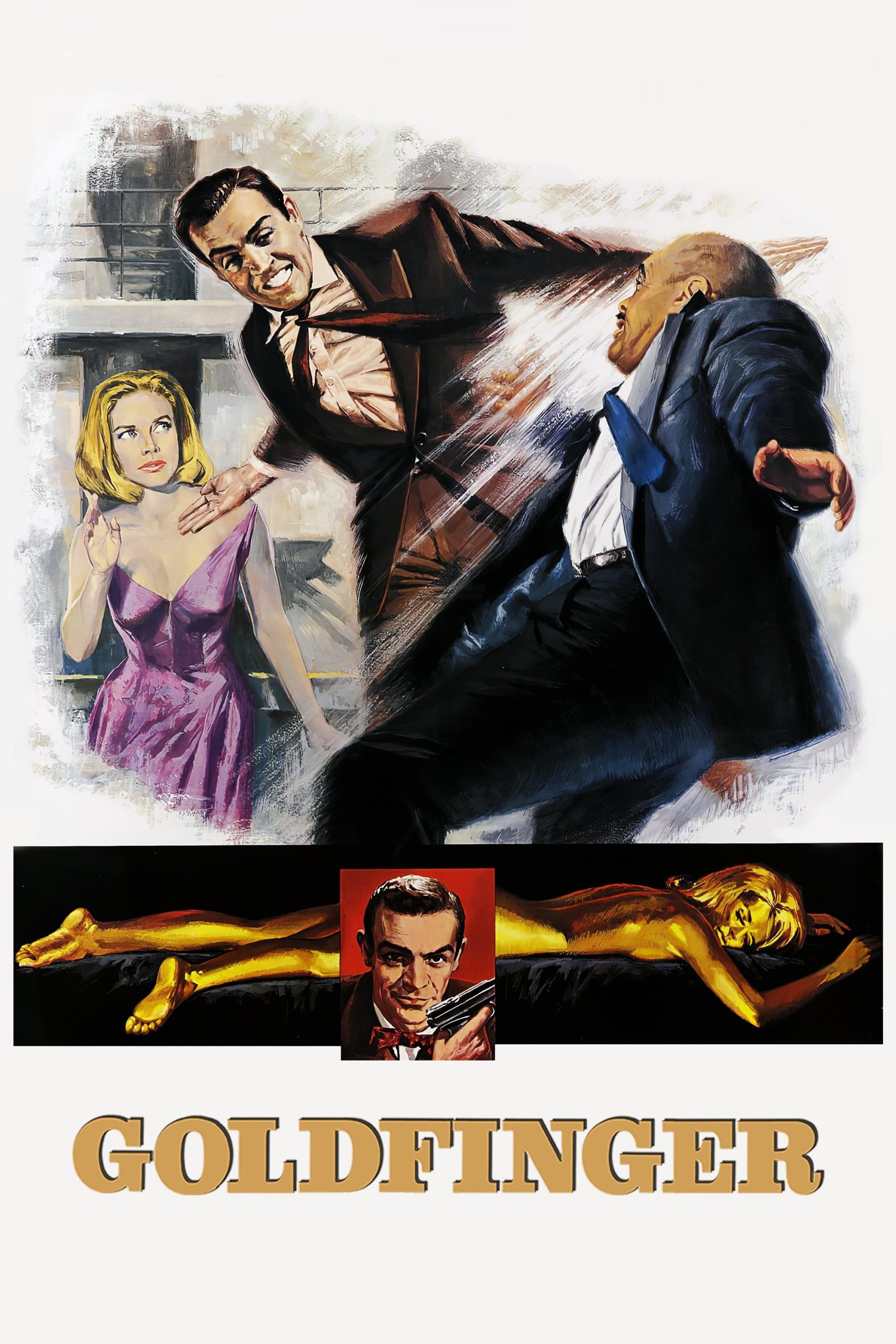
What the Film Is About
Even after countless viewings over the years, Goldfinger stubbornly refuses to fit neatly into the box of the typical spy adventure. I always return to it not for its famous gadgets or vintage thrills, but for the way it lays bare a world obsessed with surface glamour while quietly whispering about deeper anxieties underneath. To me, it’s a story about what happens when allure, power, and danger tug at a man’s conscience—a central emotional current that’s as much about Bond’s own interior orbit as it is about international intrigue or villainous schemes. The fundamental conflict simmers beneath the tailored suits and golden seduction: between trust and suspicion, between self-control and reckless compulsion, between the myth of British heroism and the creeping rot of cynicism that the swinging 1960s made impossible to ignore.
When I step into the world of Goldfinger, I sense an undercurrent of unease beneath the film’s dazzling surface. Yes, the narrative is propelled by a classic test of will—a secret agent dancing on the edge of disaster, outwitting a megalomaniac—but the true direction of the film is more psychological. It asks what the cost of such constant performance might be, both for the hero and the world he’s supposed to save. Emotionally, I feel swept up by an unsettling mixture of exhilaration and quiet skepticism, as if the movie knows the price of its own seduction.
Core Themes
While many fans treat Goldfinger as pure escapism, what keeps drawing me in is the way it’s saturated with ideas of corruption, greed, and the uneasy balance between duty and desire. The film’s obsession with gold is, to me, less about the literal metal than an indictment of how value and power become entangled. Auric Goldfinger—his very name pronouncing his fixation—turns every relationship, every object, into a tool for acquisition and domination. I’m fascinated by the way the film turns valuables into a symbol for everything that can be possessed, controlled, or tainted by obsession.
For me, the most enduring theme is the anxiety surrounding masculinity and audacity in a world that’s rapidly changing. Bond is the ideal: suave, self-assured, unflappable. Yet there’s an ever-present sense that his bravado masks vulnerability—a discomfort with how easily the rules of the old world might be upended. In the era of postwar optimism colliding with Cold War paranoia, I see Goldfinger grappling with a loss of certainty. The film uses Bond’s unshakable confidence as both critique and comfort, acknowledging deep fears about impotence in the face of modernity.
Another thread that fascinates me is how the film toys with morality. Lines between good and evil blur, not just through Bond’s own methods, but in the almost seductive charisma of the film’s villains. Even the “goodness” of the hero is undercut by moments of ruthlessness and casual disregard for collateral damage. If anything, the film seems to suggest that morality is a kind of performance—fluid, situational, and often inextricably tied to who holds power. This skepticism about virtue feels relevant both to 1964, and to today’s world of shifting loyalties and contested truths. The story’s labyrinth of duplicity and temptation never feels outdated.
Symbolism & Motifs
The film is a treasure trove of symbolism, and I never get tired of ferreting out its recurring motifs. The most obvious, of course, is gold itself—it’s everywhere, from the gold-plated women to the bars, coins, and names. But what speaks to me more deeply is how gold symbolizes not just wealth, but the corruptive influence of unchecked ambition. It’s a mark of both allure and rot: beautiful, rare, yet dangerous to pursue. When Jill Masterson is murdered and left covered in gold paint, I always see it as a cautionary vision of how beauty turns lethal when consumed by greed.
Recurring visual motifs reinforce the film’s dual identity. For instance, the golf game between Bond and Goldfinger isn’t just a sport; it’s a theatrical showdown of deception, masked aggression, and class rivalry. I’m intrigued by how sport and games serve as metaphors for the entire spy business—performance, calculation, the thrill of victory and the risk of loss. Likewise, the elaborate gadgets—a laser table, an Aston Martin bristling with weapons—feel like emblems of the era’s contradictory faith in technology, hinting at both hope and paranoia. They promise safety, but their use often escalates violence.
Even the women in the film, frequently reduced to objects or pawns, become ghostly echoes of the film’s core tension. I find myself haunted by the presence of Pussy Galore, whose very name is outrageous by today’s standards, but whose autonomy and ambiguous loyalty suggest cracks in the film’s gendered power structures. She’s as much a symbol of shifting social roles as she is a person—someone who can be both forceful and vulnerable, oddly out of place in the machinery of Bond’s desires.
Key Scenes
Key Scene 1
What I find most electrifying about Goldfinger’s murder of Jill Masterson—leaving her lifeless, painted head-to-toe in gold—isn’t its morbid shock value, but its symbolic weight. In that moment, the film literalizes the notion of being “consumed by gold”, making beauty and death inseparable. For me, this scene embodies the movie’s central question: what are we willing to sacrifice for power and pleasure? The image lingers far beyond its initial impact. It transforms the promise of wealth and possession into something horrific, exposing how fragile and dangerous the pursuit of perfection or ownership can be.
Key Scene 2
Another scene I return to is the iconic laser table sequence, where Bond faces imminent dismemberment as Goldfinger coolly explains his diabolical plans. This is more than a test of nerves; it’s a confrontation between two worldviews—Bond’s quick wit and improvisational boldness against Goldfinger’s methodical cruelty and obsession. What’s fascinating to me is how this scene flips the regular script. Bond’s invulnerability—a core part of his persona—is suddenly at real risk, and the audience must wonder whether wit and charm are enough to survive. I read this as the film questioning the limits of individual agency in a mechanized, indifferent world, a tension that colors Bond’s entire mission with vulnerability.
Key Scene 3
Finally, the film’s climax in Fort Knox carries the weight of myth. Gold, once the lure and promise of everything Bond’s world stands to protect or destroy, becomes a doomsday weapon. Watching Bond desperately try to disarm the bomb, sweat beading as seconds tick down, I feel the entire edifice of heroism waver. When the bomb is stopped with only seconds remaining, it’s not merely a triumph of courage; it’s a moment of ambivalence. I see in Bond’s relief—and the world’s rescue—a hint that order is only ever temporarily restored. The ever-present possibility of annihilation never truly dissipates, and the dance between chaos and control remains unresolved.
Common Interpretations
When I talk with other viewers and read critics’ thoughts, I’m struck by how Goldfinger invites several overlapping interpretations. Some take it as a celebration of British cool—a fantasy of invulnerability and righteous action, tailor-made for a nation still searching for post-imperial identity. For these viewers, Bond is an emblem of masculine wit, composure, and resourcefulness, almost a comic book answer to the anxieties of the Cold War era. I understand why this approach resonates: the film dazzles with its style, its wry humor, its larger-than-life set-pieces. The comfort of watching “our man” foil evil is undeniable.
Yet, I also see a thread of criticism beneath the surface, one that’s become increasingly prominent in modern interpretations. Many viewers—and certainly many contemporary critics—identify an undercurrent of skepticism about Bond’s world, especially regarding its treatment of gender, violence, and morality. For these readers, the film becomes a sly critique, not just a celebration. Moments of sexual dominance or violence provoke discomfort, especially through today’s lens, and many see in the film an anxiety about changing social roles. I find myself torn between admiration for its cinematic bravado and frustration with its blind spots, especially as the film’s treatment of its female characters veers towards the opportunistic and objectifying.
There’s also an interpretation I personally find compelling: that Goldfinger is a product of an era grappling with the rise of consumer capitalism. The fetishization of gold, technology, and status symbols serves as both allure and warning. I see the film probing the dangers of equating value with possession, cautioning against the seductions of material success. That the villains are almost more interesting than the hero is a sign, to me, that the film is less certain of its own myth than it may initially appear.
Films with Similar Themes
- Dr. No – I see this earlier Bond entry engaging many of the same themes: authority challenged by flamboyant criminality, the mythology of invincible heroism, and the seductive power of modern science turned to sinister ends.
- The Manchurian Candidate (1962) – This film electrifies me with its paranoid vision of mind control and political manipulation, echoing Goldfinger’s anxiety that personal agency is always ensnared in larger systems of power and surveillance.
- North by Northwest (1959) – Here, Hitchcock’s tale of mistaken identity and relentless pursuit makes me think of Bond’s journey across glamorous, lethal landscapes, where glamour is always shadowed by dread and the familiar is never quite what it seems.
- The Thomas Crown Affair (1968) – The gamesmanship between hunter and hunted in this stylish caper mirrors what I love about Goldfinger: the exploration of risk, mastery, and the blurred boundary between attraction and danger.
My lasting impression of Goldfinger is that it functions as a mirror, one that flatters even as it exposes the blemishes beneath the skin of its golden world. Watching the film now, I sense both nostalgia for impossible certainty and a growing awareness of the costs of such illusions. It’s a movie obsessed with value: what we treasure, what we’re tempted to betray, and what we risk losing in the pursuit of personal or national triumph. For me, its enduring power lies in this unresolved tension—between bravado and anxiety, surface allure and lurking decay, mythmaking and undermining. In such charged contradictions, the film reveals as much about the seductive dangers of its own era as it does about the perennial dilemmas of power, desire, and moral ambiguity.
After learning the historical background, you may also want to explore how this film was received and remembered.