
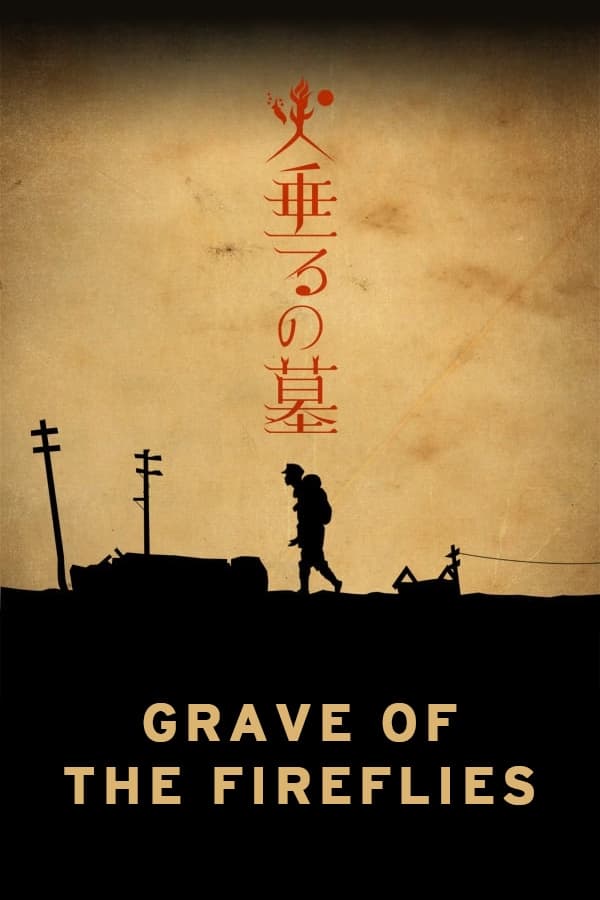
What the Film Is About
Every time I sit with Grave of the Fireflies, I’m struck less by its wartime setting and more by how quietly it pours sorrow into the viewer’s heart—not with grand speeches or melodrama, but through the intimate heartbreak of two children caught in the whirlwind of catastrophe. The film, for me, orbits around Seita and Setsuko’s struggle to maintain their bond, dignity, and sense of hope while the world around them crumbles, indifferent and unyielding. Their emotional journey is a gradual, inexorable peeling away of innocence; optimism is not obliterated suddenly but eroded through neglect, loss, and brief moments of fleeting comfort.
I’ve never seen a war film so unconcerned with heroics or victory. Instead, its central conflict lives in the small, everyday acts of survival and tenderness, set against the unstoppable machinery of war. The narrative direction feels like treading water in a rising tide, with every choice echoing: What does it mean to care for someone when society itself becomes indifferent? The film constructs its universe so quietly that I find grief lingering long after the credits end—not only for its characters, but for what their story reveals about the vulnerability of human connection during times of upheaval.
Core Themes
At its core, I experience Grave of the Fireflies as a meditation on the fragility of humanity—the way love, compassion, and dignity must struggle to survive amid the cold calculus of war and suffering. The film wrestles with themes of isolation, the corrosive effects of societal breakdown, and the limits of resilience. I find myself constantly returning to the idea of how war, while often depicted as a clash of armies or ideals, is most fundamentally about what it takes away from individuals—especially those on the margins. Seita and Setsuko’s story is about more than children surviving the bombing of Kobe; it’s a portrait of the invisible wounds war inflicts upon the most defenseless.
What has always moved me about this film is its relentless honesty regarding social responsibility—a theme as urgent today as it was in postwar Japan during the late 1980s. The film interrogates not only the horror of war itself but also the failures of family, neighbors, and society at large to care for their most vulnerable members. I see in the film an accusation that goes beyond any one country or conflict. When catastrophe strips away the structures of daily life, who do we become? Do we uphold our duties to each other, or succumb to self-preservation? In a sense, the film asks whether basic human decency is a fragile luxury or the final line of defense against despair.
I also read in it a powerful commentary on memory and trauma—a reckoning with both personal and collective guilt. Released during Japan’s own era of economic prosperity, the film resists any triumphalist narrative, instead turning back to confront the cost of forgetting. For today’s audiences wrestling with new global crises and dislocation, its questions about empathy, indifference, and remembrance remain painfully, exquisitely relevant.
Symbolism & Motifs
For me, the film’s title and recurring motif of fireflies encapsulate the entirety of its symbolic web. I see the fireflies as an embodiment of transience—brief bursts of light in overwhelming darkness, mirroring Seita and Setsuko’s own fleeting joys amid constant loss. Their glowing bodies, illuminating the night for only a moment, become both a literal and metaphorical stand-in for hope, innocence, and the inevitability of death. When I watch Setsuko’s fascination with catching these insects or her confusion when they die by morning, I feel the gulf between childhood wonder and cruel reality open wide.
Beyond the fireflies, the visual language of the film is deeply evocative. Water carries symbolic weight—rivers and raindrops signaling both life and destruction, since water brings sustenance but also echoes the bombings and loss. The decaying landscape—shrines in ruins, fields transformed into graveyards—amounts to a haunting meditation on how war perverts spaces of beauty and comfort into sites of sorrow. The recurring image of the tin candy box, initially filled with sweet relief for Setsuko, becomes a reliquary of personal history and grief. Each time I see Setsuko place a firefly in the box, I’m confronted with the painful attempt to preserve moments that will inevitably slip away.
These motifs don’t exist in isolation. They resonate with a sorrow that is at once personal and profoundly universal. I’ve learned to pay attention not just to what the film shows, but to the silences, the quiet stretches, and the absence of music—drawing me into an atmosphere where hope and mourning intermingle with each breath the siblings take.
Key Scenes
Key Scene 1
One scene that has remained with me over the years is when Seita pours a handful of the remaining candies into Setsuko’s palm, trying to comfort her as hunger gnaws at them both. There’s a tenderness in this gesture that never feels sentimental; instead, it speaks to his desperate attempt to maintain some semblance of normalcy and kindness for his little sister. For me, this moment encapsulates the film’s message about the enduring need for love—even when such acts can do nothing to reverse their situation. It is this focus on nurturing amidst devastation that gives the film its power, turning an ordinary act into an existential statement about survival of the spirit, not just the body.
Key Scene 2
Another pivotal moment emerges when Seita approaches his aunt, hoping she will show them familial warmth, but instead meets only coldness and utilitarian logic. There is no villainy here—just a chilling, bureaucratic indifference that I recognize in so many bureaucratic systems then and now. The way his aunt’s behavior fractures any illusion of a supportive community captures the film’s deeper indictment of societal failure. The film doesn’t just show children abandoned by bombs; it also shows them abandoned by those whose compassion has run dry. This scene has always caused me to reflect on how easily shared hardship, rather than uniting individuals, can result in callousness and exclusion.
Key Scene 3
If I had to choose the moment that most fully crystalizes the film’s meaning for me, it would be the scene in which Setsuko—malnourished, fevered, near death—carefully buries the bodies of fireflies she’s caught. Here, innocence performs its own ritual of mourning, oblivious to the larger calamity but devastated by the small tragedy of dying insects. Watching her, I am reminded that grief and survival exist on every scale; the suffering of a child mourning fireflies becomes a profound metaphor for untended human suffering multiplied by war. This turning point, poised between the personal and the universal, expresses the film’s conviction that every loss—no matter how small or unseen—matters. It’s a scene that lingers as a soft, devastating echo: the personal cost of conflict measured, not in statistics, but in small, sacred acts of memory and love.
Common Interpretations
When I read and listen to other critics and viewers, I notice that Grave of the Fireflies has inspired unusually passionate and reflective commentary. The prevailing interpretation, one with which I deeply identify, views the film as a tragic anti-war statement. Not in the sense of directly opposing armed conflict through polemic or rhetoric, but by compelling the viewer to feel the intimate, real consequences of war stripped of abstraction. The suffering of Seita and Setsuko isn’t a backdrop for heroics—it is the core of the film’s heartbreaking power. Through their eyes, war becomes not a clash of nations but an ordeal of starvation, neglect, and irreversible loss.
But this reading is complicated by other interpretations, which see the film as a critique of pride and the thin boundaries of familial obligation. Some argue that Seita’s choices—his adolescent desire for independence, his decision to separate from their aunt’s household—constitute a kind of tragic flaw. I find this perspective both compelling and unsettling; it forces me to consider not just the cruelty of external circumstances, but the way that pride, shame, or youthful rebellion can widen the cracks left by trauma. Still, I resist interpretations that blame the victims for their own suffering, as the film’s empathy is clearly aligned with the children’s experience, not with a moralistic dissection of their choices.
There’s also an interpretation that places the film as a subtle critique of Japanese society and its collective memory of World War II. Released in 1988, during a period of economic prosperity and modernization, the film’s insistence on not forgetting those left behind—children, refugees, the uncounted dead—was a warning against the dangers of historical amnesia. In my eyes, the film succeeds as both a deeply personal tragedy and a universal, timeless condemnation of indifference, asking audiences in any era to reckon with the human cost of neglect and remembrance.
Films with Similar Themes
- Come and See (1985) – I’m always reminded of this Soviet masterpiece when thinking about the psychological toll of war on youth. Both films center on children whose innocence is burned away, not through spectacle, but through relentless exposure to loss and brutality.
- The Wind Rises (2013) – Another Studio Ghibli film, this one reflects on the costs and moral ambiguities of progress during wartime Japan. Its protagonist also grapples with duty, hope, and the ethical shadows cast by his actions.
- Isao Takahata’s Only Yesterday (1991) – While not directly about war, this film navigates personal memory, regret, and the longing to understand oneself amidst a changing environment, echoing the inner journeys of loss and reflection in Grave of the Fireflies.
- The Boy in the Striped Pajamas (2008) – Through another pair of children’s eyes, this film explores the unfathomable horror and innocence confronting the incomprehensible cruelty of the adult world, highlighting how children become collateral damage in grown-up conflicts.
When I think about what Grave of the Fireflies ultimately communicates, I return again and again to the tension between vulnerability and dignity. The film doesn’t simply mourn lives lost to war—it mourns a world in which compassion can be so easily swept aside by fear, duty, or apathy. In refraining from easy answers or heroics, it asks me instead to witness the cost of indifference, to honor the fragility of human connection, and to resist the urge to look away from suffering that society too often deems invisible. Through the tragedy of Seita and Setsuko, I see a plea for empathy—one that, for me, refuses to fade, even decades after its release.
After learning the historical background, you may also want to explore how this film was received and remembered.