
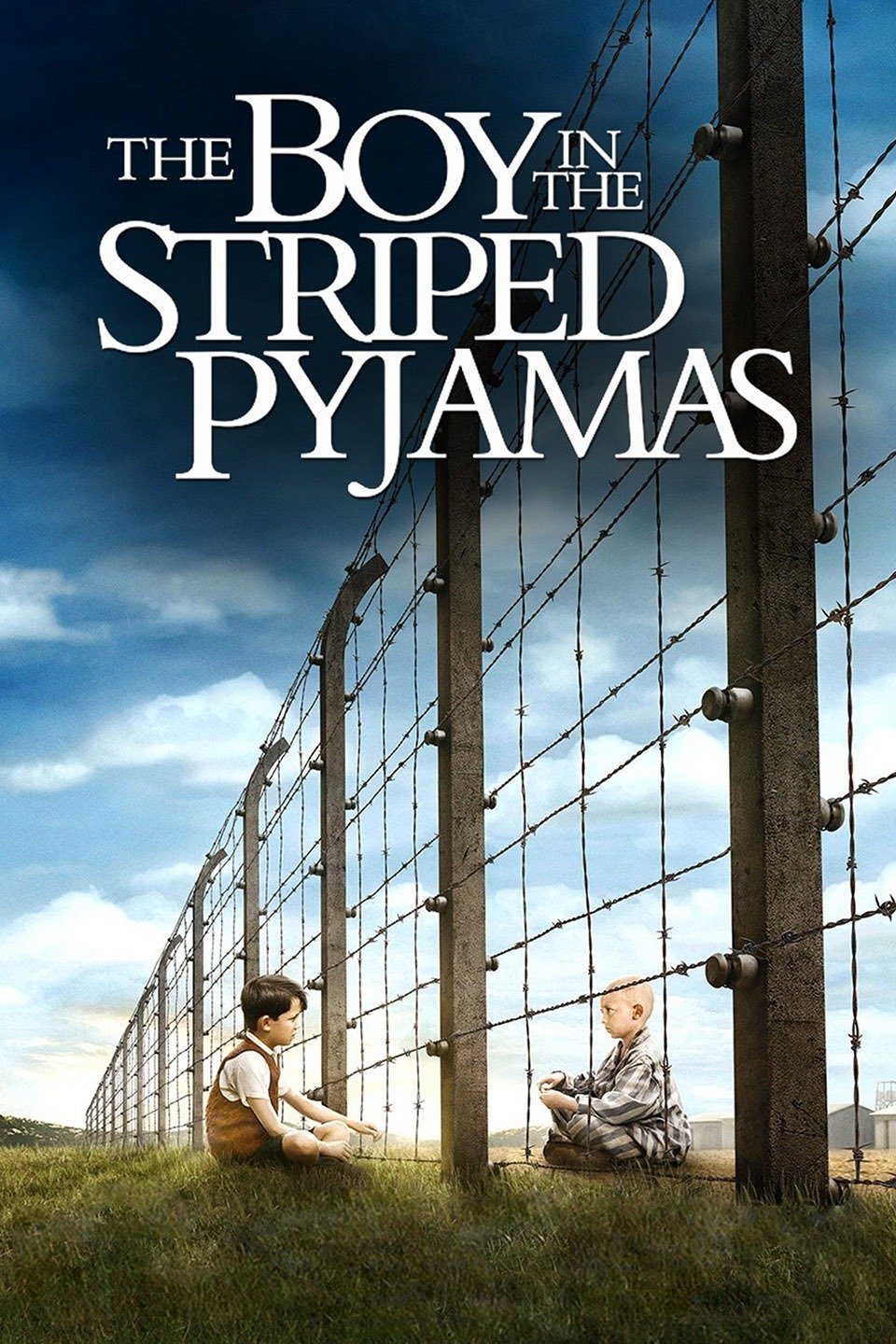
What the Film Is About
Whenever I revisit The Boy in the Striped Pyjamas, I’m struck not by the historical scope of its setting, but by how sharply it distills the experience of innocence colliding with incomprehensible cruelty. To me, the film is less about the machinery of war and more about the small, private heartbreaks that occur when one’s moral boundaries are first tested. Through the eyes of Bruno, an eight-year-old boy uprooted by his father’s military promotion during World War II, I found myself thrust into a liminal space between childhood wonder and the dark, unspoken undercurrents of adult worldviews. The emotional core of the film, for me, is the unlikely friendship that grows between Bruno and Shmuel—a Jewish boy imprisoned on the other side of a barbed-wire fence. It’s a connection born out of innocence but ultimately destroyed by forces neither boy can understand or fight against.
What gives this story its uneasy electricity isn’t the historical detail, but the relentless sense that naiveté cannot survive contact with reality. I see the film as an extended meditation on the loss of innocence—in both a personal and a collective sense. It never lets me forget that innocence itself can be dangerous, especially when it’s preserved at the cost of ignoring others’ suffering. Every moment radiates with a steady sense of dread, as if the film is whispering to me: You cannot look away, even when you wish you could.
Core Themes
What I find especially powerful in The Boy in the Striped Pyjamas is its restless interrogation of innocence, complicity, and moral blindness. The film asks me, again and again: How do ordinary people become complicit in horrific acts—and what, if anything, absolves ignorance? I see the greatest moral tension through Bruno’s inability to grasp the significance of the fence, the uniforms, or even his own father’s job. This innocence isn’t presented as mere childhood naïveté; it’s a kind of willful blindness mirrored throughout the adult world.
For me, another striking theme is the ease with which one’s identity can be weaponized. The fence, which divides Bruno and Shmuel, becomes a literal and figurative barrier—both boys could have easily been on the opposite side, their fates determined by chance, birth, or ideology. The film suggests that humanity’s tendency to draw lines—to separate “us” from “them”—is at the core of history’s darkest chapters. Watching the children attempt to bridge the literal divide with gestures of kinship and shared curiosity, I’m always reminded that cruelty often flourishes where empathy is rationed.
Reflecting on why these themes mattered in 2008, I recall the ongoing discussions around genocide, bullying, and the resurgence of tribalism in politics. The film seemed to arrive at a moment when audiences were hungry for stories that cautioned against apathy and moral compartmentalization. I would argue that its power lingers precisely because it refuses to simply blame Nazis as “others.” It pushes me to confront the moral dangers of silence and inaction, a warning that still stings today.
Symbolism & Motifs
What keeps pulling me back to this film is its careful, persistent use of symbols and recurring motifs, each loaded with real emotional weight. The fence is the most obvious, and one I find endlessly compelling: it is not just a physical barrier, but a symbol of all the arbitrary divisions humanity creates. For the boys, the fence embodies the idea that what separates them are invisible, adult rules rather than inherent differences.
Equally potent is the recurring image of the “striped pyjamas.” On first glance, the uniform appears benign—a childish misinterpretation by Bruno, who imagines the camp as a kind of farm or playground. But the stripes become an emblem of dehumanization, stripping Shmuel and the other prisoners of their identities. Watching this, I feel a quiet horror at how easily outrage is softened through euphemism and mislabeling. When innocence is preserved through misunderstanding, even the most monstrous realities can go unchallenged.
Another motif that stands out to me is the repeated framing of windows and mirrors throughout the house. Windows present distorted or partial views of the camp next door—literally and metaphorically screening the horror from domestic life. It becomes clear that selective vision—the urge to look away or rationalize—is as much a character in the story as any human. Mirrors offer moments of unease, hinting that what’s being reflected inside the house is inseparable from what’s happening outside.
Key Scenes
Key Scene 1
One scene that stays with me long after watching is the moment when Bruno sits in his family’s new home and notices the “farm” outside his window. He is mesmerized by the orderly lines and the distant figures clad in striped uniforms. From my perspective, this is more than a child’s misunderstanding; it’s a foreshadowing of the chasm between perception and reality. In that instant, I’m made painfully aware of how easy it is to remain untouched by suffering if one allows comfort and familiarity to blunt compassion. This scene matters so much because it establishes the film’s abiding anxiety: what happens when empathy is dulled by ignorance, and how might that ignorance be broken?
Key Scene 2
The sequence in which Bruno and Shmuel sit on opposite sides of the fence, sharing stories and food, is where the film’s major themes crystallize for me. Their exchange feels at once tragically simple and endlessly profound. Bruno’s attempts to understand Shmuel’s reality force both boys—and, by extension, me as a viewer—to confront the absurdity and cruelty of hatred born out of arbitrary difference. In these moments, the boys mimic the rituals of friendship, but against the bleakest of circumstances. What this scene reveals isn’t just the resilience of childhood innocence, but also its brittleness: their bond, genuine as it is, cannot ultimately protect them.
Here, the theme of identity becomes unavoidable. I’m struck by how the film frames both boys as essentially interchangeable—culturally, physically, even in their emotional needs—until the fence intercedes. The sequence quietly insists that the boundaries dividing us are learned, not innate. Each time I revisit this conversation, I am reminded that empathy requires more than goodwill; it requires a willingness to recognize shared humanity in the face of pressure to conform or remain silent.
Key Scene 3
The final, devastating scene—where Bruno crawls under the fence to help his friend—remains, for me, the film’s most potent commentary on moral reckoning. It’s a moment suffused with both hope and awful inevitability. As the boys take each other’s hands and disappear into the machinery of the camp, I feel a sense of dread that transcends the specificities of the plot. This is the point where innocence, as a protective shield, finally shatters.
What I find hardest—and most important—to hold onto in this closing act is the way it turns all the film’s prevailing questions back on the viewer. As Bruno’s family realizes, too late, the price of their insulation, I am left considering my own responsibilities: When have I looked away? What fences do I maintain between myself and others’ suffering? The film offers no easy answers, only a haunting invitation to self-examination.
Common Interpretations
I’ve found that the film’s reception remains sharply divided, and this split reveals much about the questions it wants us to ask. Many critics read the film as a searing indictment of willful blindness—the danger that comes from insulating oneself, literally or figuratively, from injustice. For these viewers, the narrative is a parable about the dangers of dehumanization, whether in the context of genocide or the everyday compartmentalization that allows cruelty to flourish.
Others, especially those with a deeper grounding in Holocaust history, have criticized the film’s framing of the story through the eyes of the privileged. They argue that by centering the emotional journey around Bruno, the film risks overshadowing the authentic suffering of Holocaust victims, transforming atrocity into a lesson for bystanders rather than a memorial for those who endured. As someone who has wrestled with these arguments, I understand the discomfort but also see value in how the film mobilizes empathy for audiences who might otherwise disengage.
There’s also a subtler interpretation that I find persuasive: the story isn’t about blaming individuals for their ignorance, but about urging ongoing vigilance. It compels me to remember that evil rarely presents itself as monstrous; it often wears the face of bureaucracy, familial love, or the desire not to make trouble. The film makes clear that moral clarity is not innate but must be fought for, again and again, in every generation.
Films with Similar Themes
- Life Is Beautiful (1997) – This film, like The Boy in the Striped Pyjamas, explores childhood and innocence against the backdrop of the Holocaust, using humor and fantasy as shields against horror. Both films foreground the power—and limits—of imagination as a mode of survival.
- The Pianist (2002) – Here, I recognize shared interrogations of complicity, survival, and what happens when society erects seemingly insurmountable barriers between groups. Both films personalize grand history through individual experience, forcing me to confront the fine line between luck and fate.
- Come and See (1985) – While set in a different region and made with much more visceral filmmaking, this film also unpacks the shattering of innocence under the weight of war. Its child’s-eye view parallels the way The Boy in the Striped Pyjamas locates tragedy not just in death, but in the irreversible transformation of the psyche.
- Au Revoir les Enfants (1987) – Every time I think of this French film, I recognize echoes of the same questions: How do children process betrayal, hatred, and violence when the adult world refuses to offer honest explanations? Both films probe the destruction of youth under totalitarian regimes.
Looking back, what this film communicates to me is uncomfortably direct: that society’s capacity for cruelty is inseparable from the ways we police our empathy and curate our understanding of others’ pain. It confronts me with the truth that silence, denial, or the luxury of ignorance is not morally neutral. Each time I walk away from this film, I am reminded that the divisions we build—whether through ideology, fear, or indifference—are rarely as impermeable as we wish to believe. In asking me to see the world through the unguarded eyes of a child, the film quietly demands that I dismantle the fences in my own mind and bear witness with honesty, humility, and courage.
To explore how this film has been judged over time, consider these additional viewpoints.