
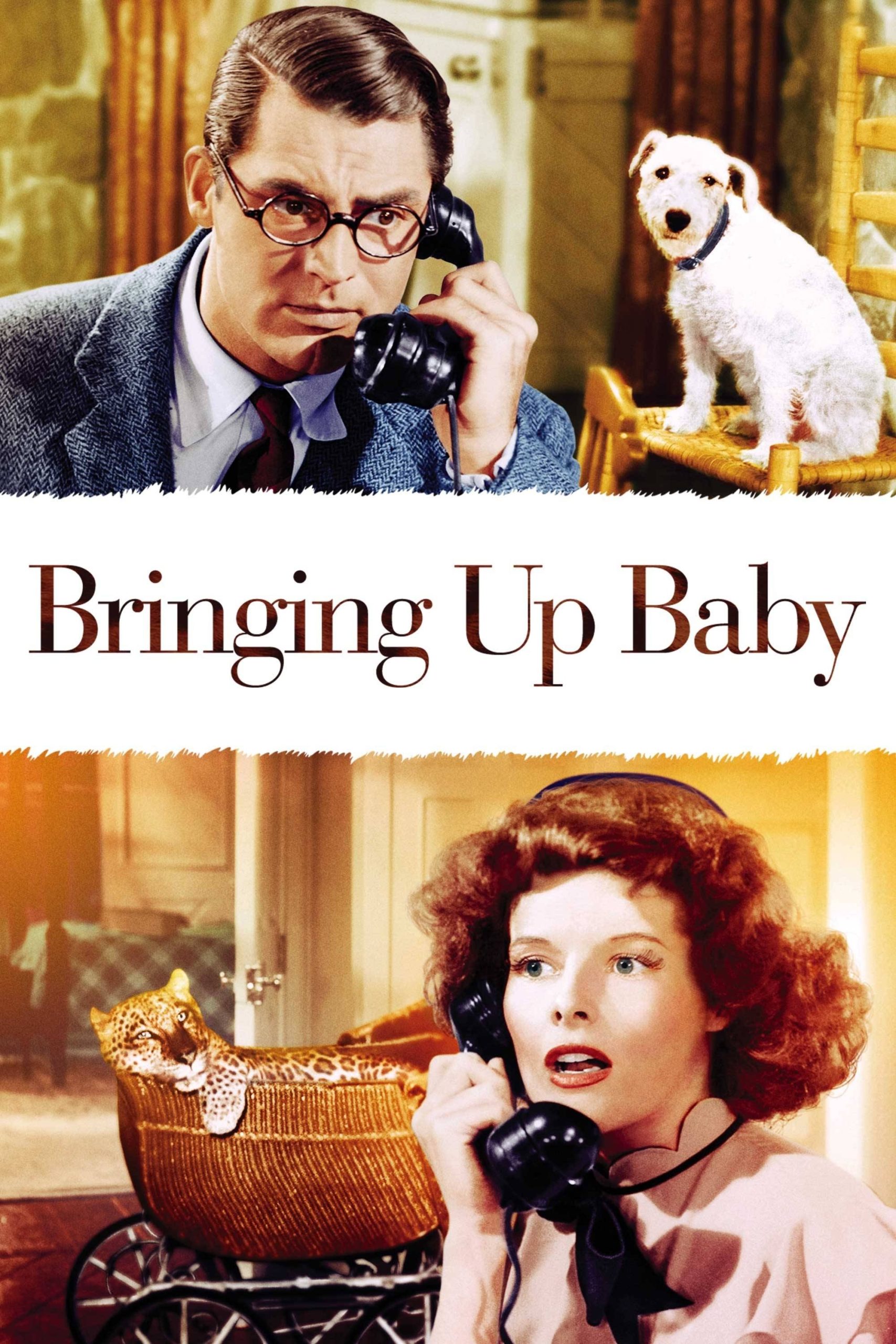
What the Film Is About
Whenever I revisit “Bringing Up Baby,” I’m swept up by the sheer chaos that underpins its surface-level hilarity. The film, on its face, is a zany screwball comedy about a buttoned-up paleontologist and an irrepressibly free-spirited woman tangled together by a leopard, a lost dinosaur bone, and a relentless tide of misunderstandings. But what strikes me even more than its plot is how much of the story is about losing – and maybe finding – control in both love and life. Watching Cary Grant’s Dr. David Huxley, I can feel his frustration and confusion as the world spirals into disorder, while Katharine Hepburn’s Susan Vance embodies the unpredictable forces that upend even the most carefully laid plans. For me, the film’s emotional heart lies in this tug-of-war between rigidity and improvisation, poised between exasperation and exhilaration.
At its core, “Bringing Up Baby” is driven by characters who seem to be constantly negotiating their place in a world that doesn’t always respond to rules or reason. I always feel as though David is not just navigating a madcap romance but enduring an existential plunge into chaos, learning to relinquish the illusion of control. The narrative doesn’t just point toward love as a happily-ever-after; it suggests a deeper reconciliation with life’s disorderly rhythm. Watching their journey, I’m reminded that unpredictability can be not just frightening but liberating.
Core Themes
The more I reflect on “Bringing Up Baby,” the more convinced I am that its comic whirlwind is a brilliantly masked meditation on the tension between chaos and order. I see David as the avatar of logic, routine, and societal expectation – all the trappings of 1930s professionalism and masculine decorum – while Susan embodies the anarchy of emotion, desire, and the feminine wildness that was just beginning to carve space in culture at that time. The battle between these energies doesn’t just drive the farce; it mirrors the social anxieties and transformations of pre-war America. As the Great Depression loosened old certainties and the gender roles of the Jazz Age evolved, such tensions felt immediate and alive.
Another theme that consistently draws me in is the film’s exploration of identity – or rather, the instability of identity. David is constantly being mistaken for someone he isn’t, forced into absurd situations, and bombarded by events that threaten his professional and personal sense of self. Susan, by contrast, adapts with almost magical resilience, morphing and improvising her way through calamity. I see the film questioning the very idea of a stable, unchanging self. Love, in this narrative, is a leap into ambiguity and surrender, not just a romantic ideal. Today, when so many struggle with questions about authenticity, personal freedom, and the unpredictability of life, I find these themes remain strikingly current.
What also stands out to me is how “Bringing Up Baby” subverts traditional gender dynamics and power relations. Susan is the catalyst – the initiator and persistent pursuer – while David is reactive, often hapless, and far from the traditional romantic lead in control of his fate. This reversal felt radical in the 1930s and still feels refreshing. Through its comic lens, the film dares to upend the norms of romance, suggesting that true connection emerges not from mastery, but from mutual surrender and shared vulnerability. Chaos, it seems to say, isn’t the enemy of love – it’s its condition.
Symbolism & Motifs
I can’t think about “Bringing Up Baby” without returning to the recurring motif of the leopard itself. For me, Baby doesn’t just represent an animal MacGuffin or comic obstacle; the leopard is a living emblem of uncontainable wildness. Its constant presence throws the characters out of their comfort zones, confronting them with the untamable and unexpected. David’s efforts to corral the leopard mirror his futile attempts to impose order on his relationship with Susan – and by extension, on life itself.
Another motif that’s always struck me is the missing intercostal clavicle, the crucial dinosaur bone David spends half the film searching for. On one level, it’s classic screwball absurdity. Yet the bone, forever just out of David’s grasp, speaks to me of the yearning for completion and understanding – goals that prove elusive in both science and love. As chaos mounts, David’s fixation on the bone feels less like professional diligence and more like a desperate clinging to something certain in a world turned upside down.
There’s also something wonderfully symbolic in the film’s play with mistaken identities and shifting roles. From David’s unintended cross-dressing to the various misunderstandings that lead authority figures astray, the film constantly unsettles assumptions about propriety and “normal” behavior. I interpret these moments as gentle but pointed critiques of social conventions: if everyone is performing, what is truly real? “Bringing Up Baby” uses comic disarray to expose the fragile fictions underpinning status and identity, inviting viewers to embrace a more playful – and forgiving – perspective.
Key Scenes
Key Scene 1
When I watch the golf course scene, where Susan accidentally absconds with David’s golf ball and his composure begins to unravel, I see it as a microcosm of the film’s message. Everything David values about predictability, order, and social etiquette is under siege. The easy slide from polite conversation to slapstick confusion is, for me, a performance of what it feels like when life breaks through the fences we build. Emotionally, I always sense David’s rising panic but also his hesitant exhilaration – an early invitation to leap outside the boundaries of his old life. To me, this scene isn’t just about comic timing. It’s about opening oneself, however unwillingly, to the possibility that freedom and joy are found in disorder.
Key Scene 2
I am fascinated by the jail cell sequence, where David and Susan (and their growing circle of confused allies) find themselves locked together, misunderstood and unable to communicate with authority. This is chaos at its most concentrated: personal, social, and linguistic. I feel the tension and frustration but also marvel at how, even in captivity, Susan remains playful, improvising her way through confusion. For David, the experience is deeply humbling – and transformative. Here, the film challenges the primacy of rationality and protocol. As I see it, the scene insists that connection only happens when we accept our shared lunacy and allow vulnerability to bind us together. It’s an anarchic vision of community, forged in laughter and confusion.
Key Scene 3
The final scene, as the towering dinosaur skeleton collapses and David’s carefully curated work is reduced to rubble, never ceases to move me. There’s loss and devastation in his eyes, but also unmistakable release. In that moment, I see a visual metaphor for the destruction of old certainties and the birth of something new. The film’s last moments suggest not merely romantic union, but the embrace of life in its messiness. I read this as a radical affirmation: to truly live and love, one must accept chaos, relinquish the need for control, and find joy in the falling apart. This is what lingers with me every time – a philosophy of improvisation and grace.
Common Interpretations
Among critics and film lovers I’ve spoken with or read, there’s a consensus that “Bringing Up Baby” is a masterpiece of screwball comedy that subverts its genre’s conventions. Many see it as an allegory for liberation from societal expectations. I often hear the argument that David represents intellectual and masculine authority, while Susan is the catalyst for personal transformation – sometimes read as the dangerous “femme fatale,” sometimes as the liberating force of spontaneity and emotion. The feminist reading, which has become popular in recent decades, sees Susan’s agency and dominance in the courtship dynamic as pointed social commentary: an assertion that women, too, can drive narrative and upend rigid gender binaries.
Others interpret the film through the lens of existentialist thought, arguing that its relentless chaos and the ultimate collapse of David’s certitudes expose the absurdity of seeking meaning in external order. Instead, meaning must be found (or invented) in the maelstrom of the everyday. A more classically psychoanalytic approach spins the story as a journey of psychological transformation, with Susan acting as a disruptive catalyst forcing David to confront his repressed desires and anxieties. Regardless of the angle, what I find most compelling is how these interpretations all converge on the idea that losing control isn’t a disaster, but the beginning of real change.
Films with Similar Themes
- His Girl Friday – I see a strong thematic kinship here: another rapid-fire comedy in which logic and order are upended by a bold, unconventional woman. The battle of wills exposes both the fragility of social roles and the liberating potential of chaos.
- The Philadelphia Story – For me, this film continues the exploration of disruptive femininity and the transformation of a rigid male protagonist. It’s also about learning humility and embracing imperfection in relationships.
- Some Like It Hot – I’m reminded how mistaken identity and cross-dressing become tools for subverting traditional gender norms. Like “Bringing Up Baby,” it uses comedy to question the fluidity of self and the boundaries of social performance.
- What’s Up, Doc? – Watching this 1972 screwball homage, it’s clear how Barbra Streisand’s wild energy reprises Hepburn’s role, propelling a tightly wound male lead into surrendering to life’s absurd adventures.
Reflecting on all this, I’m left believing that “Bringing Up Baby” is, at its heart, a gleeful endorsement of messiness – personal, social, and romantic. It gently mocks the yearning for order and rationality, reminding me that life’s richest rewards may lie in our willingness to surrender, adapt, and let love upend our best-laid plans. Through shameless zaniness, the film invites me to laugh at my own attempts at control, celebrating instead the creative possibility that emerges when nothing goes according to plan. The world of David and Susan might be absurd, but in its whirlwind, I find a tender kind of truth about human resilience, the unpredictability of connection, and the courage required to embrace the unknown.
To explore how this film has been judged over time, consider these additional viewpoints.