
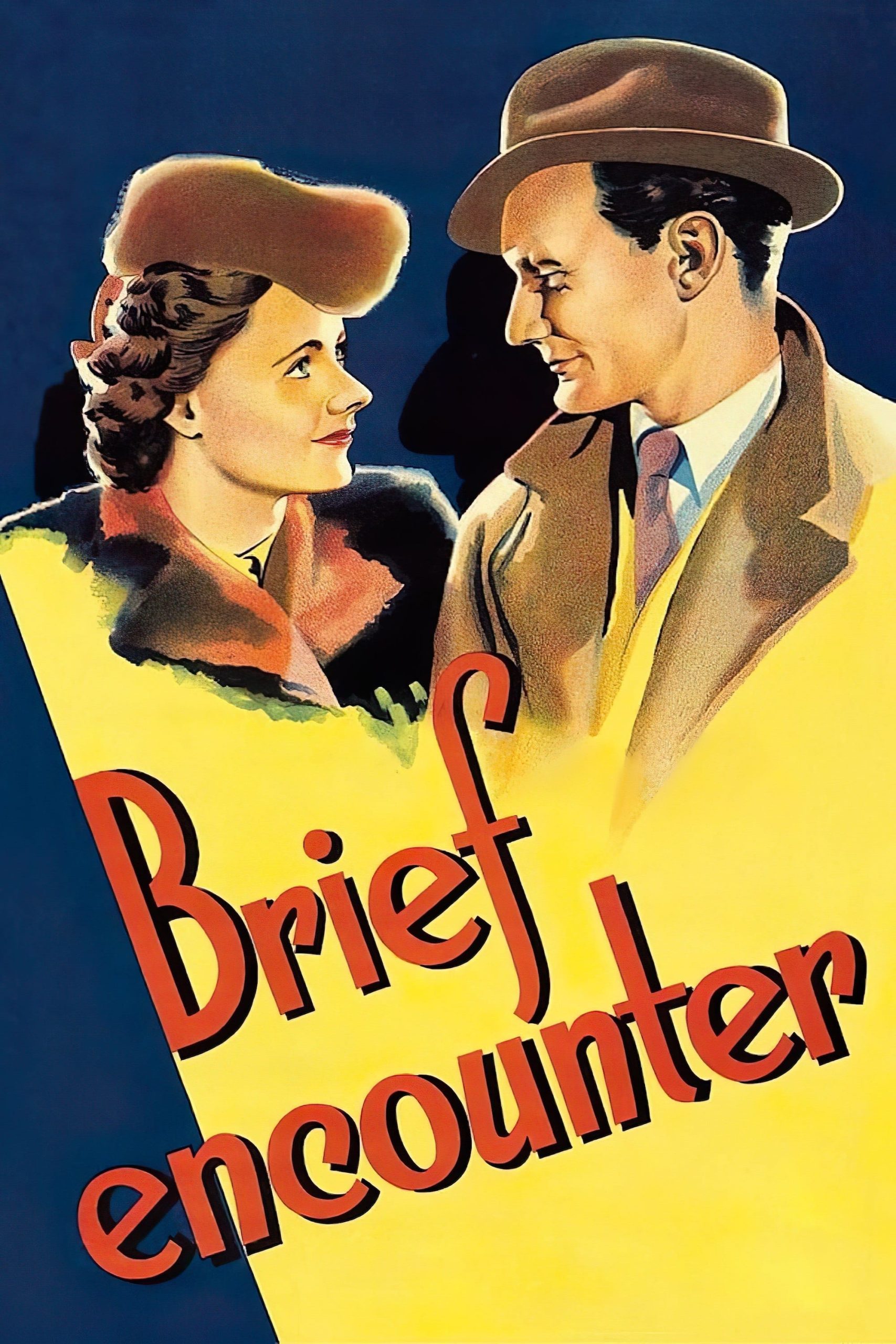
What the Film Is About
“Brief Encounter” has always felt to me like a quietly devastating meditation on the chasms within everyday life—those emotional depths that can exist beneath the surface of the most unremarkable routine. When I watch it, I’m struck by the way it traces the extraordinary surge of feeling that emerges within two otherwise ordinary people, Laura and Alec, who are caught, almost inadvertently, in the gravity of forbidden love. The film doesn’t need spectacle or overt melodrama; it relies instead on an exquisite sense of restraint, drawing me into the aching tension between what the characters desire and what their world will allow. At its core, for me, “Brief Encounter” is about the collision between profound personal longing and sober moral responsibility—two forces that carve and define the soul in quietly monumental ways.
I don’t experience “Brief Encounter” as a romantic film in the traditional sense. Rather, it’s a study in emotional discipline, the pain of unfulfilled yearning, and the dignity of ordinary people facing the limits of their own circumstances. Watching it is to embark on an inward journey, not only with its protagonists but also with one’s own memories of compromise, regret, and fleeting possibility. It’s that emotional interiority—the silent battles and the gentle, almost unbearable honesty—that makes this film linger in my mind long after the credits.
Core Themes
For me, the most arresting theme the film explores is the immense power of suppressed desire. The film’s emotional texture is built on restraint—how it feels to want, yet to deny oneself, for the sake of conscience or social expectation. I find “Brief Encounter” daring not because of any scandal, but because it takes seriously the cost of living decently. That tension between private self and public duty, between personal longing and familial loyalty, is as relevant now as it was during the film’s postwar debut. Even today, so many of us are shaped more by the dreams we do not pursue than those we do.
The film’s exploration of morality is especially poignant. I see in Laura’s struggle not just the portrait of a married woman tempted by love, but a universal meditation on guilt, temptation, and ethical boundaries. Unlike so many modern melodramas, “Brief Encounter” insists that the moral stakes are real and consequential; no easy villain is to be found here. Every time I revisit it, I’m reminded how the film’s postwar setting—when the United Kingdom was trying to regain its social footing after years of trauma—sharpens these issues. There’s an emphasis on rebuilding, on clinging to stability amid chaos, and I feel that’s mirrored in Laura’s ultimate decision to protect her family’s world, even at great personal cost.
Above all, the film interrogates the boundary between fate and choice. Was Laura fated to meet Alec, or is every step toward him an act of conscious rebellion? I’m never sure, and that ambiguity deepens the film’s resonance for me. The emotional realism, the sense that our lives can pivot on moments both unexpected and mundane, holds an appeal I rarely find elsewhere. There’s also an undercurrent of gender and social class, with Laura’s perspective drawing attention to the quiet suffering of women hemmed in by both societal pressure and their own sense of duty.
Symbolism & Motifs
My fascination with the film grows each time I notice how director David Lean deploys symbols and motifs to reinforce Laura’s internal struggle. The train station itself, with its transient crowds and ceaseless departures, becomes a stage for impermanence. To me, the recurring image of passing trains is devastating: each arrival and departure underlines the fleeting nature of the protagonists’ connection, as well as the relentless passage of time that governs all their choices. The platforms aren’t just meeting places; they’re thresholds—spaces between worlds, where daily routine might, for just a moment, give way to the extraordinary.
The motif of the clock and time also weaves through the film like a gentle refrain. I’m always aware of clocks ticking, schedules being met, and appointments dictating every encounter. It’s as if time itself is the true antagonist, enforcing the boundaries within which Laura and Alec must squeeze their brief happiness. This constant reminder of limitation—of the preciousness and precarity of each moment—adds immeasurable weight to their interludes. The clock, for me, becomes a symbol not merely of scheduling, but of their eventual separation, and of the impossibility of ever truly pausing, even for love.
Then there’s the motif of the everyday transformed by emotion. Ordinary locations—cafés, cinemas, bridges—become charged with significance, as if the secret drama within Laura and Alec lends them an aura of beauty and peril. I’m deeply moved by how a modest cup of tea or the roar of a train becomes extraordinary under the gaze of love and longing. Even the soundscape—the recurring strains of Rachmaninoff’s Second Piano Concerto—creates a swelling, almost overwhelming sense of suppressed emotion. In my view, the music is another character, giving voice to the feelings that cannot be uttered.
Key Scenes
Key Scene 1
There’s a particular early moment in the film that always strikes me as essential: when Laura and Alec share tea in the railway café after their first meaningful encounter. The lightness of their small talk stands in such sharp contrast to the tremor of feeling just beneath the surface. This scene, I believe, is the fulcrum upon which everything that follows balances—an unremarkable conversation imbued with the weight of possibility. It encapsulates how the most seismic emotional shifts begin in trivial gestures. Watching the flicker of joy and embarrassment in Laura’s eyes, I feel the universal longing for connection, and the quiet thrill of feeling seen, perhaps for the first time in years. For me, this moment is about the unpredictability of intimacy blooming in the most routine circumstances, and the sweetness, as well as the danger, of new beginnings.
Key Scene 2
Later in the film, there’s an instance when Laura must abruptly leave Alec because her train is about to depart. As she rushes away—flustered, distraught—the routine sound of the train suddenly acquires explosive emotional power. In this fleeting scene, I’m reminded how tightly woven the film’s themes are: the relentless logic of schedules and obligations, the ironclad grip of normality pushing back against desire. This is where the boundaries of their relationship come into sharpest focus. For me, it’s not just a matter of two people being thwarted by circumstance; it’s a meditation on how external forces—whether societal or mechanical—will always intrude. The pain in Laura’s expression is the pain of a thousand silenced desires, and in that moment, I understand the broader social critique at the film’s heart.
Key Scene 3
Near the film’s conclusion, Laura returns to her home and breaks down in her husband’s presence. For all the subtlety with which Lean orchestrates emotion, this is the scene that most shatters me. Her husband’s quiet understanding, his offer of tea and normalcy, isn’t a grand statement—yet in my view it’s more radical in its compassion than any eruption of anger or jealousy. This scene always feels to me like the film’s thesis: that the most meaningful acts of love are not those marked by passion, but by forgiveness, endurance, and a willingness to bear silent burdens together. In Laura’s silent tears and her husband’s gentle support, I see an affirmation of the difficult, often uncelebrated work of sustaining an ordinary life. The film seems to suggest that fidelity and kindness carry their own quiet heroism, even as they demand sacrifice.
Common Interpretations
In my experience discussing “Brief Encounter” with friends and fellow critics, several threads of interpretation appear consistently. Most viewers, I’ve found, treat it as an elegy to unconsummated love—both a celebration of its intensity and an acknowledgment of its limits. Many highlight the film’s moral seriousness, observing that its power lies in what does not happen: the choice to remain faithful despite overwhelming temptation. There’s a strong current of interpretation that sees the film as a commentary on the repression characteristic of British society in the 1940s, with railway timetables, polite manners, and reserved exteriors serving as metaphors for internalized emotional discipline.
Others, including myself at times, read the film more subversively—as a critique of the stultifying effect of societal expectations, particularly on women. From this perspective, Laura’s distress is not merely personal but structural, the result of being boxed in by roles that deny the full expression of feeling and agency. Some critics even argue that the film extends sympathy not just for Laura’s struggle, but for anyone marginalized by invisible codes of propriety and respectability.
And yet, I also encounter interpretations—usually among viewers who see Alec and Laura as tragic but noble—that celebrate the enduring value of commitment, of sacrificing personal happiness for greater responsibilities. This tension, between seeing the film as a lament for lost possibility or as a vindication of endurance, seems irresolvable to me, and that’s precisely why I return to “Brief Encounter”: it allows for both tenderness and critique, yearning and acceptance, in equal measure.
Films with Similar Themes
- In the Mood for Love (2000) – Wong Kar-wai’s modern classic resonates deeply with me as it crafts a similarly aching drama out of restraint, unspoken attraction, and the melancholy beauty of opportunities lost. Like “Brief Encounter,” it explores how social mores and personal histories inhibit the consummation of desire, elevating small gestures into seismic emotional events.
- The Remains of the Day (1993) – Watching this film, I’m reminded of “Brief Encounter’s” meditation on duty versus feeling. Here too, the protagonists are utterly defined by what they withhold, suggesting that life’s richness is often found in missed chances and the pain of living according to principle.
- Lost in Translation (2003) – This modern drama, set in a distant city, captures the transient intensity of a brief emotional connection, exploring how two strangers find solace in fleeting intimacy. Like Lean’s film, it lingers over what remains unspoken and unresolved.
- The Go-Between (1971) – I connect this film to “Brief Encounter” through its examination of class, societal boundaries, and forbidden love. The sense of inevitable, almost mechanical, disappointment feels spiritually kin, as does the motif of memory coloring every present moment.
In reflecting on “Brief Encounter,” what I’m left with is a profound sense of how the textures of daily life can conceal—and sometimes briefly reveal—a vast undercurrent of longing, uncertainty, and courage. For me, the film is ultimately about the beauty and sorrow of emotional integrity: the ongoing negotiation between self-denial and self-knowledge, between chaos and order. It honors not only the ache of missed opportunities, but also the quiet heroism of those who choose, day after day, to remain loyal—not just to others, but to the values that give life dignity. When I think of its historical moment, alongside the personal struggles it depicts, I’m moved mostly by the idea that ordinary people, facing the ordinary constraints of their time, can nonetheless live out extraordinary emotional lives.
After learning the historical background, you may also want to explore how this film was received and remembered.