
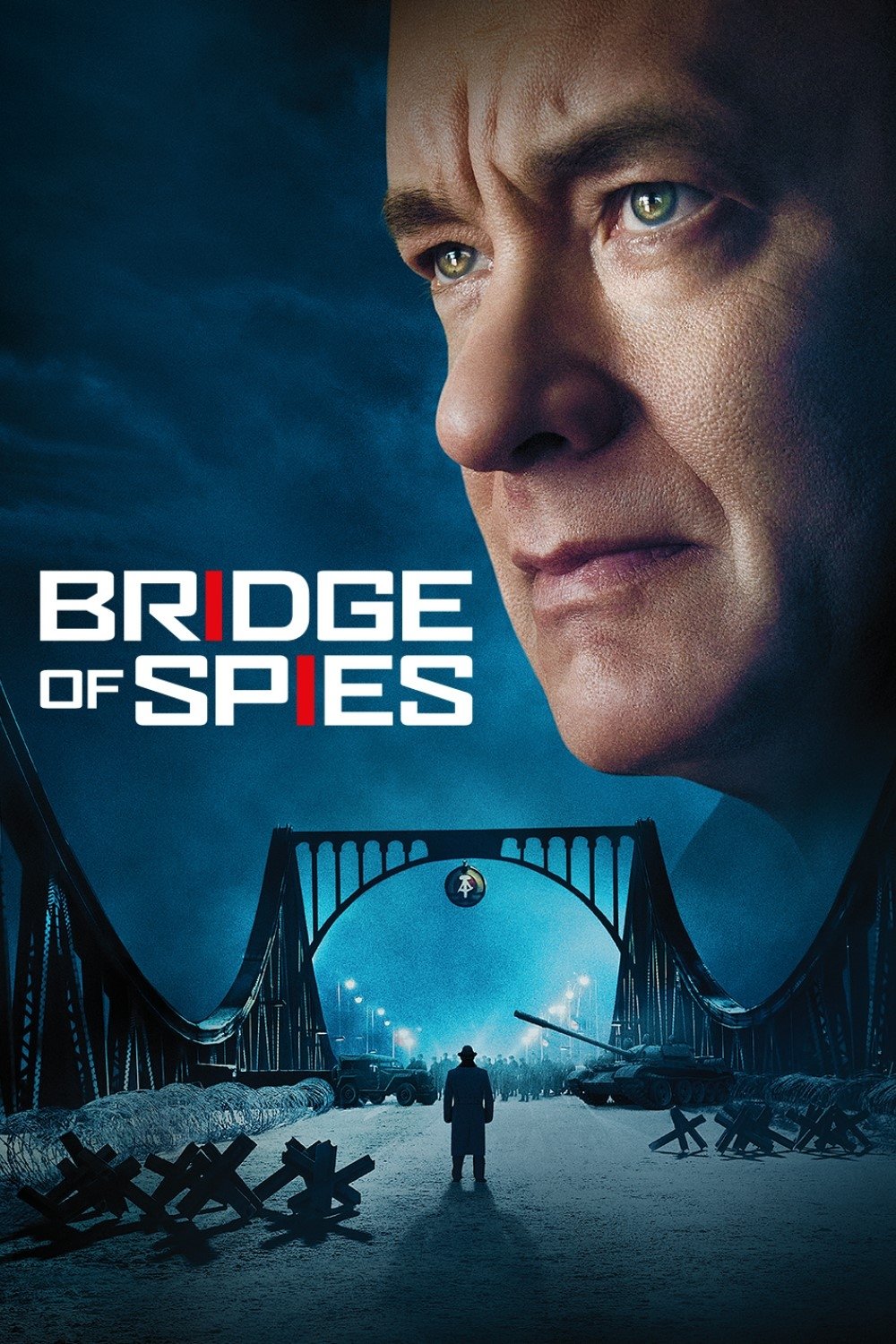
What the Film Is About
The first time I watched “Bridge of Spies,” I found myself struck not just by its unfolding Cold War narrative, but by the quiet conviction that seemed to undergird every interaction. For me, the film’s emotional center is less about espionage and courtroom drama than about one man’s almost stubborn insistence on decency and integrity in a world grown cynical. James Donovan’s journey, as I saw it, is that of a moral everyman forced to balance loyalty to country with loyalty to moral principle, and, more personally, to his own conscience.
On a broader level, to my eye, “Bridge of Spies” is a story about the emotional cost of living by one’s values in an era ruled by suspicion and fear. The tension doesn’t just come from opposing governments or ideologies—it pulses through every human transaction, testing boundaries between distrust and trust, public duty and private conviction. That, to me, is the real battleground of the film: not only the divided Berlin, but the inner conflict we each face when the world demands compromise.
Core Themes
I find “Bridge of Spies” most compelling when I reflect on its nuanced dissection of morality and responsibility. The question that kept circling my mind as I absorbed its deliberate pace was: What does it mean to do the “right thing” when the world seems to reward expedience over ethics? Spielberg, through Donovan, seems to challenge us to consider whether standing up for a principle—in this case, the humane treatment of an accused enemy—still matters when everyone else is more interested in results.
This theme of moral clarity grabbed me because it felt so countercultural, especially in our post-9/11 landscape where national security debates often override individual rights. Watching Donovan insist that Rudolf Abel, the captured Soviet spy, deserves a genuine legal defense reminded me how fragile justice can be—how dependent it is on individuals willing to bear the weight of unpopularity. And though the film is set in the 1960s, I couldn’t shake the feeling that its questions were meant for today: Where is the line between duty to state and duty to humanity? When does patriotism become a shield for denying others their dignity?
Trust and empathy are equally vital in the movie’s DNA, as I experienced it. The slow, almost grudging friendship between Donovan and Abel unfolds as a small, defiant act against a climate built on suspicion. I was fascinated by how the film emphasized the human dimensions of people commonly defined by their sides—the small acts of grace that exist even in the heart of rivalry. To me, “Bridge of Spies” ultimately asks if it’s possible to maintain our humanity without surrendering our ideals, and whether those ideals truly mean anything if we abandon them when they’re hardest to uphold.
When I consider why these themes resonate, both in 2015 and now, I think about how easily the machinery of fear—whether under the banner of the Cold War or current anxieties—turns real people into abstractions, mere pawns. Spielberg’s insistence on the importance of the individual’s ethical stance, especially against institutional or cultural pressure, has never felt more urgent. That maybe, even in divided times, decency and compassion can create their own kind of bridge.
Symbolism & Motifs
No matter how many times I revisit “Bridge of Spies,” I’m always drawn to its recurring imagery of barriers—walls literal and metaphorical, bridges looming in shadow, and windows that both separate and connect. The Berlin Wall isn’t just a historical backdrop, in my reading—it’s the physical manifestation of the divisions Spielberg wants us to notice: not only between East and West, but within hearts, families, and institutions. Every time the camera lingers on that stark, newly erected wall, I’m reminded of how conflict calcifies difference and isolates not just nations, but neighbors.
But perhaps it’s the bridge itself, the Glienicke Bridge—used for the famous exchange—that’s most loaded with meaning for me. It’s not just a location, but a mediator. In the foggy blue dawn, it feels like the only piece of common ground left between two worldviews locked in paranoia. The decision to place such a consequential human drama on such a drab, utilitarian structure seems central to the film’s message: that peace is built in shabby, vulnerable, and sometimes uncomfortable spaces, bridging worlds that mistrust one another.
One motif I keep returning to is the image of exchange. Characters are passed between hands, secrets move quietly through tense negotiations, and ideas of value—who or what is worth saving—are constantly bartered. This motif of exchange reminded me how easily human worth can be reduced to leverage in larger political games, and how quietly radical Donovan’s stubborn empathy becomes under those circumstances.
Another touchstone is the repeated use of water—rain slicked streets, the icy river beneath the bridge, a house shrouded in cold. Water, as I see it, echoes both division and reflection—sometimes acting as a boundary, sometimes suggesting the potential for clarity and truth beneath old surfaces. In a film where so much hinges on what can and cannot be revealed, I sense that these elements never appear by accident, but function as subtle reminders of the uncertainty and fluidity beneath supposedly fixed alliances.
Key Scenes
Key Scene 1
One sequence that has always stuck with me is the quiet, almost mundane exchange between Donovan and his client Abel in the holding cell. This isn’t a grand set piece—it’s intimate, deliberate, suffused with a tension that has little to do with weapons or secrets. For me, this is where the film’s values crystallize: when Donovan reassures Abel that he will defend him “as if you were my own brother.” It’s not just legal advocacy on display, but a rare, deliberate act of empathy. I felt that the entire film pivots on this moment: a reminder that even in a world of coded messages and double agents, the greatest subversion is sometimes simply treating another person with dignity.
Key Scene 2
Later in the film, the negotiation in East Berlin is, in my opinion, a stunning microcosm of the larger themes. As Donovan moves between bureaucrats and shadowy operatives, parsing trade-offs and legalese, I found my own loyalties constantly shifting. This isn’t just theater—it’s where the abstract ethics of principle run headlong into the practicalities of survival. In this claustrophobic setting, every facial expression, every measured word, seems to speak to the impossibility of clear-cut solutions. For me, this scene exposes the cost of compromise, and the film’s acknowledgment that idealism and realism are often in unavoidable tension. It’s not a world of heroes and villains, but of flawed people struggling to do what’s necessary without losing all sense of self.
Key Scene 3
The final crossing of the Glienicke Bridge—Donovan watching the simultaneous exchange unfold—struck me not just as the climax of the story, but as an almost metaphysical moment. The image of men walking toward their own lives, each uncertain what awaits on the other side, haunts me. It’s here, as I see it, that the ultimate stakes of the story come into focus: have these acts of negotiation, conducted against so many odds and at such personal cost, ultimately restored a measure of humanity to an inhumane conflict? Donovan’s lonely walk back into the fog suggests there are no simple victories—just the hope that, in standing by principle, something larger has been preserved. For me, it’s both an ending and a lingering question.
Common Interpretations
Talking to fellow cinephiles and reading critical essays over the years, I’ve noticed several prevailing takes on “Bridge of Spies.” Many viewers, like me, are drawn to its portrayal of individual conscience versus institutional inertia—that Donovan’s ethical stand operates as a call to personal responsibility. Critics often see him as a democratic idealist, a sort of postwar Atticus Finch, stubbornly believing in the rule of law even when it’s unpopular.
Others focus on the film’s skepticism toward the idea of pure good and evil. I’ve heard compelling arguments that the film avoids flattening the Soviets into faceless adversaries—Abel, especially, is depicted with a kind of quiet heroism of his own. This reading points to Spielberg’s interest in reciprocity and dignity, even for the supposed “other.” In conversations, I’ve found that this humanization of the enemy is both what endears the film to some, and what troubles those who want sharper lines.
There is, naturally, disagreement. Some critics interpret the film as a paean to American exceptionalism—the belief that the country’s legal and moral principles are unique and must be upheld, no matter the cost. While I understand this reading, I’ve always gravitated more toward the sense that “Bridge of Spies” is about the cost of those principles, and the discomfort of defending them when everyone else looks away. For some, this is a film about systems; for others, about individuals. To me, it’s about the uneasy—but necessary—space between the two.
Films with Similar Themes
- “To Kill a Mockingbird” (1962) – This classic’s unwavering commitment to legal fairness and empathy for the outsider echoes the moral core I find in “Bridge of Spies.” Both stories feature principled men who stand up for unpopular truths, reminding us of the personal costs of doing what’s right in hostile times.
- “Argo” (2012) – I often think of “Argo” when I watch “Bridge of Spies,” as both films thrust ordinary professionals into the chaos of international crisis. They each explore how individuals, against enormous political pressures, can make difference through grit, negotiation, and quiet bravery.
- “The Lives of Others” (2006) – This German film is, for me, a masterwork about the possibility of empathy in a surveillance state. Like “Bridge of Spies,” it probes the humanity beneath ideology, finding dignity and connection in unlikely places.
- “Lincoln” (2012) – Spielberg’s earlier work shares a deep interest with “Bridge of Spies” in the tension between idealism and realpolitik. Both films explore how imperfect, often compromised politics demand immense personal sacrifice from those determined to shift society in a more just direction.
Looking back, I see “Bridge of Spies” as a study in the power—and fragility—of individual conscience during times of mass anxiety. The film doesn’t offer comforting answers; if anything, it challenges us to sit in the friction between our ideals and the stark realities of the world. To me, it’s ultimately a film about the value of decency, the rigors of fairness, and the bridges—so easily burned, so painstakingly built—between people who might otherwise remain strangers. Even in a moment defined by division, it dares us to imagine the transformative potential of one person’s faith in justice.
To explore how this film has been judged over time, consider these additional viewpoints.