
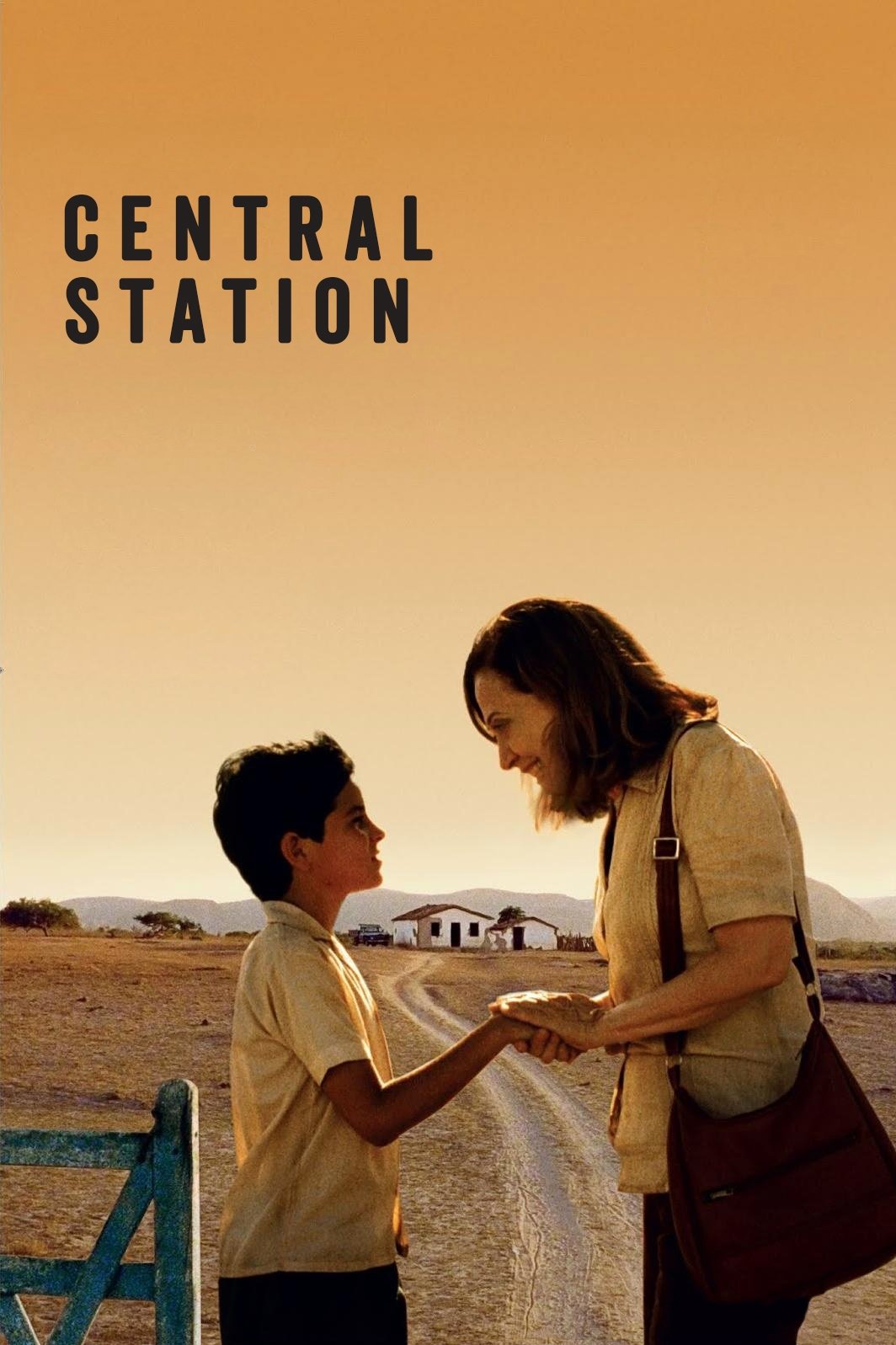
What the Film Is About
There are few films that have left me as stirred and contemplative as Central Station. When I first encountered it, I immediately felt swept into an emotional current that was more about longing, loneliness, and the subtle sparks of hope that flicker between strangers than any single plot point. The heart of the film rests on a cross-generational bond forged out of loss and necessity—the chance collision between Dora, a hardened retired schoolteacher who writes letters for illiterate people in Rio de Janeiro’s bustling train station, and Josué, a recently orphaned boy searching for the father he has never met. What struck me was how their journey quickly becomes less about the physical distance traveled and more about traversing the interior landscapes of regret, forgiveness, and unexpected love.
I experienced the narrative as a gradual peeling away of defenses: the emotional armor Dora wears, and the childlike hope Josué clings to. Their travels through Brazil’s vast terrain were, to me, a mirror for their own internal transformations—reluctant connection becoming mutual reliance. The story doesn’t unfold as a traditional road movie or sentimental melodrama. Rather, it feels like a meditation on the ways we patch each other’s wounds, intentionally or not, simply by showing up.
Core Themes
For me, Central Station is ultimately a film about human connection in a fractured world. The recurring motif of letters—pleas for reconciliation, confessions, apologies—felt especially poignant as symbols of yearning, of communication sought but not always delivered. I was continually reminded of how the film interrogates the consequences of disconnection: not just between Dora and Josué, but between urban and rural, young and old, faith and cynicism. The collapse of family structures and the erosion of trust, both personal and societal, shaped my reading of the story as an elegy for lost intimacies and missed chances.
The theme of redemption felt equally central. I saw Dora as a woman haunted by her own failings, a person who has retreated from vulnerability until she is forced to choose whether to risk opening her heart again. Her relationship with Josué becomes an unlikely path to absolution—not through grand gestures, but through daily acts of care, patience, and sacrifice. I was struck by how the film never glamorizes redemption: it makes it messy, ambivalent, and incomplete, just as it is in real life.
I also found myself contemplating the film’s exploration of poverty and marginalization. Central Station paints a Brazil scarred by inequity, where resilience is vital but often overlooked. Yet, it never renders its characters as mere victims. Instead, I felt the film’s compassion in every small gesture—moments when strangers extend kindness, or when brief encounters leave indelible marks. At the time of the film’s release in 1998, confluences of economic crisis and ongoing social upheaval made these explorations especially urgent, and two decades later, the questions it raises about compassion, agency, and our responsibility to the vulnerable feel just as urgent.
Symbolism & Motifs
What lingered with me most from Central Station were the layered symbols and motifs woven throughout its story. The station itself, for instance, is more than a backdrop—it becomes a character in its own right. Central Station represents transition, uncertainty, and anonymity. To my eyes, it’s a place where thousands pass without connecting, where stories are begun and abandoned. Dora’s job as a letter writer sets her apart as a fragile link between those desperate to reach each other and the outside world—a living emblem of communication, yet one who often chooses silence over intervention.
Letters carry profound weight in this world. I saw each undelivered or discarded letter as a silent witness to regret and broken promises. This recurring symbol accentuates the heartbreak of missed connections, the gulf between intention and action. When Dora first refuses to mail some of the letters entrusted to her, her choice struck me as an assertion of control, but one tinged with futility—the very medium she handles daily, she cannot bring herself to use for her own healing.
The motif of travel pervades the film. Every bus, dusty road, and rural hamlet is freighted with meaning: not merely distance covered, but the possibility of transformation. To me, the landscapes outside the windows—sometimes harsh, sometimes achingly beautiful—capture the emotional states of the characters far more eloquently than words ever could. At times, the endlessness of the journey feels oppressive; at others, it opens a sliver of hope for escape or redemption.
Religious imagery, though understated, gives the narrative an added spiritual texture. I found that churches and religious processions act as markers of faith—both sustaining and, at times, disappointing. Dora’s spiritual ambivalence reflects a wider crisis of belief, not just in God but in the promise of mutual aid and human decency. For me, these motifs gently invite questions about what—if anything—redeems our losses and makes suffering bearable.
Key Scenes
Key Scene 1
One moment that I always return to is the early scene where Dora agrees to take Josué home “just for one night.” The exchange is brusque, matter-of-fact, yet beneath their awkward choreography, I sensed the gravity of an unspoken decision—two lives, linked not by affection, but by shared desperation. This scene is crucial for me, because it marks the fracture point in both characters’ emotional isolation. It’s not about grand declarations, but rather about the small risk they each take in stepping outside the limits of self-preservation. Dora’s grim pragmatism collides with her flickering conscience, and Josué’s stubborn trust—risky, even irrational—holds a mirror to all the times we stake everything on a stranger’s kindness.
Key Scene 2
Much later, the moment when Dora and Josué separate during their journey carries deep thematic resonance for me. It’s a test of everything they have built together—their reluctant attachment, their fragile hope. As they part, the ache of abandonment resurfaces for Josué, and I remember feeling how this echoes the broader theme: connection cannot protect us from pain, but it can change the way we suffer. This scene challenges the film’s earlier promises, suggesting that love cannot always repair the past or guarantee safety—yet it also suggests that the act of caring, no matter how fleeting, leaves an enduring mark. For Dora, this parting is a reckoning with her own capacity for affection and, by extension, with her ability to be transformed by someone else’s need.
Key Scene 3
The film’s final scenes, set in the interior of Brazil as Dora and Josué face the reality of their journey’s end, left a deep impression on me. There is no false optimism here. Instead, I witnessed a culmination of the film’s hard-earned wisdom: sometimes, the relationship formed along the road matters more than the destination itself. The act of saying goodbye is marked by gratitude and pain; it is both an ending and, paradoxically, a beginning, because both characters are changed—if not fully healed—by what has passed between them. For me, this is the film’s ultimate statement: that in a fractured, unpredictable world, what we share with others can be the only real solace we find, even if it is inevitably tinged with loss.
Common Interpretations
When I talk with others who admire Central Station, I’m struck by the plurality of readings the film encourages. Many see it first and foremost as a journey toward redemption, focusing on Dora’s transformation from guarded cynic to someone capable of selfless love. I recognize this reading—it’s clear that the film’s narrative arc is as much about the possibility of forgiveness, both given and received, as it is about the physical act of searching for Josué’s father.
Others interpret the film as a meditation on Brazilian identity and the chasms between urban and rural life. I share some of this perspective, noticing the way the film critiques social divisions and makes visible the grinding reality of poverty without resorting to easy sentimentality. There is also a quieter, more existential interpretation that resonates with me: the idea that Central Station is about the randomness of human encounters and the unpredictable ways in which our lives are shaped by those we never expected to meet.
Still, there are those who emphasize its religious undertones—the motifs of pilgrimage, confession, and grace. I find this reading persuasive, though I see the film’s spirituality as more of a question than an answer. Faith, in this world, is not so much a cure as a companion to doubt and loss. The film’s refusal to resolve these tensions cleanly is what keeps me returning, year after year, to revisit its quiet, persistent ache.
Films with Similar Themes
- The Road (2009) – I see a thematic kinship in its depiction of two wanderers journeying through a hostile landscape, bound by necessity but transformed by the fragile emergence of trust, and the question of what, if anything, can be saved in a broken world.
- Lilya 4-ever (2002) – This film’s exploration of abandonment, exploitation, and a longing for connection echoes much of what I experience in Central Station, with both films inviting us to witness the cruel edges and small mercies that define marginalized lives.
- The Straight Story (1999) – I found striking similarities in how a simple road journey becomes an odyssey of reconciliation and forgiveness, where the geography traveled is also the geography of the self, mapped through stubbornness and grace in fleeting relationships.
- Kolya (1996) – Like Central Station, this film paints an unlikely guardianship, where indifference blossoms—against all odds—into real care. Both films use the motif of surrogate families to interrogate what it means to belong to someone else, even briefly.
For me, the lasting power of Central Station lies in its quiet assertion that no one is beyond redemption, and that the chance for connection exists even at the margins of despair. In mapping Dora and Josué’s winding route across Brazil, I found not just a portrait of a nation riven by inequality, but a parable for our own restless search for forgiveness, grace, and belonging. The film refuses easy consolation. Instead, it challenges me to believe that the effort to reach across the barriers of age, class, and disappointment—however imperfectly—is itself an act of defiance against the loneliness that would otherwise define us.
After learning the historical background, you may also want to explore how this film was received and remembered.