
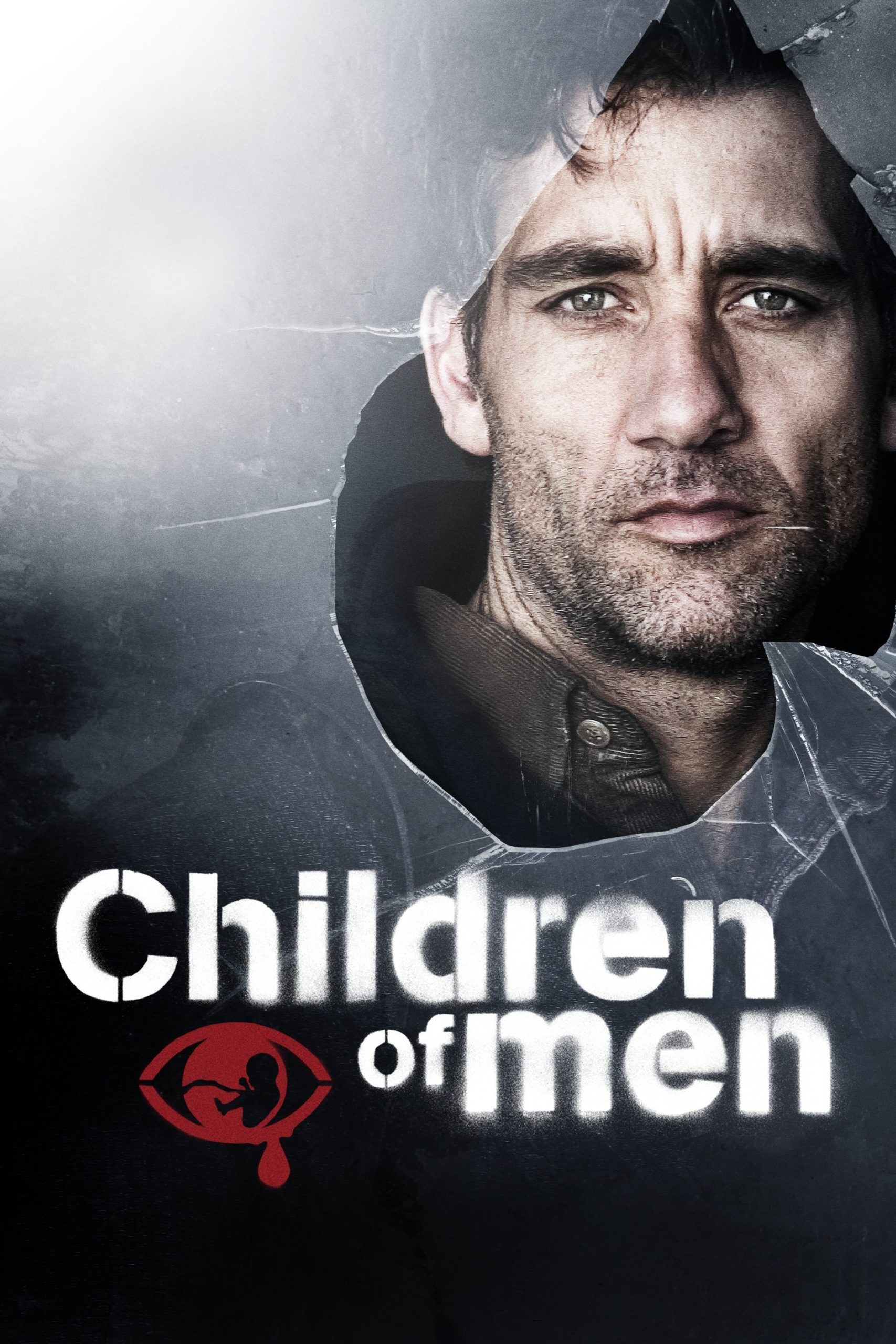
What the Film Is About
Watching “Children of Men” for the first time was a jolt to my sense of hope and despair in equal measure. I found myself pulled into a future that felt frighteningly plausible yet grounded in deeply familiar emotions: loss, longing, and the faintest pinprick of hope. The film’s journey is less about heroes saving the world and more about ordinary people clinging to humanity in a landscape stripped of certainty. For me, the core of the film lives in its exploration of how people respond when the very concept of a future—both literal and existential—is slipping away.
There’s a relentless tension throughout, as every character is marked by trauma or resignation. I was moved by how the central conflict is less a battle against a tangible villain and more an agonizing quest to shepherd possibility, embodied by a single pregnancy, through a society collapsing under fear and cynicism. Emotionally, I never felt detached, because the story is told through weary eyes—inviting me to map my own doubts or hopes onto this near-apocalyptic journey. It’s not about saving the entire world, but rescuing the possibility that a world might still be worth saving.
Core Themes
What resonates most deeply with me in “Children of Men” is how it refuses to offer easy answers. The film grapples with questions of survival, faith, and the responsibility we bear toward one another in desperate times. At its core, I see a meditation on the collapse of social trust—how fear and power fill the vacuum when hope is gone. Watching this world without children, I felt the loss not just of life but of meaning itself. Legacy, continuity, and imagination—all are called into question when the future is no longer guaranteed. The emotional weight comes from not knowing whether the characters’ choices have lasting significance; yet, the struggle itself feels meaningful.
For me, the film’s focus on immigration and exclusion struck a powerful contemporary chord, especially in light of real-world debates about borders, refugees, and who gets to belong. Released in the immediate post-9/11 era, its depiction of a militarized, paranoid Britain carried real urgency, and these concerns still echo today as societies wrestle with questions of identity and empathy. I’m constantly reminded, watching its exhausted characters and brutal environments, of the difficulty and necessity of maintaining compassion when fear is the dominant force. The tension between individual action and collective paralysis is ever-present, forcing me to wonder: Do small, fragile acts of decency count for anything in a world bereft of hope?
I also see the film wrestling with faith—not in any neatly religious sense, but in a broader confrontation with the unknown. The emergence of new life becomes a site of struggle, belief, and doubt. The characters’ willingness to sacrifice or trust appears all the more vital because certainty is out of reach. In this way, the film ultimately asks me what it means to persist: not because I know I will succeed, but because I must try anyway.
Symbolism & Motifs
Symbolism is everything in “Children of Men.” I can’t think of another science fiction film so obsessed with the emptiness of waiting rooms, abandoned classrooms, or advertising that falls on ears no longer hopeful. These visual motifs hit me as I follow the camera’s nervous drift through shattered spaces—reminders of lives interrupted and a society in perpetual mourning. The repeated images of cages, fences, and checkpoints stand out to me as a visual language of exclusion, communicating just how deeply isolation has been internalized. The world is physically and emotionally walled off, and I get the sense that every boundary is both literal and psychological. I find the frequent presence of animals without offspring—dogs, cats—especially haunting: they reinforce the pervasiveness of loss but also hint at companionship and fragility.
The motif of the “miraculous” child is handled with restraint; it never becomes saccharine. Instead, the child is continually referenced but not mythologized. I think this choice is crucial, preventing easy allegory and forcing me to locate meaning in the act of protection and nurture, rather than in any guarantee of salvation. Even sound has symbolic weight: those rare moments of silence, broken by the echo of distant gunfire, seem to invite me to contemplate what’s really at stake. The recurring use of biblical and artistic imagery—especially subtle nods to nativity scenes or works like Picasso’s “Guernica”—constantly reminds me that the struggle for humanity is both ancient and painfully current.
I’ve come to view vehicles in the film, whether clattering trains or battered cars, as both vessels of hope and reminders of transience. They carry the characters from one uncertain refuge to another, mirroring the instability of the larger world. The act of movement—fleeing, hiding, ferrying life from danger—takes on spiritual significance. I see it as reinforcing the idea that survival isn’t static; it demands action, improvisation, sometimes sacrifice.
Key Scenes
Key Scene 1
If there’s a moment that crystallizes the emotional register of the film for me, it’s the reveal of Kee’s pregnancy. The way the camera lingers—not to romanticize, but to witness the reality of new life in a decaying world—feels like a collective exhale. This scene isn’t just about hope, but about the vulnerability that comes with hope. The reactions of those who see the pregnant woman for the first time—equal parts awe and disbelief—are incredibly raw. I felt my own cynicism flicker in the presence of something so ordinary made miraculous by context. The moment challenges the ingrained assumption that nothing can change after such loss, forcing both characters and viewers out of resignation.
Key Scene 2
The harrowing single-take sequence through a war-torn refugee camp still leaves me breathless whenever I revisit it. What stands out is not just the technical mastery of the shot, but the moral chaos it encapsulates. As I follow Theo through explosions, despair, and desperation, the boundaries between right and wrong, enemy and ally, blur to the point of erasure. This relentless immersion reflects the film’s thesis: in crisis, the structures that kept society together fracture, revealing how fragile civility and empathy can be. In those long, unbroken moments, I can’t look away. The film’s worldview—that the line between helplessness and agency is razor-thin—is never clearer to me than in this sequence. It forces me to ask how I might react when the world is at its most hopeless and violent.
Key Scene 3
The final sequence—aboard a tiny rowboat, adrift in fog, with the baby in Theo’s arms—lingers in my mind as a kind of elegy and benediction. On the surface, there is nothing triumphant about this ending. The outcome is ambiguous, uncertain, possibly even tragic. Yet, for me, the scene distills the film’s ultimate message: that hope is a risk, an act of faith without evidence. The image of new life at sea, with safety merely rumored and the future resolutely unknowable, is more profound than any neat resolution could be. For a moment, the noise recedes, and all that exists is the possibility of continuation, however slim. In that possibility, I find a declaration that human dignity and effort matter—even, or especially, when the odds are overwhelming.
Common Interpretations
Speaking with other viewers and reading critical responses, I notice several currents of interpretation. Many see the film as a broad allegory for the erosion of civil society and the consequences of failing to act in defense of the most vulnerable. I often encounter readings that highlight the film’s social critique—especially its portrayal of dehumanizing state violence and the scapegoating of immigrants—arguing that it’s less about science fiction than a stark commentary on trends already visible in our own world. I personally connect to those who interpret the film as a cautionary tale, urging us to safeguard empathy and openness before it’s too late.
Another deeply resonant interpretation involves the theological imagery woven throughout the narrative. While I recognize the nativity parallels and references to hope amid ruin, I see that the film is careful not to preach. Some viewers focus on the question of faith itself: not faith in the divine, but faith in one another. I’m drawn to these readings, because for me the characters’ small acts of kindness, often in the face of overwhelming odds, suggest a secular redemption—a belief in the stubborn persistence of decency.
There’s also a perspective that views the film as a critique of inaction and complicity. Theo, the reluctant protagonist, is often read as a stand-in for the disengaged, apathetic bystander jolted into awareness by necessity. I find this interpretation especially compelling, given how the narrative frames collective despair as something that breeds not just misery, but inertia. In this sense, the film can be seen as a call to reject fatalism. However bleak the landscape, I hear a plea against giving up the struggle for something better.
Over the years, many have pointed to the film’s relevance in relation to current events—political turmoil, refugee crises, climate disaster, global pandemic—seeing in it a mirror of our anxieties about a world seemingly teetering on the edge. What I appreciate most about “Children of Men” is how it refuses to let the audience remain outside the crisis, challenging us to reckon with what we cherish and what we risk losing.
Films with Similar Themes
- Blade Runner (1982) – I see a parallel in both films’ meditations on what makes life meaningful amid dystopian decay. “Blade Runner” contemplates humanity and mortality, echoing “Children of Men”’s questions about purpose and identity.
- The Road (2009) – For me, this adaptation of Cormac McCarthy’s novel shares a tone of relentless realism and explores the relationship between hope and survival in a devastated world. Both films place a premium on the small moments of connection that remain possible even in the bleakest circumstances.
- Children of Heaven (1997) – While very different in setting and style, I find that both films focus on resilience and innocence in the face of harsh societal circumstances. “Children of Heaven”’s depiction of familial bonds has a subtle kinship to the fragile connections at the heart of “Children of Men.”
- District 9 (2009) – The way this film tackles themes of otherness, state violence, and empathy toward the marginalized deeply reminds me of the political urgency underlying “Children of Men.” The allegorical use of science fiction in both films prompts viewers to reflect on contemporary issues.
On reflection, “Children of Men” continues to haunt me because its vision of humanity is so rigorously unsentimental, yet so deeply invested in the possibility of grace. What the film ultimately communicates is that hope is not something given, but fiercely defended—often in defiance of every reason to surrender. It’s a film acutely tuned to the anxieties of its era, yet timeless in how it frames endurance, sacrifice, and faith as choices each of us must confront, alone and together. It asks me whether I am willing to risk caring for the fragile things that might, just might, lead us all across the threshold to a future worth inhabiting.
To explore how this film has been judged over time, consider these additional viewpoints.