
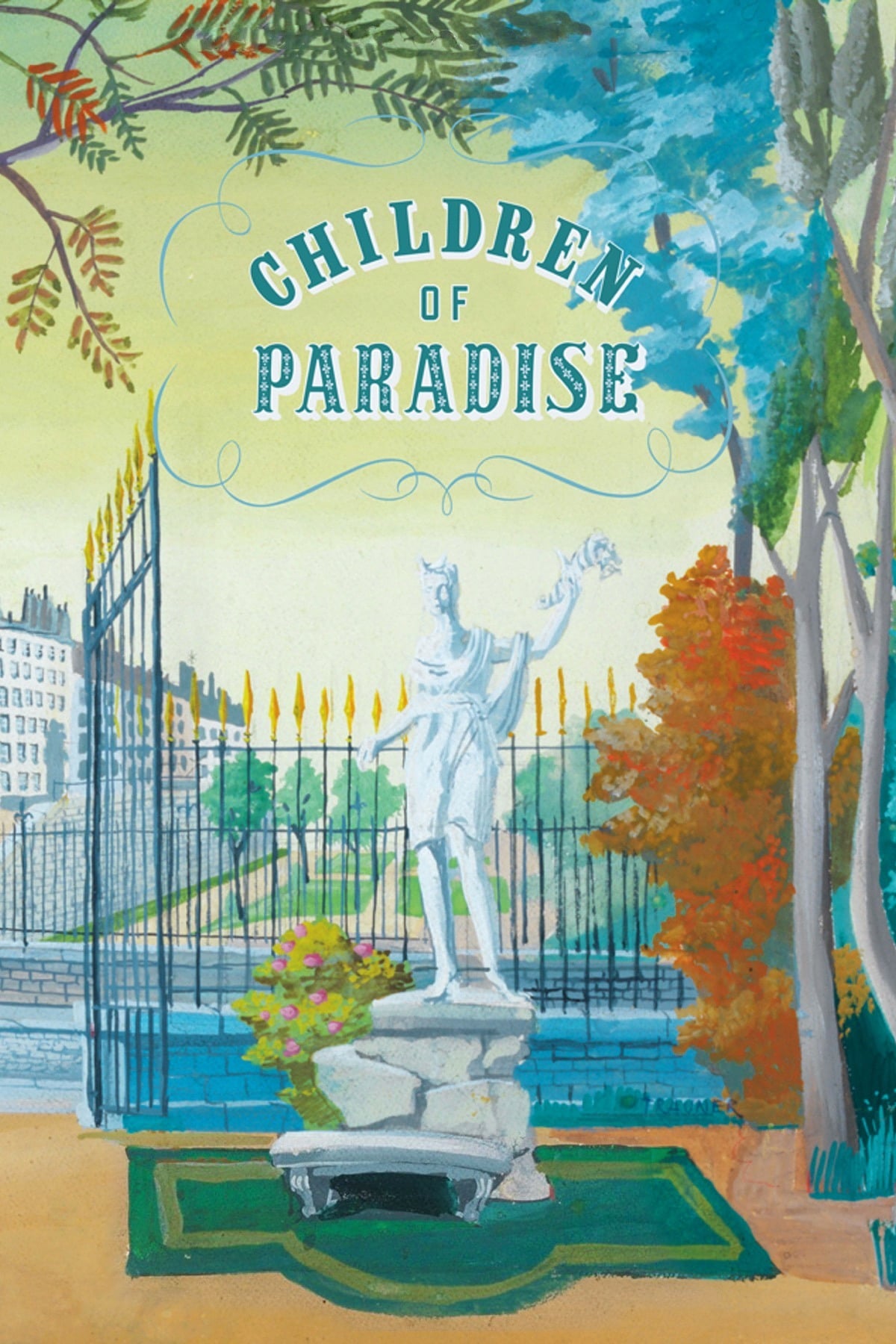
What the Film Is About
From the first time I watched “Children of Paradise,” I was swept up in its dizzying energy—an intoxicating opus of love, longing, and the fragile illusions we chase. For me, this film isn’t simply an epic of romance and jealousy on the bustling boulevards of 19th-century Paris; it’s a searching meditation on artifice and authenticity, desire and loss. The emotional heart isn’t just the tangle of relationships, but in how each character races, almost helplessly, after something transcendent—whether that’s love, artistic brilliance, or personal freedom. What stands out to me is the way Carné and Prévert sculpt a panorama where the line between real emotion and performance, onstage and off, is always blurred. The central current, winding through the theater world and street life, is a longing to be deeply seen and truly known, both by others and by oneself.
What moves me most about the film is its atmosphere of yearning—a constant tension between the ideal and the attainable. Every character, from the soulful mime Baptiste to the enigmatic Garance, is lit by inner hungers that may be beautiful or tragic, but are never truly sated. As I watch their orbits intersect and drift apart, I feel the ache of their hopes and disappointments. This isn’t just a love story. It’s an excavation of our universal search for meaning in a world that is so often indifferent and capricious.
Core Themes
When I dive into “Children of Paradise,” I find myself returning again and again to its deep exploration of love in all its forms—romantic, obsessive, selfless, and destructive. The film navigates the treacherous waters between art and reality, asking what it really means to be authentic in a world obsessed with performance. I’m constantly struck by the way it examines the masks we wear: sometimes to survive, sometimes to seduce, sometimes to hide from the wounds beneath. Garance, for instance, often seems untouchable, insulated by her poise, yet I see in her an existential loneliness that parallels the performers’ isolation in the spotlight.
One of the most enduring themes for me is the nature of desire and the impossibility of possession. Love here is never clean or unambiguous; it’s knotted with jealousy, rivalry, and an undercurrent of futility. Baptiste’s love for Garance has always resonated with me because it’s almost purer in absence than in presence—he projects his own silent ideal onto her, and in doing so, suffers the gulf between fantasy and reality.
I also sense a powerful subtext about social roles and identity. The world of “Children of Paradise” is a microcosm of French society itself, teeming with nobility, criminals, and artists all jostling for position. The theater, placed at the story’s center, becomes a metaphor for the way everyone performs—whether on a stage or in daily life. This idea felt especially charged when the film was made, in the shadow of Occupied France. Watching it now, I feel the persistent question: What does it mean to be true to oneself in a world built on shifting appearances?
Timelessness is a hallmark of truly great cinema, and “Children of Paradise” offers a powerful meditation on the endurance of art. While love may falter and masks may slip, something lasting flickers in the act of creation itself. For those living through the upheaval of the 1940s, this message must have been profoundly resonant; today, I find it equally stirring in an age still defined by public performance and personal yearning.
Symbolism & Motifs
What I find most mesmerizing in “Children of Paradise” is how it layers symbols and motifs to enrich its philosophical depth. The bustling Boulevard du Crime isn’t merely a setting; to me, it stands for the blur between public spectacle and private tragedy. The street is a never-ending stage, lined with theaters, sideshows, and masks. Each time the film shows a crowded audience, I’m reminded of the way everyone in this world, like us, yearns to watch and be watched—to play their part, even if it’s fleeting.
Masks and makeup have a special weight for me as recurring motifs. Baptiste’s whiteface as the mime is perhaps the most visually striking symbol. His face becomes a canvas for longing and pain—a silent, eloquent mask that expresses what words cannot. I always sense how this mask is both a shield and a prison, keeping Baptiste safe but also isolating him from the messiness of real life. Meanwhile, Garance, who moves freely among lovers and social strata, seems to need no disguise. Her naturalness unsettles those around her, suggesting that authenticity itself can be both liberating and dangerous.
Flowers and water also haunt my memory of the film. Garance’s name, derived from the flower madder, echoes the fragility and resilience of beauty itself—a quality that can survive even in hostile environments. Water, whether as rain or a bath, recurs in moments of transformation and revelation. These elements strike me as reminders of impermanence: love blossoms, fades, and sometimes regenerates in unexpected ways.
Finally, the motif of the mirror—visible and invisible—reflects the film’s preoccupation with self-image. Characters look at themselves or are reflected in others’ perceptions, struggling to recognize who they truly are. The mirror, to me, is an invitation to the audience to examine our own masks and the stories we tell ourselves.
Key Scenes
Key Scene 1
There’s a quiet, almost magical moment when Baptiste first performs the Pierrot routine before a spellbound audience. Every time I watch this, I’m overwhelmed by the way the film finds poetry in silence. Baptiste, with his ethereal gestures and heartbreakingly expressive face, doesn’t speak a word, but his pain and yearning ripple across the entire theater. I see this not just as a demonstration of his art, but as a commentary on humanity itself—the desperate urge to communicate what matters most, even when words won’t suffice. In this moment, I feel the porous boundary between performance and reality dissolve. Baptiste’s vulnerability, on full display, becomes both his liberation and his curse. To me, this is the film whispering that the deepest truths are sometimes those which language cannot reach.
Key Scene 2
Another scene that stays with me is Garance’s late-night conversation with Baptiste in her dimly lit room. Here, honest desire stirs beneath the surface, but both seem prisoners to their own myths. What interests me most is not what they say, but what they must leave unsaid. This encounter lays bare the gap between what they want and what they can attain. Garance’s refusal to belong to anyone—not even Baptiste—underscores the film’s signature tension: love is real, but it can never be fully possessed. I see, too, a critique of society’s insistence on confining people to neat categories of belonging or ownership. In this brief, luminous confession, the characters glimpse an impossible happiness, yet understand it can’t fit within the world’s tight, practical margins.
Key Scene 3
The film’s final parade sequence, where Baptiste is lost and panicked in a swirl of masked revelers, is the culmination of every theme and emotional strand. For me, this is much more than a visually dazzling set-piece—it’s a metaphor for the chaos of human desire. The crowd, faceless and euphoric, swallows Garance as she’s swept away, and Baptiste’s anguished pursuit is both literal and existential. In this cacophony, the boundaries between art, life, and dream finally collapse. Baptiste, still in his makeup, chases the idea of love itself—vainly clutching at something that can’t be held. Each time I see this ending, I’m haunted by its sense of loss and inevitability. The film doesn’t offer easy redemption; instead, it leaves me with the ache of beauty glimpsed and lost, and the bittersweet wisdom that no love or art can ever be wholly secured.
Common Interpretations
Whenever I speak with fellow cinephiles or read critical essays about “Children of Paradise,” it becomes clear that the film’s ambiguity is part of its legacy. The most common reading I’ve encountered frames the film as a grand allegory of artistic and personal freedom—a passionate defense of the power of theater and performance as refuges from a harsh, judgmental world. Many see Garance as an embodiment of unattainable beauty or the muse who animates and eludes artists alike.
Another popular interpretation, one that resonates for me, is that the drama reflects the complex realities of Vichy-era France, in which the film was clandestinely made. The shifting alliances, betrayals, and costumes echo the uncertainty and duplicity of occupied society. Some critics draw striking parallels between the characters’ dual lives and the necessity of disguise in times of repression. Others extend this even further, arguing that the Boulevard du Crime is a thinly veiled portrait of pre-war France itself: a dazzling, precarious world barely holding together under the weight of outside forces.
There are also more psychological readings. For those who dwell on Baptiste as the true protagonist, the film becomes a study in idealization—the dangerous allure of molding another person into a fantasy. Still others focus on the idea that every character is trapped in a role of their own making, with the world itself as a stage. What I enjoy most is how the film resists a singular answer; each viewing reveals new nuances, and the emotional resonance seems to shift and deepen as I grow older.
Films with Similar Themes
- La La Land (2016) – When I think about the tension between artistic dreams and personal connection, Damien Chazelle’s musical feels like a kindred spirit, channeling that bittersweet recognition that art elevates but also isolates.
- Amadeus (1984) – As with “Children of Paradise,” I’m struck by the questions of genius, envy, and the cost of pursuing an ideal—where characters are both blessed and cursed by impossible passions.
- All About Eve (1950) – This Hollywood classic’s obsession with performance, ambition, and authenticity mirrors the theatrical universe that Carné conjures on the boulevard.
- The Red Shoes (1948) – The way this film entwines art, desire, and self-destruction always reminds me of the fates of Garance and Baptiste: art demands sacrifice, and sometimes the price is the fullness of lived experience.
What stays with me after each viewing is the film’s deep empathy—for its dreamers, its artists, its wounded lovers. “Children of Paradise” feels, to my mind, like an epic elegy for everything ephemeral and beautiful in human nature: the impulse to create, to love beyond reason, to seek a place in a world that is all too quick to judge. It whispers that performance and authenticity are always intertwined, that artistry is resistance against oblivion, and that the ache of longing, though painful, is also what makes us most vividly alive. As I revisit its crowded streets and aching silences, I’m reminded how the burdens we carry—of love, of memory, of masks—are not so different now than in the shadowed Paris of the 1800s or the occupied France of the 1940s. The film’s ultimate truth, for me, is that we are all players beneath the indifferent gaze of fate, clinging to beauty and connection wherever we can find it.
After learning the historical background, you may also want to explore how this film was received and remembered.