
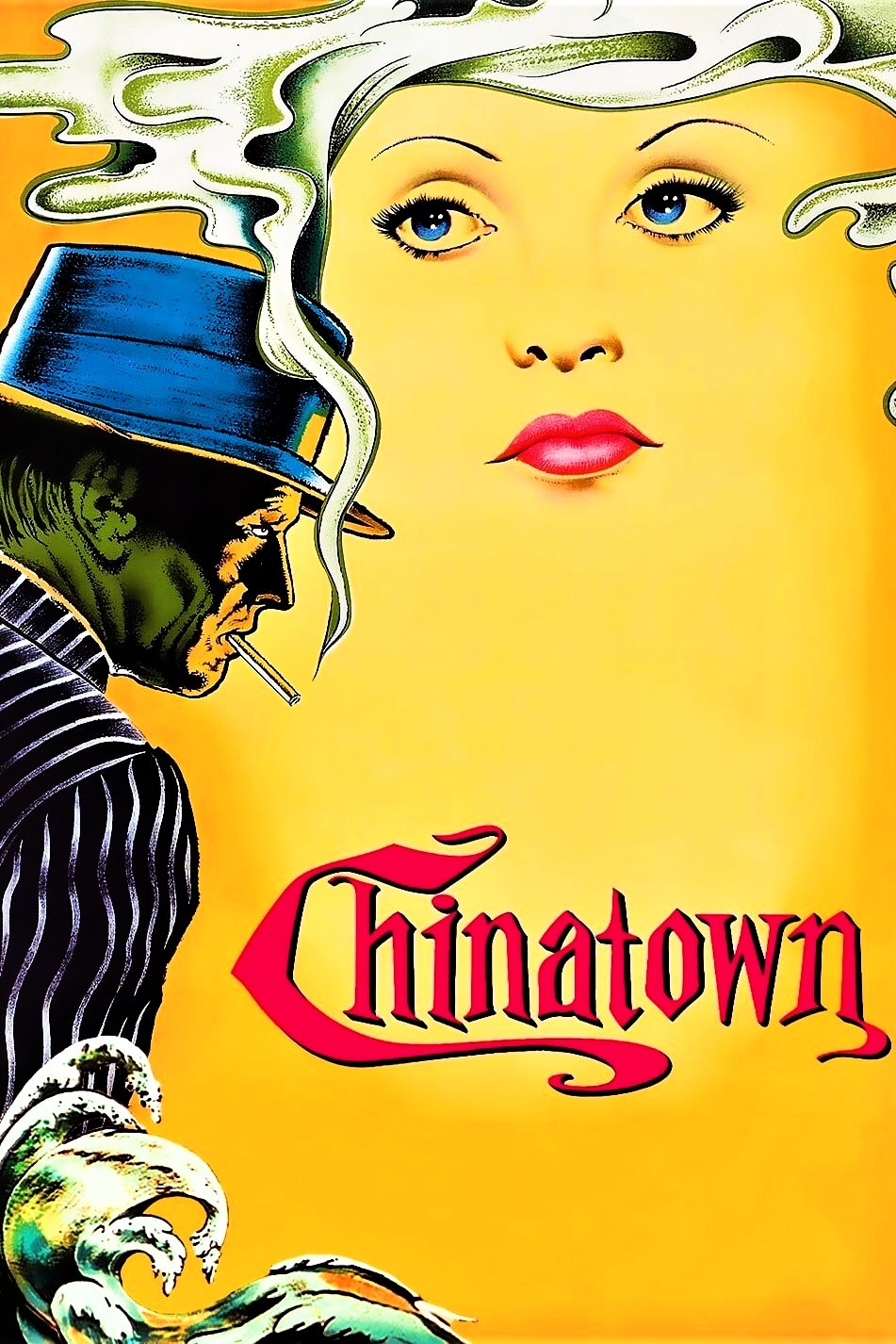
What the Film Is About
Whenever I revisit Chinatown, the first sensation that washes over me isn’t suspense or nostalgia—it’s a sense of creeping unease. For me, this film isn’t simply a mystery to be solved or a noir homage. It’s a poignant emotional spiral, charting a personal odyssey through a world where hope and helplessness are perpetually intertwined. I’ve always experienced Chinatown as a story about the corrosion of certainty: following its protagonist, Jake Gittes, as he’s confronted by moral ambiguity, I find myself pulled deeper into a narrative that promises revelations but delivers only bitter truths. What fascinates me is not so much the whodunit, but the gradual crumbling of Jake’s faith that he can make a difference in the face of institutionalized rot.
For me, the real heart of the film lies not in its puzzle-like plot, but in its relentless confrontation with betrayal, disillusionment, and the limits of individual agency. As Jake chases the thread of a seemingly straightforward case, the boundaries between victim and villain, justice and compromise, become blurred. Watching, I find myself grappling with big questions—whether anyone can truly do good in a system built on foundations of power and exploitation, and what it costs a person to even try. The overall direction is less about the outcome of any investigation, and more about the slow, inevitable defeat of innocence by the harsh realities of a world that often rewards the wrong people.
Core Themes
What always pulls me back to Chinatown is its almost merciless exploration of power, corruption, and moral ambiguity. I find the film unsettling precisely because it refuses the comfort of clear heroes and villains; nobody escapes unmarked from its twisting corridors of deceit. The abuse of authority—from individuals leveraging personal secrets, to the shadowy manipulation of entire civic systems—constantly rears its head. I’m particularly struck by how power here is never played as merely personal; it’s always societal, even cosmic. The film paints Los Angeles as a city literally and figuratively dehydrated by those in charge, and the damage ripples through every stratum of society.
Prior to watching Chinatown, I rarely considered how deeply personal trauma could be reflected on a civic scale. The themes of betrayal and innocence lost aren’t just character notes for Jake or Evelyn—they emerge as metaphors for a city (and by extension, a society) that’s been stripped of its illusions. What haunts me is the sense of inevitability: that individuals, regardless of morality or intent, often find themselves powerless in the face of entrenched systems. It hits me every time how this was a particularly potent notion in the America of the 1970s, so seared by Watergate, Vietnam, and an underlying suspicion that the American Dream was rotten at its core. Those anxieties linger today, which is why Chinatown’s themes still resonate so fiercely. It doesn’t feel like a period piece—it feels alarmingly present.
Every time I watch, love and loyalty appear only to be twisted into something unrecognizable. Jake Gittes longs to protect, to restore order, but his loyalty only deepens the tragedy. I interpret this as a meditation on the limitations of good intentions—it’s not enough to want justice, especially when the playing field is so profoundly imbalanced. This lingering hopelessness, for me, defines the film’s worldview: a recognition that sometimes, fate isn’t the result of one’s choices, but of the monstrous indifference and quiet violence of the institutions shaping those choices.
Symbolism & Motifs
When I think about what gives Chinatown its peculiar emotional weight, it’s the web of recurring symbols and motifs woven through its fabric. Water is the most obvious—appearing almost obsessively throughout the film. At first, I saw water as the literal substance at the heart of the film’s municipal intrigue, but the more I’ve reflected, the more it’s come to embody the idea of life’s elusiveness. Water slips through fingers, is manipulated and redirected, much like truth in this story. I experience every irrigation ditch and dry riverbed as reminders that scarcity and manipulation go hand in hand, and that the hunger for control can make even necessities into weapons.
The recurring visual motif of broken glasses and the persistent, almost ghostly presence of reflections and doubles both unsettle me. Each time Jake finds himself looking at his own face—sometimes distorted, sometimes split—I’m reminded how elusive identity becomes in a world built on half-truths and disguise. These motifs reinforce the notion that, in Chinatown, nothing is ever fully seen or understood—truth is always just out of reach, obscured through layers of deception and misdirection.
Chinatown itself, whenever it’s discussed or glimpsed, functions almost as an existential motif. I think of it less as a place and more as a state of mind: a shorthand for spaces where logic breaks down and doing “as little as possible” is both wisdom and admission of defeat. For me, “Chinatown” isn’t merely a geographic reference—it’s an emblem of resignation, a symbol for what happens when attempts at intervention bring only greater pain. Every time those Chinatown flashbacks are invoked, I sense the shadow of past failures, haunting every act and decision in the present.
Key Scenes
Key Scene 1
There’s a moment that always lingers with me: Jake witnesses Hollis Mulwray’s body being pulled from the reservoir. What arrests me here isn’t the act itself, but Jake’s inability to do more than watch. I feel his impotence acutely—the sense that even with all the clues and suspicions swirling in his mind, he’s powerless to alter the chain of events. It’s a scene that, to me, distills the film’s entire philosophical stance: the notion that knowledge does not equal power, and righteous intention frequently crashes against walls erected by unseen hands. The emotional texture of that moment—simultaneously desperate and detached—serves as a haunting thesis statement. I can’t help but see in Jake’s eyes the dawning realization that the world he inhabits is governed by forces far beyond individual comprehension or intervention.
Key Scene 2
The late-night confrontation between Jake and Evelyn Mulwray, where secrets pour out in halting, painful fragments, devastates me every time I watch it. This scene, for me, lays bare the entire emotional core of the film: guilt, abuse, and the crushing persistence of generational trauma. Evelyn’s confession—interrupted, elliptical, and deeply human—shatters any last illusions about rescue or happy endings. When I witness Jake’s initial inability to grasp the complexity of her pain, I’m reminded how often trauma defies simple explanations, and how our desire for neat resolutions can blind us to the suffering of others. This is the scene that most effectively pierces through the veneer of the detective genre, revealing a raw and unresolved mess beneath.
Key Scene 3
The final moments in Chinatown itself never fail to leave me shaken. I watch the chaos, the gunfire, the impossible sadness of what unfolds on the street, and I feel both rage and resignation. That iconic line—“Forget it, Jake. It’s Chinatown.”—lands, to me, as a bitter eulogy. It isn’t just about that particular night or that particular place, but about the larger human condition: sometimes, despite every effort, history repeats itself and the powerful prevail, untouched by justice or consequence. I can’t shake the sense that all of Jake’s striving comes to nothing, not because he didn’t care or didn’t try, but because the system he’s up against was always stacked against decency. To me, this isn’t nihilism for its own sake, but an invitation to recognize what’s at stake when we accept corruption as inevitable. The final scene makes the film’s worldview painfully, indelibly clear.
Common Interpretations
In every film class or casual conversation I’ve had about Chinatown, I keep encountering the idea that it’s the ultimate noir—a parable of cynicism, where good intentions founder on the rocks of systemic evil. Many critics I’ve read frame the movie as a commentary on the futility of fighting city-wide corruption, seeing Jake not so much as a failed hero, but as an everyman trapped in a rigged game. This reading always resonates with me, especially given the context of 1970s America, when trust in leaders and institutions was eroding by the day.
I’ve also encountered a more psychological interpretation, where the film becomes an allegory for repression and the dangers of refusing to face uncomfortable truths—personal, social, or political. Evelyn’s story, in these discussions, embodies how the past infects the present when left unresolved. Jake’s repeated inability to save or even fully understand those he wants to protect is seen as emblematic of collective denial—the refusal to grapple with the darker parts of our own history.
At the same time, some viewers interpret Chinatown as a critique of the American Dream itself: the myth that anyone can rise above their circumstances, only to discover that the rules of the game are written in invisible ink. In my view, all these interpretations overlap and enhance one another, creating a truly layered meditation on disappointment and the complicated relationship between individual action and societal rot.
Films with Similar Themes
- The Conversation (1974) – I see a close connection in how both films investigate paranoia, surveillance, and the painful awareness that some knowledge is a curse; both protagonists are implicated in tragedies they cannot prevent.
- LA Confidential (1997) – This modern noir reimagines the struggle against systemic corruption and violence, offering a similar meditation on innocence lost and the blurry boundaries of morality in city institutions.
- Blade Runner (1982) – While set in a different genre, I find the meditations on identity, memory, and the search for justice in a broken world to be deeply similar in spirit to Chinatown’s existential uncertainty.
- All the President’s Men (1976) – This political thriller channels the same disillusionment with authority and institutional cover-up, reminding me of Chinatown’s profound skepticism about the transparency of power.
For me, Chinatown will always be less a traditional detective story than a tragic meditation on impotence in the face of institutional evil. It’s a film that insists on the complexity of human nature—we are often neither purely good nor purely evil, neither wholly ignorant nor all-seeing. At every turn, it challenges me to recall a time when America was still struggling to understand the true cost of loyalty, ambition, and willful blindness. All these years later, I don’t see Chinatown’s message as one of resignation, but as an urgent, mournful call to keep fighting for clarity and justice, even when both seem impossibly out of reach.
To explore how this film has been judged over time, consider these additional viewpoints.