
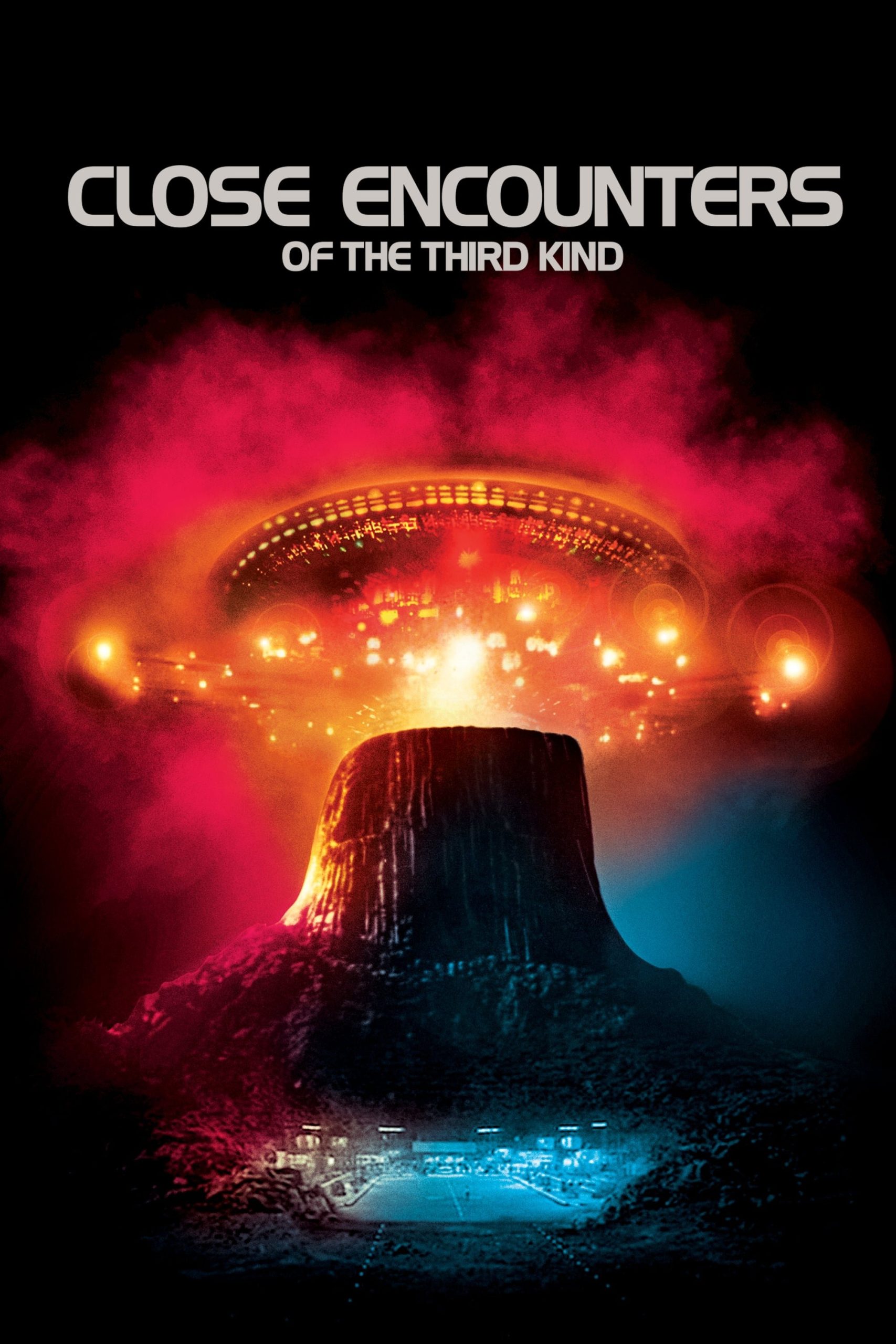
What the Film Is About
The first time I watched Close Encounters of the Third Kind, I remember feeling an intensity of curiosity that bordered on the transcendent. It wasn’t a science fiction film about aliens in the usual sense; the story struck me as a deeply personal odyssey, tapping into our urge to search for meaning beyond the boundaries of everyday life. At its core, I see the film as an examination of awe and obsession—of what happens when a person’s sense of reality is irrevocably shattered by an experience that cannot be explained. While cosmic communication is at the forefront, my experience was colored by the emotional upheaval the characters endure, especially Roy, whose struggle to understand himself mirrors a universal longing for connection with something greater.
I found myself empathizing not with spectacle, but with the ache of uncertainty and the yearning for answers. The central conflict—humankind’s first genuine encounter with an utterly foreign, intelligent presence—parallels the emotional tensions within each character. It’s a narrative that drifts away from militaristic confrontation into realms of vulnerability, wonder, and profound curiosity; the film’s direction charts a course from confusion and disorientation to acceptance and communion, not just with aliens, but with the mysteries that define our own humanity.
Core Themes
What continues to impress me about Spielberg’s vision is the layered exploration of themes often overlooked in mainstream science fiction. The film explores how the pursuit of knowledge clashes with the comfort of normality—how the search for meaning can tear apart families or even one’s grasp on reality. More than a story about extraterrestrials, I experienced the film as a meditation on longing, communication, and the faith required to surrender to the unknown.
The notion of transcending boundaries—be they linguistic, cultural, or existential—feels especially vital in the context of late 1970s America, where societal divisions, political mistrust, and disillusionment were widespread. My sense is that the film offers a subtle riposte to prevailing Cold War anxieties: here, the “other” is not a threat, but a catalyst for personal and collective transformation. At the same time, I’m drawn to the quiet critique of mid-century conformity and domesticity; Roy’s journey away from suburban comfort, toward a destiny that cannot be named, speaks to the costs and sublime rewards of relentless curiosity. Even now, the central themes endure: the film still resonates as a metaphor for all moments when old certainties give way to new horizons.
Perhaps what I find most deeply moving is the film’s optimistic faith in the possibility of communication—however imperfect or incomplete. In an era of suspicion and closed borders, Spielberg’s vision insists that music, light, and shared wonder can bridge even the most profound gaps. That spirit of open-mindedness and adventure remains just as urgent today, as our world grows both more connected and more fragmented. The film’s core themes—transcendence, communion, and the risks of seeking the unknown—are ultimately timeless.
Symbolism & Motifs
Reflecting on the recurring imagery throughout the film, I’m struck by how Spielberg uses symbols to evoke feelings that stay with me long after the closing credits. The motif of light is perhaps the most powerful—practically every close encounter is heralded by a dazzling, otherworldly glow. This light isn’t merely visual spectacle; for me, it signifies enlightenment and awakening. It’s as if each luminous beam tears through the darkness of ignorance, offering the chance for revelation.
Another persistent symbol I notice is Roy’s obsession with shaping the mysterious mound (Devil’s Tower) out of everything from mashed potatoes to mud. It’s a recurring act of compulsion that edges into sacred territory—the symbol of the tower emerges as a beacon, at once guiding and haunting its chosen. I believe it represents the magnetic pull of destiny, or perhaps the buried memories that unrelentingly surface when we’re on the brink of discovery.
Music recurs throughout as a universal language, one that pierces cultural boundaries and carries the hope for mutual understanding. When those five notes echo between species, I always feel a profound sense of hope—that melody stands as both invitation and answer, a bridge forged out of shared curiosity. In my view, this motif encapsulates the core idea that communication is a leap of faith, whether the gulf is between humans or something altogether stranger.
Finally, the use of everyday suburban imagery—the interiors of Roy’s cluttered house, the billboards, even the kitchen table—serves to ground the cosmic events in ordinariness. I appreciate how this juxtaposition blurs the line between extraordinary and mundane, suggesting that the possibility of revelation lies just beneath the surface of daily life. Whenever I rewatch those scenes, I am reminded that the miraculous may emerge from the most unexpected places.
Key Scenes
Key Scene 1
The moment that lingers with me most is Roy sculpting Devil’s Tower in his living room, surrounded by the debris of his unraveling domestic life. This scene isn’t just about obsession; it’s about surrendering to an inner compulsion so overwhelming that it overrides everything else. Emotionally, I felt caught between empathy and discomfort as Roy alienates his family, consumed by an inexplicable certainty. The chaotic, almost spiritual energy imbues his mission with an intensity that resonates far beyond a simple quest for answers.
What stands out in this scene to me is the way Spielberg frames the creative act as both destructive and redemptive. Roy’s hands, nearly frantic, mirror the human urge to translate visions into reality, even at great personal cost. The pile of sculpted earth becomes more than a model; it’s a physical manifestation of longing and a symbol of what it means to be “chosen” by forces we can’t fully understand. This moment crystallizes the film’s awe at the overpowering nature of revelation.
Key Scene 2
Another scene that strikes me is the musical conversation between human scientists and the alien mothership. It’s one of the most cinematic and moving depictions of first contact I’ve ever encountered. As the five-note motif passes back and forth—sometimes hesitant, sometimes exuberant—I’m drawn into the fragile beauty of communication. The scene pulses with hope and anxiety: will these two utterly different forms of life be able to make themselves known to one another?
For me, this sequence is a testament to the film’s core faith in the transcendent power of communication. It pivots away from conflict toward harmony, insisting that understanding (even if tentative) is possible. The interplay of sound and light doesn’t just unify the characters on screen; as I watch, I sense it reaching into my own longing for connection across divides. Here, Spielberg stages not just an interstellar greeting, but a profound meditation on empathy and the risks inherent in reaching across the unknown.
Key Scene 3
The film’s climax—when the aliens emerge, and Roy joins them—has always stirred a swirl of emotions in me: wonder, humility, loss, and excitement. This is more than the payoff to a mystery; it’s a moment of transcendence that offers release from the film’s tension between fear and possibility. I interpret Roy’s decision as an act of ultimate surrender. Rather than clinging to safety, he steps boldly into the unknown, embodying the film’s urgent call to risk security in exchange for greater understanding.
For all its spectacle, the scene is also deeply personal. I see Roy’s departure as both a leap into the cosmic and a bittersweet sacrifice. He turns away from the known—the trappings of work, family, even selfhood—to embrace something far stranger. For me, this final act is less about escapism and more about self-transcendence: an acceptance that growth often demands letting go, and that the quest for meaning may sometimes take us beyond what we can reconcile with our old selves.
Common Interpretations
Over the years, I’ve encountered a fascinating range of interpretations for this film. Many see it as a paean to human curiosity—the irrepressible drive to question, seek, and make sense of the unknown. For some critics, this appetite for revelation is what gives the film its emotional and philosophical weight: the aliens become metaphors for the unexplored mysteries that lie just beyond our reach. In this view, Roy’s journey transforms into a secular pilgrimage, and the film becomes less about extraterrestrials than about the costs of spiritual awakening.
There are also those who interpret the story as a subtle critique of domestic norms and American conformity. Rather than glorifying Roy’s family, the film depicts domestic routines as stifling, sometimes even suffocating. Roy’s abandonment of his home is unsettling for many viewers, and I’ve heard some interpret this as a commentary on the limits of traditional roles—particularly in the era of post-Watergate, post-Vietnam disillusionment. It raises an uncomfortable question: must the quest for self-knowledge come at the expense of our personal connections?
Other readings go deeper still, finding in the film a yearning for reconciliation with the “other”—be it geopolitical rivals, strangers, or even neglected parts of ourselves. The aliens are not hostile, but enigmatic. Their willingness to reach out contrasts with the skepticism and anxiety of human authorities. In my own view, the film’s ultimate faith in the possibility of understanding, even with those most different from ourselves, is what resonates most profoundly. Especially today, the notion that humility and openness can bridge divides feels more vital than ever.
Films with Similar Themes
- 2001: A Space Odyssey – For me, this film shares the theme of transcendence and the longing to grasp cosmic mysteries. Both films use awe and spectacle to meditate on human evolution—what it means to come into contact with something vastly greater than ourselves.
- Arrival – This later film seems almost a spiritual descendant of Close Encounters, focusing on the difficulties and rewards of interspecies communication. Like Spielberg’s work, it sees language and understanding as acts of hope against fear and misunderstanding.
- Contact – I see this film as a cousin in its blend of scientific obsession and spiritual awe. It, too, asks whether we are alone, and whether meeting the “other” might change our identities in fundamental ways.
- E.T. the Extra-Terrestrial – Directed by Spielberg himself, this film echoes Close Encounters’ belief in innocence, wonder, and the painful consequences of both human curiosity and fear. It places the search for connection front and center in a more intimate, child’s-eye view.
When I reflect on what Close Encounters of the Third Kind ultimately communicates, I see a spellbinding portrait of human nature’s relentless drive toward the unknown. The film doesn’t simply celebrate curiosity; it delves into the costs, risks, and upheavals that seeking answers can bring. Spielberg’s storytelling asks us to imagine contact not just with aliens, but with the parts of ourselves—restless, dissatisfied, endlessly yearning—that refuse to be silenced by convention or fear. Whether we read it as a hopeful hymn to transcendence, a critique of societal norms, or a fable of communication across chasms, I find the film’s optimism tempered by the recognition that all such encounters demand radical openness and humility.
To explore how this film has been judged over time, consider these additional viewpoints.