
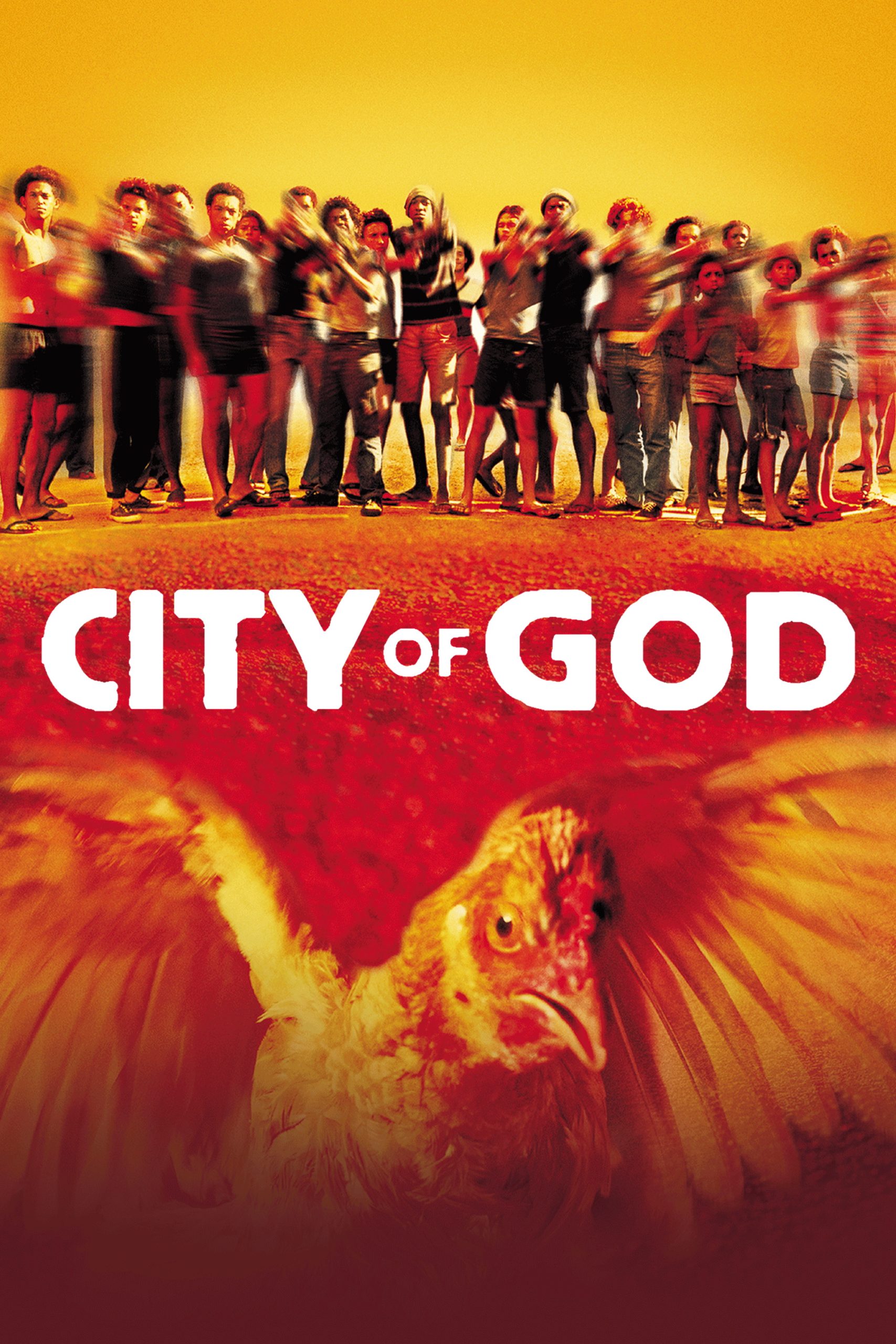
What the Film Is About
Every time I watch “City of God,” I feel a visceral tug—equal parts exhilaration and sorrow—that refuses to let go. For me, this film isn’t just about the spiral of violence within the favelas of Rio de Janeiro; at its heart, it’s the emotional journey of those entrapped by circumstance yet desperate to carve out something of their own. I see the central conflict in the lives of its characters: the struggle to find agency within an unforgiving landscape, where the lines between innocence and complicity blur. It’s a coming-of-age told through a lens clouded with desperation and fleeting hope, where everyone is forced to choose—often early—between becoming prey or predator.
This isn’t a typical narrative of good versus evil. What captivates me is how the film thrusts emotional stakes onto nearly every character. I’m made to witness not just their external battles but their internal reckonings. Watching these young lives unfold, I find myself wrestling with whether any choices are truly free, or if they’ve all been mapped by the invisible boundaries of poverty, power, and survival. That, for me, is the real current that drives the story forward.
Core Themes
The first time I absorbed the film’s rawness, the word that echoed for me was “survival” ― not just physical, but spiritual. I recognize a powerful meditation on how violence saturates and shapes identities from childhood onward. In my view, “City of God” isn’t content to merely expose violence as a spectacle; instead, it seeks out the roots: power, deprivation, inevitability. There’s a sense that violence is both a symptom and a lifeblood of the environments we inherit. When I look deeper, the film is really interrogating: When you’re born here, can you ever hope to become more than your postcode?
I also see morality—and its malleability—as a central theme. The inhabitants of the City of God develop a code informed by paradoxes: moments of compassion laced with threat; friendships teetering on betrayal. That deeply unsettles me, because the film shatters Western notions of clear-cut heroism or villainy. I’m left questioning whether morality is a luxury reserved for those not fighting daily for survival. The theme of fate versus agency feels ever-present: Is escape possible, or are our attempts futile in the face of relentless cycles?
Something else always stands out to me: the film’s unflinching look at social stratification. At its 2002 release, Brazil was confronting a reckoning with its own disparities—the film resonates not simply as a local story, but as an indictment of what happens when an entire population is rendered invisible. Two decades later, I believe these questions haven’t lost their currency. Globally, the film’s portrayal of entrenched poverty and youth abandoned by institutions feels as vital as ever. The cycle of violence, the magnetic pull of power, the ambivalent possibilities for transcendence—I see them echo in countless societies even now.
Symbolism & Motifs
One thing that’s always stayed with me is how “City of God” weaves its symbols into the very air the characters breathe. For me, the most striking is the persistent image of the camera. It’s not just a narrative device—it’s a weapon, a shield, and, crucially, a compass for hope. When I see Rocket with his camera, it’s like watching someone wielding the only tool capable of transforming perception into possibility. That camera doesn’t shoot bullets, but it shoots moments—evidence that another life, another destiny, is possible. It suggests, to my mind, that art might offer liberation where violence cannot.
The motif of the circular narrative reinforces the endless, self-perpetuating violence. I interpret the opening and closing sequences as artistic bookends: the motif of the chicken’s frantic dash becomes a microcosm of life in the City of God itself—no matter how desperately you run, the cycle snaps back shut. The motif of childhood, and children with guns, haunts me every viewing. It’s a heartbreaking symbol, a way of showing innocence co-opted and corrupted, and a reminder that violence has become the inheritance as well as the education of the young. I feel the cityscape itself—the claustrophobic apartments, tangled alleyways, and hidden corridors—serves as a sort of living organism, a visual metaphor for entrapment yet resistance. The environment is both crucible and cage.
I also recognize the use of color and light as semiotic cues. When I see flickers of sunlight or the sudden, almost surreal beauty inside the chaos, I’m reminded of the life force running through even the most devastated corners of the world. Every motif, every recurring image, seems to insist that every act—be it violent or creative—is ultimately shaped by the environment that births it.
Key Scenes
Key Scene 1
One scene that never lets me go is the chilling moment where a child—armed, uncertain, trembling—is forced by older gang members to choose which terrified child to shoot. I recoil every time, yet I’m compelled to look closer. To me, this isn’t just a harrowing depiction of lost childhood; it encapsulates the film’s entire thesis. The emotional weight is devastating—here, violence is not innate but learned, enforced, inherited. It’s a moment that shreds any illusion of safety, innocence, or straightforward “bad guys.” I feel the film screaming a question at us: What kind of world manufactures such choices, and who bears the weight—the shooter or the unseen architects?
Key Scene 2
Equally unforgettable to me is the moment Rocket finally captures the pivotal photograph that could transform his fate. I read this scene as something far more profound than a coming-of-age beat; it is a metaphysical act. It’s as if every frame, every snap, is a fight for authorship over his story. In that single, defining moment, Rocket chooses not to aim a gun, but a lens. I sense the film arguing here that creativity is a sacred act of resistance, a way to redirect energy that would otherwise feed the cycle of destruction. It’s where I see agency break through, and I’m reminded that the ultimate weapon isn’t always the most obvious one.
Key Scene 3
If there’s a scene that feels like both a culmination and an exhale, it’s when the new, even younger gang takes over in the final minutes. That horrifying glimpse of children plotting, boasting, and preparing for the violence to come leaves me gutted. For me, it represents a final, bitter statement: while individuals may find slivers of hope, the machine of violence is unyielding, already recruiting its next generation. It’s a cyclical horror that refuses easy redemption, reminding me of the urgent need for collective—not just personal—transformation. I leave the film each time with a cold certainty that the story is meant as a warning: unless the entire system is confronted, the wheel only keeps turning.
Common Interpretations
Whenever I debate “City of God” with others, I notice a spectrum of interpretations, some more hopeful than others. Many see it as an unflinching social critique—to me, that’s a necessary reading. The film exposes the raw consequences of governmental neglect, institutional failure, and the world’s indifference to marginalized populations. Critics often hail its immersive direction and kinetic style as a means of making violence unbearable rather than anesthetizing. From my vantage point, the stylish cinematography doesn’t beautify brutality; instead, it weaponizes realism, insisting viewers cannot look away.
I’ve heard others argue the film is essentially a fable about fate. For them, almost every character—save those with extraordinary will or luck—remains trapped. Rocket’s partial escape is not celebrated as a triumph, but as a rare exception highlighting the cruelty of the rule. I relate to this interpretation, though I feel it overlooks those small flickers of hope that insist survival is still an act of resistance.
Some, particularly members of the communities depicted, have voiced discomfort with how violence and poverty are made into spectacle. When I listen to these critiques, I recognize a tension: Does the film reinforce stereotypes, or does it finally give voice to voiceless stories? My own sense is that it risks both—it’s an act of exposure, but also a mirror reflecting the (sometimes voyeuristic) gaze of audiences far removed from the reality it depicts.
Ultimately, whenever I parse these diverse readings, I’m convinced the film’s chief power is its refusal to provide moral comfort. It holds up injustice and asks, “What happens if nothing changes?”—and it makes sure I leave carrying that question with me.
Films with Similar Themes
- “Boyz n the Hood” – I see direct parallels in this film’s unflinching depiction of urban violence, generational trauma, and the hunger for dignity amid systemic neglect. Both films refuse to romanticize life on the margins and ask if escape is even possible.
- “Gomorrah” – Like “City of God,” I find “Gomorrah” to be a relentless examination of how crime and violence function as institutions, consuming even the youngest among a community and rendering morality fluid.
- “Slumdog Millionaire” – While its tone ultimately tilts more toward hope, I’m struck by their shared themes: childhoods forged in desperation, destinies shaped by environment, the urge to transcend the limitations set by birth.
- “La Haine” – For me, this French work resonates strongly with “City of God” in its portrayal of aimless youth trapped by circumstances, simmering resentment, and the cyclical nature of state violence and poverty.
After years reflecting on “City of God,” I believe the film ultimately lays bare how human nature is both adaptive and yearning—how people survive, improvise, and occasionally rebel against systems designed to erase them. It tells me that a society’s true character is reflected not in the freedoms of its privileged, but in the constraints of its forgotten. Though the specific setting is Brazil’s favelas in the late 20th century, the warning embedded within is tragically universal. Unless we are willing to witness, understand, and act, the cycle repeats. In that way, the film lives on—not just as a work of art, but as an open-ended question we must all decide how to answer.
After learning the historical background, you may also want to explore how this film was received and remembered.