
What the Film Is About
There are certain films I approach the way I would a cherished photograph—familiar, but mysteriously layered. “City Lights” always strikes me as one of those rare works where the emotional momentum carries me along with a powerful mix of laughter and ache. What resonates most is the way Chaplin’s Little Tramp, an outsider in a dazzling metropolitan sprawl, faces an indifferent and often hostile world with bottomless vulnerability and stubborn hope. Rather than simply following a string of misadventures, I feel swept up in his need to matter, his desperate determination to touch another life, and the emotional tightrope he walks when love collides with poverty and pride.
At its core, “City Lights” is a story about connection and dignity—the ways these fragile things must be protected, bartered, and, sometimes, performed. I don’t see this as a film obsessed with happy endings, but as one deeply invested in the emotional truth of self-sacrifice. The central conflict never feels merely external; the most poignant struggle is how to be seen amid the indifferent rush of city life, how to persist in kindness when the world equates worth with wealth. This is what stays with me: a subtly profound narrative, less about romantic triumph than about the messy, beautiful cost of compassion.
Core Themes
Whenever I return to “City Lights,” I’m confronted by its sustained meditation on the dignity of the human spirit and the capriciousness of social hierarchies. The film’s major themes—poverty, love as redemption, and the blindness (literal and figurative) of society—intertwine so effortlessly that I stop seeing “silent comedy” and start witnessing a living fable about empathy. Chaplin continually nudges me to ask: what is worth fighting for when survival itself is precarious? How do we define decency in a world where the wealthy are insulated from everyday desperation?
What always surprises me is how relevant these questions remain. Released during the teeth of the Great Depression, “City Lights” reached an audience that knew real hunger and marginalization. Yet, the film’s critique of economic disparity isn’t locked in its era. As I watch the Tramp’s acts of selflessness amid enduring humiliation, I notice how timeless the examination of social compassion feels. In a contemporary context—where divides between “haves” and “have-nots” persist—the film’s insistence on kindness as heroic has only deepened for me. Chaplin proposes that real nobility isn’t about status, but about the courage to see and be seen, especially by those who live “invisible” lives.
There’s also the undeniable thread of romantic longing—yet I sense that the film’s romance is not simply about coupling, but about mutual recognition. Both the Tramp and the Blind Girl are, in their own ways, invisible to society. Watching their gradual bond unfold, I’m reminded that the deepest form of love isn’t possessive or triumphant; it’s the kind of attention that restores someone’s sense of worth. This attention, in its most generous form, becomes an act of giving equivalent to rescue—in both the literal and moral sense.
Symbolism & Motifs
I find the film richest when I surrender to its visual poetry—the subtle recurring symbols that echo long after the credits. Chief among these is the motif of blindness. At its surface, the Blind Girl is an obvious embodiment of this, but I see blindness in every social encounter—the sighted fail to notice suffering, wealth looks past poverty, and even love, at times, is colored by fantasy rather than reality. This motif, to me, asks whether true perception requires more than just eyes.
The use of the flower—the modest blossom the Tramp buys from the Blind Girl—has always stopped me short. It becomes not just a token of affection, but a kind of silent promise: a pledge that someone believes in your intrinsic worth, regardless of how the world has assessed you. As I track the passing of the flower between the Tramp and the Girl, I’m deeply moved by how such a simple object acquires the weight of destiny. The flower is both a disguise and a revelation; it allows the Girl to “see” the Tramp’s inner value, just as it pushes the Tramp to prove himself worthy.
Physical comedy, which might seem to belong only to slapstick, becomes another motif that I read as a metaphor for survival. The Tramp’s physical awkwardness—his stumbles and pratfalls—aren’t just for laughs. For me, they express the constant threat of humiliation that shadows the poor, the world’s readiness to laugh at those who are struggling. Chaplin makes me acutely aware that the line between laughter and sorrow is perilously thin; to fall is to risk being crushed, but also to risk being recognized in your frailty.
Finally, the city itself looms as a kind of dispassionate observer. The grandeur of its buildings and the flashing of bright lights seem to offer promise, but also serve as a constant reminder of the Tramp’s outsider status. City lights promise opportunity and glittering ambition, yet they also blind and overwhelm—illuminating and obscuring, sometimes at once. The city is both playground and prison, echoing the double-edged nature of progress and anonymity in modern life.
Key Scenes
Key Scene 1
For me, the moment when the Tramp encounters the Blind Girl for the first time isn’t just about love at first sight—it’s a moment of radical possibility. The way he responds to her vulnerability reminds me of the ways that simple acts of recognition can restore dignity to another person. I don’t see this scene as mere exposition, but as a distillation of the film’s faith in unexpected connections. The Tramp subverts the city’s apathy; he chooses to stop, to pay attention, to care. This is the emotional epicenter of the film—not because of romantic potential, but because it sets the stage for his journey from marginal figure to self-selected savior. That moment always renews my belief that compassion, especially between society’s “invisible” people, can tip the scales of fate.
Key Scene 2
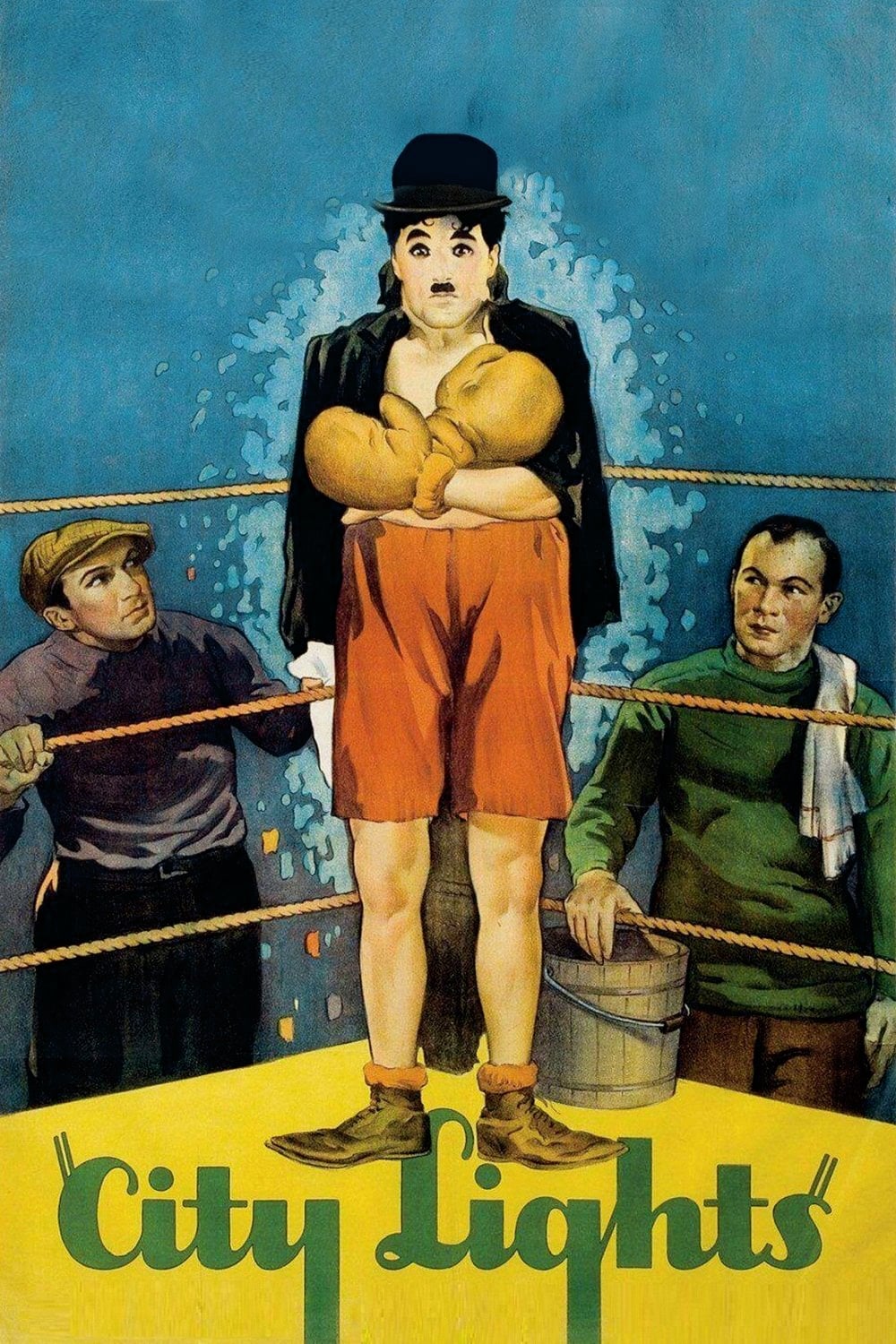
The boxing match—chaotic, painful, and slyly comic—lingers in my memory as a perfect encapsulation of the dignity-versus-degradation theme. Watching the Tramp step into the ring, I don’t just see a gag-laden bid for fast cash. What strikes me is the way this scene distills the risks of survival in an indifferent world. The Tramp is repeatedly outmatched, battered, put at risk, but he persists—not for glory or bravado, but for someone else’s benefit. This is where the film’s moral compass becomes clearest. When I see the Tramp’s determination, the battered body standing for a battered soul, I’m reminded of the high stakes of empathy and the humiliations endured by those who love without means. The boxing ring is a little arena for the ceaseless struggle to retain one’s humanity when the world would strip it away for sport.
Key Scene 3
Nothing in Chaplin’s oeuvre, in my experience, lands with the same emotional force as the final scene of “City Lights.” The Blind Girl, her sight restored, regards the Tramp—now disheveled and even more obviously marked by poverty—with a mix of uncertainty and dawning realization. I’m never prepared for the impact of her gentle touch, her recognition of the Tramp as her benefactor. It’s not simply a romantic reconnection; it’s a declaration that true worth lies in what we’re willing to give, and in our courage to see one another as we are. Every time I return to this scene, I am struck by how it completes the film’s meditation on perception. The Girl’s gratitude and the Tramp’s bashful hopefulness illuminate, without a word, the power of love to dignify the overlooked and to redeem the rejected. It’s an ending that quietly insists on grace—and makes me believe, for a moment, that such grace is possible in the everyday.
Common Interpretations
Over the years, I’ve seen how “City Lights” has inspired a slew of interpretations, yet certain readings surface time and again when I talk to critics and cinephiles. The most profound and consistent interpretation, in my experience, is the belief that the film elevates compassion as the highest form of human action. For many, Chaplin’s portrait of sacrifice—giving without hope of reward—embodies a rare kind of moral ideal. The Tramp’s actions are both practical responses to dire need and symbolic gestures against the numbing effects of urban modernity.
I often encounter debates around the film’s depiction of poverty: Some see it as sentimental, softening the edges of real deprivation. But others, myself included, argue that Chaplin’s humor allows the pain of poverty to be absorbed and understood without succumbing to despair. The Tramp’s resilience is not a denial of hardship but a way of asserting autonomy in a world stacked against him.
Another interpretation I hear often is that “City Lights” is ultimately a fable about identity, specifically the idea that who we are is not always visible to those who matter most. The Blind Girl’s initial inability to “see” the Tramp as impoverished, followed by her ultimate recognition of his generosity, becomes an allegory for the hope that our truest selves will, finally, be acknowledged.
There’s also a less common—though always intriguing—reading of the film as a critique of capitalist fantasy. Some see the portrayal of the eccentric millionaire and the city as a satire of materialism, suggesting that wealth is capricious and unreliable, while sincere acts of care endure beyond monetary cycles. I find this angle persuasive, especially whenever I consider the cyclical friendship between the Tramp and the Millionaire: connection that flickers with sobriety and vanishes with inebriation, satirizing the unreliability of class-based solidarity.
To explore how this film has been judged over time, consider these additional viewpoints.
Films with Similar Themes
- The Kid (1921) – Chaplin’s earlier film explores a similar juxtaposition of comedy and social commentary, using the poverty of the Tramp and his adopted child to raise questions about institutional compassion and the resilience of outsider bonds.
- Modern Times (1936) – I see “Modern Times” as a spiritual cousin to “City Lights,” depicting the individual’s struggle for dignity within the dehumanizing machinery of industry, and infusing slapstick with a critique of economic inequality.
- Penny Serenade (1941) – While different in style, this film’s focus on perseverance through hardship and the importance of small, redemptive moments of human kindness reminds me of the ethos at the heart of “City Lights.”
- Ikiru (1952) – Kurosawa’s portrait of a bureaucrat finding meaning in selfless acts for others echoes what I value most in Chaplin’s film: the belief that one’s greatest legacy may be a humble, unseen gesture made for someone else’s benefit.
For me, “City Lights” is a film about the transformative power of seeing—seeing beyond appearances, beyond status, and beyond circumstance. It asks whether we, in the rush of our daily lives, are still capable of stopping, noticing, and caring. The film’s era may have been marked by economic devastation, but its emotional insights transcend time: that true greatness grows not from victory or material gain, but from empathy, self-sacrifice, and the tender risk of revealing one’s most vulnerable self. I leave every viewing reminded that the deepest human truths are often expressed in silence, in gestures, and in those luminous moments when one soul recognizes another.