
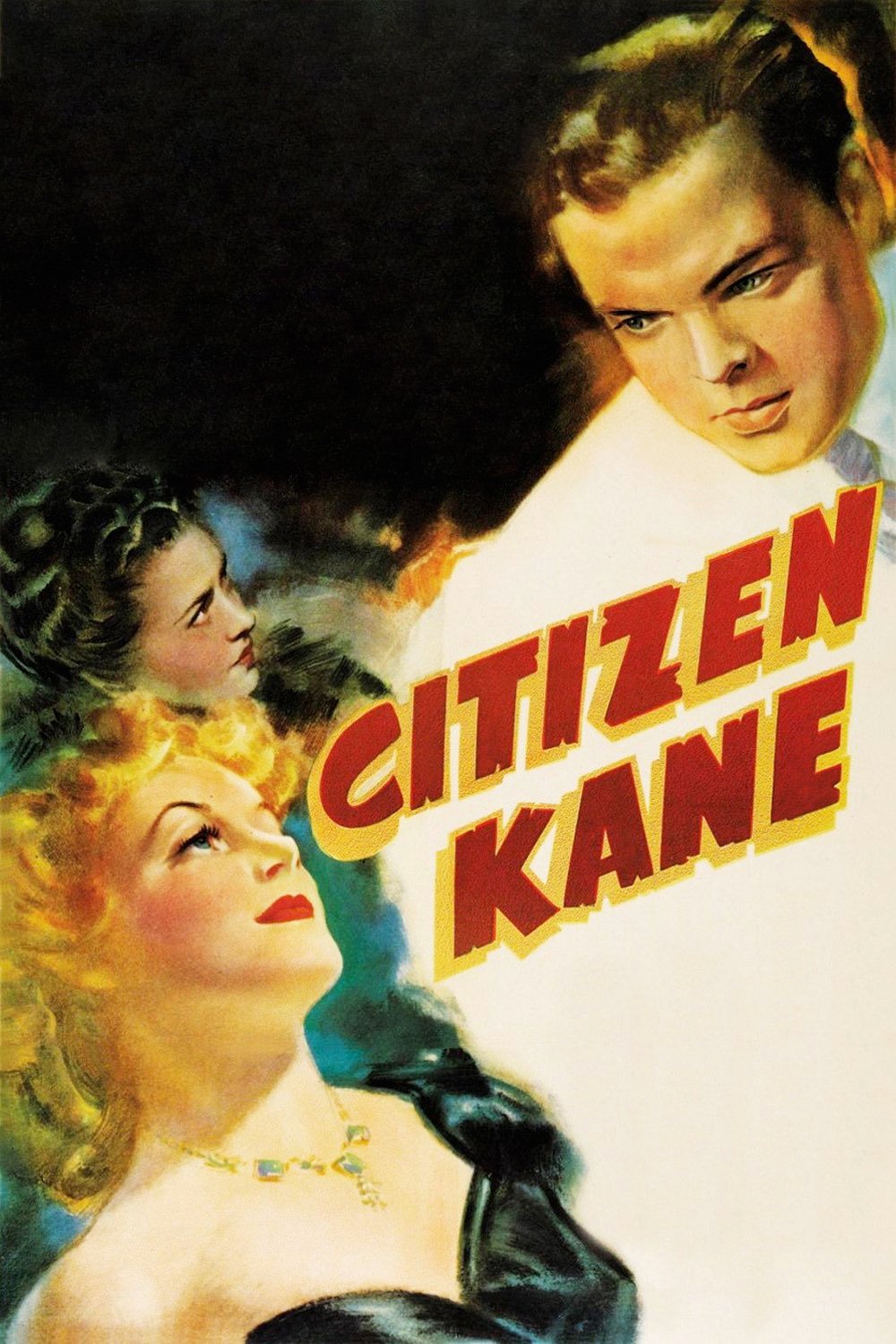
What the Film Is About
In all my years of analyzing films, few have unsettled and fascinated me like Citizen Kane. When I first watched it, it struck me less as a simple biography and more as a probing psychological odyssey—one that follows a man’s hunger for recognition, affection, and mastery, only to find something hollow at the very core. What captivated me most was the way the film’s central conflict isn’t about who will win or lose in a traditional sense, but rather about an internal struggle: the relentless pursuit of love and significance, which proves as ephemeral as newspaper headlines.
For me, the emotional journey at the heart of the film is relentless, propelled by yearning and regret. The film traces the rise and unraveling of Charles Foster Kane, presenting him as both a colossus and a cautionary figure. It’s not just the arc of gaining everything and losing it all that haunts me, but the sense of isolation that pervades Kane’s life despite his power and wealth. The narrative direction always feels like a spiral to me: with every turn, it draws the audience closer to Kane’s most vulnerable core, all while holding us back from ever reaching it completely.
Core Themes
Whenever friends ask me what Citizen Kane is really about, I find myself returning to the idea that it’s an elegy for the costs of ambition and the illusions of self-invention. The film digs deep into the nature of legacy, the hollowness of material success, and the tragedy of misunderstanding your own heart. For me, its main theme is the peril inherent in pursuing external validation at the expense of genuine connection—how power and influence can amplify one’s flaws rather than redeem them.
I can never ignore the film’s harsh critique of the American Dream, which—especially in the early 1940s—must have been electrifying. Released at a time when the United States was emerging from the Great Depression, and at the dawn of its global ascent during World War II, the film casts a pessimistic shadow over the dream of self-made kingship. It asks hard questions about whether it’s ever possible to really control your destiny, let alone find fulfillment in money or public adoration. Watching Kane, I see someone imprisoned by the very myth he tries to embody.
On a deeper level, I find the film an exploration of identity’s fluidity and the impossibility of truly knowing another person—or even oneself. The shifting perspectives, fractured narrative, and contradictory anecdotes all point me toward the realization that we are often mysteries, even to those closest to us. This uncertainty about who Kane really was extends, in my mind, to each of us. That’s why, decades later, its questions about selfhood, loss, and the bittersweet nature of memory still feel urgent and true to me.
Symbolism & Motifs
There’s no way I can think of Citizen Kane without contemplating the avalanche of symbols that Orson Welles sets loose. The most haunting, by far, is “Rosebud”—the cryptic last word that comes to stand for everything left unexplained about Kane’s soul. Personally, I see “Rosebud” as more than a literal sled or a clue to his childhood; it becomes a stand-in for all lost innocence, those untouched moments we spend the rest of our lives trying to recapture or even understand.
The labyrinthine corridors of Xanadu, Kane’s palatial estate, always conjure images of emptiness and alienation for me. The sprawling, cold rooms filled with art and artifacts offer a visual lexicon of loneliness; they’re Kane’s attempt to collect the world but also his way of walling himself off from it. For me, each object signals a longing for meaning, but also the absence of genuine intimacy. The recurring motif of mirrors—Kane reflected endlessly back at himself—underscores this sense of fragmented identity, reminding me that all his public faces are ultimately masks, worn even for his own benefit.
Another motif that resonates with me is the use of fractured narrative and unreliable memory. The film’s very structure, told through conflicting testimonies, signals that Kane is not a fixed entity, but a shifting collection of impressions. This, I think, is a powerful statement about how all biographies are negotiations with myth and memory. The darkness and deep shadows in Gregg Toland’s cinematography reinforce my impression that truth itself is murky, flickering, and always receding just out of reach.
Key Scenes
Key Scene 1
One moment that stays with me is the montage of Kane’s marriage, where a once-hopeful union turns into a tableau of mutual alienation. In just a few silent, expertly composed shots, I’m forced to witness not just a relationship dying, but the emotional barrenness that grows inside someone who keeps everyone—even loved ones—at arm’s length. This sequence, in my eyes, distills all the film’s anguish about connection and loss. It’s never melodramatic; instead, it’s quietly devastating, showing that the decay of love is often a slow, almost invisible process.
Key Scene 2
I am always struck by the scene where Kane destroys Susan’s room in a fit of rage after she leaves him. On the surface, it’s a spectacular outburst, but to me it reads as the purest visual expression of his inability to command love or loyalty, no matter how much he demands or pleads for it. The violence and sorrow of this scene feel less about Susan than about Kane’s internal collapse. For me, it’s a stark demonstration of how power and control are a poor substitute for intimacy—that the more Kane tries to exert his will, the less human he becomes.
Key Scene 3
The film’s closing sequence, where the true meaning of “Rosebud” flickers away among Xanadu’s discarded relics, has always chilled me. It lands as a mournful thesis statement: for all the effort that goes into piecing together a life, some parts remain irretrievably private. When I watch the sled burning, I don’t experience a simple solution to the film’s mystery; instead, I feel the weight of the unknowable—the things we never reclaim, the moments that shape us and then vanish. The immense, impersonal scale of the burning room dwarfs “Rosebud” and, by extension, Kane himself. It’s as if the film is daring me to accept that some truths fade into ash, forever out of reach.
Common Interpretations
Among the community of critics, I find a general agreement that Citizen Kane is ultimately a meditation on the ambiguity of identity and the corrosive nature of power. Many interpret the film as a direct attack on the arrogance of self-made men—particularly real-life magnates like William Randolph Hearst—but I see something more enduring than satire. There’s a widely held notion that Kane is a tragic figure because he mistakes fame and acquisition for meaning; that the pursuit of legacy is as empty as the echoing halls of Xanadu. I’ve encountered interpretations focusing on the allegory of lost innocence—how “Rosebud” represents the primal wound at the center of every adult life, a yearning never fully expressed or healed.
Some readings emphasize the film’s structure itself as a message: the fact that Kane is revealed only through the conflicting memories of others points to a profound skepticism about the possibility of “truth” in biography or in self-understanding. To me, the film isn’t about solving the riddle of Kane, but about exposing the limits of inquiry—making peace with the slippages and contradictions that define a person’s legacy. There’s also a strong thread of political and historical interpretation, suggesting that Kane’s trajectory mirrors the anxieties of pre-war America: the fear that material power brings spiritual bankruptcy. While not all critics agree on which theme predominates, I think this diversity of perspectives only amplifies the film’s richness.
Films with Similar Themes
- The Great Gatsby (1974 and 2013) – I find a strong kinship in their shared fascination with wealth’s emptiness and the cost of chasing a romanticized past. Both stories cloak their central figures in myth, only to reveal a deep, private ache at their center.
- There Will Be Blood (2007) – I see Daniel Plainview as a spiritual successor to Charles Foster Kane: both men are tragic titans undone by ambition, their vast enterprises masking isolation and emotional poverty.
- Sunset Boulevard (1950) – This film, like Citizen Kane, uses the rise-and-fall structure to interrogate fame’s cruel illusions and the ways storytelling distorts personal truth. Its haunted mansions and fractured perspectives recall Kane’s Xanadu and shifting legacies.
- All the King’s Men (1949) – I’m reminded of the parallels between the corrupting influence of power and the destruction of ideals, as both films lay bare the consequences of unchecked ambition on both self and society.
When I distill the meaning of Citizen Kane down to its barest essence, I’m left reflecting on the paradoxes at the heart of human ambition. The film, to me, is a lament for those who devote themselves to the construction of a public persona, only to lose the thread of their own private selves. It warns that even the mightiest can be felled by unmet emotional needs. More than anything, Kane’s journey has taught me that the search for love and meaning, so common to every era, can be as blinding as it is universal. In a world that prizes legend over reality, this film asks me to recognize the fragility and depth of what remains unspoken and unresolved.
After learning the historical background, you may also want to explore how this film was received and remembered.