
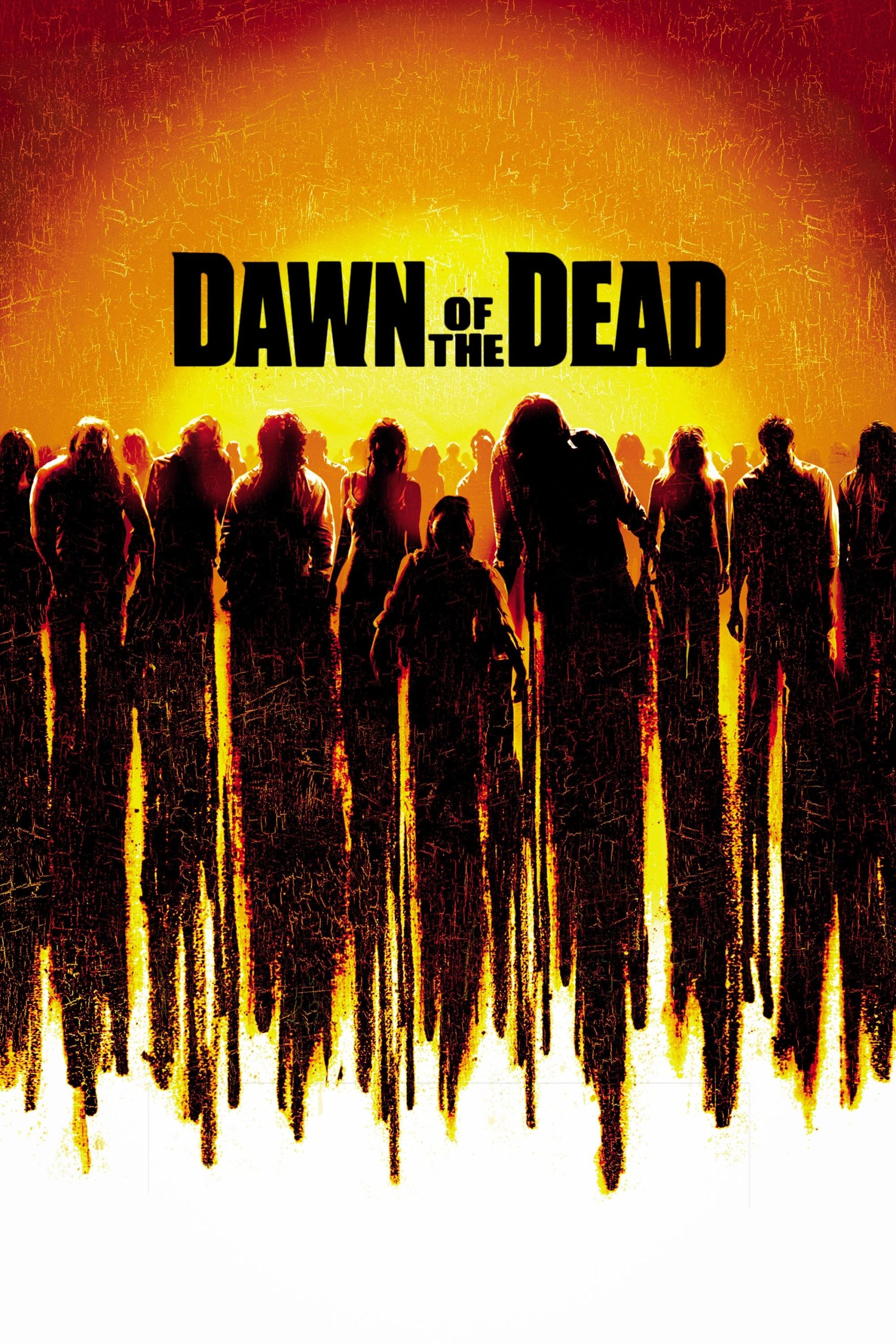
What the Film Is About
I remember the first time I watched “Dawn of the Dead” (1978), I was struck not just by its visceral impact but by the particular unease it left in me—something that went far beyond the scares and the bloodletting. For me, the film isn’t just a story about survival in a world overrun by the undead; it’s about the desperate search for meaning and sanctuary as the familiar world crumbles away. The emotional journey of the central characters, huddled together in the isolated haven of a deserted shopping mall, draws me into a profound meditation on what it means to be alive when all the usual markers of civilization fall apart.
At its core, I see “Dawn of the Dead” as a wrenching exploration of human responses to catastrophe and the kinds of communities we build—or fail to build—when our backs are to the wall. The overall direction of the narrative always felt to me like a tightrope walk between hope and despair, between the urge to cling to what remained and the realization that the old ways were already gone. It’s the emotional tension—the fluctuation between fragile safety and ever-present dread—that keeps me coming back, year after year, for fresh insights.
Core Themes
When I reflect on “Dawn of the Dead,” I can’t help but see it as a dense tapestry of social ideas. The most immediate and lingering theme for me is consumerism. The film skewers the emptiness of material comfort; the undead shuffle mindlessly through the mall, compelled by instincts they don’t understand, mirroring what I see as the numbed trudge of shoppers in a capitalist society. Watching the survivors try to replicate normal life amid the apocalypse, surrounding themselves with goods and luxuries, always struck me as both deeply sad and darkly funny. The shopping mall is not just a setting—it’s the embodiment of modern excess and alienation.
But if consumerism is the main artery, other thematic currents pulse just as strongly. I see the fragility of social order: the collapse of government, the rise of vigilante responses, and the increasingly desperate improvisations of the group left me thinking about how civilization is held together by mere threads. The film doesn’t let me ignore the violent streak that runs through society’s core. The characters are forced into acts of brutality—not just against zombies but against other survivors. This blurring of moral boundaries in the name of survival often leaves me with uncomfortable questions about what we’re willing to justify when our world gets stripped to its bare essentials. As I watch these people try to defend their enclave, I sense that power, control, and fear are tangled together in a complicated knot.
What’s always remarkable to me is how much these same themes have stayed relevant. In the 1970s, when the film was released, the malaise of post-Watergate America and the hangover of Vietnam had made cynicism almost a national mood. Today’s debates about consumer culture, disaster response, and the deeper anxieties of modern life make “Dawn of the Dead” feel just as urgent, if not more so. The film’s underlying fear—that our comforts are flimsy and our social bonds even flimsier—never loses its sting.
Symbolism & Motifs
In my view, every visit to “Dawn of the Dead” reveals a new layer of symbolism at work. The first and most glaring motif is the shopping mall itself—a gleaming symbol of American abundance turned mausoleum. I find the irony almost painful: the very site meant to serve desire and leisure becomes a fortress and finally, a trap. As the terrified survivors gorge themselves on consumer goods, I pick up on Romero’s satirical bite—are they truly safer, happier, or just more insulated from meaning?
The zombies themselves, in my reading, operate on multiple symbolic levels. On one hand, they represent the ultimate loss of individuality—a crowd without consciousness or purpose. On the other, I find them a chilling exaggeration of consumer culture: inexhaustible in their appetites, unthinking in their repetition, and unstoppable in their mass. It’s hard for me not to wince at scenes where the zombies shuffle in endless loops through the mall, parodying the behavior of shoppers driven by habit rather than need.
Violence, too, becomes a motif—a visual and emotional language that runs through every act, every negotiation of power. Weapons are everywhere, but their presence rarely brings security; instead, they escalate conflicts and breed mistrust. I read the film’s continual resort to violence not just as a survival mechanism but as a critique of society’s tendency to solve problems through force, a tendency which, in the film’s world, only hurries the breakdown it seeks to prevent.
Even the quieter details, such as the television broadcasts that punctuate the narrative, seem laden with symbolic meaning for me. The screens flicker with noise and confusion, a stand-in for authority that has lost all power. In these moments, I see a society not just falling apart, but already, in some fundamental way, hollowed out from within.
Key Scenes
Key Scene 1
Early in the mall, there’s a sequence where the survivors indulge in the full bounty of their environment: free clothes, gourmet food, jewelers’ cases ripe for the picking. For me, this is more than just a respite from fear—it’s a surreal tableau about privilege and emptiness. Watching these characters, exhausted but momentarily gleeful, grabbing for things just because they can, I sense a paradox: they are living out a fantasy of freedom while utterly trapped. The pleasure is shallow, fleeting, almost manic. I came away feeling that the film was asking, with a wry grin—what happens when you get everything you always wanted, but the world outside is ending? It’s not comforting; it’s existentially horrifying.
Key Scene 2
Much later, when the survivors must defend the mall against a roving gang of bikers, the film’s themes snap into sharper focus for me. Here, order fractures into total chaos, as two encampments of the living fight for scraps while the dead press in. I read this confrontation as the collapse of solidarity and the eruption of base impulses; the boundaries between “us” and “them” disintegrate. The supposed sanctuary becomes a battleground. I’m always struck by how quickly the veneer of civilization falls away—revealing both savagery and the futility of claiming ownership in a world that’s already lost. The film, in moments like this, feels to me less like a horror story and more like a warning.
Key Scene 3
The closing stretch—where the defense collapses, and the last survivors are forced to abandon their fortress—still hits me as the film’s definitive statement. The hard-won haven is revealed as a tomb; the fantasy of exclusion is overrun by reality, both literal and symbolic. When the lead characters finally make their desperate escape, I feel a deep melancholy but also a sense of release. The film, to my mind, ends on a note of tangled ambiguity: nothing has been saved, but maybe something has been learned. Security, “normalcy,” even identity, prove to be illusions—what endures is adaptability and, perhaps, the willingness to move forward despite everything. For me, this ending is a perfect encapsulation of the film’s thesis: the old world cannot be reclaimed, and clinging to its trappings is a dead-end.
Common Interpretations
As I’ve followed conversations around “Dawn of the Dead,” both among critics and in popular circles, I notice a general consensus around its critique of consumerism—and I share that reading. The zombies’ mindless return to the mall, acting out their former habits in grotesque pantomime, has become an iconic image for the mind-numbing routines of modern life. Many viewers, myself included, find the film’s lens on consumption both prescient and bitingly satirical—especially as today’s culture wars play out along lines of materialism and economic anxiety.
Yet I often encounter other rich readings that resonate with me. One is the idea that the film diagnoses the fragility of order, showing how quickly chaos rises when structures fail. Another interpretation that has always compelled me involves the film’s view of violence: some argue that Romero is as critical of the living as he is of the dead, indicting human nature’s tendency towards self-destruction. I certainly see merit in that angle, especially in the film’s later scenes.
There are also those, perhaps more focused on the emotional arcs, who see “Dawn of the Dead” as a story of isolation, grief, and the quest for connection. That personal aspect—how disaster can bring people together, but also drive them apart—has been especially poignant for me in recent decades, as the world faces new crises.
If there’s any recurring difference in interpretation, I’d say it’s the degree to which the film is viewed through a political versus a psychological lens. While the satire on shopping malls and mindless capitalism is undeniable, I tend to believe that its portrait of fear, longing, and collapse reaches far beyond economics—into questions of what it means to be human when civilization cracks.
Films with Similar Themes
- They Live (1988) – I find a clear thematic dialogue with “Dawn of the Dead” in John Carpenter’s riff on hidden control and consumerist manipulation. Both films use genre conventions as a vehicle for skewering how society is molded by commercial interests and passive compliance.
- 28 Days Later (2002) – Like Romero’s masterpiece, this film explores the collapse of social norms and the thin veneer of civility in the aftermath of a catastrophe. Its rage-infected hordes and embattled survivors echo the questions of power, community, and violence I read in “Dawn of the Dead.”
- Lord of the Flies (1963) – Although not a zombie film, this adaptation shares the motif of societal breakdown and the reversion to primal instincts. I’ve always felt the kinship in how both films probe what happens when authority and order evaporate.
- The Road (2009) – The bleak, post-apocalyptic odyssey at the heart of “The Road” mirrors for me the desperation and fractured hope of Romero’s survivors. In its relentless question—what is left to cherish or protect when all else is gone?—I hear echoes of “Dawn of the Dead.”
Ultimately, what I carry away from “Dawn of the Dead” is a complicated but deeply personal sense of disquiet. The film refuses easy answers. Through its stark visuals and razor-sharp social commentary, it leaves me pondering how much of our lives are spent walling ourselves off—protecting our small enclaves—while ignoring the rot that’s spreading beyond. Whether seen as a critique of consumerism, a meditation on violence, or a parable of civilization’s fragility, its warning feels more immediate than ever. For me, Romero’s work is an unblinking reflection of human nature’s strengths and deep flaws: our ingenuity, our pettiness, our capacity for both solidarity and selfishness. Made at a time of profound cultural malaise, the film continues to hold up a mirror that shows not just monsters, but ourselves.
To explore how this film has been judged over time, consider these additional viewpoints.