
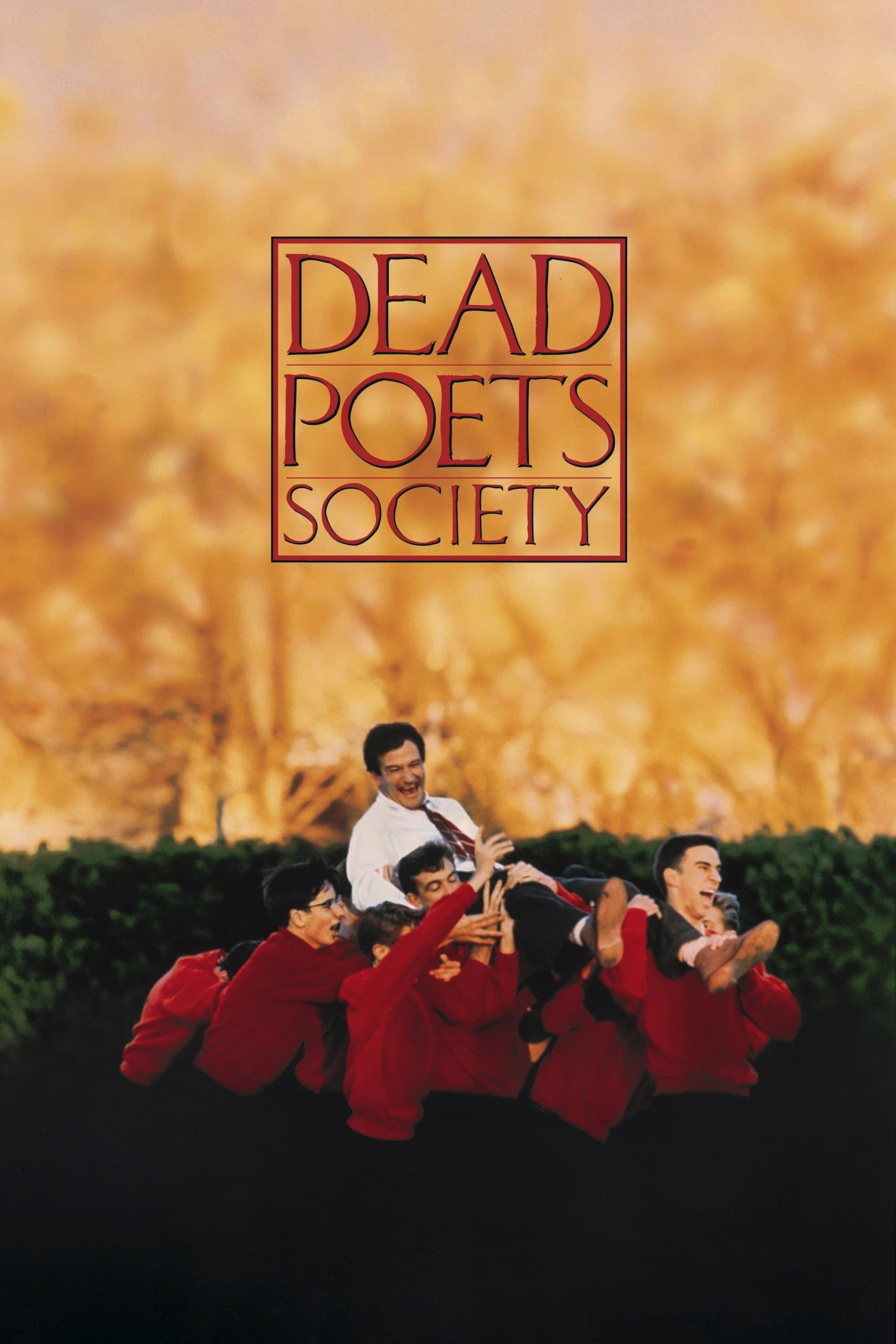
What the Film Is About
Every time I revisit “Dead Poets Society,” I’m struck not by the specifics of its boarding school setting or period costumes, but by a universal ache—an ache for personal expression in the face of suffocating conformity. What pulls me in, again and again, is the emotional upheaval that comes when youthful yearning meets the forceful stone wall of tradition. This isn’t just a film about a renegade English teacher; it’s about what happens when someone dares, even briefly, to set young minds and hearts alight with the idea that their voices and dreams matter. The central conflict emerges right in this tension between the liberating possibilities of art and poetry versus the rigid rules and expectations that were written long before these boys were born.
What I carry away most vividly isn’t the sequence of events, but the intensifying pressure that builds within each character—especially as the story draws out their deepest hopes and crippling fears. The film’s emotional journey, to me, feels like a slow blooming that’s always at risk of being crushed. In every classroom, dormitory discussion, or hushed woodland gathering, there are questions about who these boys are allowed to be, and whether they dare to assert that self in public. “Dead Poets Society” is, at its core, an elegy for the dreams we’re taught to suppress and the moments we dare to reclaim them.
Core Themes
For me, the most compelling theme winding through “Dead Poets Society” is the battle between individuality and conformity. I see the film as a passionate defense of selfhood—of the irreplaceable value in thinking, feeling, and living authentically, even when those around us prize obedience over originality. The tension isn’t merely academic; it permeates the very air at Welton Academy, where tradition is so heavy that it smothers curiosity. I find this tension especially poignant because it echoes, in miniature, battles that everyone eventually faces: when to risk stepping away from the crowd, even when the cost is steep.
Another central idea that shapes my reading of the film is the transformative power of art and literature. The students learn to recite poetry not as a classroom exercise, but as an intoxicating way to see the world anew. For me, this goes beyond “seizing the day”—the film suggests that poetry, when truly heard, can ignite rebellion against the deadening forces of control. The ability to imagine and to speak beauty is, in itself, an act of resistance. Even now, decades after its release, I see this message as fiercely relevant, especially as formal institutions become more standardized and less nurturing of the eccentric or the passionate.
I also can’t shake the film’s deep ambivalence about authority. The fathers and administrators in the film represent a world built on certainty, discipline, and proven formulas for success. I find myself wrestling with the notion that caring for the future sometimes means dousing the present. The film invites us to ask—at what cost do we demand obedience? Where is the line between guidance and suffocation? When I view it through this lens, “Dead Poets Society” feels less like a story about rebellion for its own sake, and more a meditation on what’s lost when risk, play, and feeling are systematically discouraged.
Even now, I rarely meet someone who can’t relate to wanting approval and belonging, only to struggle with whether those things are worth the price of self-denial. The film’s themes are timeless precisely because the machinery of conformity is ever-present, and the need for creative disobedience never ceases. Watching these characters lurch between fear and daring, I’m reminded that every generation must negotiate these same fundamental questions—and that the answers rarely come easily.
Symbolism & Motifs
What lingers in my mind long after the credits roll are the symbols dotting the film’s landscape—each working quietly to reinforce a deeper point about individuality and risk. Chief among these is the recurring motif of open windows and outdoor spaces. Whenever characters step outside the formal confines of Welton—whether to the cave, to the woods, or simply out into the night—they are literally and figuratively breaking out of oppression. I see these spaces as sanctuaries for thought and feeling, places where possibility breathes. The contrast between inside and outside isn’t just visual; it’s ethical. The institutional interiors are cold, ordered, and stifling; outside, the boys can become whoever they wish, if only for a moment.
Another motif that has always struck me is the repeated invocation of “carpe diem.” It’s easy to dismiss this as just a catchphrase or pep talk, but I believe the film treats it more as a challenge—a dare to live with immediacy, depth, and intention. Each time a character recites those words, I sense it’s both an aspiration and an admission of how hard such a life is to choose. The old textbooks and classroom routines (especially the literal ripping out of textbook pages) act as symbols of the inherited wisdom that, if left unexamined, can calcify into dogma.
I’m also fascinated by the use of candlelight in the film, particularly during the clandestine meetings of the Dead Poets Society. For me, the small flames represent the flickers of inspiration and hope, fragile but real, that exist even in the dark. The group’s poetry readings near the cave’s entrance, lit only by a few flickering candles or the soft spill of moonlight, create an atmosphere of vulnerability and radical honesty. It reminds me that the creative impulse always exists on the margins, threatened by the chill of conformity but never entirely crushed.
Perhaps most poignantly, the cave itself functions as a powerful symbol of both refuge and risk. Every time the boys venture there, I sense the duality: the cave is a womb for new ideas, but it’s also a temporary escape, never a permanent solution. Eventually, the pressures of the outside world will catch up. In this way, the film acknowledges that inspiration is precious but fragile in an environment hostile to change.
Key Scenes
Key Scene 1
There’s one pivotal moment that has always defined my understanding of the film’s message: the first time Mr. Keating, standing atop his desk, implores his students to “look at things in a different way.” This isn’t grandstanding for its own sake; it’s an embodiment of the film’s most urgent principle. For me, watching Keating physically place himself above the routine, inviting his students to alter their perspective—literally and metaphorically—becomes an act of intellectual rebellion. In that moment, the classroom transforms from a site of rote memorization to a site of possibility. The emotional charge in this scene lies in its quiet challenge—a call not just to question, but to see, truly see, beyond inherited assumptions. Every time I see this, I’m reminded of how small gestures can spark seismic changes in how we relate to the world and ourselves.
Key Scene 2
Another unforgettable moment for me unfolds when Neil, so alive with his newfound passion for acting, finally takes the stage in “A Midsummer Night’s Dream.” It’s not just a performance—it’s the crystallization of a desire to be seen, to express, to exist fully. I read this not as a plot point, but as a meditation on the cost of daring to reach for meaning in a world that values conformity over self-expression. Neil’s triumph, and the fallout that follows, cuts deeply because it captures the perilous line between inspiration and destruction. The tension here exposes the limits of what art and enthusiasm can protect us from—societal and familial judgment, the crushing force of unmet expectations. It’s a painful reminder that change is never isolated, and rebellion can sometimes yield consequences we cannot control. To me, this scene is where the film’s tension between hope and heartbreak becomes most acute.
Key Scene 3
The film’s closing sequence—the standing-on-the-desk salute from Keating’s students—resonates with me as its true moral climax. Here, the posture adopted by the boys is more than a final act of defiance; it carries the accumulated weight of everything they’ve felt but could not say. The silence, the restraint, the trembling resolve—it’s all distilled into this subtle, yet powerful gesture. I see it as a bittersweet victory: an assertion of loyalty, memory, and conscience in a place that demands silence and complicity. In adopting Keating’s literal and figurative vantage point, the students reclaim their capacity for independent thought, if only fleetingly. For me, that final shot isn’t an exclamation mark, but an ellipsis—a sign that the struggle between conformity and individuality continues, long after the credits roll.
Common Interpretations
I’ve found that interpretations of “Dead Poets Society” diverge along two closely linked paths. There are those who view it as a stirring, if tragic, endorsement of nonconformity—a celebration of creative risk-taking against the forces of repression. In this reading, the film stands as a love letter to the iconoclasts among us, urging audiences to prize their own distinct voices even when they tremble with uncertainty. Many critics praise the movie for reinvigorating the ideal of the teacher as a catalyst for self-discovery and moral courage.
Yet, I’ve also encountered a more cautionary interpretation—one that recognizes the perils of unbridled self-expression. Some critics argue that the film ultimately complicates its own message, suggesting that even well-intentioned rebellion can have devastating outcomes if it isn’t grounded in a deeper awareness of context and consequence. The events that unfold could be read as a warning about the costs of romantic idealism, especially within rigid systems unwilling or unable to adapt. Where some see the ending as hopeful, others see it as a somber acknowledgment of how rarely institutions make room for true transformation.
As for me, I most often read the film as inhabiting a delicate middle ground. What strikes me isn’t so much its advocacy of one position or another, but its acute awareness of how desperately we all want to believe in change—and how fraught the work of achieving it really is. The ambiguity that lingers in the film’s final frames is, for me, its greatest strength: it suggests that pursuing selfhood and meaning is both worthy and risky, and that every victory against conformity is partial and hard-won.
Films with Similar Themes
- “The Prime of Miss Jean Brodie” (1969) – I see in this film a kindred meditation on the influence (and limits) of unconventional teaching, as a passionate instructor awakens the inner lives of her students while navigating the dangers of personal charisma and ideological rigidity.
- “Rushmore” (1998) – This film, for me, explores the tension between youthful creativity and institutional tradition, as a precocious student tries to find space for his unique ambitions within a confining private school setting.
- “The Emperor’s Club” (2002) – I find echoes of “Dead Poets Society” in this film’s depiction of how teachers attempt to inspire moral growth, but must also face the stubborn weight of tradition, institutional politics, and personal fallibility.
- “Good Will Hunting” (1997) – Beyond the surface similarities of a young protagonist guided by an empathetic mentor, I find this film equally invested in the possibility—and difficulty—of using education to catalyze genuine self-discovery and transformation.
For me, “Dead Poets Society” ultimately asks not just whether we can find our own voices, but whether we have the courage to use them in communities that thrive on obedience. It refuses easy answers, and instead holds open the wound between the longing for freedom and the safety of conformity. The Welton Academy of the 1950s is a microcosm, but the emotional weather it conjures—of yearning, fear, hope, and regret—remains acutely familiar. The film’s enduring legacy, as I see it, lies in its conviction that art, beauty, and defiant honesty are never wasted, even when they come at great personal cost. “Dead Poets Society” reminds me that the fight to live deliberately is a story without end—one every generation must grapple with anew.
To explore how this film has been judged over time, consider these additional viewpoints.