
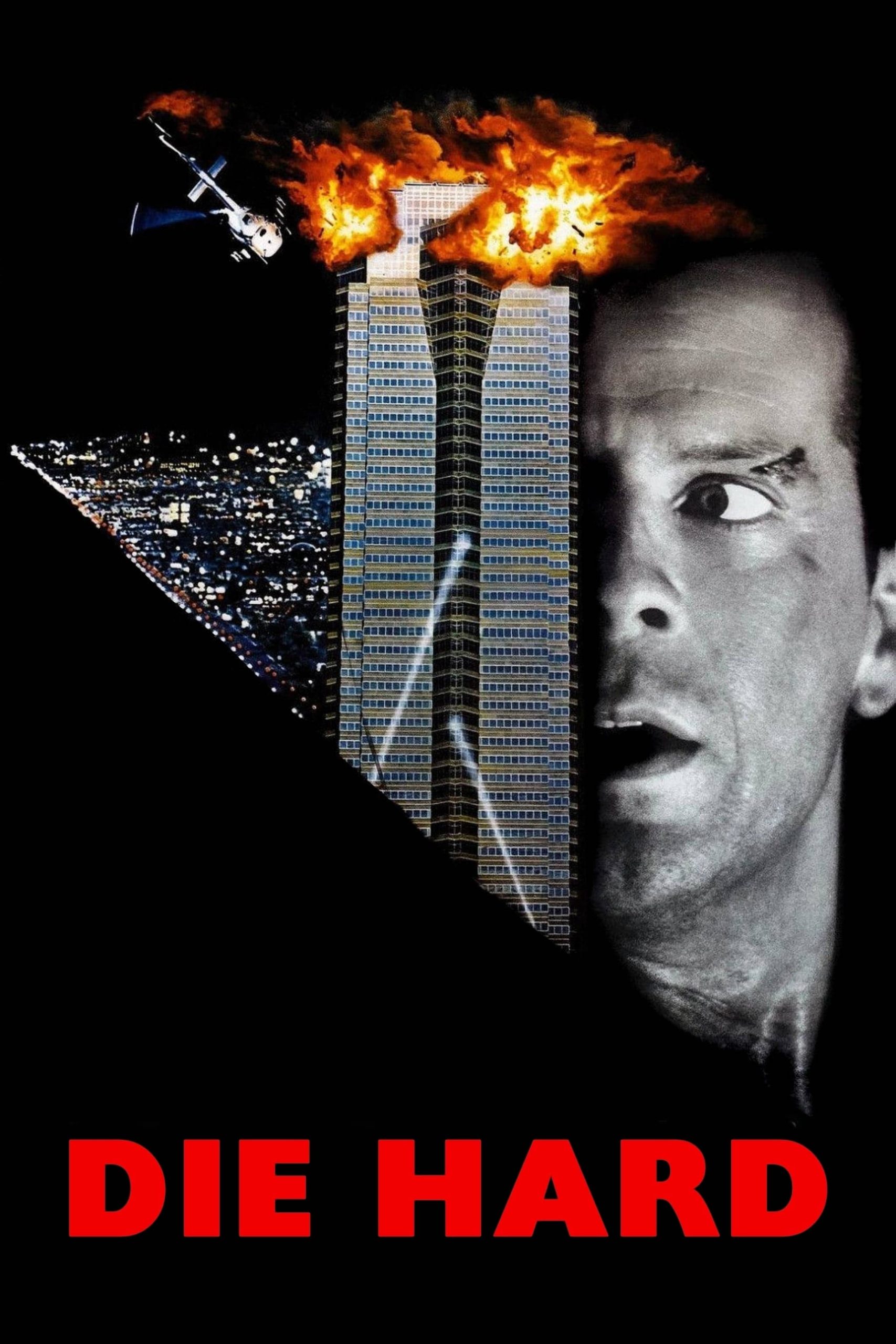
What the Film Is About
The first time I watched Die Hard, I felt every ounce of adrenaline, but what impressed me went beyond bullets and broken glass. I found myself invested in a man forced to confront personal demons against the ticking clock of violence and chaos. For me, this is a story about what happens when an ordinary—if somewhat jaded—individual is pressed to the limits of his courage, loyalty, and ingenuity. I was consistently struck by how the emotional journey of John McClane, our protagonist, mirrored a path of confronting vulnerability as much as confronting mortal danger.
Rather than just pitting one man against a gang of criminals, Die Hard feels like a test of selfhood in the harshest of circumstances. I read the film as an intense meditation on what it means to be separated—physically and emotionally—from the people we care about. The central conflict isn’t just good guys versus bad guys; it’s a man wrestling with his own isolation and regret, set against the backdrop of a capitalist fortress under siege. The drama pulses not simply from gunfire, but from John’s determination to reconnect with his estranged wife and, in doing so, himself.
Core Themes
When I look beneath the surface of Die Hard, several profound themes emerge, each threading the chaos with meaning. The idea of individual agency, of one person’s capacity to make a difference, echoes powerfully throughout the film. Against every rational expectation, McClane persists—resourceful, battered, desperate. I read this as a defiant assertion of human resilience. At the film’s core is the struggle to retain one’s moral bearings in a world that seems rigorously indifferent to virtue.
The film’s take on masculinity particularly resonates with me. Unlike the action heroes of prior decades, McClane isn’t invincible—he bleeds, he falters, he openly admits fear and doubt. I see the vulnerability written into both his physical and emotional wounds as an intentional challenge to the era’s action tropes. Released in 1988, the film arrives at a cultural moment when both workplace values and family roles were in flux. McClane’s journey forms a critique of the “superman” ideal, revealing instead a model of masculinity that’s elastic, permeable, and riddled with uncertainty—a vision that still feels urgent in today’s conversations around gender and identity.
Another theme working its way through the film is the complex relationship between authority and heroism. I’ve always been fascinated by how Die Hard subverts our expectations: the institutions designed to protect—police, FBI, corporate leadership—are largely ineffective, bureaucratic, or outright obstacles. It’s the lone individual, not the system, who has to act. I find this an acerbic commentary not only on the failures of authority but on the necessary skepticism toward institutional power in late twentieth-century America, a skepticism that feels pointedly contemporary.
At the same time, love and reconciliation operate quietly but powerfully. The backdrop of estrangement between John and Holly becomes, for me, the emotional lynchpin of the film’s action. Beyond the pyrotechnics, Die Hard is, at heart, about the challenges of connection—between spouses, colleagues, and strangers thrust into crisis. In a world dominated by architectural ambition and corporate gleam, the genuine struggle to bridge personal divides becomes its own kind of heroism. That lesson, in my view, has never gone out of style.
Symbolism & Motifs
Each time I revisit Die Hard, I’m pulled in by the film’s clever use of visual motifs and recurring symbols that deepen its themes. The skyscraper itself, Nakatomi Plaza, is more than a setting—it stands as a looming icon of 1980s American ambition, progress, and, in many ways, alienation. When I watch McClane crawl barefoot through vents and across shattered glass, I read the building as a labyrinth, hostile and impersonal, a cold fortress that paradoxically becomes both his prison and crucible.
Even McClane’s bare feet take on a potent symbolic role for me. His vulnerability is made painfully visible, stripping away the “armor” expected of an action hero—McClane doesn’t stride invulnerably through danger, he limps and bleeds, all while improvising. This physical exposure mirrors his emotional rawness, especially in moments of despair and confession. I interpret this motif as a dismantling of the illusion of invulnerability that defined so many 1980s heroes.
The contrast between glass and steel recurs visually and thematically. Shattering glass punctuates the action, but I see it as more than spectacle—it represents moments of dangerous clarity. Each break marks a revelation, a breach through which truth, vulnerability, or genuine emotion seeps out. Meanwhile, the cold steel and concrete seem to embody the impersonal, profit-driven world of big business. These motifs make the action feel psychologically charged; the building’s destruction isn’t just physical, but symbolic of breaking down emotional walls.
For me, the radio communication between John and the outside world becomes another crucial motif. The constant, crackling exchange via walkie-talkie is more than a plot device—it’s the lifeline connecting McClane to humanity and community, tenuous and unpredictable. In these moments, I find a meditation on how technology mediates our connections, often bridging distances but never fully transcending the echo of isolation.
Key Scenes
Key Scene 1
I always return to the moment when John McClane, wounded and bone-tired, bares his fears to Sgt. Al Powell over the radio. He confesses that he may not make it out alive and asks Al to deliver a message of love and apology to his wife. This scene resonates with me as the emotional heartbeat of the film. McClane’s vulnerability is on full view—he’s not just fighting for survival, but for the chance to make amends. The desperation in his words strips away any residue of macho bravado, revealing that the most terrifying enemies are often the regrets we carry inside ourselves. This moment, for me, crystallizes the film’s belief in the importance of emotional honesty, even (or especially) under the direst circumstances.
Key Scene 2
Another scene I find essential occurs when Holly, McClane’s estranged wife, confronts Hans Gruber. I see in this moment not just an act of courage, but a reassertion of agency in an environment—both corporate and criminal—designed to rob her of it. Holly’s insistence on her own and her colleagues’ dignity pushes back against the film’s parade of male authority figures. This scene deepens one of the film’s central questions: What does real strength look like? Is it power in the sense of domination, or in the sense of standing up for others, especially when the cost is high? I interpret this exchange as an argument in favor of a quiet, enduring resilience that operates outside the expectations of traditional heroism.
Key Scene 3
The climactic confrontation between McClane and Gruber remains, in my mind, the film’s thematic crescendo. When McClane outsmarts Gruber and saves Holly, there is a sense of poetic symmetry—personal and professional redemption interwoven. What always strikes me is that McClane doesn’t emerge unscathed, either physically or emotionally. The moment they share afterward—a quiet, battered embrace—feels to me like more than mere victory. It’s a hard-earned acknowledgment that both vulnerability and determination are necessary to transcend isolation and cynicism. The film’s final statement, as I see it, is that connection, not conquest, makes survival meaningful.
Common Interpretations
Over the years, I’ve noticed a range of perspectives when people talk about Die Hard. For some critics and fans, the film is the ultimate “everyman” fantasy, a celebration of individual resourcefulness overcoming both criminal menace and bureaucratic ineptitude. I understand this reading—it’s clear that the film offers a potent wish fulfillment in the face of faceless authority and impersonal systems. Many see McClane as a modern cowboy, upholding basic decency in a landscape devoid of certain moral clarity.
But I also encounter interpretations that emphasize the film’s satirical qualities. There’s a sharp critique of corporate culture threaded throughout—the gleaming lobby, the status-obsessed executives, the cultural cluelessness of the so-called elite. Some writers frame Die Hard as a subversive riff on both the Reagan-era action formula and yuppie capitalism. In this interpretation, McClane’s battered body becomes a symbolic vessel for working-class anger—against institutions that promise security but often deliver confusion and indifference.
A third common interpretation centers on the film’s handling of masculinity. While some read McClane’s journey as a reaffirmation of traditional male heroics, I find many critics just as likely to highlight its destabilization of those values. The film, in this lens, is less about overcoming the villain and more about dismantling the myth of the untouchable action hero. The messiness, fear, and emotional transparency McClane displays—a willingness to express love, regret, and weakness—have become, for many, the film’s most enduring contribution to the genre.
Of course, the perennial debate about whether Die Hard is “a Christmas movie” persists, but I view this less as a quibble and more as an extension of the film’s discourse on redemption, forgiveness, and the possibility of renewal in the face of chaos. It’s fascinating how a film so steeped in gunfire and tension has become, for some, a holiday tradition—perhaps because underneath its violence, it’s about the vulnerable drive to reconnect.
Films with Similar Themes
- Lethal Weapon – The thematic connection here, for me, is the focus on wounded masculinity, personal redemption, and the uneasy alliance between damaged individuals in the face of institutional and personal dysfunction. Both films challenge the invincible action hero trope with characters who bleed and break.
- Speed – I find that Speed explores the lone hero-versus-system theme, highlighting human ingenuity and resilience under relentless pressure, set against the backdrop of technologically mediated modern danger.
- First Blood – This film, like Die Hard, examines alienation and the personal toll of violence. John Rambo’s struggle against authority and his own demons mirrors McClane’s, albeit with a darker, more solitary focus.
- The Towering Inferno – The high-rise setting and crisis-driven narrative echo Die Hard, but I’m most interested in how both use architectural marvels as metaphors for societal hubris and the need for cooperation, rather than reliance on singular heroics alone.
Ultimately, what continues to captivate me about Die Hard is not the mayhem or even the clever one-liners, but the film’s enduring meditation on what makes us human—our capacity for perseverance, our hunger for connection, and our struggle to find meaning in moments of crisis. When I revisit those vertiginous floors of Nakatomi Plaza, I see not just a backdrop for carnage, but a winding road through alienation, heroism, and reconciliation. In the end, Die Hard speaks to the hope that even amid chaos and fracture, there is always a way back to empathy and belonging.
After learning the historical background, you may also want to explore how this film was received and remembered.