
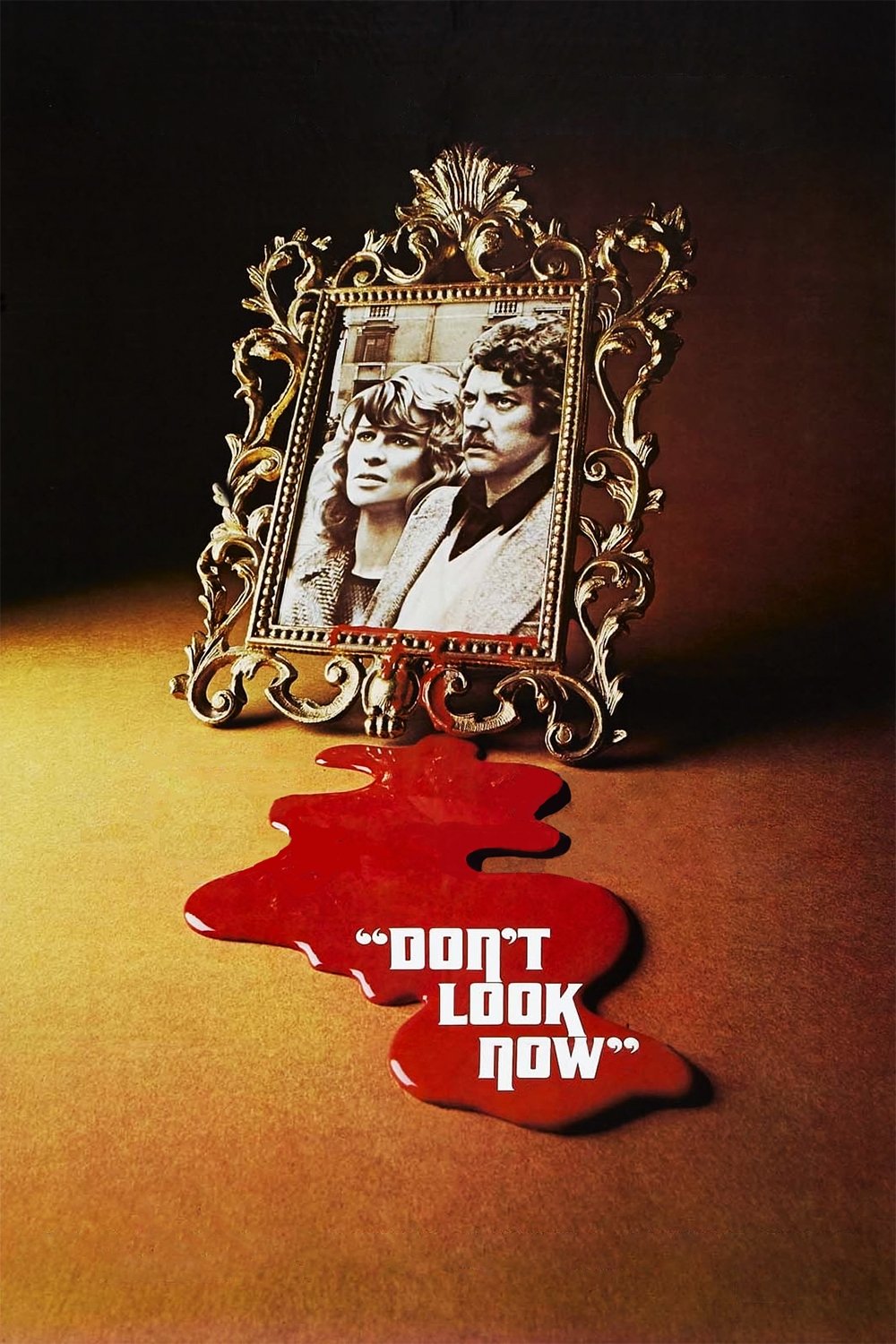
What the Film Is About
When I first watched “Don’t Look Now,” I was caught off-guard by how it lingers in the spaces between spoken words and haunted memories. For me, this isn’t merely a story about grief, nor is it a straightforward thriller. The film immerses me in the strange, shifting territory where sorrow, fear, and intuition collide. It follows a married couple—grieving, unmoored, and emotionally volatile—as they travel to Venice in the aftermath of their daughter’s accidental death. What seared itself into my mind was the sense of wandering through a labyrinth of trauma, where every alleyway and reflection seems to echo unseen presences and frazzled nerves.
I never felt the film was content to tell a simple story of loss; instead, it draws me into a psychological puzzle. The real conflict, as I experience it, is between clinging to rational explanations and succumbing to the mysterious, almost supernatural weight of grief. The emotional journey here isn’t linear or complete. Even as the narrative winds toward an unsettling climax, I keep sensing the messy, cyclical tangle of mourning and the thin veil separating memory from reality.
Core Themes
What continues to strike me about “Don’t Look Now” is its fearless excavation of grief’s psychic aftermath. The film stares directly at that aching space left by personal tragedy—a space neither logic nor love can easily fill. My experience with it is a bracing confrontation with the way loss reshapes a person’s internal landscape. It asks: When someone you love disappears, what do you see and hear in their absence? The film’s world is constructed from the echoes of what’s missing.
I see the tension between the rational and the mysterious as another theme: this is a film perched on the divide between scientific explanation and the pull of the inexplicable. John, the protagonist, resists supernatural interpretations even as his senses tell him something is amiss. His wife, Laura, is drawn to the hope that connection persists beyond death. The film never settles in either camp, which I find endlessly compelling—it forces me to occupy that same place of irresolution.
Another theme that resonates is the instability of perception. “Don’t Look Now” keeps returning to the question of whether what we see is ever the whole truth. That feels acutely relevant not only to the 1970s—with their explosion of interest in psychology, the paranormal, and the limits of scientific certainty—but to my own experience grappling with the unreliability of memory and sense when under emotional siege. In the uncertain present that I live in now, the film speaks louder than ever about the difficulty of truly knowing or trusting anything—least of all, oneself.
For me, Venice is more than just backdrop; it’s a living, breathing entity that amplifies themes of disorientation, longing, and hidden menace. Its labyrinthine streets mirror the mazes our minds construct after trauma. As I reflect on the era of the film’s release, I think about how the early ’70s marked a turning point: a time when people were increasingly skeptical of easy answers and more willing to probe the undercurrents of psychological pain—an openness that’s echoed in the film’s refusal to provide safe or conclusive moral lessons.
Symbolism & Motifs
Repeated imagery courses through “Don’t Look Now” like an undertow—and I find myself pulled beneath the surface by symbols that seem at first incidental, but gradually reveal a deeper structure. One motif that’s impossible to ignore is the color red. From the striking coat worn by John and Laura’s daughter, to brief flashes in the Venetian landscape, red becomes a kind of visual trauma—a color that both obsesses and warns. Red is the past you can’t outrun and the intrusion of memory on the present. I often think of it as the color of both danger and longing, making every appearance fraught with psychological electricity.
Mirrors, glass, and reflections haunt the film—and consequently, haunt me. These surfaces seem to invite looking and mis-seeing. They break the world into fragments, just as grief shatters a person’s sense of unity. Whenever a character gazes through glass or into water, I’m reminded of how reality bends in the wake of loss. It’s as though the film is challenging me to question the reliability of my own perception—to wonder if what’s presented is a truth or a projection of interior anxiety.
Water itself functions as another motif I can’t ignore—it’s everywhere, sometimes serene and other times menacing. In my view, the waterways of Venice blend life and death, offering a kind of passage or borderland. Water carries both literal and metaphorical weight here: it’s a reminder of the drowning incident that opens the film, but it also acts as a conduit for the characters’ psychological drift. The city’s endless wetness is a kind of persistent mourning, and I feel it seeps into every frame.
Finally, I’m fascinated by the use of doubles and doubling—reflections, twins, déjà vu, mistaken identities. These devices force me to confront the idea that in grief, we are always searching for what’s lost: trying to see our loved ones in strangers’ faces, reliving moments, haunted by echoes. This motif points to a world perpetually out of alignment, where the past and present blur, and where nothing is quite what it seems.
Key Scenes
Key Scene 1
Whenever I remember “Don’t Look Now,” I find my thoughts circling back to the intercutting between John and Laura’s lovemaking and their routine preparations for the day. The emotional impact of this scene is overwhelming—and not just for its reputation as one of cinema’s most authentic portrayals of intimacy. To me, it’s a meditation on connection in the aftermath of devastation. The editing fuses passion and ritual, suggesting that love and loss are interwoven beyond separation. It’s as if grief and desire are not separate but part of a continuum—the need for closeness entangled with the impossibility of healing. This scene forces me to consider how trauma binds couples even as it sets them adrift, and how ordinary acts—buttoning a shirt, brushing hair—can carry the weight of unspoken sorrow.
Key Scene 2
One of the most unsettling moments, in my memory, unfolds during John’s encounter with the elderly sisters, one of whom claims to have psychic visions of his deceased daughter. The encounter is quietly unnerving, cutting to the bone of what the film is probing: the hunger for reassurance, for proof that death isn’t the end. I’m struck by how the sisters destabilize John’s wary skepticism but, more importantly, how they ignite Laura’s hope. For me, this moment isn’t just a narrative device for introducing the supernatural; it’s a snapshot of the collective need to find meaning in loss. I keep coming back to how these women—so worldly and so otherworldly—act as messengers, whether genuinely gifted or not, who pull John and Laura deeper into the murk of what can’t be explained away.
Key Scene 3
The final confrontation—where John pursues the red-coated figure through Venice’s winding walkways—hits me with an almost primal force. By this point, the suspense and foreboding are nearly unbearable. What devastates me most isn’t the shocking reveal or violence, but what it represents: a full-circle return to the inseparability of memory, intuition, and fate. John’s relentless search is a metaphor for the inability to let go, a headlong chase after a phantom that ultimately leads to tragedy and closure of a kind. The film’s parting image leaves me reeling, convinced that the past is never really gone, only transformed, and that resisting its pull can bring release—or ruin.
Common Interpretations
Talking to fellow cinephiles and reading the best criticism on “Don’t Look Now,” I’ve noticed recurring interpretations that mirror my own fascination with the film’s mysteries. Many see it, above all, as a study in the psychological impact of grief—how tragedy warps perception and sets us adrift in unfamiliar territory. There’s a strong consensus that Venice itself is more than a backdrop; it’s an emotional landscape and a mirror for the characters’ fractured inner worlds.
Some audiences lean toward supernatural interpretations, treating the film’s spectral moments and patterns of déjà vu as a suggestion that John possesses second sight, or that the boundary between the living and the dead is genuinely porous. Critics often note, however, that the film deliberately withholds conclusive answers, thriving instead on ambiguity. Others interpret the narrative as a purely psychological case study, with John’s visions and obsessions stemming from survivor’s guilt and the all-consuming pressure of unprocessed grief.
A third group of interpretations focuses on the film’s meditation on fate and fatalism. I’ve encountered compelling readings that argue the entire story is a closed loop: that John, in ignoring his own intuitive warnings, is ensnared in a kind of preordained ending. Whether his visions are warnings from a benevolent or malevolent force, it doesn’t matter so much as the inexorable pull toward destiny—a reading that leaves me with a chilling sense of the limits of free will, especially when we are blinded by grief.
It’s rare to find viewers who leave the film satisfied with a single, clear explanation. That’s part of its genius: “Don’t Look Now” invites endless debate over whether it’s best understood as a ghost story, a suspense thriller, a tragic love story, or something more eerie and existential. For me, the most powerful takeaway is its acknowledgment of uncertainty—the impossibility of ever completely separating rationality from intuition, or present from past.
Films with Similar Themes
- The Innocents – Like “Don’t Look Now,” this film blurs the border between psychological trauma and supernatural suggestion, using its haunted setting and unreliable narrator to explore the inner life of grief and doubt.
- Picnic at Hanging Rock – I find that both films unsettle me with their refusal to provide comforting resolutions. Both dwell on unexplained loss and the psychological currents beneath the surface of everyday life.
- The Sixth Sense – The interplay between grief, supernatural visions, and the longing for connection across the veil of death creates an atmosphere of ambiguity and dread that reminds me strongly of “Don’t Look Now.”
- Repulsion – While more claustrophobic, this film explores a descent into psychological instability, mirroring the way “Don’t Look Now” uses environment and perception to echo interior states of trauma and unease.
If I try to distill what “Don’t Look Now” ultimately communicates, it’s this: human beings are never entirely rational, nor do we live outside the shadows of our past. We are shaped—sometimes even destroyed—by the things we most try to forget. The film doesn’t offer easy solutions or definite boundaries between the seen and unseen; instead, it reminds me that grief is a lifelong companion, altering every perception, every relationship, every moment of hope. In a world that prizes explanations, I think the film’s daring embrace of ambiguity, fear, and unresolved sorrow might be its most enduring, and profound, legacy.
To explore how this film has been judged over time, consider these additional viewpoints.