
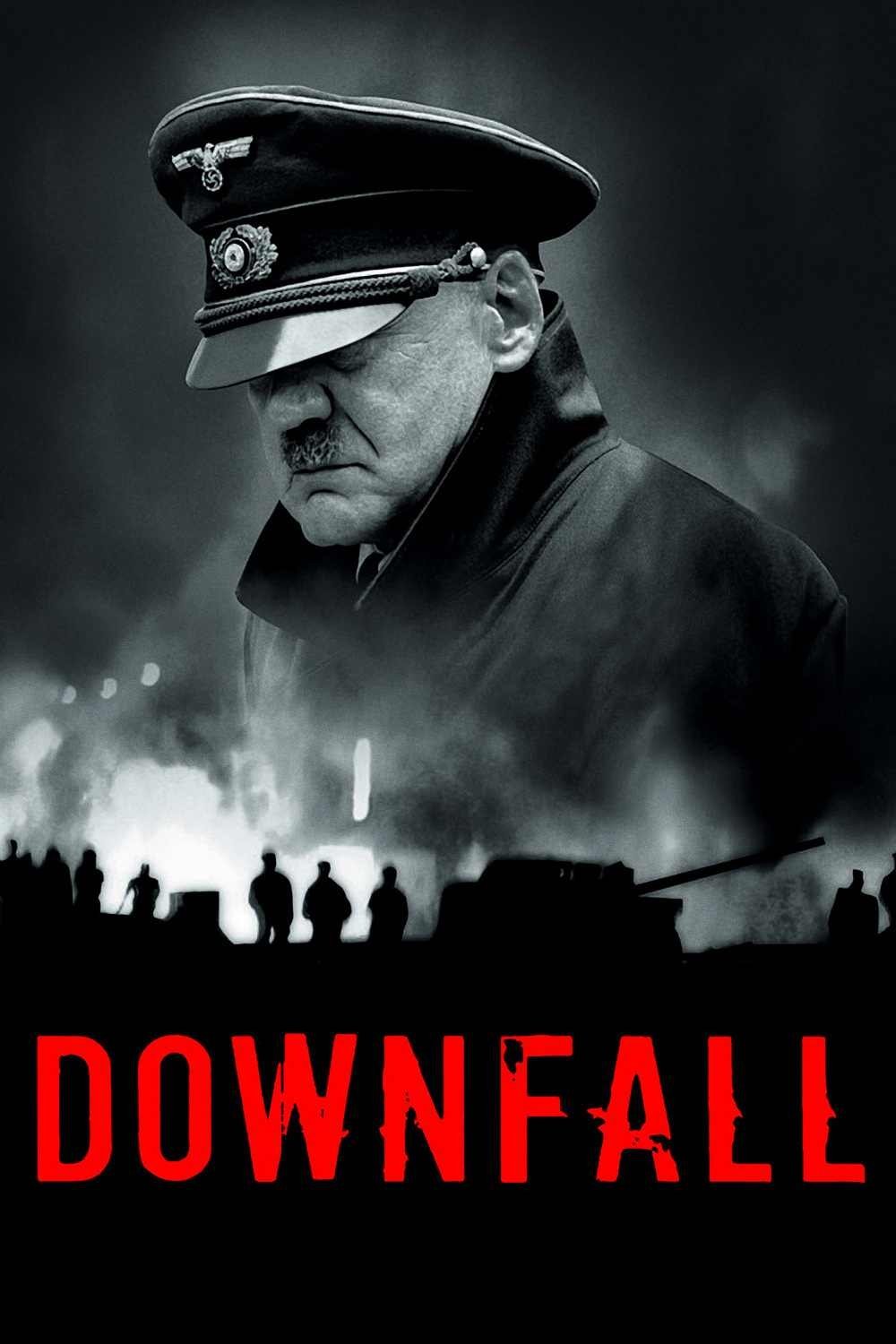
What the Film Is About
The first time I sat down with Downfall, I wasn’t prepared for how deeply it would unsettle me—not simply as a historical account, but as an unflinching window into a world collapsed by its own moral entropy. This isn’t a war film in the conventional sense. To me, it felt like an intimate confrontation with extremity, with the emotional chaos that erupts when an entire worldview begins to disintegrate. The story doesn’t just chart the final days of Hitler’s regime from a tactical standpoint, but rather, it immerses the viewer in the claustrophobia, paranoia, and mounting despair that defined the end of a monstrous era. Every moment hums with a kind of dread that transcends historical distance, reminding me that what’s at stake is far more existential than militaristic.
What lingers for me isn’t the momentum of tanks or troop movements, but the psychological clash between myth and reality as the Nazi hierarchy confronts its imminent demise. Witnessing characters—some intoxicated by belief, others paralyzed by uncertainty—made me reflect on how systems based on delusion and violence finally cannibalize themselves. The film’s journey is emotional rather than chronological, inviting me to dwell on the unraveling of humanity within the fractured microcosm of Hitler’s bunker.
Core Themes
When I engage with Downfall as more than a depiction of historical catastrophe, what strikes me most is the persistent examination of power’s corrosive effect on conscience. The film makes me stare directly at complicity—the subtle, incremental choices people make when swept up in ideology. I find this moral territory both chilling and compelling. Here, power isn’t glamorous or strategic, but desperate, isolated, and dehumanizing. What the film really forces me to confront is the banality of evil: how monstrous acts aren’t always committed by monstrous people, but by individuals clinging to loyalty, routine, or delusion long past the point of reason.
The film’s themes reach beyond their historical specificity. For me, the questions it raises about responsibility and self-deception haven’t lost their relevance. In an era when societies frequently grapple with political extremism and the psychology of followers versus leaders, this film’s insights into groupthink and moral abdication feel uncomfortably timeless. It interrogates not only why horrors happen, but how ordinary people become agents—or silent bystanders—of those horrors. It’s a study in the inertia of ideology, showing how personal and collective denial can prolong destruction long after hope or victory have vanished.
Symbolism & Motifs
What I find remarkable about Downfall is how it weaves together symbolism and visual repetition to build its oppressive atmosphere. The bunker itself looms as a physical and psychological labyrinth, reflecting both the claustrophobia of Hitler’s collapsing regime and the mental confinement of its adherents. To me, the perpetual dimness and receding corridors operate like metaphors for a worldview with nowhere left to turn—each escape route, literal or moral, bricked over by past choices.
Uniforms, medals, and ritualistic salutes recur almost obsessively throughout the film. I read these as desperate attempts by the characters to maintain a façade of order and meaning amid unraveling chaos. Every salute seems stripped of conviction, every insignia a hollow token in a world where ideology is divorced from reality. These motifs, coupled with increasingly fractured dialogue and discordant musical cues, leave me with a sense of dissonance—a world clinging to symbols when their substance is gone.
There’s also a persistent motif of children and the theme of innocence corrupted. The presence of young boys drafted into the defense of Berlin, and the tragic fate of Goebbels’ children, haunt me as reminders that the ideological rot isn’t just contained to the bunker but spills into the next generation. It’s as if the film wants to dramatize the transmission of beliefs, even at the edge of oblivion, and the ways innocence becomes a casualty of fanaticism.
Key Scenes
Key Scene 1
For me, one of the most indelible moments is the sequence in which Hitler meets with his remaining generals and advisers to issue impossible military orders. The emotional intensity of this scene isn’t about tactical failure; it’s about the psychological collapse of a leader facing the truth of defeat for the first time. Watching Hitler’s rage, denial, and breakdown, I saw not just a dictator’s desperation, but the endgame of political delusion. The scene isn’t just pivotal because of its surface drama—it’s crucial because it exposes the emptiness of cult leadership when reality finally intrudes. I felt, almost viscerally, the consequences of a system built on fantasy and intimidation turning, finally, on itself.
Key Scene 2
A scene that remains with me long after the credits is the intimate, quietly shattering sequence involving Magda Goebbels and her children. The cold deliberateness with which Magda—seduced by the ideological cause—chooses destruction over survival for her family is, in my mind, the centerpiece of the film’s exploration of fanaticism. This moment complicates simple notions of good and evil. I found myself horrified, but also compelled to reckon with how belief can twist the most fundamental human impulses. The logic of ideology, pressed to its merciless conclusion, annihilates empathy and bends even a mother’s love into something destructive and unrecognizable. For me, this scene is not about sensationalizing tragedy, but about showing the seduction and cost of absolute conviction.
Key Scene 3
The film’s final sequence, following Traudl Junge as she emerges from the dark confines of the bunker into the chaos and fragile hope of a ruined Berlin, serves as a kind of release—and, for me, a subtle thesis statement. There is no triumphant resolution or neat catharsis. Instead, I felt a mingling of relief and haunting ambiguity. Junge’s survival isn’t depicted as victory, but as a beginning of reckoning, a weight she will carry in perpetuity. As she walks into the uncertain future, I am reminded that history’s end points for some are only the starting line for reckoning and memory for others. The film leaves me questioning what it means to bear witness, to be neither monster nor hero, but a participant swept up by the currents of history—an uncomfortable but necessary invitation to reflect on my own responsibilities within the systems I inhabit.
Common Interpretations
In parsing how critics and viewers have responded to Downfall, I see several dominant threads. The most widespread interpretation, and the one I share, is that the film represents an attempt to deconstruct the myth of the “exceptional evil.” It dares to humanize—not to exonerate—the figures within the bunker, arguing that monstrous outcomes proceed from deeply flawed, but recognizably human, participants. Some viewers find this deeply disturbing, seeing it as an unwelcome softening of historical villains, while others (myself included) interpret this choice as a necessary rebuke to the idea that atrocities happen only at the hands of monsters, never by “ordinary” people.
Another powerful thread of interpretation I’ve encountered emphasizes the film’s cautionary resonance. Many see Downfall as a meditation on the seductive dangers of ideology—a warning against dogma of any stripe—and how easily collective hysteria can transform a society’s core. There’s a minority view (which I find less persuasive) that worries the film risks creating sympathy for its subjects merely by presenting them in their full humanity. But for me, this critique misunderstands the film’s intent: it isn’t about forgiveness, but about the precariousness of conscience and the fragility of democratic norms when they’re assailed by charismatic authority.
I’ve also heard from peers who read the film as a study in denial and the psychology of self-preservation, arguing that it’s less about monumental evil and more about the small betrayals and evasions that make such evil possible. That subtlety is precisely what I find so devastating about the film—it traps me, as a viewer, in the gray zones of history, refusing any satisfying clarity.
Films with Similar Themes
- Das Boot – I see a distinct thematic link in the way this film chronicles the psychological descent of men caught in an impossible conflict. Like Downfall, it foregrounds claustrophobia, moral ambiguity, and the struggle to retain humanity in dehumanizing circumstances.
- The Lives of Others – Story-wise, this film is very different, but I find it resonates with Downfall in its piercing exploration of surveillance, complicity, and the subtle, everyday forms of resistance and surrender within a coercive system.
- Apocalypse Now – Although set in a different time and place, I’ve always been struck by the way both films dive into the self-destructive madness of ideology and authority—the slow disintegration not only of armies and states, but of individual minds and principles.
- Come and See – Watching this harrowing film, I’m reminded of Downfall’s willingness to stare unblinking into the abyss of human cruelty and the haunting aftermath it leaves behind. Both refuse to resolve horror into catharsis, leaving the wounds raw and urgent.
What I ultimately take from Downfall is not just a history lesson, but a meditation on the forces that shape and shatter our moral compass. The film’s true power, for me, lies in its refusal to let the audience off the hook—its challenge to see both the terror of unchecked power and the tragedy of its petty, desperate architects. Watching it, I’m forced to confront the terrifying banality of evil, the ease with which conscience can be eroded by conformity, and the enduring responsibility to remember, reflect, and resist. It’s an invitation—sometimes uncomfortable, often necessary—to grapple with the shadows of humanity, both past and present.
To explore how this film has been judged over time, consider these additional viewpoints.