
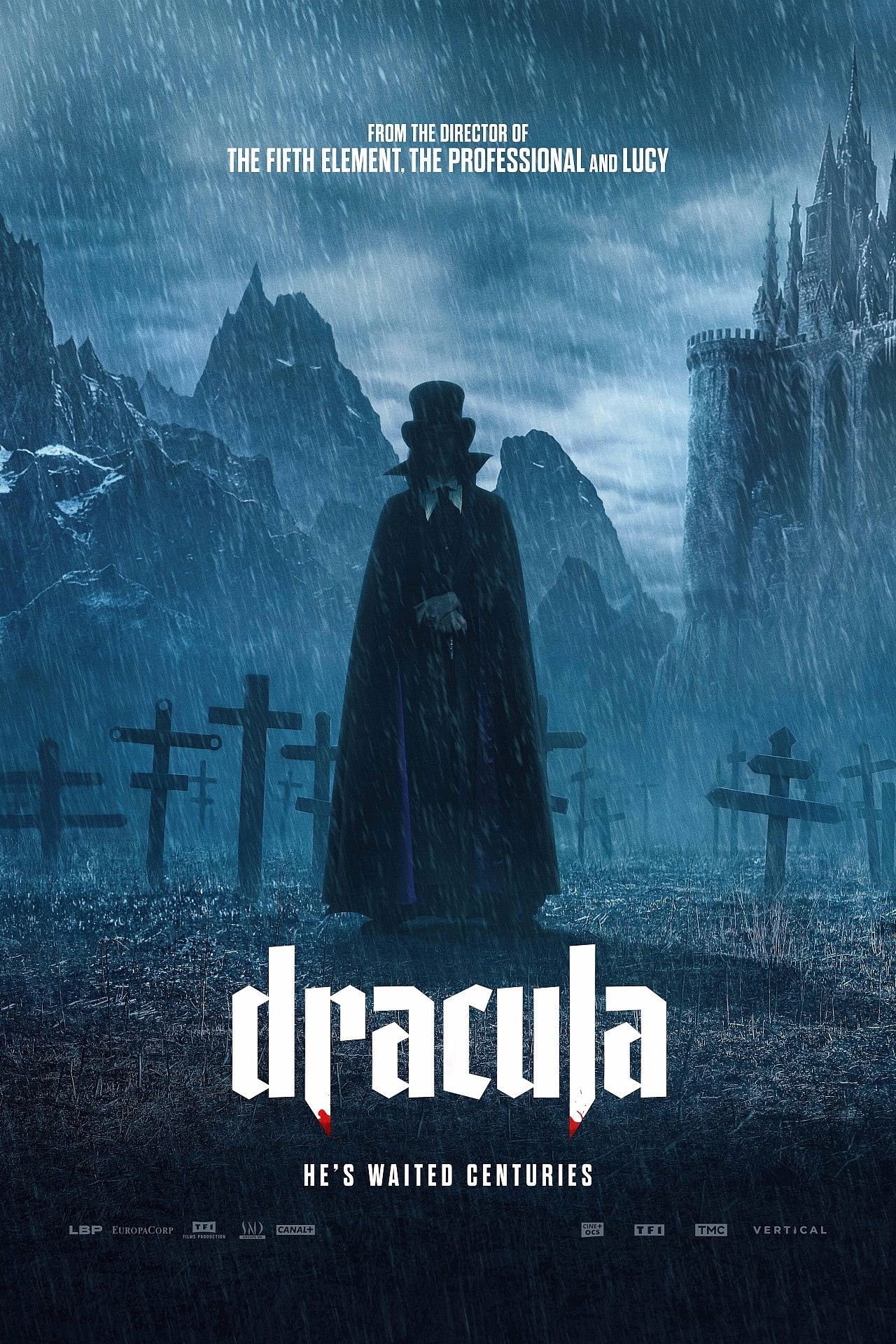
What the Film Is About
When I watch Dracula (1931), I don’t just see a story about a vampire invading polite English society. What strikes me most is the atmosphere of perpetual unease—the way the film draws me into a world where boundaries blur: between life and death, waking and dream, sanity and irresistible compulsion. At its core, I feel Dracula is less about defeating a literal monster and more about the struggle to preserve identity, sanity, and civility in the face of the unknown. There’s a pulsing anxiety that runs beneath the surface as characters are pulled, almost magnetically, toward desires and dangers they can barely admit to themselves.
For me, the emotional journey of the film is a descent: from the comfort of the everyday into something at once seductive and terrifying. The central conflict—a group of well-meaning but deeply vulnerable people confronting an ancient evil—serves as a framework for exploring what happens when rational order collides with irrational hunger. I sense throughout the film an undercurrent of suppressed longing, the ache of boundaries threatened, and what it feels like to stand at the edge of the familiar, staring into darkness.
Core Themes
One of the themes that lingers with me after every viewing is the tension between reason and the supernatural. Dracula is obsessed with the limits of science, faith, and social custom. I interpret it as a meditation on how brittle our civilized facades truly are—how quickly our sense of control can collapse under the weight of ancient fears. Watching Van Helsing, the embodiment of rational inquiry, face off against Dracula, an almost mythic force, I see the film probing the limits of modernity’s confidence.
Another theme that echoes through the film for me is the duality of desire and repression. Dracula’s victims aren’t simply attacked—they’re seduced, hypnotized, drawn into trance-like surrender. The film offers an allegory for forbidden cravings, ones that society demands we contain. This is particularly resonant considering the context of the early 1930s: a world emerging from war, facing social change, but still shadowed by Victorian moral codes. That persistent sense of the forbidden—what we want but mustn’t have—feels as raw now as it likely did then, especially as contemporary culture grapples with issues of control, consent, and societal taboos.
Watching today, I’m also struck by the film’s exploration of outsider status. Dracula, both alluring and monstrous, is at once an alien invader and a dark reflection of those he preys upon. To me, he becomes a symbol of society’s fears around immigration, otherness, and the unknown. The anxiety about what seeps in from the margins, bringing both danger and fascination, seems as relevant now as it was in a world anxious about borders and shifting identities.
Symbolism & Motifs
One motif I’m always drawn to is Dracula’s cloak—a garment that both conceals and transforms him. To me, it epitomizes the film’s obsession with duality: protection and predation, intimacy and threat. When Dracula wraps his cloak around victims, it’s as if he’s enveloping them in the seductive darkness of the unconscious, a symbol of surrendering to desires lurking just beneath awareness.
Mirrors—or rather, the conspicuous lack of reflections—hold a special symbolic power for me. Dracula famously casts no reflection, a chilling image that I read as an emblem of lost selfhood. His victims, too, become shadows of themselves. In a broader sense, the motif of reflection (or its absence) challenges characters to ask: who am I, when faced with the uncanny or the alien? To me, mirrors become a silent battleground for issues of identity and the boundaries between self and other.
The trilogy of darkness, blood, and light also pulses through the film’s imagery. I find the deliberate use of gauzy drapes, deep shadows, and sudden flashes of illumination to be more than just mood-setting. Blood in Dracula is more than life force—it’s a currency of power, a symbol of transformation and possession. The recurrent motif of crossing thresholds—windows, doors—mirrors the psychological trespasses occurring throughout. Each time a character allows Dracula in, I see it as a metaphorical yielding to forces we’d rather deny are within ourselves.
Key Scenes
Key Scene 1
The first appearance of Dracula in his castle is unforgettable for me. It’s not just the iconic line—“I am Dracula”—but the deliberate pace, the luxuriant stillness as Lugosi’s vampire descends the stairs, that makes this scene so significant. Here, I feel the heart of the film’s message: the profound power of the alien and the unknown to unsettle all our assumptions. Dracula’s eerie confidence, the way he glides through silence, instantly inverts the dynamic between guest and host. It’s a moment that lingers because it crystallizes how easily the boundaries of safety can be erased—and how intoxicating that violation can be.
Key Scene 2
The confrontation between Van Helsing and Dracula feels, to me, like the film’s central philosophical showdown. When Van Helsing brandishes a crucifix, and Dracula recoils, it’s not simply a battle of good versus evil in a religious sense. I see it as a collision of worldviews: science and faith, tradition and transgression, the familiar and the uncanny. The scene speaks to the impossibility of neatly categorizing fear and desire; Van Helsing’s certainty is tested, and Dracula, though momentarily repelled, remains hauntingly seductive. This encounter sharpens the film’s argument that some mysteries resist both science and faith, inhabiting a twilight zone that is deeply human.
Key Scene 3
The ending—the destruction of Dracula—always leaves me with a sense of ambiguity rather than triumph. The vampire’s demise is quiet, almost anticlimactic; there’s no cathartic victory. For me, this muted resolution suggests that the shadows Dracula represents can’t ever be fully banished. The threat of the unknown, the lure of forbidden desires, remain endemic to human nature. This closing gesture feels less like the end of evil and more like a reminder: darkness may be driven back temporarily, but it’s never truly vanquished.
Common Interpretations
Throughout my study of Dracula’s critical reception, I’ve encountered a spectrum of interpretations. Many see it as a straightforward allegory of good versus evil, drawing on Christian symbolism and pitting faith against the supernatural. This reading often focuses on Van Helsing as a champion of rationality and redemption, with Dracula serving as the monstrous other, an embodiment of external threat.
But I notice a strong alternative line of analysis: one that focuses on sexual repression and desire. Critics argue that Dracula’s victims are seduced as much as attacked, and that the film’s subtext is one of taboo longing. I find this reading especially compelling when considering the pre-Code era’s relatively frank, though stylized, approach to sexuality. The film becomes a meditation on what society forbids, and what happens when suppression gives way to surrender.
There’s also a political reading I find persuasive, situating the film within anxieties about outsiders, immigration, and the erosion of social order. Dracula as a foreign aristocrat inserting himself into the heart of Britain resonates with discussions about national identity and the threats posed by external influences. Some interpret the vampire as a stand-in for the “other,” whose allure is matched only by his danger.
A more psychological approach suggests that Dracula is a projection of individual and collective fears—the monster who embodies everything polite society dares not acknowledge. In this interpretation, the film is less about destroying an external enemy and more about confronting the darkness within.
Films with Similar Themes
- Nosferatu (1922) – I connect this earlier German film with Dracula’s exploration of otherness and the thin line between fascination and terror, especially in its dreamlike depiction of the vampire as a manifestation of primal fear.
- Frankenstein (1931) – The themes of scientific hubris, the monstrous other, and Victorian anxieties about social disruption deeply resonate with the territory Dracula occupies, making these two films cinematic siblings in my mind.
- Let the Right One In (2008) – I find this modern film similarly explores the notion of intimacy as a kind of dangerous surrender, and uses the vampire myth to investigate loneliness, desire, and the longing for connection across boundaries.
- The Hunger (1983) – This stylized take on vampirism dives into the seductive power of immortality, the fluidity of identity, and the cost of succumbing to forbidden appetite—all themes that, for me, echo the haunting essence of Dracula.
When I reflect on Dracula’s lasting power, what I ultimately see is a testament to our deepest anxieties about selfhood, civilization, and the unknown. The film communicates, across its elegantly staged shadows, that our efforts to contain longing, fear, and the “other” are always fragile. No matter how sturdy our traditions and beliefs, something ancient lurks at the margins—a force that is at once seductive and annihilating. Dracula is, for me, not just a story about defeating a monster, but a parable about what it means to be human: to desire what is forbidden, to fear our own darkness, and to cling to the light, knowing it will never fully dispel the shadows we carry with us.
To explore how this film has been judged over time, consider these additional viewpoints.