
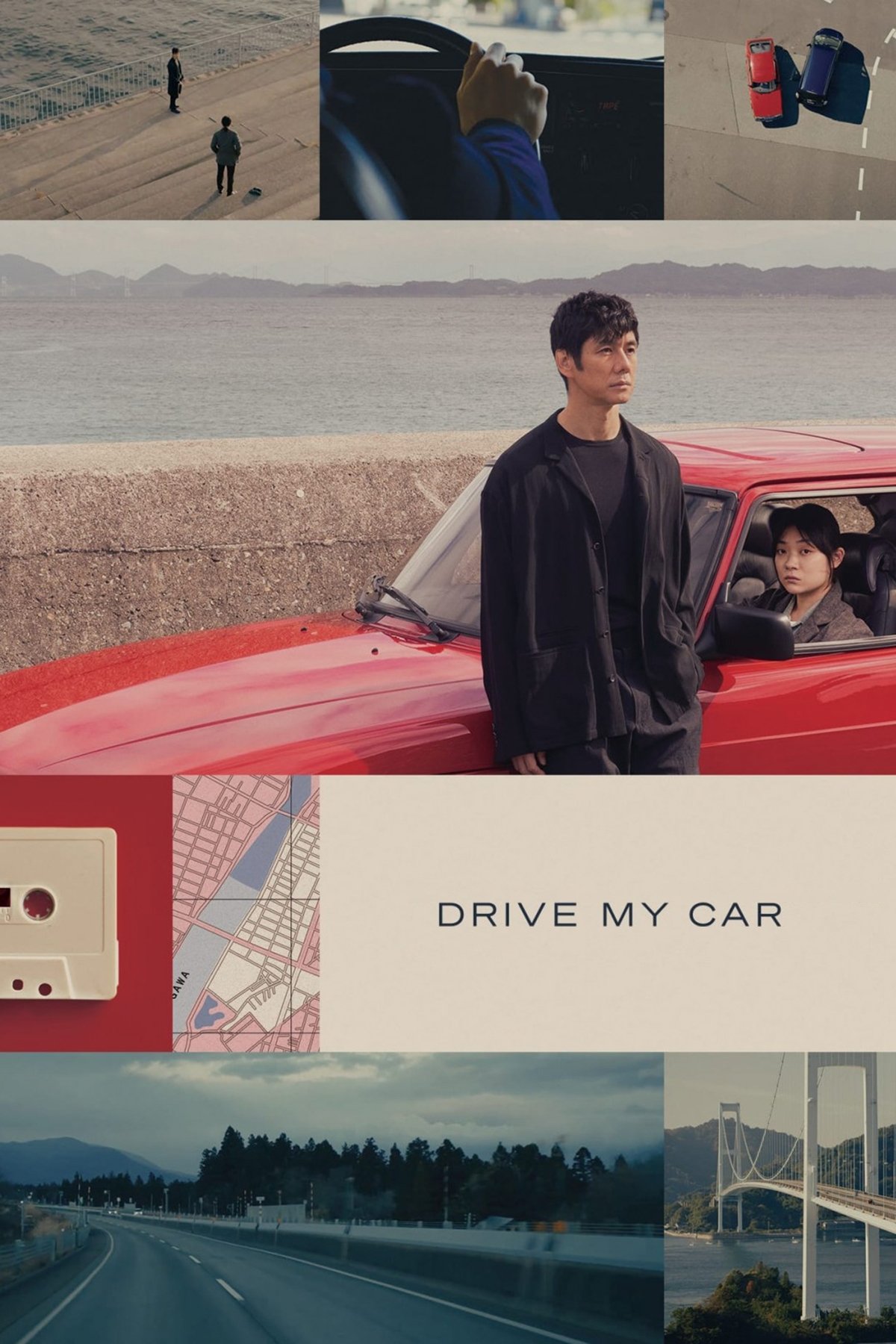
What the Film Is About
When I first watched “Drive My Car,” I didn’t approach it expecting to see an ordinary drama or even a typical meditation on grief. What struck me almost immediately was the film’s use of silence — not just as an absence of words, but as a space loaded with unseen currents of longing, doubt, and reckoning. I grew absorbed by its patient unraveling of a man’s search for meaning in the aftermath of profound loss, and the generational and emotional boundaries he is continually pushed to confront.
To my eyes, this film isn’t simply about mourning or making peace with the past. It’s about what we are actually left with when relationships change, secrets surface, or communication breaks down. I felt that “Drive My Car” asks what it means to truly hear another person — and ourselves — when the things we most want to say may be unspeakable. The central conflict, as I interpreted it, revolves less around solving a mystery or seeking justice for a transgression, and more around the painstaking project of rebuilding a sense of self and possibility, fragment by fragment, against an uncertain future.
Core Themes
Reflecting on “Drive My Car,” I see it as a film that lives in the spaces between words, where themes of grief, forgiveness, and communication circulate with immense subtlety. The movie lingers on how individuals cope with grief — not with melodrama or dramatic outbursts, but through the muted repetition of daily life and work. It exposes what happens when literal and emotional journeys overlap, driving us forward even when we would rather stay in place.
What resonated most deeply for me is how the film explores the limits and possibilities of communication — both within our closest relationships and in broader, cross-cultural settings. I was mesmerized by how the multi-lingual play rehearsals served as microcosms for this search: people speaking Japanese, Korean, Korean Sign Language, and even English, all searching for shared meaning when words themselves are inadequate. This complexity felt urgent in a world that, even in 2021, was reckoning with new forms of isolation, misunderstanding, and the search for authentic connection.
I also found that the film explores the difficulty of accepting parts of life that are unresolvable. Rather than offering closure, it seems to suggest that healing is about learning to carry the weight of what can never be fully explained or repaired. In many ways, the film’s relevance has only increased as social isolation, loss, and the need for understanding remain deeply felt across every generation.
Symbolism & Motifs
Rarely have I seen a film more meticulously constructed around objects and motifs that accumulate resonance as the story advances. The crimson Saab at the heart of “Drive My Car” is, for me, much more than an iconic prop. It becomes a moving sanctuary, an enclosure where sorrow is carried and, with time, tentatively shared. The routines built around this vehicle — the drives, the silences between driver and passenger, the passing scenery blurred by memory and regret — echoed for me as a metaphor for how we transport pain through life, often shielded from others.
Another motif I found fascinating was the recurring use of rehearsed language: lines from Chekhov’s “Uncle Vanya” repeated over and over, stripped of sentimentality until their raw emotional charge seeps into the performers (and into me, as a viewer). I saw these rehearsals as an act of emotional excavation, where meaning is mined not from spontaneity, but from ritual and repetition. Through this process, the film seems to ask: Can scripted words, performed in the presence of others, open a path to genuine self-expression?
Silence, too, functions as both signature and symbol. The long, unhurried takes and the quiet, sometimes wordless, exchanges force me to inhabit the discomfort of “unknowing” — the realization that often, the most important truths stay tucked in the margins of our lives. Even the film’s red dashboard light, warning of a problem that never quite derails the journey, struck me as an emblem of damage that cannot be neatly resolved — the persistent hum of loss that we must learn to drive with.
Key Scenes
Key Scene 1
One moment that I continually return to — not just for what it reveals, but for how it feels — is Kafuku’s first extended conversation with Misaki, the taciturn chauffeur assigned to him. At first, their exchanges are spare, almost mechanical. Yet, as they drive together in silence and in speech, an understated intimacy emerges. For me, this scene signals the film’s belief in the slow, halting formation of trust — that sometimes the most transformative connections arise not through confession, but through steady, shared presence. It’s in this car, moving through the world yet untouched by its chaos, where grief can surface on its own schedule.
Key Scene 2
Later in the film, when the multilingual cast rehearses “Uncle Vanya,” I found myself mesmerized by the layering of languages, emotions, and gestures. The presence of a mute actress delivering lines in Korean Sign Language crystallized, for me, the idea that meaning is not confined only to words: the film’s search for understanding stretches far beyond what language usually affords. I found this powerful because it challenges the assumption that emotional truth depends on the right words, reminding me that true communication can emerge in surprising, nonverbal forms. In this way, the scene both deepens and complicates the central themes of connection and alienation.
Key Scene 3
Near the film’s close, Kafuku and Misaki take an emotionally charged journey to her hometown, the site of her own buried grief. As they stand together amid the wintry ruins, confessing the secrets and regrets that have driven them forward and held them back, I felt the film’s deepest questions come into view: What remains of us after we finally share our unspeakable pain? For me, this scene doesn’t provide resolution so much as an invitation — to carry our wounds more honestly, to recognize kinship in vulnerability, and to move forward not because we are healed, but because we have risked being known.
Common Interpretations
From the conversations I’ve had and the critics I’ve read, the consensus is that “Drive My Car” is at its core a meditation on the complexities of grief and the unpredictable forms that healing may take. Many viewers interpret the film as an extended elegy for the routines that both imprison and sustain us while mourning — the rituals of art, of work, of repetition — and how these offer a slowly-unfolding path back toward living.
There are also nuanced debates about the film’s approach to communication. Some see its multi-lingual performances and rituals as evidence of optimism — a belief that empathy and understanding bridge even the widest chasms of silence and language. Others, myself included, read the film as more ambivalent, suggesting that even our best attempts at connection can falter, and that loss is something to be carried, not cured.
For many, the character of Misaki stands as a figure of stoic resilience, the possibility of moving forward after unspeakable trauma, while Kafuku embodies the struggle to forgive not only others but also oneself. Interpretations diverge, too, on whether the film’s ending offers hope or simply acceptance. Does reaching out to another person represent a new beginning, or just a brief solace on a longer journey through uncertainty? My viewing left me with both possibilities still open.
Films with Similar Themes
- Tokyo Story – Like “Drive My Car,” Ozu’s quietly devastating classic is, to me, an inquiry into familial distance, communication failures, and the muted persistence of grief across generations. Both films embrace silence and everyday gestures as bearers of emotional truth.
- Lost in Translation – I often return to Coppola’s wistful Tokyo-set meditation for its exploration of cross-cultural connection and loneliness. Both films foreground physical and emotional dislocation, charting the subtle bonds that form between unlikely companions.
- Patterson – Jarmusch’s quietly observational film shares with “Drive My Car” a poetic attention to routine, the writing process, and the intricacies of unseen inner lives. In both, meaning is coaxed from repetition, and transformation happens slowly, if at all.
- Secret Sunshine – Lee Chang-dong’s moving tale also grapples with trauma, forgiveness, and the elusive quest for comfort after tragedy. I am struck by the way each film treats spiritual wounds as living realities—ever present, rarely healed, but sometimes illuminated through awkward, human connection.
What reverberates for me, long after the credits roll on “Drive My Car,” is how it insists on the unfinished, imperfect nature of both art and life. The film doesn’t offer neat resolutions or grand revelations, but rather a quietly radical faith in showing up: to listen, to perform, and to endure, even when language and love fail. In an era so marked by isolation and rapid change, I experience it as a profoundly moving account of how we might begin again, with one another, on the winding roads of our own making.
To explore how this film has been judged over time, consider these additional viewpoints.