
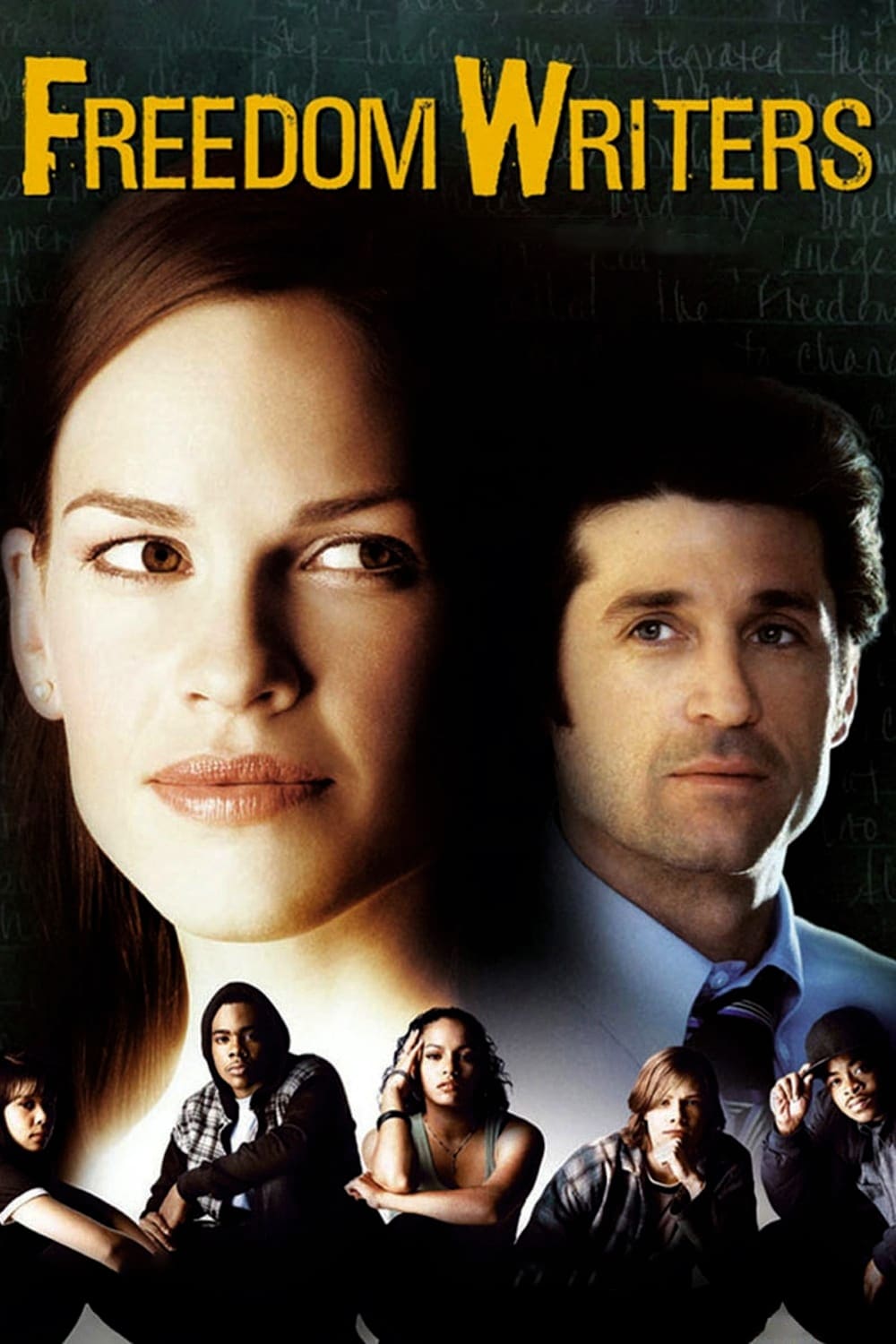
What the Film Is About
When I first encountered this film, what struck me wasn’t just the premise of an idealistic teacher stepping into a gritty, fractured classroom. It was the way it dared me to feel the stakes of transformation—on both sides of the desk. “Freedom Writers” is, at its heart, about the collision between hardened circumstances and radical hope. I watched as a group of teenagers—labeled, written off, and shackled by everything from racial tension to generational trauma—confronted a world that demanded survival over vulnerability. And standing with them, a teacher who risked her own comfort and career to bridge the divide between alienation and acceptance.
It’s a story that unfolds not through plot twists, but through hard-won emotional breakthroughs. Every interaction pulses with tension between despair and possibility. For me, the deeper current of “Freedom Writers” isn’t about education as a concept, but about what it means to truly see and be seen. The narrative doesn’t grant its characters easy redemption. Instead, it carves out a space where individual dignity and empathy are hard-fought revelations rather than givens.
Core Themes
I’ve always felt that the most persistent question driving this film is: Can people change—not just externally, but in their sense of worth, power, and community? The film orbits around issues of identity, power dynamics, and the longing for acknowledgment. I see its primary themes as radical empathy, the battle for self-narrative, and the intergenerational costs and healing of violence.
Radical empathy emerges when the teacher, Erin Gruwell, refuses to accept the diminished expectations set for her students. For me, it’s not only about her compassion, but about the uncomfortable work of listening—and the risk of having one’s worldview challenged in return. The students, many of them battered by indifference and cycles of gang violence, are not just recipients of empathy; their journey to trust each other and themselves is essential. Through their writing, they craft new identities, wrestle with pain, and shape stories that matter.
There is also a running conversation about power: who has it, who is denied it, and what reclaiming it looks like in a battered educational system. “Freedom Writers” lands its blows hardest, I think, in its depiction of authority figures—administrators, parents, gang leaders—who both define and police the boundaries of possibility. The film asserts, through every beat, that social change is possible only when people seize the means to define themselves, even if the world resists their transformation. When I viewed the film, I found myself reflecting on how these challenges mirrored post-1990s America, with its heated debates about race, education, and urban futures. And yet, every time I revisit it, those themes remain worryingly, hauntingly present. The film still matters precisely because the questions it raises about justice, equity, and belonging have not faded, either on screen or in daily life.
Symbolism & Motifs
The visual and narrative motifs in “Freedom Writers” feel meticulously chosen to reinforce its emotional layers. For me, the diary composition books stand as the centerpiece of symbolism—a humble object that transforms into a vessel for forbidden truths and emerging hopes. Watching each student take ownership of their journal, I sensed the collective power of storytelling: each battered notebook testified to survival, imagination, and the aching need for authenticity.
Another motif I can’t shake is the recurring classroom circle, especially during peer discussions. The very arrangement of the desks and chairs challenged the vertical structures that defined so much of the students’ lives: instead of hierarchy, here was the daring experiment of equality. It was as much a visual metaphor as a lived process—every time students faced each other, I saw them literally and figuratively breaking the cycles of isolation that had defined their daily existence.
The idea of “the line,” both literal and figurative, also recurred throughout the film. I found the “line game”—inviting students to stand on a line across the classroom floor in response to personal questions—remarkably revealing. It wasn’t just an icebreaker; it exposed the invisible barriers that separated the students by race, trauma, and experience. Yet, by refusing to let those lines become walls, the film insisted that recognition and solidarity could be born from shared vulnerability.
Photographs and references to historical moments, from the Holocaust to the Rodney King riots, underscored for me the film’s motif of interconnected struggles. These images were never mere backdrops; they called each student (and me as a viewer) to consider the weight of inherited histories and the radical act of not repeating the pain of the past.
Key Scenes
Key Scene 1
The moment that reverberates most forcefully for me is when Ms. Gruwell uncovers a racist caricature passed around the classroom and draws a connection to Nazi propaganda. It’s not just a lesson in intolerance; it’s an urgent plea for accountability—personal and historical. In this exchange, I saw the film’s thesis crystallize: indifference to injustice is complicity. The emotional charge is palpable, as she forces her students (and, by extension, the audience) to wrestle with their own prejudices and inherited pain. For me, this is where the film’s argument for moral imagination, rooted in the past but urgently contemporary, lands hardest.
Key Scene 2
Another transformative sequence unfolds when the students begin reading “The Diary of Anne Frank.” For me, this didn’t just bring distant history into the present—it dissolved the artificial boundary between “extraordinary” suffering and everyday struggles. The parallels the students drew between their own lives and Anne Frank’s were never about appropriation, but about recognition. I found this scene essential in examining how literature, when approached honestly, pushes us to ask who gets to have their stories told. The students’ discussions of resilience, hope, and injustice reframed the classroom from a battleground to a sanctuary for collective healing.
Key Scene 3
The final act, for me, is defined by the students’ public reading of their stories. When these young people—once told their voices were worthless—stand before peers and authority figures to share their truths, it’s not just a dramatic catharsis, but a rewriting of social contracts. I was moved by how this moment refracts all the film’s previous struggles for dignity and self-assertion. It’s a turning point where the classroom ceases to be a site of mere instruction and becomes ground for resistance, affirmation, and genuine change. Here, the film’s claim is unmistakable: transformation is real, but it demands both witness and risk.
Common Interpretations
I often come across interpretations that read “Freedom Writers” as a tale of inspirational pedagogy—a celebration of the teacher’s tireless battle against impossible odds. While that’s undeniably a part of the film’s impact, I think there’s something deeper. Many critics and viewers see it as a meditation on the possibilities and pitfalls of cross-cultural solidarity. One reading emphasizes Gruwell as the “white savior,” questioning the ways in which narratives of liberation can inadvertently center those in positions of relative privilege. I understand this perspective and see it reflected in certain moments of the film—there’s a tension, sometimes uncomfortable, around whose agency and pain we’re really being asked to empathize with.
But I’ve also found that others read the film as a genuinely collaborative journey, focusing less on Gruwell as the heroic outsider and more on the agency of her students. From this angle, the film becomes a forum for marginalized voices that would otherwise remain unheard. The diaries, the classroom debates, the stories brought to the fore—all of these, in my eyes, refute stereotypes about “at-risk youth” by giving them complicated, fiercely individual identities.
For me, the richest interpretations come from reading the film as both a critique and a hope: critique, for the systems that betray and abandon young people; hope, for the possibility that empathy, rigor, and honest storytelling can undo at least some forms of inherited harm. The film’s legacy, to my mind, is this tension between the limitations of a single teacher’s reach and the transformative force that can emerge when students reclaim their stories together.
Films with Similar Themes
- Dead Poets Society – I see this as a thematic cousin, with its focus on teachers challenging institutional rigidity and fostering authentic self-expression among students. Both films wrestle with rebellion versus conformity, especially within the classroom.
- Dangerous Minds – The parallels are clear for me: a determined teacher enters a troubled school and uses unconventional methods to connect with students society has written off. In both, education becomes an act of faith against chaos and structural violence.
- The Class (Entre Les Murs) – What intrigues me about this French film is its unflinching look at authority, multicultural classrooms, and the limits of dialogue. Unlike “Freedom Writers,” it resists resolution, but both films interrogate the fragile dynamics of empathy and power in education.
- Precious – While not a classroom story in the traditional sense, I found its connection in the way it amplifies marginalized voices and centers the inner life of a young person contending with trauma, systemic neglect, and self-discovery.
As I reflect on what “Freedom Writers” ultimately says about human nature and its era, I keep returning to this: people are rarely given the space to narrate their own lives, especially when burdened by legacies of prejudice and poverty. The film, for all its Hollywood gloss, asks viewers to look beyond labels and see the raw process of becoming—how trust and solidarity must be earned, how pain must be witnessed, and how real social change begins with the courage to speak and be heard. It recognizes both the danger and the necessity of hope, refusing to surrender to cynicism even as it names the forces arrayed against honest human connection.
After learning the historical background, you may also want to explore how this film was received and remembered.