
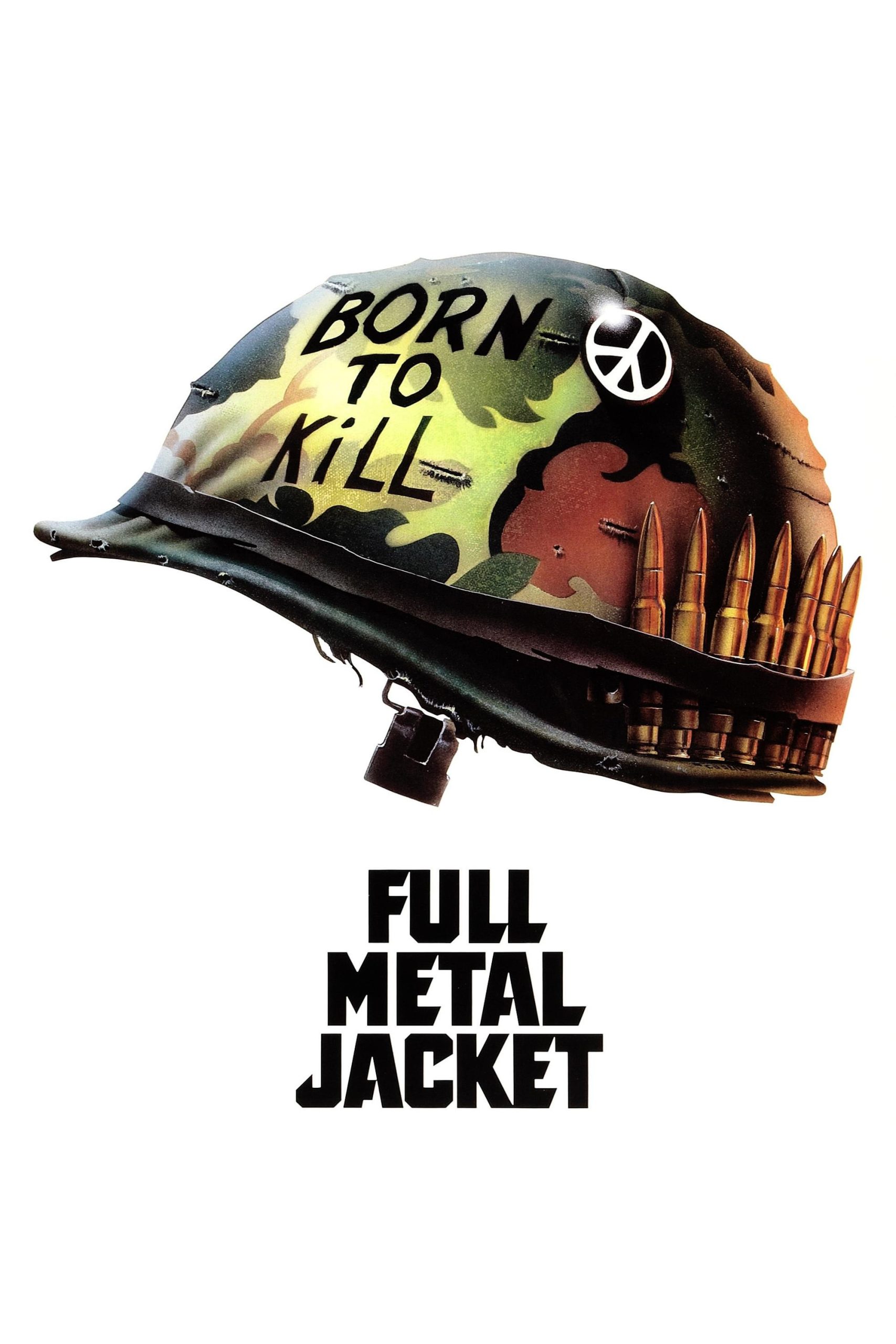
What the Film Is About
The first time I watched Full Metal Jacket, I felt an intense cocktail of awe and discomfort twisting inside me. Stanley Kubrick’s vision of the Vietnam War isn’t merely a movie about rifles and platoons—it’s a journey into the machinery that forges soldiers and the psychic toll exacted by that transformation. From the opening images of shaved heads, I sensed a stripping away of individuality, almost ritualistic in its brutality. What unfolds, in my mind, is less a tale of battlefield tactics and more a raw exploration of the making and unmaking of men.
For me, the film pivots on emotional fragmentation—the journey from hope to nihilism, brotherhood to isolation. The central conflict doesn’t lay between Americans and the Viet Cong, but within the men themselves: the pressure to conform, the urge to resist, and the perpetual struggle to retain a sliver of selfhood within an inhuman system. I walked away haunted by the idea that the war begins in the barracks, long before a trigger is ever pulled.
Core Themes
What stirs me the most about Full Metal Jacket is its relentless focus on the deconstruction of identity. I see the film probing foundational themes: the corrosion of innocence, the machinery of institutional violence, and the moral cost of obedience. The military, as depicted through Kubrick’s lens, is a relentless engine, churning out interchangeable soldiers while grinding down their individuality. I couldn’t help but notice how characters are reduced to nicknames, stripped of real names and, with them, any remnants of their prior selves.
Violence—both physical and psychological—runs like a dark river through the heart of the film. I found myself repeatedly questioning where the roots of that violence truly lie: is it inherent, a shadow deep inside every person, or is it carefully nurtured by systems whose existence depends on aggression? The film seems to bind personal violence to institutional mandates. Morality becomes slippery, uprooted from civilian codes and replaced by a chilling calculus of survival and dominance. Watching the trajectory of characters like Joker and Pyle, I felt the story was as much about the birth of violence inside a person as it was about its expression on the battlefield.
What keeps Full Metal Jacket so relevant for me—even decades after its release—is the universality of its themes. The film was born in an era still healing from Vietnam’s cultural wounds, yet the issues it interrogates—groupthink, the banality of evil, the dangers of obedience—still pulse through every new conflict. The dehumanization at the film’s core doesn’t lessen with time; if anything, it grows more vital with each passing year, as both the world and the nature of war become ever more mechanized.
Symbolism & Motifs
I’ve always been struck by the film’s deliberate, almost hypnotic use of symbolism. The opening head-shaving sequence is the first moment that lodged deep into my memory. To me, those whirring clippers don’t just prepare the men for battle—they are a ritual act, signaling the erasure of the self and the birth of an anonymous machinery. Behind every act of uniformity, Kubrick plants a seed of dread: how much humanity can you sacrifice for survival?
The training ground itself, ruled by the merciless Gunnery Sergeant Hartman, transforms into a kind of militarized classroom. I often replay in my head the relentless drill chants, which echo through the film like a dangerous lullaby. They’re more than training exercises—they’re a pulse, a heartbeat, indoctrinating the men into a new reality. Even details like the identical bunks and the omnipresent rifles become loaded motifs, reinforcing the sense that the individual is just a cog in a vast, impersonal war machine.
Another motif that lingers is Joker’s helmet, famously inscribed with “Born to Kill” alongside a peace symbol. For me, this contradiction isn’t just visual flair—it acts as the film’s philosophical wedge, splitting open the doublethink necessary to live in a world that both thirsts for peace and thrives on violence. Joker’s helmet, more than any dialogue, dramatizes the film’s central question: can innocence and brutality truly coexist inside the same person?
Key Scenes
Key Scene 1
One moment I return to over and over is the harrowing confrontation between Private Pyle and Gunnery Sergeant Hartman during basic training. While it would be easy to get lost in the shock of surface brutalities—physical punishment, verbal assault—I see something deeper at stake in this clash. The scene isn’t just about military discipline; it’s a test of will, a stripping-down that edges into ritual humiliation. What moved me most was the look in Pyle’s eyes as he absorbs the relentless cruelty. In that moment, the cost of transformation—breaking one man to build another—lands with full force. I see the entire system’s cold efficiency reflected in Pyle’s unraveling, and I feel the existential chill in the air as he loses any connection to his former self.
Key Scene 2
For me, the infamous “This is my rifle, this is my gun” chant is as pivotal as any gunfight. On the surface, it seems like just another fragment of harsh training, but I interpret it as a moment when language itself becomes weaponized. The chant fuses soldier and weapon, blurring every boundary between person and tool. I can’t shake the feeling that here, words do more than instruct—they rewire. When Joker and the others recite those words, the line between human and instrument of war vanishes. This ritual repetition doesn’t just toughen them for battle; it divorces them from the civilian ethic, welding identity to violence in a way that feels both intimate and terrifying.
Key Scene 3
The sniper sequence near the film’s end lands with the blunt force of tragic inevitability for me. As the squad hesitates, caught between duty and dread, I see the full, cumulative burden of their psychic wounds. The final act of killing the wounded sniper—a young Vietnamese girl—is agonizing to watch, not only for its violence but for its ambiguity. Joker is forced to become the executioner, the very thing he once questioned. In his face, I see the collision between the urge for mercy and the necessity imposed by his role. It feels like the final shattering of any illusion: here, in the ruins, I am left face-to-face with the tragedy of lost innocence and the ultimate cost of becoming fully indoctrinated. This is the film’s final indictment—a haunting statement about the moral corrosion at the core of war.
Common Interpretations
In all my years dissecting cinema, few films have yielded as much spirited debate as Full Metal Jacket. Most critics I’ve read—along with the audience members I’ve spoken to—see it as a searing critique of military dehumanization. They point to the two-part structure, with its transition from boot camp to battlefield, as a mirror for the psychological journey from individual to weapon.
Some, like me, view the film’s depiction of training as the true heart of the story, arguing that Kubrick’s real subject isn’t the war in Vietnam, but the conflict within modern institutions that demand conformity at the price of soul. Others focus instead on the Vietnam sequence, finding in Joker’s dry humor and moral ambiguity a nuanced meditation on the ways soldiers adapt—or fail to adapt—to the chaos around them.
There’s also a strong current of interpretation that sees the film as a study of masculinity: how it’s constructed, enforced, and eventually dissolved under pressure. In my own reading, I’ve never felt that Kubrick is simply condemning the military; instead, he’s holding up a mirror to any system that seeks to overwrite the self for the sake of efficiency and violence. A smaller but vocal group interprets the film’s ending as deliberately unresolved—a bitter acceptance that some questions (“What is the true nature of evil?” or “Can innocence survive?”) remain forever unanswered in the crucible of war.
To explore how this film has been judged over time, consider these additional viewpoints.
Films with Similar Themes
- Apocalypse Now (1979) – I see this film as a feverish descent into war’s psychological abyss, grappling with moral ambiguity and the instinct for violence much like Full Metal Jacket does, but with a surreal and poetic twist.
- Platoon (1986) – This film’s inside-out perspective on the Vietnam War echoes Kubrick’s preoccupation with innocence corrupted and soldiers battling both the enemy and their own inner demons.
- Paths of Glory (1957) – Another Kubrick vision, this antiwar classic explores institutional cruelty, the machinery of blame, and the expendability of humanity—themes that feel strikingly resonant to me when compared with Full Metal Jacket.
- Jarhead (2005) – I find a tonal kinship with the way both films examine how war shapes and unravels identity, focusing less on combat and more on the psychological terrain navigated by soldiers consigned to wait for violence to erupt.
Reflecting on what Full Metal Jacket ultimately communicates, I’m left with a sense of deep unease—a feeling that the film is less about a particular conflict and more about what happens when people are asked to unlearn their own humanity for the sake of the collective and the violent tasks it demands. Kubrick refuses to offer neat answers or easy villains. Instead, I find a powerful meditation on the social forces that demand conformity, the dark currents of obedience, and the fragile flame of individuality that struggles to survive inside the machinery of war. For me, the film’s most enduring message is a warning: that the systems we build to protect us can, if left unchecked, also become engines of alienation and tragedy. Through its razor-sharp lens, I see not just a war movie, but a troubling window into the ongoing struggle to balance power, morality, and identity, both on the battlefield and far beyond.