
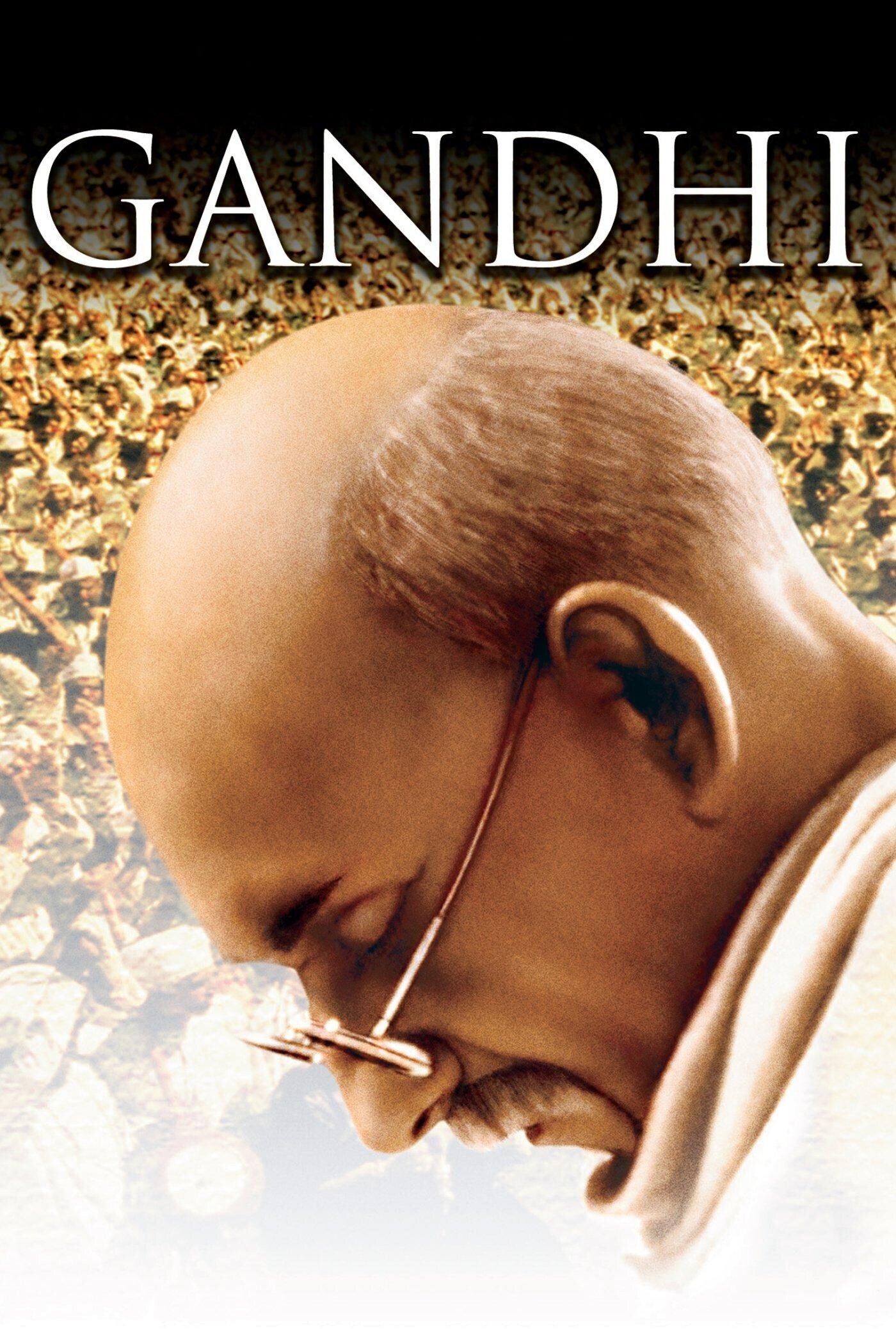
What the Film Is About
Before I even attempt to untangle the political and historical tapestry of “Gandhi,” I have to admit: the impact of this film sneaks up on me whenever I revisit it. To me, it is less a chronological retelling of events and more a careful, often painful investigation into the mechanics—the real costs and confounding contradictions—of ethical leadership. I’m always struck by how the film orbits around one human being’s evolving response to oppression, not just as a matter of tactics but as a test of personal transformation. The balance between an individual’s conscience and the unruly needs of a nation is constantly at the forefront, making every triumph seem provisional and every defeat strangely illuminating.
The emotional thread of the movie is, for me, unmistakably one of searching—for dignity, for a non-violent way to alter history, for a kind of moral purity that both provokes and comforts. Even at its most didactic, the film is never just about India or British colonial cruelty; it’s about the emotional journey of refusing to play by the old rules, then grappling with what rises up in their place. I was drawn into the stubborn hope that empathy—even in the face of overwhelming violence and betrayal—could move millions, and the private agony that accompanies such public conviction.
Core Themes
I see “Gandhi” as a rare film in how densely it weaves its themes. The clearest, and perhaps most pertinent, is the idea of non-violence—not as a passive withdrawal but as a daily, deliberate battle. Watching the film, I found myself consistently challenged by the question: What actually makes non-violence work, or fail? Is it personal resolve, mass participation, or the reactions of those in power? For me, the answer varied with each viewing, which speaks to how alive the film keeps its central theme.
Another inescapable idea is the interrogation of power. “Gandhi” is deeply invested in showing how power operates at every level: police clubs crashing down in a salt marsh, politicians whispering in wood-paneled rooms, suffering bodies demanding policy changes simply by refusing to comply. Yet, I often sense that the film’s real question isn’t just who wields power, but how it morphs and proliferates—how each person touched by injustice is asked to take a stand, and how those stands sometimes conflict or even harm each other.
Identity and loyalty are intimately connected in the film, especially through Gandhi’s own transition from outsider to spiritual center. I’m always moved by the way the film explores belonging—as a South African lawyer struggling against racism, a husband and friend navigating painful choices, and ultimately, a symbol who is no longer privately his own. In showing Gandhi’s sacrifices, the film makes the audience ask: Who do I serve, and at what cost?
Above all, I sense the film wants me to reflect on social change as a complex, iterative process. The idea that history is shaped not just by lightning-bolt moments but through a slow, cumulative revolution of attitudes—in individuals, in communities—is at the heart of its message. This felt vital in 1982, as many were seeking reassurance or caution from the past amid global shifts and new independence movements, and it is even more urgent now, as questions of resistance and renewal keep reappearing in fresh forms.
Symbolism & Motifs
When I look back at “Gandhi,” images and recurring ideas stick to me like fragments of poetry—they matter as much as the story itself. White cloth, for example, surfaces as an ever-present motif. Gandhi’s embrace of humble homespun clothing is much more than a biographical detail; it’s a deliberate visual argument about the potency and dignity in simplicity. That coarse, hand-spun fabric stands, in my eyes, as a rebuke to both colonial perceptions of “progress” and to the hierarchies within Gandhi’s own movement. Every time he sits surrounded by villagers, draped in his plain dhoti, I feel the film reminding us that reinvention can start with what we choose to wear, what we value, how we literally clothe ourselves in our beliefs.
Another motif I can’t help but notice is the recurring contrast between crowds and individuals. The film masterfully frames Gandhi both within vast, undulating human masses and in solitary moments—a reminder that social change is forged in both collective surges and the private space of a single will. Each time the camera lingers on Gandhi alone after heated dialogue or public violence, I’m struck by how the power of ideas must survive both applause and silence.
Salt, too, becomes a powerful symbol—not just during the film’s famous march, but as shorthand for the ordinary materials that sustain life and that colonial power tried to co-opt. Whenever someone gathers it in their hand, it feels to me like an act of ownership and reclamation. These details make the stakes of the struggle deeply tangible: independence isn’t an abstraction, but the right to life’s most basic elements.
I also find recurring motifs in sound and silence. The cacophonies of protest—marches, pounding feet, swelling voices—often dissolve abruptly into quiet scenes of reflection or mourning. These sharp contrasts drive home, for me, how activism is not a static quality but an exhausting cycle of risk, loss, and regrouping. It’s in these transitions that the film’s message settles in: change is always noisy and then unspeakably still, and the work of healing does not end with victory.
Key Scenes
Key Scene 1
There’s a moment early in the film when Gandhi witnesses outright bigotry on a train in South Africa, and this first collision with institutional racism is a foundational fracture. What lands hardest, for me, is not just the shocking injustice, but the conversion it triggers—a moment of shame and resolve wound tightly together. The scene acts as the moral ignition for everything that follows; it marks the split between acquiescence and action. What I find crucial in this scene is the raw portrayal of humiliation, not diminished by sentimentality but given room to hurt and finally to fuel something larger than individual pride. It’s the beginning of Gandhi’s commitment to resisting injustice not just for himself, but for a wider community whose dignity has always been under siege.
Key Scene 2
The massacre at Amritsar, presented with a chilling directness, remains for me an unshakable indictment of colonial violence. Yet what makes this sequence so thematically pivotal isn’t just the brutality inflicted, but the silent witness of what comes after. The stunned, wordless reckoning—the aftermath that refuses to sensationalize suffering—forces me to grapple with the price of nonviolent resistance. Here, the film turns its gaze on the limits of moral persuasion; the vision of peaceful protestors meeting automatic firepower lays bare a truth that moral high ground is no guarantee of mercy. In this, the film doesn’t offer easy catharsis, only a demand that I confront the realities opponents of change always face.
Key Scene 3
Toward the end, Gandhi’s final hunger strike is—in my view—the film’s most complex turning point. With the country spiraling into chaos after independence, the Mahatma’s return to personal sacrifice stands as a last, desperate attempt to repair communal fractures. For me, this scene brings into sharp focus the recurring tension in the film: lofty ideals colliding with the intractability of real-world hatred and fear. The sight of Gandhi’s frail body, refusing nourishment until others repudiate bloodshed, is a painful reminder that ideals remain fragile, constantly in need of protection, and that empathy alone can never fully heal historical wounds. It reads like a last testament to the film’s faith in conscience—and the limits of that faith.
Common Interpretations
I often hear people talk about “Gandhi” as a luminous tribute to nonviolent resistance, a cinematic hagiography designed to inspire. That’s certainly there—a reverence for the transformative power of peaceful disobedience, and for the humility and endurance required to steer a country out of subjugation without resorting to hatred. Critics and audiences have long read the film as a lesson in strategic resistance: a blueprint for any movement seeking to shake the foundations of power without surrendering its soul.
But I’ve also encountered readings—both sympathetic and skeptical—that dig at the film’s ambiguities. Some argue that “Gandhi” exposes the personal toll of sainthood: the painful isolation, the sense that sweeping social transformation can cost its prime mover any semblance of an ordinary life. Others see the film as a warning about the fragility of ideals once those who share them begin to diverge—the uneasy legacy of partition, for instance, standing as both a triumph and a tragedy.
There are even those who interpret the film as a critique of the West’s belated realization of colonial wrongs, noting how the narrative frames British characters as slow to learn, walking a line between complicity and late-coming alliance. This invites debate about whose story “Gandhi” is ultimately telling, and whether the lens remains too reverential or manages to stay critical. These differences in interpretation, I think, only enhance the film’s stature as a genuine work of historical and emotional complexity—a film whose real subject is not just one man but the ever-shifting ground where morality and politics meet.
Films with Similar Themes
- Selma – This film strikes me as a spiritual companion to “Gandhi,” dramatizing the difficulties and costs of nonviolent resistance during the American civil rights movement, centering on Martin Luther King Jr.’s campaign for voting rights.
- Invictus – Here, I see a meditation on reconciliation and nation-building through the forgiving vision of Nelson Mandela, echoing Gandhi’s belief in the redemptive potential of personal sacrifice and inclusive leadership.
- The Battle of Algiers – This movie offers a gritty, unsentimental study of colonial resistance where violence and nonviolence intermingle, posing many of the same moral and political questions about means and ends that “Gandhi” raises.
- Milk – In focusing on Harvey Milk’s campaign for LGBTQ rights, this film explores the loneliness, hope, and strategic compromises required for any social movement to take root—another echo of the dilemmas faced by Gandhi as depicted in the film.
What lingers most with me about “Gandhi” is not just its portrait of one extraordinary life, but its measured, often sobering insistence that ideals are always up against the grinding machinery of history. Human nature, as the film sees it, is capable of both staggering cruelty and unexpected empathy—a juxtaposition that’s as true of leaders as of the masses. Society, these frames tell me, is never finished; it must be remade again and again in the details of our choices, our allegiances, and the risks we’re willing to take to see justice not just imagined, but lived. The era in which “Gandhi” was made—cast between the exhaustion of twentieth-century wars and the unrest of a rapidly changing world—crackles through every shot, challenging me to find my own balance between hope and realism, audacity and humility.
To explore how this film has been judged over time, consider these additional viewpoints.