
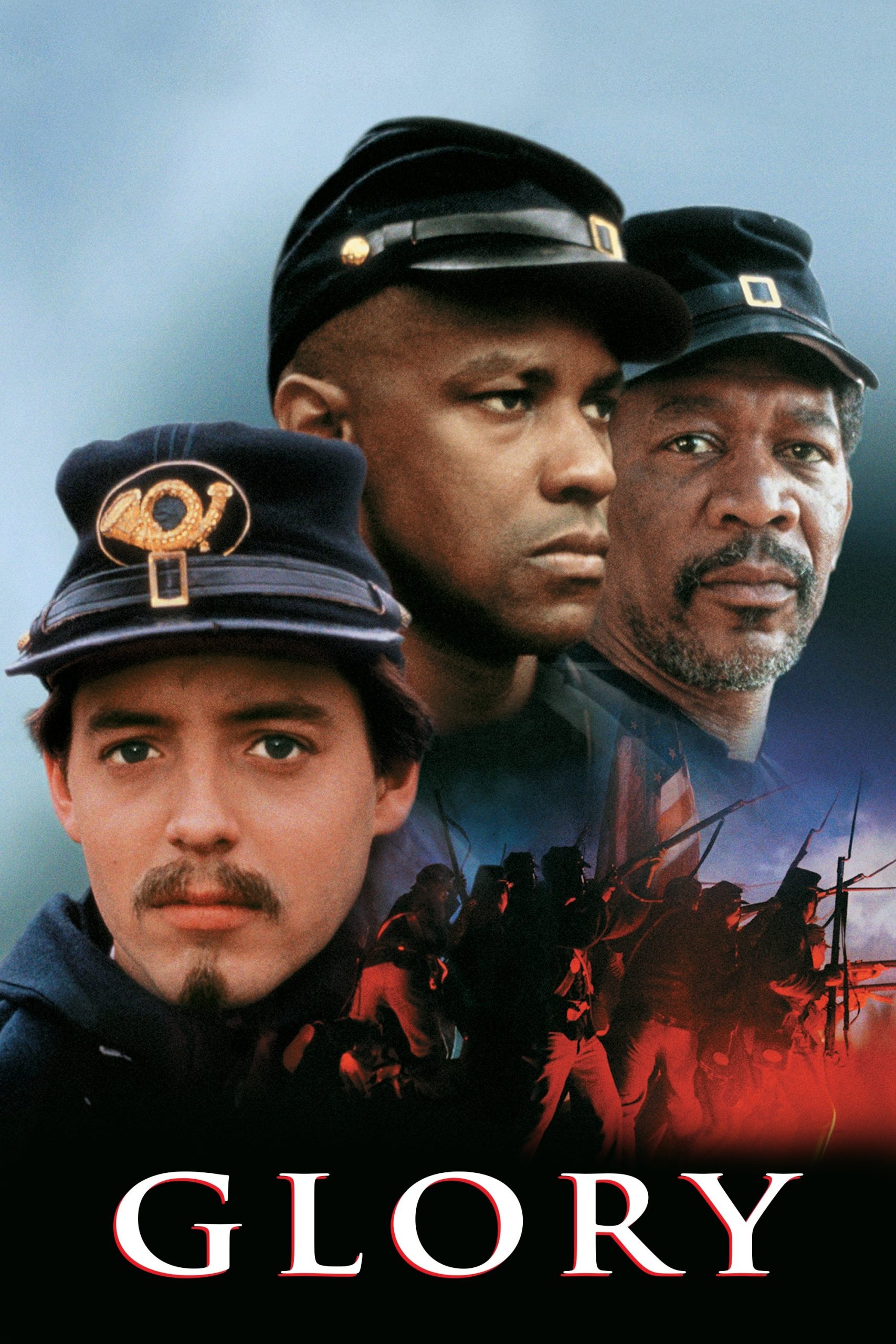
What the Film Is About
Sometimes a film leaves me with the uncomfortable sensation of being a witness rather than a spectator, pushing me to confront realities I’d rather avert my gaze from. “Glory” (2014), with its quietly devastating narrative, strikes me as one of those films. At a high level, I see it not merely as a story about an unassuming railway worker and the fallout from a small act of honesty, but as an unvarnished journey through the labyrinth of personal dignity clashing against institutional indifference. The central conflict—an ordinary man caught in the grinding gears of a sprawling, impersonal bureaucracy—draws me into uncomfortable territory, as I’m made to question the value of goodness in a world that seems calibrated to drain it away.
As I followed Tsanko, the protagonist, I felt the emotional terrain shift beneath my feet—from the humble pride he finds in his quiet life, to the humiliation and loss that follow his entanglement with the callous workings of state and media. Rather than a tale of simple good versus evil, “Glory” urged me to meditate on the fragile balance of power, the corrosion of integrity, and the mutability of self-respect. It’s a journey defined by how institutional neglect and personal ambition can turn a moral act into ammunition for self-serving narratives, leaving the initiator worse off than before.
Core Themes
What resonated most with me was the film’s interrogation of integrity—not as some grand, abstract virtue, but as a quiet, lived experience vulnerable to ridicule and exploitation. I’m drawn to the way “Glory” explores the collision between honesty and systemic corruption. Tsanko’s story exposes the futility of good intent when it’s filtered through powers that value optics over substance, and outcomes over people. Honesty becomes less a moral north star and more an accidental liability, a kind of social currency that’s traded, devalued, and discarded.
Power, in this film’s universe, isn’t merely political—it’s deeply personal. The functionaries who orchestrate Tsanko’s fleeting media stardom strike me as both comically shallow and authentically ruthless, using bureaucracy as both shield and weapon. Morality is dissected and displayed as a fragile possession; watching Tsanko try to direct his own narrative, I’m reminded of how even the purest intent can be misunderstood or manipulated when it leaves the boundaries of the private self. Released at a time when skepticism of state institutions and media-driven spectacle seemed freshly urgent, “Glory” felt to me like a warning bell—a fable about what happens when integrity collides with cynicism and is, almost inevitably, trampled underfoot.
Years later, I still see the film’s concerns echoed all around me: in every viral feel-good story that gets repackaged and spun, in every institution that asks me to trust it uncritically while wielding power behind closed doors. Tsanko becomes a kind of everyman whose experience remains distressingly familiar—an emblem of the personal costs involved in defending decency in a world wired for exploitation.
Symbolism & Motifs
It’s the film’s use of symbolism that lingers in my mind—the little, ordinary things turned into reservoirs of meaning. The battered, once-proud wristwatch Tsanko receives (and then loses) becomes, to me, the emotional center of the film: a physical stand-in for dignity, honor, and a sense of self that’s increasingly out of sync with the world around him. The simple act of winding it feels like a ritual—a stubborn insistence on staking out a modicum of control, however symbolic, over his life story. When the state awards Tsanko a flashy replacement as a gesture of gratitude, I can’t help but sense the hollowness of institutional rewards—the original watch, with all its sentimental value, always meant more.
Repetition recurs as a motif too—especially in the mundane rituals of railway work, which contrast sharply with the chaos unleashed by the arrival of journalists and bureaucrats. I see this contrast as a way of highlighting how meaning is built in the everyday, and how easily it’s undermined by forces that neither understand nor respect it. The motif of speech—the struggle to be heard in a world that barely listens—further amplifies Tsanko’s isolation. His stutter isn’t just a personal quirk but a metaphorical stumbling block, emblematic of all who are excluded by the mechanics of official discourse.
Even the film’s visual palette—smudged, grayish, industrial—anchors me in a world where the machinery of the state appears coldly indifferent to the warmth of actual human need. These visual choices quietly reinforce the idea that individual life and its precious meanings are both dwarfed and threatened by the impersonality of public narratives.
Key Scenes
Key Scene 1
The moment when Tsanko finds a bag of cash scattered along the railway tracks stands out to me as the film’s quietest—and most loaded—moment of decision. It’s not action-movie dramatic, but in choosing to report his discovery, Tsanko unknowingly sets off the spiral that will reshape his life. What makes this scene crucial isn’t just that it sets the plot in motion, but that it crystallizes the film’s main question: What is the true value of honesty? I felt a mounting unease watching the simplicity of Tsanko’s gesture get folded into a state narrative that has nothing to do with him or his real motivations. His act embodies decency, but the consequences soon reveal how fragile that decency becomes under the glare of institutional self-interest.
Key Scene 2
When Tsanko is herded, bewildered and uncomfortable, through a state-run awards ceremony—buffed up as a national hero, then quickly discarded—I found myself cringing at the spectacle. The scene is so rich in irony I could barely watch without wincing; Tsanko’s dignity is paraded about and then forgotten once the cameras stop rolling. To me, this scene isn’t just about bureaucratic hypocrisy. It’s about the way institutions consume and regurgitate real acts of good for their own narratives, stripping away the human being at the center. Watching Tsanko’s confusion and the abrupt shift in officials’ attention, I was struck by how easily an individual can dissolve into insignificance once their usefulness has ended. The hollowness of public recognition, versus the private cost paid, struck me as a sharp indictment of modern media and bureaucracy alike.
Key Scene 3
There’s a later moment when Tsanko, desperate to reclaim his lost watch and restore some sense of personal worth, collides again with official indifference. That confrontation—quiet, humiliating, and excruciating in its ordinariness—hit me hardest. Here, the film, in my eyes, solidifies its tragic viewpoint: the machinery of the state, and those who serve it, have no space for genuine remorse, repair, or even understanding. Tsanko’s final humiliation isn’t melodramatic but methodical and quietly devastating. I interpreted this as the film’s last, wordless statement: in the contest of human worth versus institutional inertia, it is almost always the former that is quietly erased.
Common Interpretations
From what I’ve gathered, interpretations tend to converge around the film’s indictment of systemic corruption and the indifference of bureaucratic power. Critics often read Tsanko as a stand-in for all those marginalized or rendered invisible by the “official” story, while the hostile, career-focused PR official becomes a symbol of modern statecraft—slick, calculating, and emotionally disengaged. I’ve heard audiences talk about the film in terms of it being a contemporary fable: a parable about what happens when “doing the right thing” is detached from any meaningful reward or recognition.
Some viewers see the film primarily as social satire, pointing out the dry, almost absurd humor in its depiction of bureaucratic rituals—a kind of understated mockery of the very institutions it critiques. Others, myself included, feel the satire lands with real venom, turning the film from simple dark comedy into a slow-motion tragedy. There’s also a stream of interpretation that focuses on the stutter—as both a literal obstacle and a broader metaphor for everyone whose voices are stifled by systems not designed to accommodate them.
What I haven’t seen is many people reading the film optimistically. To me, and to most I’ve discussed “Glory” with, its vision of society is stark—hope emerges only in the quiet persistence of dignity, not in any final victory against the system.
Films with Similar Themes
- The Death of Mr. Lazarescu – I see this Romanian film as a thematic sibling, with its unflinching portrait of one man’s journey through indifferent state machinery and the slow erosion of dignity.
- A Touch of Sin – Like “Glory,” this film explores how individual acts collide with the corruption and violence simmering beneath everyday life, presenting integrity as both weapon and liability.
- Leviathan – The relentless scrutiny of power and the tragic consequences for the powerless strongly echo “Glory”’s worldview. Both films showcase ordinary people crushed by indifferent systems.
- Wild Tales – Though more overtly comedic and bombastic, segments of this anthology strike me as parallel in the way they depict ordinary people’s eruptions of anger or despair when confronted by institutional callousness.
When I look back at “Glory,” I’m left with a profound sense of mourning for the everyday heroism that so often goes unnoticed, or worse, is twisted into something ugly by those who claim to celebrate it. The film’s ultimate communication, as I interpret it, is this: Our acts of goodness are our own, precious but perilous, and the very systems built to “protect” or publicize them are, all too often, ready to trample them for short-term advantage. Watching Tsanko’s journey, I’m reminded of the quiet bravery required to hold onto one’s principles in a world that sometimes seems to only value spectacle and self-preservation. “Glory” made me question, perhaps more deeply than I’d like, the real cost of decency—not only for the individual but for the society that so casually discards it.
To explore how this film has been judged over time, consider these additional viewpoints.