
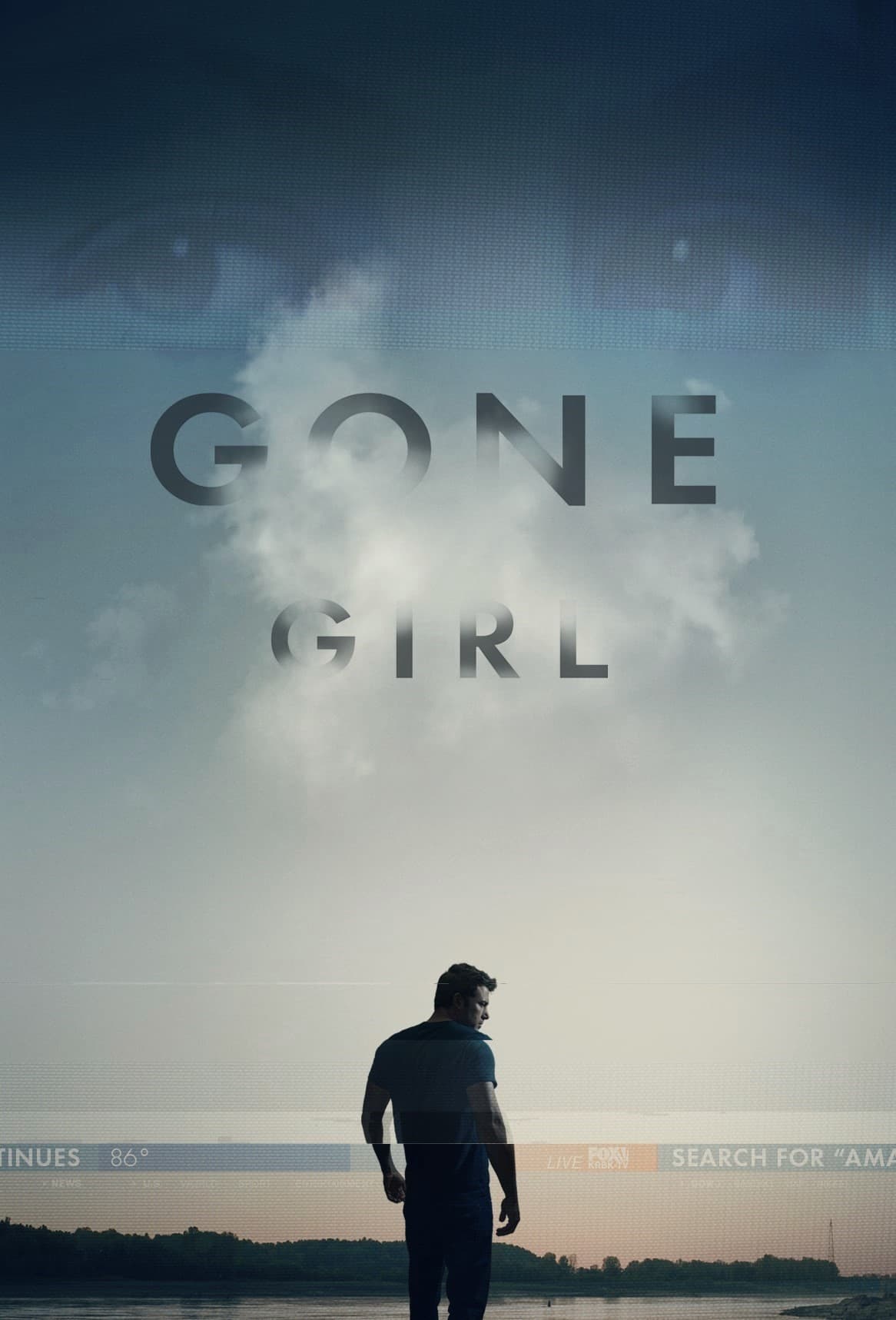
What the Film Is About
Every time I revisit “Gone Girl,” I am unsettled in the best—and worst—possible ways. To me, the film is a nerve-fraying reflection on the stories we craft within marriage and the manipulations necessary just to survive the modern public gaze. Emotionally, it’s a bitter pas de deux between two people whose intimacy has been corroded by secrecy, resentment, and desperate self-preservation. Rather than inviting the viewer to resolve a straightforward whodunit, “Gone Girl” isolates us in a weirdly intimate yet alienating world where love, trust, and performance are tightly tangled. The central conflict never really settles into a battle of good and evil; instead, it thrums with ambiguity, implicating everyone—characters and audience alike—in the cruel mechanics of image, expectation, and control.
For me, what makes this film linger is the way it weaponizes our hunger for answers, only to challenge, even punish, the audience for trying to separate fact from fiction as neatly as the media does. The narrative’s direction is almost a trap: just when I think I have a handle on who is right or wrong, the film pivots—emotionally, morally, and thematically—into deeper, more unsettling territory. “Gone Girl” isn’t content to say something about marriage or media; it takes those familiar frameworks and asks whether anyone, even ourselves, can be truly known.
Core Themes
The most recurring sensation I get from “Gone Girl” is dread—dread not of violence, but of misunderstanding, misrepresentation, and the claustrophobia of identity under siege. I see the film wrestling with the question of how private selves and public personas merge and fracture, especially in the ecosystem of marriage. The very act of performing love, loyalty, and victimhood is dissected with surgical precision. I’m always struck by how sharply the film explores the concept of narrative control: who gets to decide the story, and how does storytelling become a tool of power, manipulation, and even vengeance?
To me, the marriage at the center of “Gone Girl” is less about passion or partnership and more about mutual surveillance—a toxic stalemate where authenticity becomes impossible. I’m fascinated by how the film reframes gender roles and expectations. Amy’s often-shocking actions become a twisted mirror held up to the cultural fantasies of the “cool girl” and the dutiful wife—roles that director David Fincher and writer Gillian Flynn render as both seductive and deeply fake. Meanwhile, Nick’s desperation to appear innocent exposes the limitations of traditional masculinity and the hollowness at the heart of domestic stability. Released in 2014 amid intense discourse about the “war of the sexes,” social media identity, and the court of public opinion, “Gone Girl” felt like a perfect storm. Nearly a decade later, those anxieties feel even more acute as our personal narratives are endlessly performed, curated, and scrutinized online and offline.
Violence emerges not just as bloodshed but as psychological warfare. The film’s moral logic feels slippery, unmoored from easy judgment. I keep circling back to how “Gone Girl” suggests intimacy itself might be a kind of peril—one that can destroy as much as it nurtures, and which, when mediated by public opinion, becomes something unrecognizable. Ultimately, what I take from the film’s thematic web is a sense that our modern search for “truth” is inevitably undermined by fantasy and the need to control our own stories.
Symbolism & Motifs
There are certain visual and narrative patterns in “Gone Girl” that have grown in significance for me with each viewing. Mirrors, for one, appear constantly—whether it’s the literal glass in the couple’s home or the metaphorical feeling that every conversation is a kind of reflection, never quite the reality itself. I see these mirrors as stand-ins for duality: the person we present versus the shadow self we conceal. Each time a character is framed with their reflection, I’m reminded that duplicity and self-awareness are at the heart of this film.
The motif of media saturation is another thread that gives the story its bite. Television screens, news tickers, and tabloid websites are more than background detail; they filter the characters’ identities before my eyes, constantly reshaping the narrative I’m supposed to believe. What fascinates me is how the film’s tone seems to mimic the fevered, superficial cycles of news and gossip culture—every development becomes “breaking news,” every private anguish a public spectacle. It’s as though the media spectators are a Greek chorus, amplifying and distorting the substance of real suffering.
I also find recurring patterns in the language of objects—diaries, presents, hidden envelopes, even the infamous “treasure hunt.” These devices don’t just move the plot; they shape the sense of performance that the film wears as a second skin. The journal is especially emblematic, blurring the lines between confession and fabrication, authenticity and artifice. I come away from the film asking: can any recorded narrative—personal or public—be fully trusted? These physical tokens, loaded with conflicting meanings, force me to question the stability of the truth being told.
Key Scenes
Key Scene 1
The moment that always unnerves me is Amy’s monologue about the “cool girl.” It’s not just a showpiece of writing and acting; it’s a thesis statement, a eulogy, and a provocation. In those few minutes, I feel as though the film pulls back the curtain on decades of flattering and debasing expectations created by pop culture. Amy’s indictment isn’t reserved for men; it implicates women, too, in their pursuit of approval, belonging, and desirability. To me, this scene is a caustic commentary on how gender roles aren’t just inherited—they’re performed, rehearsed, and ultimately weaponized. It’s not hyperbole to say this speech changed how I think about the subtle demands placed on women. The emotional charge of the scene comes from its blend of fury, sadness, and clarity; it doesn’t excuse Amy, but it does make her actions a kind of unmasking, as if she’s daring us to admit how seductive and suffocating those cultural myths can be.
Key Scene 2
Another scene that I always return to, in terms of both discomfort and fascination, is the televised interview Nick gives. He’s sweating, rehearsed, desperate to sway public opinion back toward him. What strikes me is how the conversation is shaped for the cameras—every gesture meticulously curated, every word measured for strategic effect. For me, the emotional core of this moment isn’t even Nick’s fear of being convicted but his terror of being misread or misrepresented, either by the law or by the mob of opinion that’s massed outside his door. This is where the film’s themes of media manipulation and public performance get clearest: truth takes a backseat to perception, and survival depends on hitting the right emotional notes—whether or not they’re real. Whenever I watch this sequence, I feel the chill of how dehumanizing it is to have your life (and morality) decided on a screen.
Key Scene 3
For me, the most quietly horrifying scene is the film’s conclusion—a return to apparent domestic normalcy between Nick and Amy, now irretrievably bound together by shared trauma and mutual assured destruction. There’s no cathartic triumph or escape, just the resigned acceptance that their marriage—and their identities—have been forever changed. I always see this ending as an indictment of both the fairy tale and the crime story: it refuses to grant closure or redemption, and instead leaves me pondering how relationships can become prisons, not because of outside threats but because of the psychological contracts we sign with each other. The muted horror of the final scene is how both characters remain trapped in the performances they’ve honed for survival, proving that, sometimes, reconciliation only deepens the original betrayal. To me, it’s a statement about the limits of truth and the cost of narrative coherence in a world obsessed with image and happy endings.
Common Interpretations
What I find compelling about “Gone Girl” is the diversity of readings it invites. Many critics—and I count myself among them—interpret the film as a dark satire on contemporary marriage and the impossibility of ever really knowing another person. This isn’t just a story about deceivers and victims; it’s about the allure and danger of constructing roles to fit cultural scripts, even when they turn deadly. Some viewers I’ve spoken to see Amy as a monstrous outlier, a “femme fatale” whose elaborate vengeance is both thrilling and terrifying. Yet, others treat her as a tragic figure—someone deformed by the relentless pressure to be everything to everyone.
There’s also a widespread view that “Gone Girl” is a searing critique of news media and pop-culture justice—a demonstration of how facts are quickly subsumed by spectacle. I sometimes hear debates about which character, if any, is sympathetic. For me, the brilliance of the film lies in its refusal to offer simple heroes or villains. Both Nick and Amy are, at various points, believable, detestable, pitiable, and manipulative. Each time I see it, I notice how the movie encourages us to root for, fear, and judge them, highlighting the instability of public opinion. The film’s ambiguity remains its greatest asset: it’s possible to walk away feeling that it’s a warning, a satire, a tragedy, or even a grimly comedic commentary on the impossibility of “happily ever after.” And that, I think, is precisely the point.
Films with Similar Themes
- “The Girl on the Train” – I see this film’s unreliable narration and exploration of female trauma as spiritually connected to “Gone Girl,” especially in its depiction of perception versus reality within relationships.
- “Eyes Wide Shut” – What intrigues me is how both films probe the facades and deceptions within marriage, unmasking the tensions that can lurk beneath seemingly stable partnerships.
- “Double Indemnity” – If I think about the classic femme fatale and the manipulative interplay between desire, trust, and betrayal, this film comes immediately to mind as an early echo of “Gone Girl’s” DNA.
- “To Die For” – I’m often reminded of the way this film satirizes media culture and the hunger for fame, using a female protagonist whose self-invention is both fascinating and chilling—much like Amy’s.
When I step back and reflect on what “Gone Girl” ultimately communicates, I see it as a blunt, brilliant exploration of how we fracture ourselves to meet societal demands—especially within those closest relationships where the stakes are most desperate. The film’s cynicism about happy endings feels less like nihilism and more like a gritty acknowledgment of the messiness and violence lurking beneath the surface of modern life. It’s a story that exposes, rather than solves, our longing to be loved, our capacity for deception, and our complicity as both participants and spectators in the dramas that unfold around us. What resonates most for me in this cinematic world is its insistence that, even in the most intimate settings, truth is always provisional, always contested, and always, on some level, a performance.
To explore how this film has been judged over time, consider these additional viewpoints.