
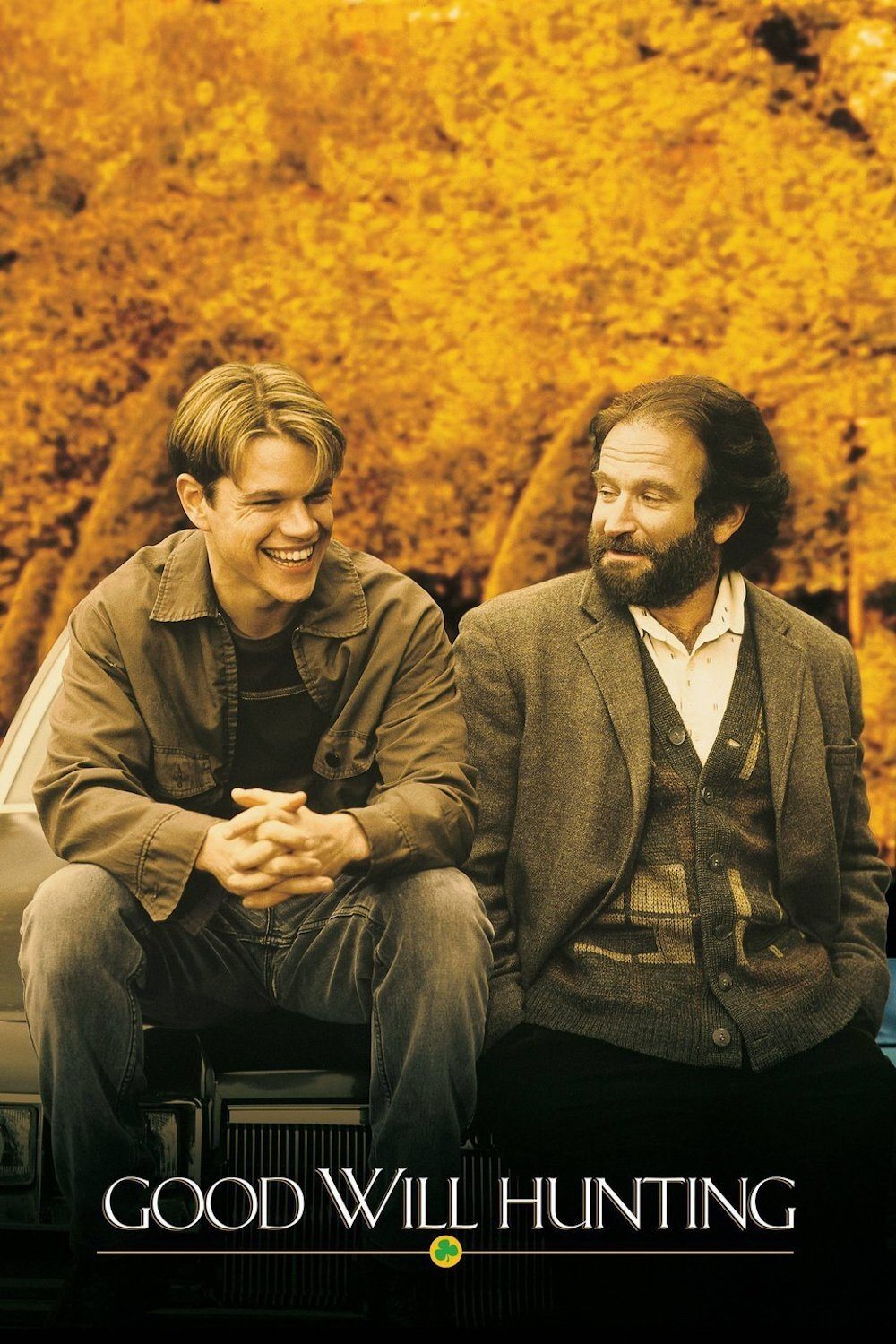
What the Film Is About
From the opening moments of Good Will Hunting, I sense a film that isn’t preoccupied with grand events so much as it is obsessed with the private war inside one young man’s soul. To me, it’s fundamentally about the push and pull between brilliance and vulnerability—between a self-imposed exile from intimacy and the gravitational pull of genuine connection. I’m not just watching a coming-of-age narrative; I’m experiencing the ache of someone who has mastered every academic puzzle, yet fumbles with the simplest question: can I let myself be loved?
The movie’s emotional core, for me, revolves around Will’s struggle to reconcile the trauma and bruises of his past with the hope and risk of a different future. Every scene hums with the tension between the impulse to burn bridges before anyone else can, and the tentative yearning to finally stop running. The central conflict has never felt to me like a mere battle between a character and society—it’s the ceaseless confrontation with his own sense of worth.
Core Themes
What has always struck me about Good Will Hunting is its fearless dive into themes of genius, trauma, and the myth of self-sufficiency. The film insists that intelligence alone can’t save us—that even the most gifted mind is helpless without the awkward, painful act of letting others in. At the heart of the movie, I find a meditation on vulnerability, masculinity, and the courage it takes to accept help and forgiveness.
I see this film as relentlessly questioning what it means to belong to a community. Class divides linger in every exchange, not as a backdrop, but as a living, breathing antagonist. Will’s friends embody a fierce loyalty that is sometimes tender, sometimes suffocating, and often desperate to protect him from dreams that might take him away. In my eyes, the movie is haunted by the ways that trauma endures in silence, and the subtle boundary between loyalty and stagnation.
Back in the late 1990s, the film’s themes—abuse, repressed potential, therapy—were still working their way into mainstream cultural conversations. I remember being moved by how honestly it put therapy on the screen, not as a punchline, but as an arena for real, messy change. Today, the questions it raises about class, opportunity, and emotional vulnerability feel just as urgent, if not more, in a world still wrestling with mental health stigmas and the illusion of individual self-reliance.
Symbolism & Motifs
Watching Good Will Hunting, I’m always drawn to the recurring image of closed doors—literal and emotional. The doors Will slams or lingers outside of are more than set dressing; they become a visual shorthand for his refusal to let anyone get close. When I see a door in this movie, I read it as a quiet dare: will he walk through, or shut it in someone’s face?
Math, too, becomes freighted with meaning far beyond classroom exercises. For me, Will’s chalk-covered equations aren’t just signs of his intelligence—they’re shields, ways of keeping messy emotions at bay by clinging to certainty. Mathematics in the film is both an escape hatch and a prison; it grants Will rarefied status among ivory tower elites, yet it also disguises his wounds in the abstraction of numbers.
There’s also the motif of mirrors and reflections that I notice, especially in moments when Will confronts not only others, but his own pain. Whether it’s a literal look in the mirror, or those charged sessions with Sean, the mirror becomes a demand to stop hiding. Boston itself, with its rigid class lines and old architecture, is more than a setting—it’s almost a character, a bruised landscape of hope and resignation that reflects Will’s internal battle.
Key Scenes
Key Scene 1
For me, the “It’s not your fault” scene stands as the film’s raw emotional fulcrum. Watching Robin Williams’ Sean Maguire repeat that phrase until Will breaks down, I never fail to feel the crushing power of compassion finally breaking through a lifetime of defense. This scene is less about a specific memory than about the act of letting oneself be truly seen, and—just as crucially—letting oneself experience grace. The repetition isn’t just for Will; it’s for all of us who’ve ever needed someone to assure us that we are not the architects of our own pain.
Key Scene 2
The moment Will chooses to hold onto his friendship with Chuckie—particularly during Chuckie’s bittersweet daydream about coming to Will’s house one morning only to find that he’s finally left—always makes me consider the complexities of loyalty and expectation. In that exchange, I see their entire relationship distilled: a friend who truly wants what’s best, even if it means losing what’s familiar. I find it’s not just a scene about departure; it’s about loving someone enough to let them go. It reframes loyalty as something less about holding tight, and more about encouraging one another to reach for what seems impossible.
Key Scene 3
The movie’s closing shot—Will driving out of Boston towards an uncertain future with the possibility of love—resonates with me as a powerful statement on risk and change. It isn’t painted as a neat solution. Instead, it feels like a leap into the unknown, propelled by pain and hope in equal measure. Every time I watch it, I see a film that refuses to romanticize genius, choosing instead to value bravery—the kind required to step out of the patterns that have always defined you. It’s a scene that doesn’t promise perpetual happiness, but it insists that growth is a choice that must be made more than once.
Common Interpretations
Whenever I talk about Good Will Hunting with fellow film enthusiasts or read critics’ insights, I notice a few dominant readings. Many see the film as a story about potential—less about mathematics than about what happens when a person stops believing the worst about themselves and dares to imagine a life beyond survival. This interpretation resonates with me: Will’s conflict isn’t simply with his past, but with the way he’s internalized shame and convinced himself that happiness is not his to claim.
Another widely held view positions the film as an ode to working-class companionship and blue-collar solidarity. The idea is that Will’s community, with all its flaws, gives him a foundation even as it threatens to keep him rooted in old wounds. That tension between loyalty and escape is a well many critics and viewers return to, noting how the movie challenges simplistic ideas about social mobility and “making it out.”
I’ve also observed that some interpret the therapist-patient dynamic between Sean and Will as a kind of surrogate father/son relationship, suggesting that real healing only happens when we allow others to enter the messiness of our lives with empathy. There’s debate here: some feel the film leans into sentimentality, while others, myself included, find its emotional candor both refreshing and necessary, especially considering Hollywood’s historic reluctance to portray therapy in such a nuanced way.
A less frequent but equally powerful interpretation treats the film as a critique of the meritocracy myth—the idea that talent automatically opens doors and erases structural injustice. I find this reading compelling, especially in the way the film foregrounds class, trauma, and the limits of academic “salvation.”
Films with Similar Themes
- Dead Poets Society – This film, like Good Will Hunting, circles around unconventional mentorship and the struggle to define oneself amid societal pressure. Both movies have left me thinking about how young men navigate inherited expectations and seek out adult connections that move them beyond what their environments prescribe.
- A Beautiful Mind – I am always compelled by how this film also grapples with the burdens and isolation of genius. The protagonist’s internal obstacles and transformative relationships mirror Will’s, albeit filtered through the unique challenges of mental illness and academia.
- Moonlight – This movie strikes me as a powerful exploration of trauma and self-acceptance, focusing on how personal history and environment shape (and sometimes constrain) the pursuit of authenticity. Like Good Will Hunting, it finds beauty and hope in moments of hard-won vulnerability.
- The Pursuit of Happyness – Watching this, I feel echoes of Will’s struggle to overcome social and economic barriers. Both films spotlight perseverance and the transformative power of mentorship, while interrogating what true success means beyond surface achievement.
Ultimately, when I reflect on what Good Will Hunting communicates, I see it as a love letter to imperfect humanity. It isn’t a mathematical equation to be solved, but a story about how survival can turn into living when we take the risk of being known. The film speaks to all the ways in which we bruise ourselves on our own limitations, and how genuine connection—be it through friendship, love, or therapy—offers a ladder out. Its truths feel enduring precisely because they resist quick fixes: healing happens not in sudden revelation, but in the daily, sometimes halting practice of showing up for one another. In every silent hesitation and conflicted goodbye, I read a message about the value of empathy, of staying even when it hurts, and of forgiveness—especially the kind we reserve for ourselves.
After learning the historical background, you may also want to explore how this film was received and remembered.