
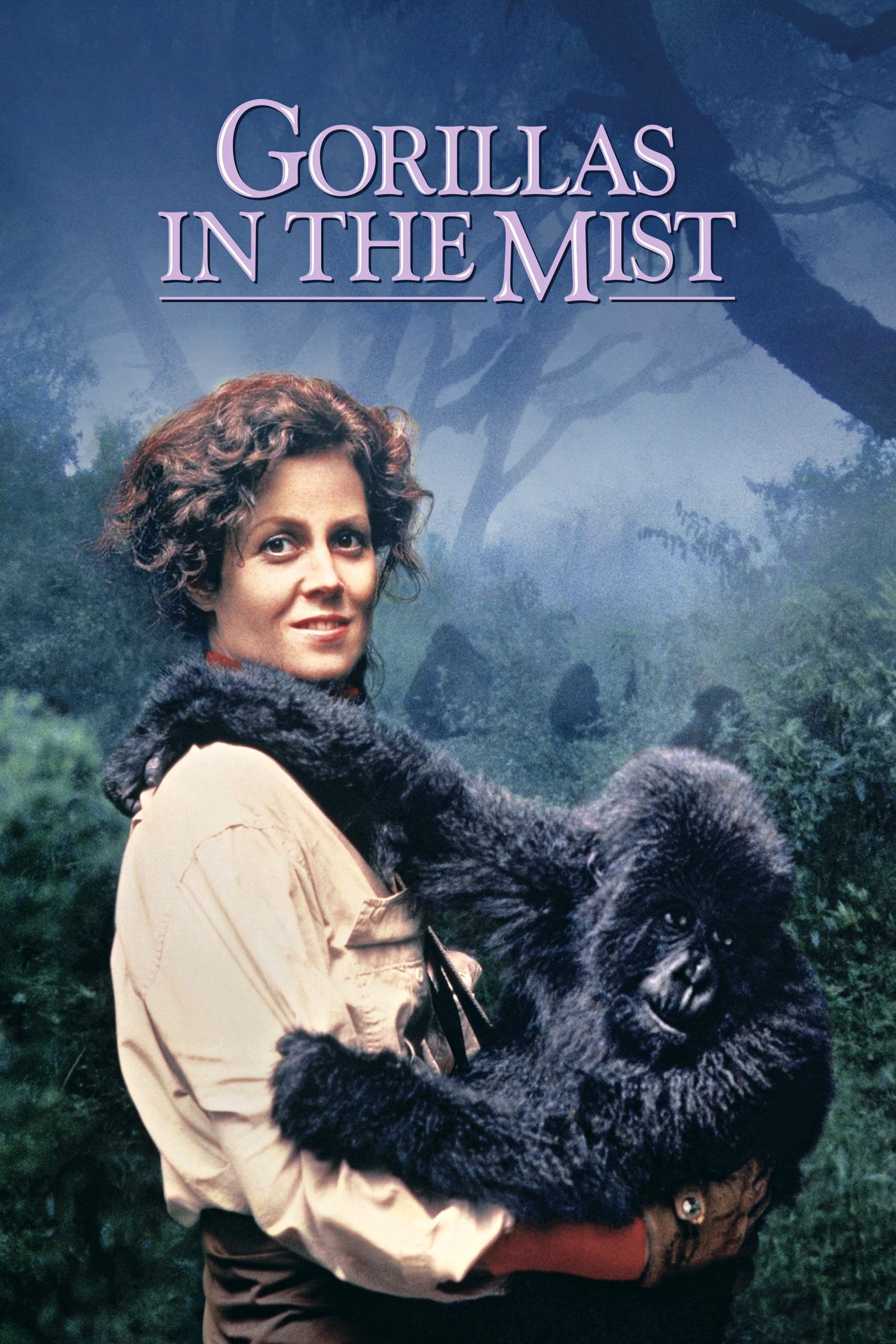
What the Film Is About
Watching “Gorillas in the Mist” for the first time, I was struck immediately by the sense that this isn’t just the story of one person battling impossible odds—it’s an invitation to experience the messiness, wonder, and heartbreak of genuine commitment. I don’t see it as a simple dramatization of a scientist’s fieldwork in Africa; I feel it’s a sweeping emotional journey about what it means to truly connect—to a cause, to a place, to beings outside ourselves—with all the risks and triumphs that come with that territory.
For me, at its core, the film charts the transformation of a passionate outsider, Dian Fossey, as she immerses herself in a landscape where traditional boundaries—between human and animal, activist and villain, protector and destroyer—grow increasingly blurred. The narrative’s central arc, as I interpret it, isn’t about whether Fossey succeeds or fails in her scientific mission, but about how far someone is willing to go to defend what they love, and what is sacrificed or reshaped in that process. I found myself grappling not only with the film’s vivid depiction of endangered wildlife but with the emotional toll exacted on those who refuse to be bystanders in the face of brutality or indifference.
Core Themes
In my view, the most prominent theme running through “Gorillas in the Mist” is the collision between idealism and harsh reality. I interpret Fossey’s journey as a meditation on the price of moral conviction. It’s not just that she believes in animal conservation—she embodies the lengths to which a person might go when their values conflict with commercial, political, and cultural forces. For me, the film explores the loneliness and social cost of activism: how devotion can become obsession, and how easily personal relationships are frayed in the wake of mission-driven isolation.
Another theme that resonated with me is the discomforting question of human intervention—both our capacity to protect and our propensity to destroy. The film compels me to ask: where is the line between stewardship and domination? Fossey’s efforts demand a confrontation with the colonialist legacy of Westerners in Africa, forcing viewers like myself to interrogate whether her intrusion into the lives of gorillas (and local people) is benevolent or another form of trespass. This complexity feels especially relevant to conversations happening today about environmentalism, activism, and the global North’s relationship with the global South.
Love and empathy, too, are inescapable themes. I was moved by the film’s insistence that genuine understanding—across species barriers, no less—is possible. The tenderness between Fossey and “her” gorillas challenged my assumptions about animal intelligence and the universality of emotional connection. This theme, to me, is what lends the film its persistent relevance. At a time when the disconnect between humans and nature could not feel starker, “Gorillas in the Mist” still urges us (sometimes uncomfortably) to reconsider our responsibilities and our kinship with the more-than-human world.
Symbolism & Motifs
One motif that struck me throughout my viewing is the recurring visual of mist itself. For me, the swirling fog that envelops the Virunga mountains becomes a metaphor for ambiguity and the unknown—for those emotional and ethical gray areas that defy neat solutions. Whenever Fossey disappears into the mist, I felt a sense of uncertainty: is she losing herself in her purpose, or drawing closer to a realm of authenticity that the civilized world has lost?
I was also intrigued by the recurring image of hands—human and gorilla alike. Hands reaching through the bars of cages, hands touching, hands wielding weapons. For me, these shots visualize the spectrum of human power: the capacity to nurture and to harm. They serve as a potent reminder, etched into my mind, of the fragile boundaries between care and control, empathy and dominance.
Another symbol that resonated for me was the gorilla’s silver back, glistening in the filtered sunlight. The silverback, an emblem of strength and wisdom within gorilla society, stands in sharp contrast to the vulnerability imposed by habitat destruction and poaching. Watching these creatures in moments of serene intimacy, I couldn’t help but reflect on the tragic irony that the very traits making them noble in the wild also mark them as targets in a world ruled by profit. For me, the gorilla becomes a vessel for meditating on loss and reverence, victimhood and resilience.
The motif of isolation—shots of Fossey alone, separated from colleagues, even estranged from the local people—reminded me of the isolating effects of passionately held beliefs in a world that doesn’t care to listen. All these symbols deepen the film’s central paradox: that to fight for something wholly, we may have to risk becoming strangers to everything (and everyone) else.
Key Scenes
Key Scene 1
There’s a scene that haunts me long after the credits roll—Fossey’s first visceral encounter with the gorilla families. I remember feeling the texture of her hesitation, the awe and apprehension as she edges closer. This isn’t a moment of scientific triumph so much as a communion: the mutual regard exchanged between creature and human. For me, this encounter is vital because it subverts the customary hierarchy—Fossey behaves as guest, not conqueror, in the gorillas’ realm. Emotionally, it’s a quiet but radical act of humility, the foundation for the ethical vision that animates the film. In that stillness, the film asks whether genuine understanding (even love) is possible between two species, and what it might cost us to pursue it.
Key Scene 2
One of the film’s most troubling scenes, as I see it, comes when Fossey confronts local poachers. She lashes out violently, driven by anguish more than calculation. I found this moment both bracing and uncomfortable: it muddies the moral clarity of her crusade, shading her activism with a kind of vigilantism. My reading is that this scene challenges the viewer to consider whether righteousness justifies force, and it interrogates the fine line between justice and obsession. The emotional charge of this confrontation reveals Fossey’s growing isolation—not only culturally, but morally. It left me wrestling with difficult questions about the ethics of activism, especially when noble intentions devolve into coercive control.
Key Scene 3
For me, the film’s final statement comes not in words but in a mournful tableau: the aftermath of violence, as a beloved gorilla lies dead and Fossey is devastated by loss. Here, the movie offers no easy comfort—only a sense of wounded stewardship and ambiguous legacy. This moment struck me as the culmination of all the film’s internal contradictions. I felt the full emotional weight—the bitter cost of devotion, the possibility of futility, and the lingering hope that sacrifice can ignite change. The image lingers in my memory as a challenge: what will it take to honor what’s irreplaceable, and at what personal expense? It’s an ending that refuses sentimentality, pushing me instead toward introspection.
Common Interpretations
In discussions with fellow enthusiasts and in my reading, I find that the dominant interpretation casts “Gorillas in the Mist” as a plea for animal rights and environmental stewardship. Many viewers, like myself, are moved by its depiction of a courageous woman confronting apathy and direct violence against creatures whose sentience mirrors our own. In this light, the film becomes a rallying cry—a dramatization of what might be possible if we treat the non-human world not as resources, but as kin.
However, I’ve also encountered a more critical strand of interpretation. Some see Fossey’s story as a cautionary tale about the dangers of uncompromising idealism. Her single-minded devotion, according to this reading, verges on authoritarianism, blurring the boundaries between protector and oppressor—especially in her dealings with local communities. From this perspective, the film has been seen as a narrative about the perils of overidentifying with a cause, to the point that empathy for wider human contexts is lost.
A third, more nuanced interpretation—one I’m partial to—views the film as an exploration of ethical ambiguity. Rather than lionizing or vilifying any one character, it invites viewers to dwell in the discomfort of irresolvable conflicts: between preservation and intervention, compassion and fanaticism, the sanctity of life and the inevitability of loss. I believe that’s where the film’s true power resides: in refusing to offer a tidy moral, but instead compelling us to wrestle with our own responsibilities and uncertainties.
Films with Similar Themes
- Born Free – I’m reminded of “Born Free,” not just because it centers on wildlife conservation, but because it similarly explores the emotional cost and unexpected consequences of trying to bridge the gap between the wild and the human world.
- Out of Africa – While more of a romantic epic, “Out of Africa” resonates with me for its examination of Westerners grappling with the complexities of another continent, and its ambivalence about the limits of understanding across cultural boundaries.
- Jane – The documentary about Jane Goodall frequently crosses my mind as a spiritual sibling to Fossey’s story, reflecting the solitary drive, risks, and ethical gray areas faced by field scientists committed to primate research and protection.
- The Constant Gardener – Though set in a vastly different milieu, this film strikes me as thematically connected for its unblinking look at the price of activism, the moral ambiguity of Western involvement in Africa, and the intersection of personal trauma with broader social injustice.
What “Gorillas in the Mist” ultimately communicates, to me, is the terrifying, exhilarating weight of taking responsibility—for the world, for other beings, for one’s own ideals. It’s a film that doesn’t permit the comfort of distance: by foregrounding intimacy and loss, reverence and rage, it pulls us into the brutal complexity of caring fiercely for something vulnerable. I see it as both a tribute to those who dare to fight for the voiceless and a meditation on the messiness of such devotion, offering no simple answers but urging, always, that we do not look away.
After learning the historical background, you may also want to explore how this film was received and remembered.