
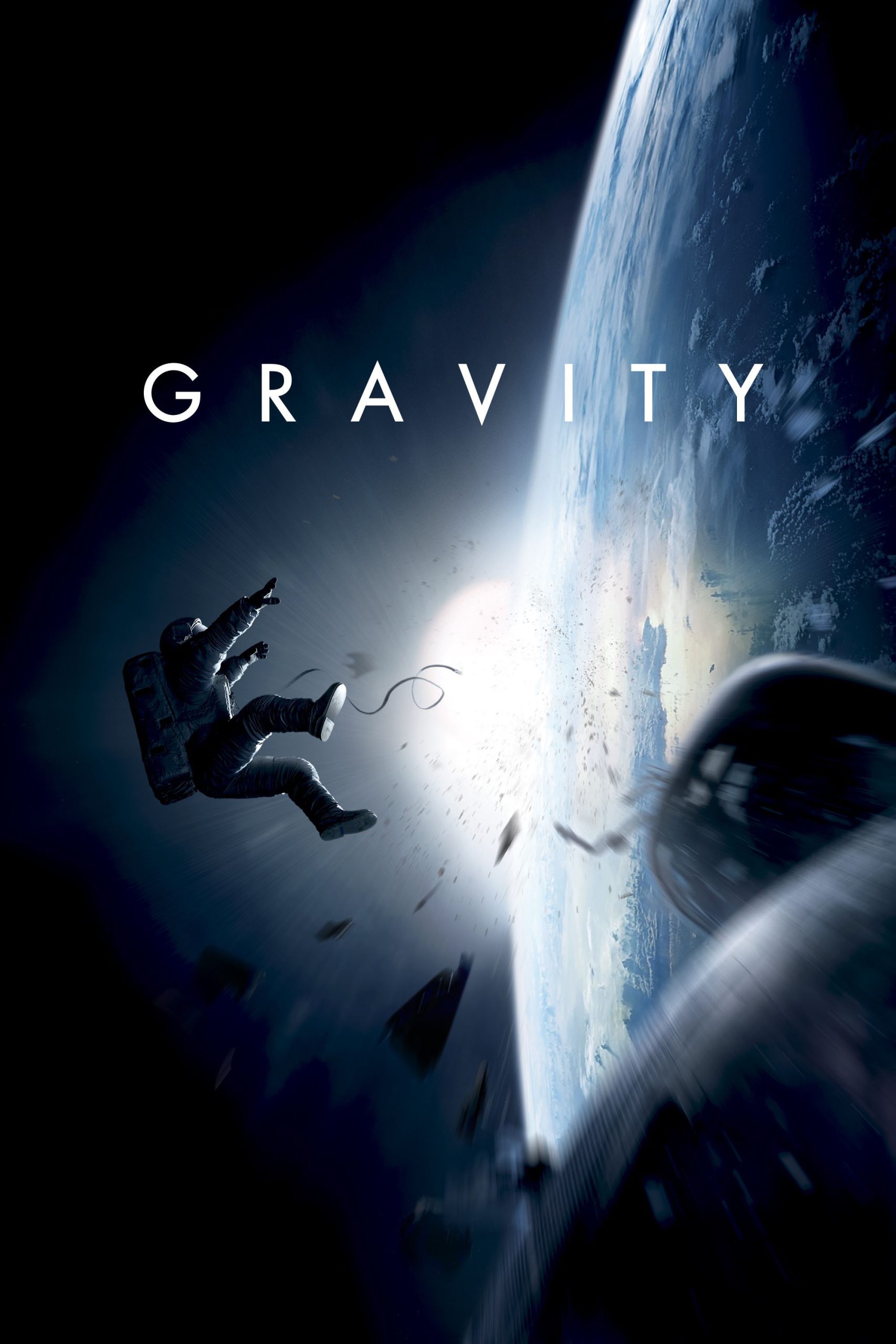
What the Film Is About
When I first experienced “Gravity,” I was captivated by how it transforms what could have been a technical spectacle into something deeply human and fundamentally primal. To me, the film is much more than an account of astronauts stranded in orbit—it’s a harrowing meditation on the will to live, cast against the ultimate backdrop of existential isolation. The central conflict is not just the struggle against an indifferent universe but the internal reckoning that takes place inside Dr. Ryan Stone. I felt the emotional journey unfold less as a straightforward rescue but as a battle between despair and renewal. The narrative’s direction, I realized, isn’t toward escape; it’s toward rebirth.
For every technical marvel, there’s an emotional beat that hammers home the sensation of drifting—not just through physical space, but within a devastated psyche. The film never lets me lose sight of its underlying tension: the persistent threat of obliteration and the desperate flicker of hope that flickers in the dark.
Core Themes
The first theme that jumped out at me was survival—not as an achievement, but as a process. “Gravity” interrogates what it means to persist when stripped bare by loss and fear. I found that the film’s treatment of survival is inextricable from grief; Dr. Stone is not merely battling physics but wrestling with personal tragedy. Survival, here, becomes a question of choice: Will she succumb to the void, or will she ignite some fragment of hope and keep moving forward?
Another theme that continually resonated with me was rebirth. This film isn’t content with merely depicting the mechanics of staying alive in space—it’s about transforming pain into resolve. Stone’s journey, with all its setbacks and hallucinations, felt like a continual dying and being reborn. That sense of cyclical struggle struck me as universal: how often do we find ourselves consumed by inertia, only to spark back to life in moments of crisis?
I also see “Gravity” as a meditation on isolation and connection. Its imagery of bodies floating alone through the vastness of space struck me as an emblem of contemporary alienation; technology, ironically, brings us further from what we love. At its 2013 release, the world was grappling with the paradox of hyper-connected digital life that often leaves us feeling more isolated than ever. Even now, I believe that enduring anxiety—about being truly seen and heard, about making meaningful connections—remains as potent as ever.
Lastly, the film brushes up against the theme of letting go. So many of Stone’s obstacles require a form of surrender—whether letting go of physical debris, of a spacecraft, or of the past itself. I was particularly struck by how the film frames release not as defeat, but as the necessary surrender that enables transformation and forward motion.
Symbolism & Motifs
From my vantage point, “Gravity” is a film suffused with symbols that double as philosophical questions. The most prominent, to me, is the visual motif of floating. I found floating to represent more than a physical state—it’s emotional suspension, the uncertainty that separates trauma from healing. This image recurs whenever Dr. Stone is untethered, evoking the feeling of existing without grounding.
Another powerful symbol that stayed with me is the imagery of birth and rebirth. One of the film’s most iconic shots, Dr. Stone curled in a fetal position within the airlock, immediately called to mind the security and vulnerability of the womb. To me, this wasn’t accidental; every airlock is a womb, every suit an umbilical cord, and every ejection a perilous, painful birth into a new form of existence. I found this motif a poignant way of depicting spiritual renewal.
The frequent references to gravity, both literal and figurative, functioned for me as the force of life itself—a pull toward meaning, home, survival. Conversely, the absence of gravity is presented as both freedom and terror, just as the absence of personal gravity—of attachment, of hope—threatens to send us spinning off into meaninglessness.
Silence plays its own enigmatic role. I noticed how, in the soundless vacuum, the silence can be suffocating or oddly serene, at times contemplative and at others threatening. This motif foregrounds personal introspection—when all distractions are stripped away, what’s left to confront except oneself?
Key Scenes
Key Scene 1
The moment that truly anchors the film, in my opinion, is Dr. Stone’s first moment of surrender inside the Soyuz capsule. Here, isolated from any immediate threat, she faces a kind of emotional collapse. For me, this scene achieves something crucial: it trades the adrenaline of physical danger for the quiet devastation of internal despair. Dr. Stone’s tears (suspended in zero gravity, floating away from her) feel weighted with all she’s lost, all the stories untold, all the futures erased. I read this scene as the embodiment of the film’s emotional core—a confrontation with hopelessness before there can be any spark of hope. It’s not an escape from danger that’s at stake, but the willingness to begin living again.
Key Scene 2
Another pivotal scene for me is the hallucinated reappearance of George Clooney’s character, Matt Kowalski, inside the capsule. When Stone seems to have lost all will to survive, this moment destabilizes the film from straightforward realism into something more mythic. I interpreted Kowalski’s visitation not as a rescue from outside, but as the surfacing of Stone’s own inner determination. The advice he dispenses isn’t groundbreaking, but I was moved by how it catalyzes Stone’s return to action. The scene skillfully reframes hope: not as something that comes from others, but as a part of ourselves that must be resurrected from the wreckage. The fact that Stone is ultimately alone only deepened my appreciation for how the film regards hope as self-generated.
Key Scene 3
When Stone finally crash-lands back on Earth and pulls herself up from the water and mud, I experienced it less as a physical rescue and more as a re-entry into the world of the living. Watching her stagger, almost crawling toward uprightness, I was struck by how primal the gesture felt. For me, this moment isn’t just the end of a space mission; it is a wordless testament to rebirth, a visual metaphor for the human drive to survive, adapt, and stand again even after cataclysm. The earth’s gravity, after so much spinning adrift, is reimagined as an anchor: both a burden and a promise.
Common Interpretations
Across my readings and discussions, I’ve noticed that most critics and audiences agree on Gravity’s unflinching focus on human endurance. Many respond, as I do, to its core message of survival against overwhelming odds. There’s a nearly universal appreciation for how the film’s technical grandeur dovetails with intimate psychological storytelling.
Others, however, highlight the movie’s existential anxiety—watching Dr. Stone adrift in the void, some interpret her journey as a metaphor for the search for purpose in an indifferent universe. I have met viewers who see the central conflict not as survival per se but as the struggle to rebuild one’s sense of self after loss. There are even theological or spiritual readings, focusing on Stone’s many births and near-drownings as symbolic of a pilgrimage from suffering to redemption. For some, the narrative arc doubles as a psychological healing process: a return to life after profound depression.
Few see “Gravity” in strictly literal terms. Most conversations I’ve had shift quickly to what’s unseen—what the emptiness and the silence demand of us as individuals. That, for me, is the film’s true power: it sets the stage for each of us to fill its silence with our own fears, griefs, and hopes.
Films with Similar Themes
- “2001: A Space Odyssey” (1968) – My main connection here is thematic; both films ask what it means to seek meaning against the backdrop of cosmic indifference and the strangely nurturing, yet terrifying, infinity of space.
- “The Martian” (2015) – Like “Gravity,” this film explores survival under impossible circumstances, but I was drawn to the difference: where “Gravity” runs on emotional and psychological endurance, “The Martian” focuses as much on pragmatic optimism as existential crisis.
- “Cast Away” (2000) – For me, the story of a man isolated by circumstance fits snugly beside “Gravity”. Both use physical isolation as a metaphor for internal exile and ask when, if ever, isolation might become empowerment.
- “All Is Lost” (2013) – Here, I found a nearly silent meditation on survival and existential struggle. The lack of dialogue in both films highlights the elemental conflict between the individual and an uncaring universe, pushing us to confront what it means to persist.
Stepping back from the spectacle of “Gravity,” what stays with me is its message about the persistence of hope in the face of unimaginable odds. I can’t separate its era from its anxieties; in a time when catastrophe and loneliness felt omnipresent, I saw this film as an ode to the fragile, stubborn human drive to begin again, no matter how lost we’ve become. Through its imagery and emotion, “Gravity” leaves me convinced that survival is not just an instinct—it’s a choice to keep reaching, to accept loss, and to trust, however tremblingly, in the gravitational pull of renewal.
To explore how this film has been judged over time, consider these additional viewpoints.