
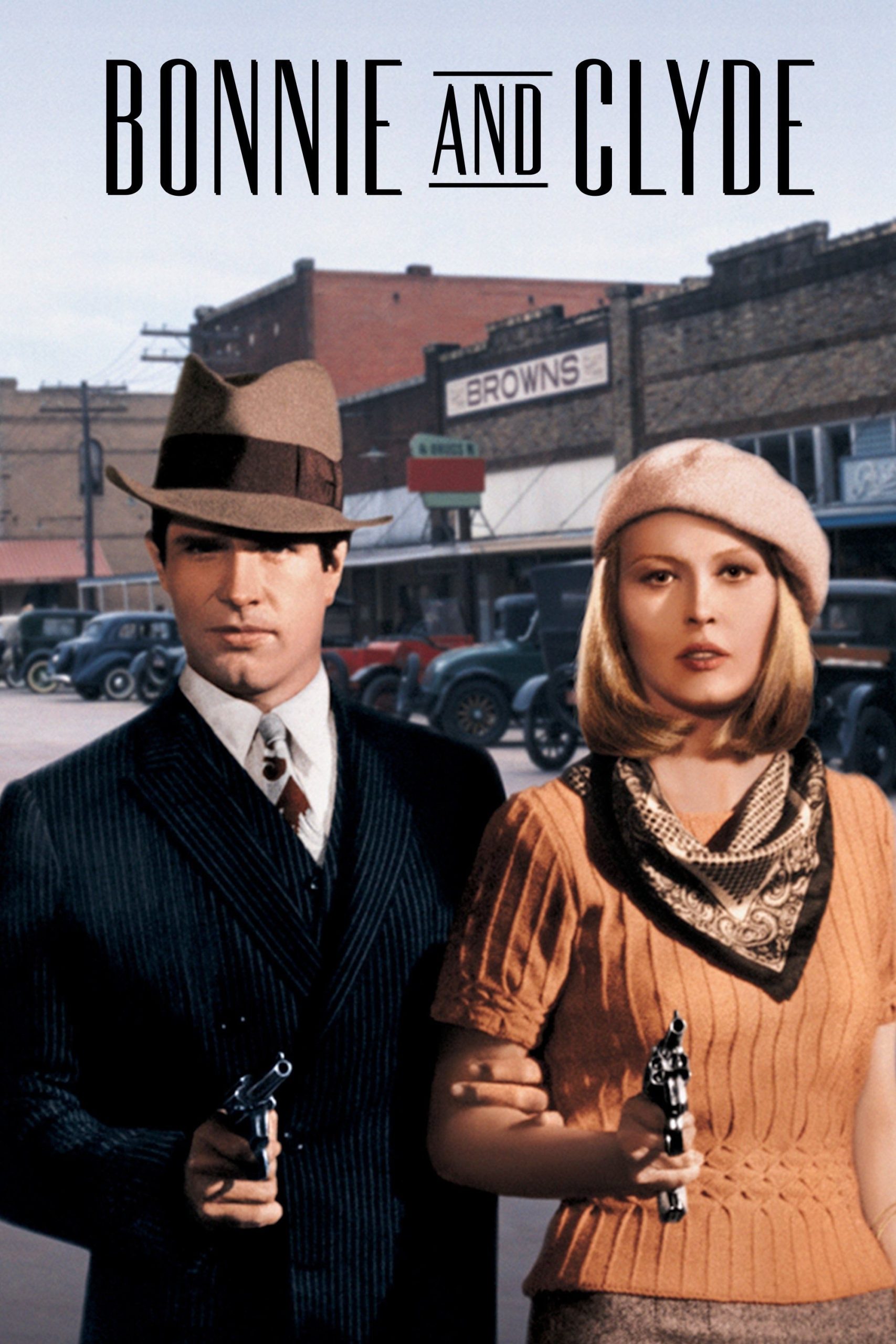
What the Film Is About
Experiencing “Bonnie and Clyde” feels, to me, like staring directly into the blinding light of America’s contradictions—beauty and brutality, love and violence, hope and fatalism—stitched together with unsettling intimacy. The emotional journey it offers isn’t about the exploits of two notorious criminals so much as an intense, restless yearning: for meaning, for escape from suffocating small-town routine, for the kind of love that feels urgent and all-consuming. Every frame pulses with the anxiety of living on the edge, where excitement and doom are tangled together in a headlong rush toward oblivion.
What I find most affecting is how the film positions its characters in a constant negotiation between their private fantasies and public realities. Bonnie and Clyde are inseparable from their legend, but also desperate to find something genuine in each other and the world that chases them. The story becomes less about their criminal acts and more about how fleeting intimacy and rebellion can feel in the shadow of inevitability. Theirs is not just a doomed love story—it’s a meditation on the hunger for freedom and the price it exacts.
Core Themes
When I watch “Bonnie and Clyde,” the theme that comes through most urgently is the tension between rebellion and societal conformity. The film burrows into the allure and perils of defiance. I always find myself returning to how it grapples with the price of nonconformity—how much you sacrifice for the intoxicating promise of living on your own terms. The film was a thunderclap at the time of its release: 1967 America was writhing with frustration, haunted by the Vietnam War, civil unrest, and a generational rift. “Bonnie and Clyde” captures that volatile mood; it’s both a product of and a comment on a moment when old rules no longer seemed to have persuasive power.
Violence, too, runs through the film—visceral, intimate, and shocking. But what strikes me is how violence is portrayed less as a means of profit than as a consequence of desperation and yearning. There’s no glamor in the brutality, even though Bonnie and Clyde are arguably glamorized. Every gunshot seems to wound the couple as much as anyone else. It’s an ethical ambiguity that forces me to question: Are these characters monsters, victims, or simply human beings swept away by forces larger than themselves?
Love and loyalty are interwoven here, but with a jagged edge. I’m fascinated by how Warren Beatty and Faye Dunaway play their characters as both lovers and co-conspirators, bound together by both attraction and necessity. Their romance isn’t soft or redemptive; it’s entwined with fear and fragility. The film asks what we’re willing to forgive for love’s sake, and whether love in a broken world can ever be pure.
Finally, the film’s exploration of the mythic American dream—freedom, self-invention, the open road—feels central to its meaning. But unlike other anthems to aspiration, “Bonnie and Clyde” exposes how that dream can warp into alienation and violence when hope meets hard reality. The film refuses to let me look away from what happens when yearning is stifled and escape is the only answer left.
Symbolism & Motifs
Every time I return to this film, I see how Arthur Penn weaves a visual language loaded with recurring symbols, all deepening the emotional impact. Automobiles, for instance, stand in for freedom, movement, and temporary escape. Bonnie and Clyde’s car always seems like a third character—cramped, unreliable, forever in flight. It’s as if the American landscape itself is complicit in their story, stretching wide and open but never promising true sanctuary.
I also notice how the motif of mirrors and windows turns up at critical moments, reflecting the characters’ longing for something just out of reach—some future, some other life. The way Bonnie gazes out a window or regards her own reflection catches me off guard, suggesting how she’s both a participant in her story and a spectator to her own unraveling.
The use of old-timey photographs, especially in the staging and eventual media coverage, transforms Bonnie and Clyde from flesh-and-blood fugitives into legends. The famous “iconic snapshots” motif is not just clever—it’s profound commentary on the way mass media transforms real suffering and longing into consumable myth. This blurring of reality and legend makes me question my own complicity as a viewer, hungry for romance even when it’s bound up with tragedy.
The constant juxtaposition of laughter and violence—often in the same breath—creates an unnerving sense of instability. The most joyful, intimate moments are almost always on the cusp of disaster. For me, this repetition works as a grim reminder that in their world, happiness is always precarious, shadowed by imminent threat.
Key Scenes
Key Scene 1
One moment that haunts me is Bonnie’s conversation with her mother, set against the vastness of a rural Texas field. The emotional charge doesn’t come from what’s said, but from the gulf between Bonnie’s dreams and her mother’s resigned gaze. I see this scene as the film’s quietest, most devastating truth: freedom can be isolating. It’s a reckoning with the fact that breaking away from your roots means leaving behind a piece of yourself that can never be reclaimed. The melancholy here weighs heavier than any shootout—the cost of escape is not just physical danger, but a kind of spiritual homelessness.
Key Scene 2
Another scene that lingers for me is the bank robbery gone wrong, where the violence finally lands not on anonymous bankers or policemen, but on the couple’s own circle of friends and accomplices. The stakes change, and so does my sense of complicity—suddenly, the adventure no longer feels glamorous or righteous. The gang’s laughter cracks, revealing desperation and mounting paranoia. This moment exposes the limits of loyalty, the erosion of trust under pressure. It makes me reflect on how danger corrodes intimacy, and how the line between us-versus-them and all-against-all inevitably blurs when survival becomes the only goal.
Key Scene 3
The ambush that ends their story is unforgettable, not just for its violence, but for the way it crystallizes every theme that’s come before. Time slows; silences stretch; Bonnie and Clyde exchange a final, unspoken look that’s a fragile, fleeting grace note amid chaos. To me, this final tableau echoes the film’s recurring question: Was the risk, the rush, the reckless love, worth the price? The abruptness and brutality of their end is the film’s last, most honest answer—a warning and a lament. It’s a moment that transforms these outlaws from living myth to tragic cautionary tale, underscoring the human cost of chasing an impossible freedom.
Common Interpretations
From conversations I’ve had and criticism I’ve read, interpretations of “Bonnie and Clyde” are as diverse as the emotions it stirs. Some see it primarily as a countercultural statement—an allegory for 1960s youth rebelling against an establishment they viewed as corrupt or indifferent. I agree with this reading to an extent; the film’s style and spirit are inseparable from the crisis of authority and social upheaval of its time. Its violence feels cathartic but also sobering, forcing audiences to confront both the injustice of rigid conformity and the emptiness of reckless rebellion.
Others approach the film as a meditation on the seductive power of media mythmaking. I’m sympathetic to this view, especially given how Bonnie and Clyde are immortalized through their own staged photographs and newspaper headlines within the film. This interpretation prompts uncomfortable questions: Are we watching the story out of empathy, or are we irresistibly drawn to spectacle, even tragedy, when it’s packaged seductively?
Some viewers focus on the personal and psychological—seeing the couple not as symbols but as broken, searching people, grasping for intimacy in a world that keeps love just out of reach. I find this view especially moving. The film’s violence and romance aren’t competing, but entwined; every tender moment is undercut by dread, every joke bears the weight of survival.
There’s also conversation about genre and style. “Bonnie and Clyde” upends the classic gangster film, lacing its narrative with moments of vulnerability and sensuality uncommon in earlier crime films. This shift in tone and structure feels to me like an announcement that Hollywood itself was changing—embracing ambiguity and letting new voices in. Whether the film is a tragedy, a romance, or a social critique remains up for debate, but its refusal to pin itself to just one meaning is, for me, its greatest strength.
Films with Similar Themes
- “Badlands” (1973) – To me, this film draws from “Bonnie and Clyde” in its lyrical yet disturbing meditation on alienated youth and fatal attraction. Both films ask whether love can survive on the run, and what happens when rebellion leads only to destruction.
- “Natural Born Killers” (1994) – I see this film as an explicit exploration of media mythmaking and sensationalized violence. Like “Bonnie and Clyde,” it questions our appetite for outlaw icons and implicates viewers in the creation of modern legends.
- “Thelma & Louise” (1991) – This story of two women escaping oppression echoes “Bonnie and Clyde’s” fusion of freedom and fatalism. For me, both films fuse friendship (or romance) with rebellion, but never lose sight of society’s pressure to punish defiance, especially from those with little power to begin with.
- “A Place in the Sun” (1951) – Though different in style, I find resonances in this film’s treatment of desire, class, and the fatal consequences of reaching beyond one’s circumstances. Both dramas trace the cost of longing for a different life.
What lingers most after watching “Bonnie and Clyde” is not just the spectacle of outlaw life, but the aching, unresolvable tension between hunger for transcendence and the hard limits imposed by society and fate. It’s a film that, for me, captures the most exhilarating and most terrifying aspects of being alive: the urge to burst free, the gravity of connections we can’t escape, the way myth is made from mess and longing. In watching Bonnie and Clyde burn brightly and perish quickly, I’m left with questions that are neither comfortable nor easily answered—a mark, to my mind, of truly powerful cinema.
To explore how this film has been judged over time, consider these additional viewpoints.