
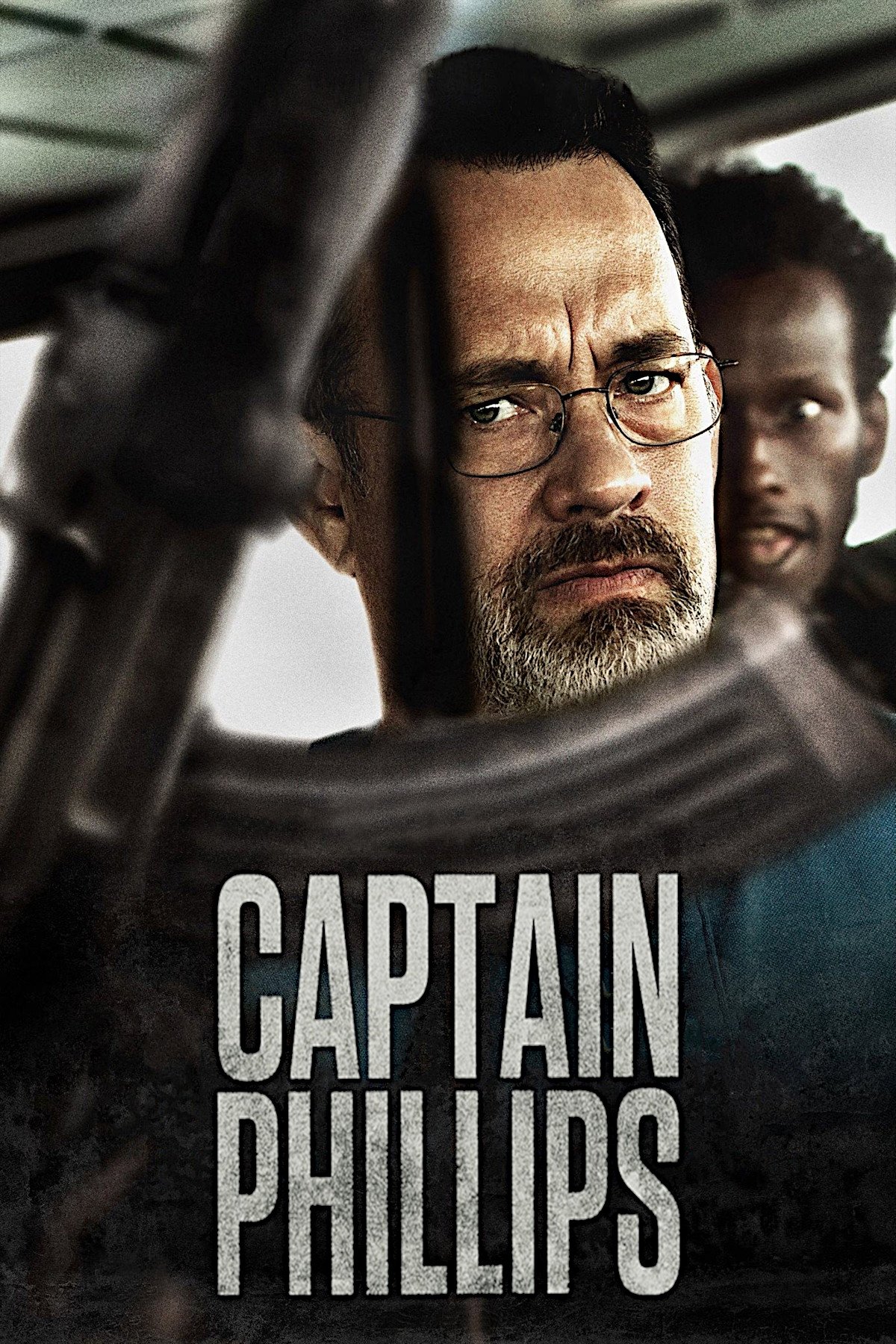
What the Film Is About
I’ve always been captivated by films that pivot on moments of extreme duress, when everyday individuals become reluctant protagonists in much larger power plays. “Captain Phillips” strikes me as a film anchored less in piracy or action than in the convergence of vulnerability and authority, set aboard a container ship far from home but deep in contested moral waters. The film seems, at its core, to be about ordinary people thrown into extraordinary—and excruciatingly real—circumstances, forced to negotiate fear, compassion, and duty in ways they could never have predicted.
The emotional journey here, for me, is not just a clash of captors and captives but a raw exploration of desperation on all sides. Rather than spotlighting a clear hero or villain, the film invites me to sit with discomfort: to experience the anxieties of Captain Phillips himself while also glimpsing, if only briefly, the fractured humanity of the Somali pirates. The central conflict is as much about inner turmoil—survival, the preservation of dignity, the fragility of safety—as it is about external threat or military intervention.
Core Themes
What I find so compelling about “Captain Phillips” is its meditation on power—what it looks like, who wields it, and at what cost. The film threads together a number of intersecting themes: the ambiguity of authority in moments of crisis, the global disparities that drive desperate acts, and the way systems (political, economic, military) implicate even those who think themselves merely bystanders. It’s a film acutely aware of its time, emerging in an era when piracy off the Somali coast commanded the world’s attention, yet its themes still resonate with me now, as these issues mutate rather than disappear.
I can’t help but dwell on the theme of mutual dehumanization, how both Phillips and his captors are trapped by broader, invisible forces. Survival is presented less as a triumph and more as a residue—something left over when the machinery of global commerce and poverty collides in a flashpoint of violence. There’s also a tension between personal morality and institutional mandates: Phillips has to perform not only as a captain but as a human being, balancing the safety of his crew with the imperative to connect, however fleetingly, with those who threaten him.
The film’s depiction of authority—both the official, naval kind and its unauthorized, makeshift reflection among the pirates—raises questions for me about legitimacy and empathy. “Captain Phillips” issues a quiet challenge to the audience: to look not just at what people do under pressure, but at what they’re denied by forces far beyond their control. It’s an unblinking look at the cost of global inequity, yet never flattens anyone into abstraction. That’s part of what makes its themes endure.
Symbolism & Motifs
More than many thrillers, “Captain Phillips” uses subtle, repeating images to reinforce its meaning. Water, for example, is omnipresent and mutable—sometimes calm, sometimes treacherous, always inescapable. To me, the endless horizon is less a symbol of freedom and more a reminder of isolation, the vast distances that separate people by luck, birth, and circumstance. The ship itself transforms in meaning as the film unfolds: from a symbol of mundane routine, to a fortress, to a cage. Its corridors and bridges become stages for chaos and negotiation, amplifying the sense that no one is entirely in control of what’s unfolding.
I also see echoes in the use of windows and doors: who gets to shut them, who is forced to wait outside, and how easily they’re breached. These thresholds mirror larger questions about borders—national, social, and emotional. The radios, another recurring motif, crackle with both promise and frustration, serving as bridges to safety that just as often transmit confusion or procedural coldness. Each of these elements feels like a thread, weaving together themes of connection and disconnection, safety and threat.
The motif that lingers most in my mind, though, is the uneasy intimacy forced on both captors and captives by the space of the lifeboat. This shared confinement seems to flatten many of the superficial distinctions between the two sides, exposing their exhaustion, dread, and hope with uncomfortable candor. In these compressed quarters, differences in power feel both magnified and oddly fragile—reminding me of just how arbitrary the line between mastery and powerlessness can be.
Key Scenes
Key Scene 1
For me, the initial face-to-face confrontation between Captain Phillips and Muse, the Somali pirate captain, is the film’s first real crucible. This is where the abstraction of threat gives way to the unsettling particularity of two men meeting under catastrophic circumstances. What strikes me isn’t just the undercurrent of danger, but the mutual sizing-up that happens on both sides. It’s a moment weighted with hollow bravado and genuine terror, where survival hinges on performance—on convincing the other of confidence, resolve, even a sliver of decency. I see this encounter as the film’s emotional axis: it makes visible the costs of violence for everyone involved, and it refuses any easy division between villain and victim.
Key Scene 2
The scene that resonates most with the film’s themes, for me, unfolds inside the suffocating heat of the lifeboat. Here, the barriers between captive and captor collapse—not because of mutual understanding, but because of shared exhaustion and desperation. The pirates, formerly forces of menace, become men struggling with hunger, injury, and panic, while Phillips’s façade as captain slips away, revealing his profound vulnerability. It’s in these exchanges, the whispered negotiations and erupting quarrels, that the film articulates its central questions about power, choice, and the thin line between control and collapse. I always come away asking myself: what would I do, if there were no good options left?
Key Scene 3
The climactic rescue and its immediate aftermath provide what I see as the film’s final word—not in its action, but in its emotional fallout. What lingers is not triumph but trauma: Phillips, safe but shattered, struggles to process what has happened to him. The film lingers with extraordinary patience on his breakdown, refusing to let either him or me escape into catharsis. For all the film’s tension and military spectacle, it is this quiet, overwhelming wave of shock and grief that defines its meaning. It asks me, unmistakably, to consider what it truly costs to survive, and what remains of a person after being caught between forces too great to resist.
Common Interpretations
I’ve learned that “Captain Phillips” has been received through several interpretive lenses. The most common reading, and the one I find myself drawn to, is that the film is fundamentally a critique of global inequality and the unintended consequences of a violently interconnected world. Many critics and viewers see it not purely as an American tale of heroism, but as a brutal reminder of how economic despair, far from American shores, breeds cycles of piracy and violence. The pirates are not just antagonists—they are themselves victims of collapsed systems, forced into choices by circumstances as uncontrollable as the ocean itself.
Others interpret the film primarily as a survival thriller, focused on the ingenuity and endurance of Phillips and, by extension, American power, both institutional and individual. This reading often foregrounds the Navy’s intervention and sees the story as emblematic of Western assertiveness and the necessity of force in a dangerous world. To me, this feels less generous, but I can’t deny that the film supports multiple readings: it never hands down a single verdict on heroism or villainy.
A third, and in my view more nuanced, interpretation centers on the psychological fallout of trauma, not just for Phillips but for anyone forced to the edges of endurance. The film’s willingness to dwell on the aftermath, rather than racing into resolution, marks it apart from more conventional thrillers. I’ve noticed that this is what many discuss afterward: not how the ship was stormed, but how its captain is permanently changed. This move, from outward conflict to inward reckoning, is what raises “Captain Phillips” above mere spectacle for me.
Films with Similar Themes
- United 93 – I see a clear parallel in its focus on ordinary people thrust into crisis, grappling with terror and impossibly high stakes. Like “Captain Phillips,” it sidesteps hero worship to probe the ambiguities and anxieties of those caught in world-shaking events.
- Captain Fantastic – While radically different in genre and tone, I’m struck by how both films interrogate authority and parental responsibility against harsh realities, asking what it means to do the “right thing” under pressure and isolation.
- Hotel Rwanda – Both films explore survival within systems that have utterly failed. Each protagonist navigates moral compromise and split-second decisions amidst international neglect and local desperation.
- The Hurt Locker – For me, this film’s portrayal of emotional endurance and psychological unraveling in the aftermath of violence mirrors “Captain Phillips,” particularly in how both focus not only on action but on the scars left behind.
What I ultimately draw from “Captain Phillips” is an unvarnished meditation on the fragility of control—how swiftly stability can rupture, and how thin the line is between security and chaos in a world structured by invisible, often indifferent forces. I come away from the film less certain about easy heroism, but more attuned to the burdens we carry when our humanity is tested by circumstances far beyond our choosing. For me, the film is less about victory than about the weight of survival and the haunting awareness that the boundaries separating us can dissolve in an instant—leaving raw need, fear, and occasionally, fleeting moments of recognition between strangers.
After learning the historical background, you may also want to explore how this film was received and remembered.