
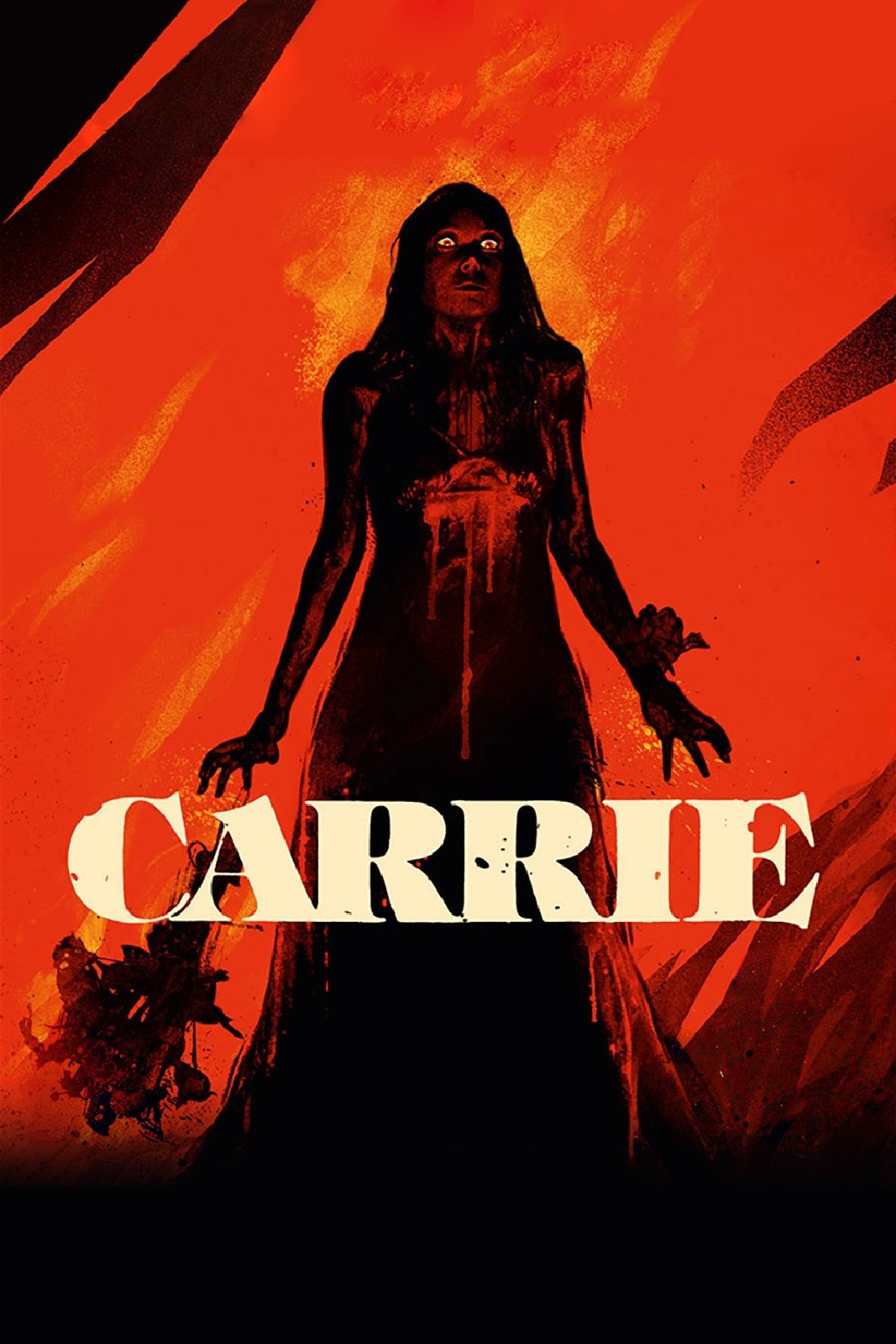
What the Film Is About
When I first watched Carrie, I was struck not by the overt horror, but by the slow crescendo of dread woven through its emotional core. For me, the film isn’t simply a supernatural thriller about a girl with telekinetic abilities—rather, it’s a harrowing journey through the landscape of teenage vulnerability, social alienation, and the longing to belong. What haunts me long after the credits is the depth of Carrie’s inner anguish as she navigates a world that seems intent on crushing her spirit, both at school and at home. The heart of the film lies in that collision between innocence and cruelty, power and shame.
On a deeper level, I experience Carrie as a meditation on the volatile mix of personal pain and collective persecution. The emotional journey feels like a slow-burn fuse leading toward an inevitable explosion—not just of supernatural mayhem, but of all the repressed feelings, fears, and humiliations Carrie has endured. The film charts the unpredictable emotional territory where the need for acceptance contends with the terror of exposure, and where the hope for kindness is continually undermined by the threat of ridicule.
Core Themes
What I find most resonant about Carrie are its explorations of isolation, power, and social cruelty—especially as they intersect in the world of adolescence. Loneliness saturates almost every frame. Carrie’s undefined sense of self, shaped by her mother’s religious fanaticism and her peers’ relentless mockery, becomes the central drama: Who is she allowed to be, and what is the cost of trying to exist on her own terms?
The film’s preoccupation with power is not just the paranormal kind. I find it fascinating how it scrutinizes the basic human urge to assert control, whether through supernatural abilities, psychological manipulation, or the sheer force of peer group dynamics. Carrie’s power is a metaphor for adolescent potential—the ability to remake or destroy, to resist or to conform. In 1976, right on the cusp of broader conversations about women’s rights and bodily autonomy, these themes echoed with particular force; for me, they still feel uncomfortably relevant in today’s climate of social media bullying and pressure to perform.
At its core, Carrie also grapples with shame, repression, and the terrifying unpredictability of human emotion. The film’s horror derives as much from the eruption of repressed feelings as from the literal horror of supernatural violence. I see this as a cautionary tale about what happens when empathy is withheld and boundaries are enforced through fear instead of love. What makes Carrie enduring, for me, is the way it asks us to contend with the consequences of cruelty—intimate, mundane, institutional, and spectacular—played out on the vulnerable body of one girl.
Symbolism & Motifs
When I think about what gives Carrie its distinctive place in horror cinema, I’m drawn to its use of recurring symbols and visual patterns. The imagery of blood is perhaps the most layered and potent. From the infamous opening scene to the climactic carnage, blood isn’t just a shock device—it becomes a symbol of both vulnerability and transformation, of shame and becoming. To me, it represents not only Carrie’s biological coming-of-age but also the primal, uncontainable emotions society fails to channel in young people.
Mirrors and reflections play a subtler but no less critical role. Every time Carrie confronts her own image, I see a metaphor for her struggle to reconcile the self she’s been told she is with the self she feels emerging from within. The motif of the closed, stifling spaces—the darkened house, the claustrophobic school corridors—reinforces the overarching sense of entrapment that envelops Carrie’s life. Recurring religious iconography, especially the oppressively Catholic household, stands in as a visual shorthand for judgment and repression, suggesting that the horror Carrie experiences is as much spiritual as it is physical or emotional.
Zooming out, I realize the film regularly juxtaposes innocence with cruelty. Scenes that invoke the ritualistic—whether it’s prayer, prom, or public humiliation—echo the idea that communal bonds can both nurture and destroy. These symbols, for me, amplify the film’s meaning beyond mere supernatural revenge, interrogating the ways social rituals can become instruments of exclusion and violence.
Key Scenes
Key Scene 1
For me, one scene that sits at the very heart of Carrie’s message is the infamous opening in the girls’ locker room. As I watch Carrie experience her first period, surrounded by jeering classmates, the film’s combination of raw embarrassment and sadistic group behavior crystallizes. This moment is suffused with more than just the shock of blood; it’s an initiation into feminine shame, the body as a battleground, and the social cost of ignorance and otherness. I always read this scene as a metaphorical birth not only of Carrie’s powers, but of her sense of profound difference from those around her. It’s a microcosm of the film’s focus on how cruelty finds its sharpest edge in communal settings, particularly among the young and powerless.
Key Scene 2
The prom sequence, especially in the moments leading up to “the bucket,” is the epitome of emotional manipulation and dread. I find myself holding my breath, not because I don’t know what’s coming, but because of how artfully the film layers hope and humiliation. Carrie, for a fleeting time, buys into the fantasy of acceptance and normalcy. Watching her dance, smile, and allow herself to believe in kindness gives the scene immense emotional weight. But underlying this is always the sense of fragility—the way kindness can be weaponized or swept away in an instant. When the prank is sprung, the full force of the film’s critique of mob mentality and scapegoating slams home. I see this as the moment where repressed pain and rage, incubated by years of abuse, finally demand to be recognized.
Key Scene 3
The final confrontation between Carrie and her mother is where I find the film’s statement most unguarded. Here, supernatural spectacle gives way to the quieter horror of familial fanaticism and unconditional rejection. Their struggle is tangled with religious symbolism and maternal betrayal. This is the emotional furnace in which Carrie’s rage and sorrow are forged. To me, this scene asserts that the most fundamental violence is not always that which is seen or shouted, but that which is experienced in the name of love, faith, or protection. It is the crushing weight of being deemed unworthy by the one person who ought to cherish you. In my reading, this is Carrie’s final and most tragic release—a moment where vengeance collapses into grief.
Common Interpretations
In my years of discussing and reading about Carrie, I have encountered a handful of interpretations that dominate the conversation. Some focus on the film as a feminist allegory—a tale of female puberty, bodily autonomy, and the terror provoked by women who refuse to be contained. This view draws a direct line between Carrie’s powers and her maturing body, interpreting her supernatural abilities as a metaphor for awakening femininity in a culture that both fetishizes and fears it. Others approach the film through the lens of trauma, reading it as a dark fable about the cost of bullying and emotional repression—how those denied compassion can become agents of chaos or destruction.
Another popular interpretation is the critique of religious fundamentalism. Many see Carrie’s mother not only as a source of terror, but as a representation of ideology taken to its inhumane extreme. Under this lens, the film asks which is more monstrous: the girl with powers, or the society that refuses to nurture her? Personally, I’m drawn to readings that see Carrie less as a warning against difference and more as an indictment of systems—schools, families, communities—that grind down the vulnerable in the name of order or righteousness.
For some critics and viewers, the film works primarily as an adolescent revenge fantasy—a cathartic eruption of agency for the powerless. But I always come back to the film’s sense of loss and empathy; I don’t see Carrie as triumphant, but as touchingly, terrifyingly human, haunted by the simple wish to be loved.
Films with Similar Themes
- Ginger Snaps – I see this as a sharp exploration of female adolescence, linking supernatural horror to the turmoil of puberty, much like Carrie does with its body horror and social outsider narrative.
- Heathers – This dark comedy skewers high school power dynamics and the threat of collective cruelty, echoing Carrie’s interest in how peer groups can enforce conformity or scapegoat outsiders.
- We Need to Talk About Kevin – For me, this film dives into the complexities of parent-child relationships, guilt, and violence, resonating with Carrie’s examination of failed nurture and eruptive consequences.
- The Faculty – Though lighter in tone, it also presents the teenage experience as a battleground of conformity, authority, and identity, with alien invasion standing in for adolescent alienation.
Reflecting on Carrie after all these years, I’m convinced its real horror lies not in pyrotechnic violence, but in its clear-eyed view of what happens when empathy collapses. The film asks hard questions—about who gets to belong, who is forced to the margins, and what becomes of those whom society refuses to see. Every time I return to it, I find myself grappling not just with the mechanics of fear, but with the tragedy of wasted potential and broken connection. For me, Carrie endures precisely because it dares to show how monstrous ordinary people can become—not out of evil, but out of habit, fear, or indifference.
To explore how this film has been judged over time, consider these additional viewpoints.