
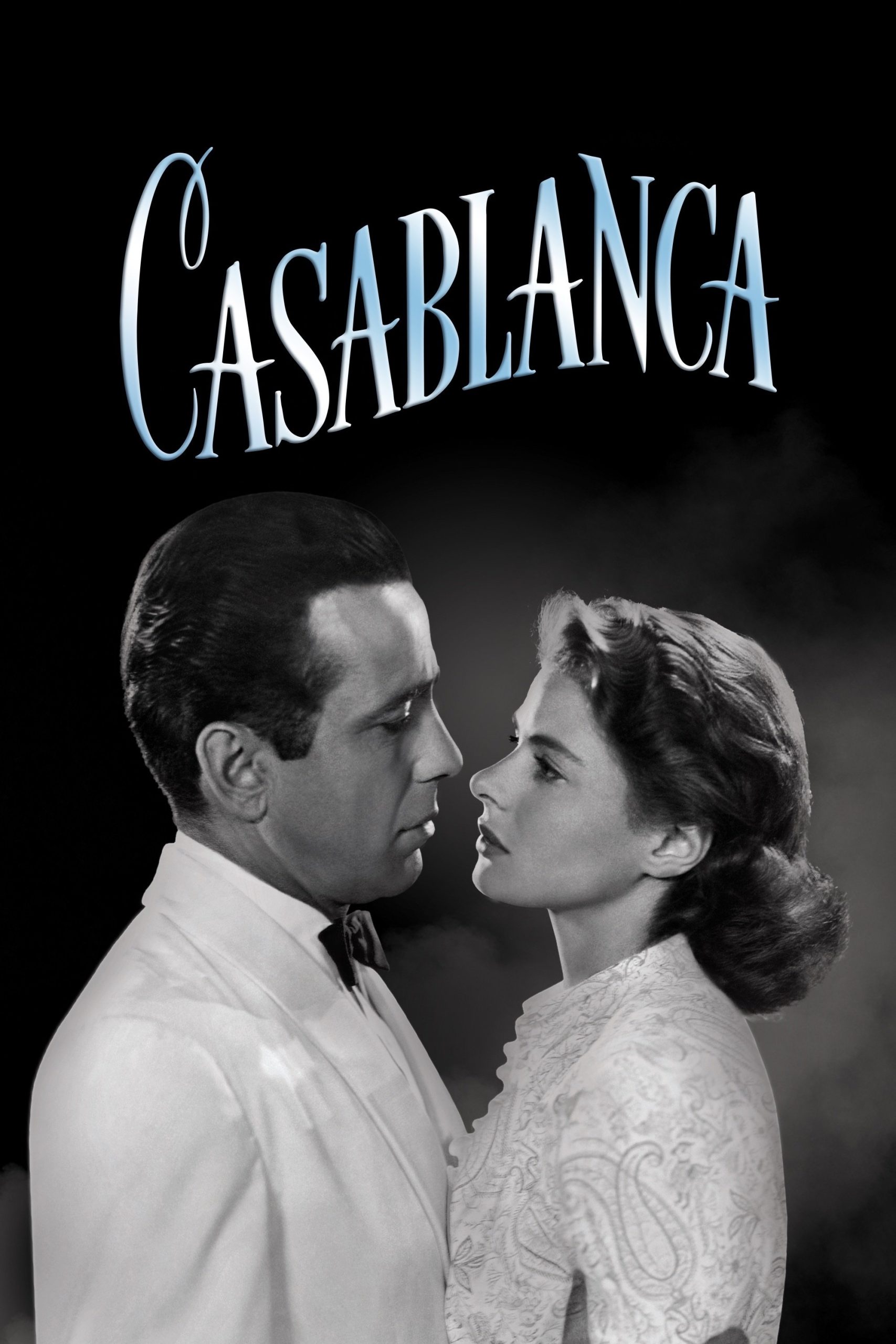
What the Film Is About
There’s a special kind of ache that runs through “Casablanca”—something deeper and more complicated than your typical wartime love story. What drew me into the heart of this film wasn’t just the star-crossed romance or the looming threat of Nazi occupation. Instead, I’ve always been struck by how the story uses its wartime setting to turn personal desires into crucibles for the soul, forcing characters to weigh what they owe to others against what they owe themselves. The emotional journey, to me, hinges on the tension between longing and letting go—between protecting one’s wounded heart and opening it up for an ideal larger than oneself.
When I watch “Casablanca,” I see a narrative that’s less about whether love will triumph, and more about how people behave when love is tangled up with duty, pain, and sacrifice. The central conflict plays out internally; it’s a question of how much we’re willing to risk for what we believe in, and whether personal happiness can—or should—take precedence over the needs of a world in crisis. The film invites me to dwell not just in the urgency of its era, but in the universality of those impossible choices that define who we truly are.
Core Themes
Every time I revisit “Casablanca,” I’m struck by how layered its themes are—woven so tightly into the characters’ interactions that even throwaway lines hum with significance. Most people remember it as a romance, but I’ve always felt the film functions primarily as a meditation on moral responsibility. Love, in this movie, is sacred and transformative, but almost always in tension with something larger: the call to conscience. Is it noble, or naïve, to put ideals above desire? “Casablanca” refuses easy answers, prodding me to reflect on how deeply war tests—and sometimes elevates—our sense of what’s right.
Loyalty comes up again and again, but it’s rarely shown as static or straightforward. Rick’s growth fascinates me: he begins as a cynic, detached and bitterly resigned, but circumstance forces him to confront his own capacity to care. In my view, the film’s depiction of self-sacrifice is impossibly bittersweet. It doesn’t paint sacrifice in heroic colors; instead, it sits quietly with the costs and the regrets that come with choosing the greater good. In this way, “Casablanca” explores the complex terrain of identity during crisis—how people rediscover or redefine themselves amid chaos, fear, and temptation.
I can’t ignore how timely these themes would have felt in 1942, with the world at war and the outcome hanging in the balance. Yet what surprises me is just how relevant they remain. That tension between private longing and public responsibility, between the urge to close ourselves off and the necessity of opening up for something beyond ourselves—it’s as urgent as ever in a world still marked by upheaval and uncertainty.
Symbolism & Motifs
If there’s one thing about “Casablanca” that I find endlessly rewarding, it’s the film’s mastery of symbol and motif. It’s not an ostentatious movie—the symbolism never feels pushed or overly diagrammed. Instead, images and repeated ideas quietly reinforce what’s at stake beneath the surface. The letters of transit, for instance, always seem to me to embody pure hope and possibility—a tangible escape route, yes, but also a litmus test for character. They pass from hand to hand, corrupted and redeemed, not unlike the souls of the very people who seek them.
Rick’s Café itself feels like a breathing metaphor for liminality. Every time I see that blurred line between tables—where desperate refugees rub elbows with callous profiteers, where laughter undercuts fear—I’m reminded that the café isn’t just a setting but a spiritual crossroads. It’s a holding zone for people suspended between exile and belonging, between safety and danger, between past and future. For me, the fog-shrouded airport at the film’s conclusion stands as the ultimate symbol: a place where choices become irreversible, where clarity comes shrouded in uncertainty and sacrifice is both end point and beginning.
I’ve always been struck by the constant interplay of darkness and light throughout the film. Shadows and silhouetted figures aren’t mere flourishes—they map an inner geography of characters in hiding or emerging into new selves. Music, too, becomes its own motif: “As Time Goes By” becomes more than a love song; it’s a quiet insistence that the past endures, haunting yet also guiding the heart toward what must be done.
Key Scenes
Key Scene 1
For me, few moments in the film resonate as deeply as the stirring rendition of “La Marseillaise” inside Rick’s Café. Whenever I watch this scene unfold, I feel swept up in a wave of communal urgency—a defiant act of hope orchestrated through song. It crystallizes the tension at the heart of the film: the individual struggle set against the needs of the collective. While the patrons stand to sing, risking the wrath of the occupying forces, the emotion here is so raw that it seems to transcend the screen. I see it not just as an outburst of patriotism, but as a reclamation of agency, a moment when suppressed convictions burst forth in a dangerous and exhilarating show of unity. This moment, for me, isn’t about the lyrics or the melody, but about reclaiming dignity when all seems lost.
Key Scene 2
Another scene that always lingers in my mind takes place in Rick’s office, where he is forced to choose not only between personal happiness and moral obligation, but between past betrayal and present redemption. As he faces Ilsa, and later Laszlo, I can practically feel the weight of unspoken history pressing down on every gesture, every word left hanging. What I find remarkable here is how the film frames sacrifice as an act not of suffering but of self-revelation. Rick’s willingness to risk losing what he loves in service of something greater unmasks the vulnerability that’s been so carefully guarded. The scene challenges my own ideas about what it means to love: is love truly love if it’s possessive, or if it risks nothing for the world beyond itself?
Key Scene 3
In my eyes, the film’s closing scene at the airport wrenches all previous ambiguities into sharp relief. There’s a sense of finality—of an old self falling away as Rick sends Ilsa away with Laszlo. What hits hardest for me is the stoic grace with which Rick makes this impossible choice. It’s both a personal defeat and a moral victory, proof that sometimes doing the right thing means surrendering what we want most. When Rick utters those iconic lines about the “beginning of a beautiful friendship,” I’m reminded that the greatest acts of courage are often those unseen, the quiet pivot points that turn personal pain into hope for a more just future. This scene doesn’t just wrap up the narrative—it gives me a sense of what real heroism might look like in a world gone mad.
Common Interpretations
Over the years, I’ve noticed that almost every viewer finds a different resonance in “Casablanca.” The most widely accepted interpretation is that it’s a story about sacrificing personal happiness for the greater good. Most people, like me, see Rick as a stand-in for the hesitant bystander, learning that indifference is itself a political act. Yet there’s also a powerful undercurrent arguing that love—even unfulfilled, painful love—can be a crucible that forges something stronger than self-absorption. Some critics dwell on the movie’s political context, arguing that it’s essentially Hollywood’s wartime pep talk: a nudge for a divided America to embrace unity over isolationism.
There’s another reading that’s always intrigued me: the idea of “Casablanca” as a myth of exile, displacement, and belonging. The film centers on transient souls—refugees, stateless wanderers—hovering in a twilight zone of uncertainty. Some see Rick’s transformation as emblematic of the American immigrant experience, piecing together a sense of purpose and morality from the ruins of disappointment. Audiences often debate which heroic ideal is most compelling—the stoic resignation of Ilsa, the steadfast activism of Laszlo, or the bruised idealism that Rick finally embraces.
Still, for as much as critics love to debate, I find that “Casablanca” endures precisely because it invites so many layered, even contradictory, interpretations. Is it a tragic romance, a tale of moral resurrection, or an allegory for a world in flux? I’d say it’s all three at once, refusing to allow any single reading to claim the last word.
Films with Similar Themes
- Notorious (1946) – I see an eerie thematic twinship in how both films use romantic entanglements as the crucible for moral compromise and redemption. Sacrifice, trust, and the high personal cost of doing what’s right hover over every encounter.
- The Third Man (1949) – Whenever I think of “Casablanca,” I think of postwar Vienna’s labyrinthine shadows in “The Third Man.” It similarly questions loyalty, blurred identities, and the ethics of survival in a time of chaos.
- Dr. Zhivago (1965) – Both films frame love against sprawling historical turmoil, where private longing is repeatedly measured against the demands of revolution and shifting allegiances.
- Michael Clayton (2007) – Though set in a very different era, I’ve always felt that this modern thriller revisits Casablanca’s central debate between cynicism and the uneasy necessity of moral action when corruption prevails.
For me, what “Casablanca” ultimately communicates is the enduring struggle between the heart and the world. Underneath the glamour and suspense, I see a film obsessed with asking what it means to be brave when faced with loss, and whether hope can be sustained without self-delusion. If there’s a truth at the center of “Casablanca,” it’s that our greatest acts of love are often indistinguishable from sacrifice—and that the most honorable thing we can do is face the world’s chaos without surrendering either our integrity or our tenderness. I carry this message with me every time the credits roll, reminded that uncertainty doesn’t diminish meaning, but rather sharpens it to a point.
After learning the historical background, you may also want to explore how this film was received and remembered.