
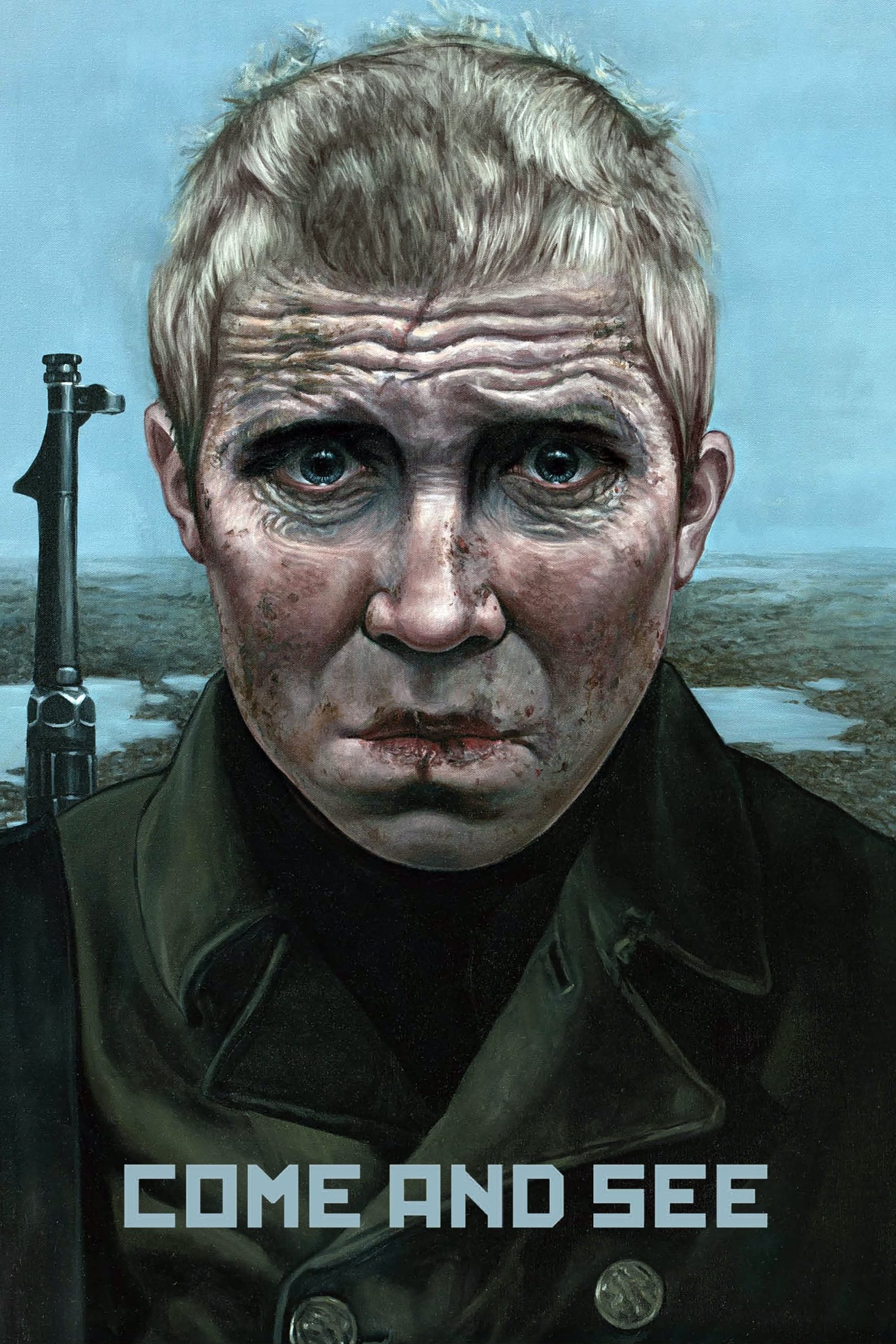
What the Film Is About
The first time I watched “Come and See,” I was left with a sensation unlike anything I’d experienced in cinema before—a hollow ache that seemed to echo through my bones long after the credits faded. For me, this film isn’t merely about war or history; it feels like a raw plunge into the shredded psyche of a world on fire. I don’t see it as a simple retelling of a boy’s journey through occupied Belarus during World War II; it’s an emotional ordeal that brings me face-to-face with innocence lost, hope suffocated, and the corrosive power of violence inflicted on both individuals and entire cultures.
What strikes me most deeply is how the film’s narrative doesn’t just chronicle a physical struggle. It follows a spiritual descent—a confrontation with horror so primal that I find myself questioning every assumption I held about the nature of evil, resilience, and the fragility of humanity. Every frame feels engineered not just to inform but to unsettle, to overwhelm me with brute emotional force.
Core Themes
When I reflect on “Come and See,” the core themes that emerge are those of innocence destroyed, the moral collapse in times of war, and the indelible scars left on survivors and witnesses. What moves me is how the film unsettles traditional depictions of heroism or sacrifice. Instead, I’m drawn into a relentless meditation on suffering and dehumanization—how, in the face of overwhelming violence, ordinary people are left staggering through the ruins of their former selves.
For me, the degradation of innocence is not merely a motif; it is the theme that rings out at every traumatic juncture. The protagonist, a young boy swept by the tidal wave of war, becomes the vessel through which I confront the loss not only of individual innocence but of communal memory and dignity. The film’s refusal to offer catharsis or redemption feels entirely intentional—forcing me to grapple with what it means to survive at such terrible cost.
On another level, I see the film’s interrogation of memory as vital, especially considering the climate in which it was made. Released in the waning years of the Soviet Union, “Come and See” acted as both a demand for remembrance and a kind of reckoning—a condemnation of historical amnesia. To me, its relevance hasn’t waned; if anything, its depiction of how societies process trauma seems more necessary than ever. It keeps us mindful of the seductive dangers of forgetting, of sanitizing past atrocities, and of valuing national myth over human cost.
Violence, both psychological and physical, is omnipresent. I often sense that the film is less interested in violence as spectacle and more as a mechanism for revealing the limits of empathy and the extremes of human behavior. The perpetration of cruelty and the witnessing of suffering coalesce into a sustained meditation on what endures—if anything does—when all comfort has been stripped away.
Symbolism & Motifs
I find “Come and See” to be a film that speaks through images and recurring motifs far more eloquently than through conventional dialogue or exposition. Over time, a few key symbols have lingered with me, deepening my sense of what the film is trying to articulate.
First, the repeated presence of mud and bogs is inescapable. The characters are often shown slogging through thick, suffocating landscapes—belly-deep in mud, struggling for every inch. I see these visuals as physical manifestations of spiritual entrapment. Watching the boy slog through endless marshes, I always feel the crushing weight of his despair and an almost existential stasis, as if the world itself is actively conspiring to swallow hope whole.
Another recurring motif that stands out for me is the use of close-ups on eyes—especially the protagonist’s eyes as the story unfolds. Early in the film, his gaze radiates youth and naïveté. By the end, his eyes are emptied out, reflecting suffering far beyond his years. I can’t help but interpret the transformation of his gaze as a barometer for the annihilation of innocence, serving as a painful mirror for the emotional trajectory of the film itself.
Finally, sound—especially the use of jarring, unnatural silences and the constant drone of distant violence—functions as a symbolic element in its own right. These carefully selected soundscapes pull me out of whatever comfort I might find, keeping my nerves on edge and making me feel that true peace, even for a moment, is forever out of reach.
Key Scenes
Key Scene 1
Reflecting on the film’s pivotal moments, I find myself haunted by the early scene where the protagonist, Florya, returns home to find his world irrevocably changed. He’s convinced that he can join the partisan fighters and participate in the war like the adults he idolizes. But when he comes home, his family is gone—the home is silent, a place emptied out by invisible devastation. To me, this scene isn’t just a tragic consequence of war; it’s a cruel rite of passage, stripping Florya of his childhood illusions. Emotionally, I experience this as a watershed moment, when the film makes it clear that innocence itself is a casualty of war.
Key Scene 2
One moment that shatters me every time I revisit it is the burning of the village—a scene that I find nearly unbearable in its sustained cruelty and unflinching depiction of atrocity. Here, villagers are herded into a barn, and what unfolds is as much psychological torment as physical horror. This isn’t presented as a spectacle for shock value, but rather, it’s a searing indictment of human capacity for organized brutality. It’s in this sequence that the film’s rejection of sentimentality becomes crystal clear for me; I see no comforting myth of collective resistance or miraculous survival. Instead, I’m left with the memory of unheeded screams and the sense that, for the perpetrators, cruelty is both senseless and deliberate. This scene underscores the film’s unyielding themes: the annihilation of community, the normalization of violence, and the moral vacuum of war.
Key Scene 3
I’m inevitably drawn to the closing scene as a final, devastating summation of the film’s message. Florya, now shockingly aged by his ordeal, confronts a photograph of Hitler and symbolically “shoots” at it—a gesture that quickly collapses under the weight of everything he’s endured. This isn’t simply vengeance or closure; for me, it reads more like a futile exorcism, a wish to reverse time and undo what cannot be undone. The sequence leaps through archival footage in reverse, a dizzying montage that seems to beg history to unfold differently. Yet, the impossibility of undoing such trauma is hammered home. Here, I feel the enormity of what has been lost—not only lives but the very possibility of returning to innocence.
Common Interpretations
What fascinates me about “Come and See” is the breadth of response it provokes among viewers and critics. In my experience, the most common interpretation centers on the film as a relentlessly anti-war statement—one that dispenses with even a trace of romanticism. It’s often cited as one of the most realistic, harrowing portraits of conflict, lauded for shaking off propaganda or heroic tropes. I share the view that the film’s meticulously unsentimental approach demands the audience to attend to suffering—not as an abstraction, but as an immediate, personal trauma.
Some critics emphasize the work’s allegorical dimension, arguing (and I agree) that the film’s true target is not only the historically specific atrocities carried out by the Nazis, but the capacity for cruelty that exists within any social or political system unchecked by conscience. For many, the setting stands as a grim shorthand for any human-made catastrophe. While a few interpretations do suggest the film deals with questions of divine absence or existential nihilism, I find that, for myself, the heart of the matter lies in the deafening silence that follows unspeakable violence—a meditation on the afterlife of trauma and the thin thread by which sanity sometimes hangs.
I’ve also encountered readings that see the film as a moral challenge to the viewer, compelling us not only to witness atrocity, but to internalize the duty of memory and empathy. Whether interpreted through the lens of collective memory or personal transformation, I always return to the notion that the film rejects easy answers—leaving the work of processing and reflecting squarely in my lap.
Films with Similar Themes
- Paths of Glory – I find a deep thematic resonance here, as both films scrutinize the inhumanity of war and the moral erosion of those trapped within its machinery. “Paths of Glory,” while a different time and place, similarly strips away the myth of honor and exposes the human cost of institutional violence.
- The Thin Red Line – This film, for me, offers another meditation on innocence and the corrosive effects of violence on the soul, using poetic visuals and internal monologues to question what, if anything, can endure in the face of sustained trauma.
- Grave of the Fireflies – Although animated and set in Japan, I see this film as a kindred spirit to “Come and See.” Both films wrenchingly depict the destruction of childhood in wartime, refusing to comfort the viewer with easy narratives of redemption.
- Schindler’s List – Spielberg’s film also confronts the Holocaust, but from a perspective that offers both monstrous cruelty and rare moments of moral clarity. While “Come and See” withholds consolation, both works insist that evil must be remembered and confronted.
For me, “Come and See” ultimately communicates a message as direct as it is devastating: that the horrors of war do not merely exist in the past, nor are they confined to the guilty and the dead. The film insists that memory itself is a moral act, and that each act of witnessing—even through the medium of cinema—is a small resistance against erasure and denial. Each time I return to it, I feel compelled not just to remember the historical victims, but to examine the darker reaches of my own capacity for empathy, despair, and hope. In forcing me to sit with discomfort and refusing to provide easy resolutions, “Come and See” functions as a living reminder of how fragile humanity is, and how desperately we must defend it.
To explore how this film has been judged over time, consider these additional viewpoints.