
What the Film Is About
There’s something about “Dial M for Murder” that has always left a sharp impression on me—less as a whodunit and more as a meditation on how thin the membrane is between the familiar and the monstrous. I see the film, not just as a cleverly constructed thriller, but as an almost surgical examination of domestic trust under siege. This is a story that needles at the security we feel in our intimate lives, showing how easily partnership and loyalty might slip, under pressure, into calculation, suspicion, and even betrayal. The tension isn’t merely “will they get caught”; I feel pulled into a world where every cozy certainty—shared love, domestic safety, even social civility—hides something quietly corruptible.
What intrigues me most is how the film transforms the classic living-room mystery into a psychological crucible. As I watch, I’m less focused on the crime’s logistics and more on the emotional unraveling: jealousy disguised as reason, love weaponized as leverage, and fear ricocheting in private glances. The emotional journey, for me, is about the slow collapse of trust—in oneself, in others, and in the invisible structures keeping civilized life from chaos. Even after the credits roll, it’s this ever-simmering anxiety beneath the surface of polite society that lingers in my mind.
Core Themes
From the first time I watched “Dial M for Murder,” I sensed its themes reaching far beyond suspenseful gamesmanship. To me, its heart beats with a dark inquiry into control and manipulation. The main antagonist, rather than being a dogged predator, is a disturbingly plausible, buttoned-down spouse who plots violence not out of passion, but precision. That, I believe, is the film’s coldest insight: how the machinery of intimacy can become the means of exploitation. I see power, in “Dial M for Murder,” as subtle and insidious—grasped not through overt force, but through elaborate psychological maneuvering, technological know-how, and an unsettling familiarity with human weakness.
Morality, too, is endlessly elastic in Hitchcock’s drawing room. What strikes me every time is how the characters rationalize selfishness, skirt responsibility, and play victim or savior only as it suits their self-interest. No one emerges entirely pure. I’m reminded, suddenly, of how the postwar era—wracked by anxieties about appearances, gender roles, and social status—seeps into every gesture and decision in the film. In a society desperate for order, the idea that evil could arise not outside the home but within it feels particularly pointed. That, I think, is why these themes remain relevant. The illusory comfort of routine, the capacity for moral compromise, and the dangers of taking emotional security for granted—these have not aged one bit.
For me, “Dial M for Murder” also powerfully explores the performative side of domesticity. The home is a stage; each character is forced to play roles for the benefit of others, hoping the performance will prevent suspicion or achieve self-preservation. Watching these performances slip and snap, I’m reminded of how fragile even the closest relationships can become under pressure. In this way, the film whispers to me about the risks we face when trust turns out to be only surface-deep.
Symbolism & Motifs
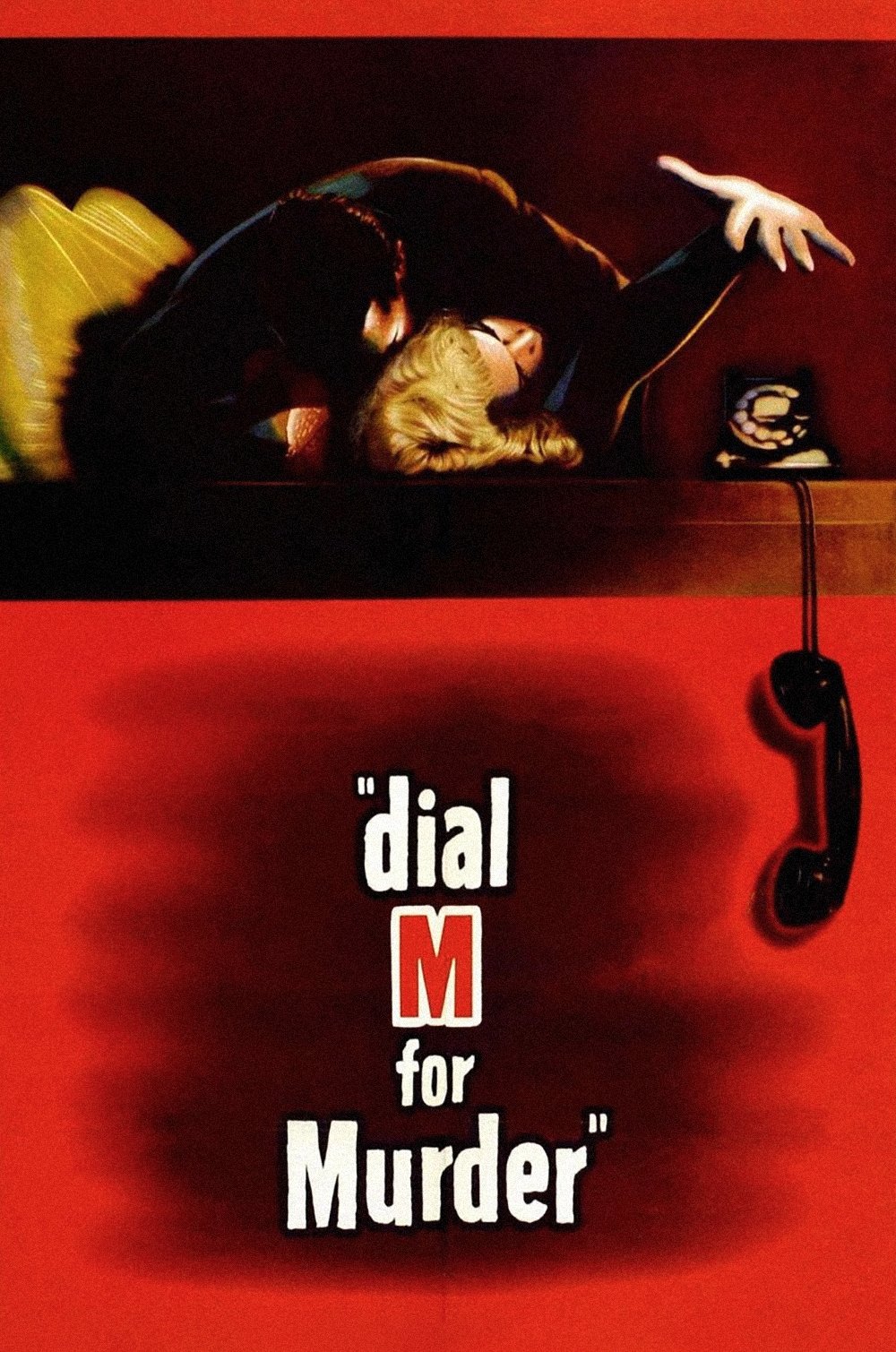
Whenever I return to “Dial M for Murder,” it’s the recurring symbols and carefully constructed motifs that draw me deeper into its subtext. The telephone, of course, stands as the film’s most striking symbol. For me, it doesn’t simply serve as a plot device for murder—it becomes a totem of disconnection. In a world supposedly made safer by technology and communication, I find it telling that the phone is used for manipulation and violence instead of fidelity and reassurance. It’s as though Hitchcock is warning me: every means of connection can be twisted into a tool for deceit.
The keys—those everyday objects that unlock privacy and grant access—emerge as a powerful motif for me. Their subtle exchanges throughout the film are a quiet ballet of trust and suspicion. I’m struck by how the simple handing over, misplacing, or hiding of a key represents the shifting lines of loyalty and the fragility of one’s safe space. That these small objects could determine life, death, guilt, or exoneration underlines how easy it is for security to unravel.
The familiar, even claustrophobic, setting has always haunted me. The way Hitchcock keeps the camera trapped in the London apartment mirrors the characters’ growing sense of entrapment. Curtains drawn, lamps glowing softly, the outside world is reduced to distant streetlights and muffled conversation. This insularity becomes more than a backdrop; it feels like a prison of polite society, suggesting that what threatens us might come, not from outside, but from within the rooms we trust the most.
Finally, I see precision—meticulous plans, tidy appearances—as a motif that masks moral rot. The antagonist’s focus on detail exposes an obsession with order that tips unpredictably into pathology. It’s a sharp reminder to me that beneath the mask of respectability, chaos and violence are always just an ill-fitting gesture away.
Key Scenes
Key Scene 1
There’s one moment—a close-up of the would-be victim, alone and bathed in a muted lamplight, reaching gingerly for the phone—that crystallizes, for me, everything that matters in this film. It’s not the act of violence itself that defines this sequence, but the unbearable suspense of ordinary life suddenly ruptured. This scene forces me to sit with the shock of vulnerability: the realization that harm doesn’t announce itself with dramatic fanfare, but slips in through routine, disguised as the mundane. Here, the film’s message about the fragility of presumed safety and the violence lurking beneath routine hammers home in a single, breathtaking moment.
Key Scene 2
Later, I’m struck by a pivotal interrogation scene—not one of brute confrontation, but of psychological fencing. The detective’s gentle but relentless questions become, in my eyes, a test of how well facades can hold under scrutiny. The tension in the room is suffocating, not because of any overt threat, but because of the growing certainty that the careful choreography is about to unravel. To me, this scene exposes the limits of cunning; it suggests that no matter how deeply motives are buried or how convincing the performance, truth seeps out along the seams of everyday interaction. Moral ambiguity, rationalization, and desperate improvisation come crashing together, laying the groundwork for emotional reckoning.
Key Scene 3
Near the end, what hits me hardest is the moment when the machinations, deceptions, and intricate plans fall apart in one revealing confrontation. There’s no melodrama—instead, I find a chilling sense of anti-climax. Watching the perpetrator face exposure, I realize that the climactic “reveal” is less about restoring order and more about unmasking the ordinary evil possible in any civilized setting. The lack of triumphant justice, the muted relief, and the quiet devastation inspire in me a lingering sense of unease. This final note insists, to my mind, that what we deem safe is always more precarious than we want to believe.
Common Interpretations
Looking at the legacy of “Dial M for Murder,” I notice two dominant schools of thought among critics and audiences. Some, like myself, see it first and foremost as a sly autopsy of upper-middle-class marital life—a thriller less interested in the criminal act than in the emotional silences that precede and follow it. These viewers read the film as a near-existential meditation on trust, with violence as a dark eruption from beneath the calm surface of routine. The phone, the keys, the domestic rituals—all become stand-ins for the everyday objects and actions by which we anchor our identities and relationships, even as they fail us.
Others gravitate toward viewing the film as a master class in suspense—a genre exercise executed with almost mathematical precision. They marvel at Hitchcock’s technical prowess, his manipulation of viewer knowledge versus character ignorance, and his almost playful use of confined space. At times, this reading risks flattening the film’s complexity into a mere intellectual puzzle, but it rightfully acknowledges the delight and dread of watching a perfect plan go awry.
What I find most interesting is how these interpretations overlap and braid together. Whether you focus on corrosive intimacy or on the game-like structure, both readings are caught up in Hitchcock’s fascination with performance—how we act and react under pressure, and what truths are revealed in the process. For me, the enduring debate over the film’s core intention only amplifies its strengths. “Dial M for Murder” is either the world’s most unsettling parlor trick, or an icy domestic parable—or, I think, somehow both.
Films with Similar Themes
- Strangers on a Train (1951) – I see this film as a close cousin, equally obsessed with the idea that ordinary people, pressed by circumstance or cunning, can be coaxed into crossing moral lines. Both films use murder-plotting and manipulation as metaphors for hidden darkness in polite society.
- Double Indemnity (1944) – For me, this classic noir shares “Dial M for Murder’s” fascination with domestic betrayal and the dangerous allure of forbidden schemes. The dance of trust, guilt, and self-justification is just as central.
- Gone Girl (2014) – What strikes me is how Gillian Flynn and David Fincher update the marital thriller for a new age, stripping away illusions of marital bliss and laying bare the power struggle and performative facades reminiscent of Hitchcock’s approach.
- Rear Window (1954) – As another Hitchcock masterwork, I feel it similarly blurs the boundary between observer and participant, exploring how voyeurism, suspicion, and intimacy can breed both fascination and danger within the supposed safety of home.
Having spent years revisiting “Dial M for Murder,” I’m always drawn back to its unnerving clarity about the ways we perform for— and sometimes against—those closest to us. The film, for me, ultimately insists that the boundaries between trust and treachery, order and chaos, intimacy and threat, aren’t as stable as we’d like to believe. In an era defined by the public face of respectability and the private churn of anxiety, Hitchcock’s vision felt shockingly prescient. Even today, I find it a relentless reminder that beneath our daily rituals lies a world of hidden motives and fragile loyalties—a message that, no matter how we advance, remains chillingly relevant.
After learning the historical background, you may also want to explore how this film was received and remembered.