
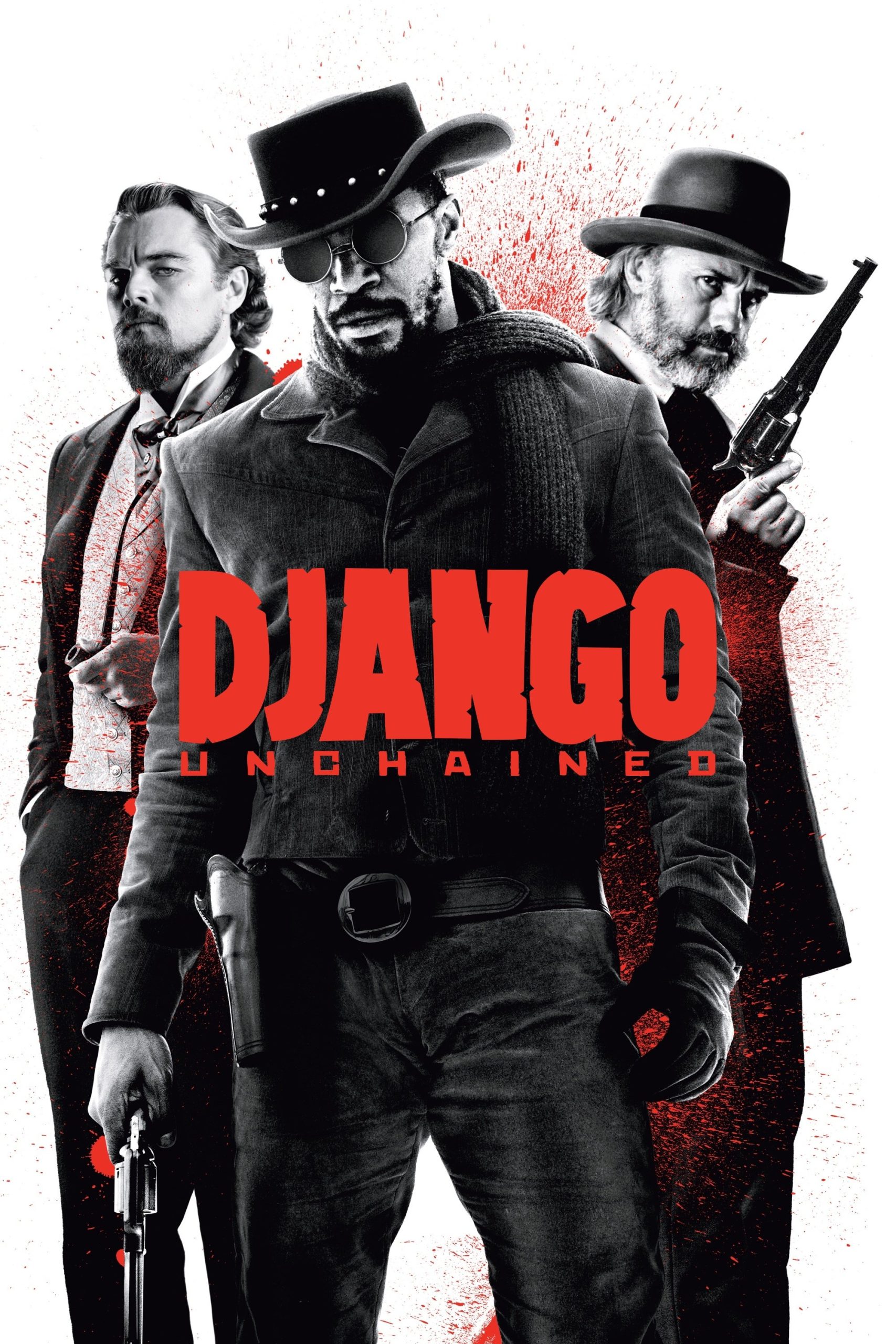
What the Film Is About
Whenever I revisit Django Unchained, what strikes me most sharply is the raw, vengeful pulse that threads through every scene. The film’s core, for me, is an audacious quest for justice in a world systemically shaped to deny it—an emotional journey that is as ferocious as it is tender. The protagonist’s pursuit of his loved one is not merely a rescue mission; it’s a daring charge against an entire culture built on degradation and cruelty, and I constantly sense that simmering outrage and hope vying for dominance beneath the surface.
At its heart, Django Unchained rides the razor’s edge between myth and reality, inviting me to witness not just individual transformation, but the shattering of collective illusions. The film’s wild, often shocking narrative direction thrusts its characters into a series of escalating confrontations, but the emotional trajectory always orbits around reclaiming dignity from the ashes of historic violence. For me, the film is not simply a Western or a revenge fantasy—it’s a brutal reckoning with what it means to demand humanity in a dehumanized world.
Core Themes
When I reflect deeply on Django Unchained, the themes resonate on multiple, sometimes uneasy, frequencies. Power dynamics—who has it, who wields it, who’s stripped of it—dominate every interaction. I see Django’s odyssey as a reclamation not just of his autonomy, but of his very identity in a system determined to erase him. There’s an undercurrent of defiance that energizes the film, as Django repeatedly refuses to accept the confines assigned to him by a society governed by racial violence.
Morality in the film, as I interpret it, is anything but clear-cut. The lines between heroism and brutality blur almost constantly. I find myself questioning where justice ends and vengeance begins, and whether it’s possible for Django’s quest to not become tainted by the very cruelty he’s fighting against. That tension—between righteous fury and the corrupting influence of violence—feels startlingly relevant, particularly in a world still grappling with systemic injustice long after the film’s setting.
Another profound theme for me is love as a transformative force. The bond between Django and his wife, Broomhilda, gives the hyper-violent tale its emotional gravity. Their devotion is portrayed not sentimentally, but as a force powerful enough to subvert social order and personal fear. I also feel that the movie wrestles with the legacy of storytelling itself—the use of Western tropes, legends, and even fairytales as both escapism and a means of rewriting history. Released at a time when public discussion around race, historical memory, and representation was sharpening, Django Unchained invited new conversations that, in my mind, haven’t lost their urgency today.
Symbolism & Motifs
There’s a visual and narrative audacity to Django Unchained that never feels accidental. Many of the film’s recurring motifs work like psychic landmines for me—unexpectedly detonating just when I think I’ve grown accustomed to the film’s rhythms. Take, for example, the recurring imagery of chains and shackles. On the surface, they symbolize physical bondage, but I interpret them as reminders of the psychological and generational trauma inflicted by slavery. When Django casts off his chains, I always see it as a metaphorical act—breaking invisible fetters of fear and submission that run deeper than mere iron links.
The motif of blood—spilling, spraying, blotting out the landscape—is another confronting symbol. It feels excessive at times, which I believe is intentional: the visual overkill demands I acknowledge the violence at America’s roots, rather than minimize it as many historical accounts tend to. Blood, in this context, represents both the cost of freedom and the ongoing stain of history itself. Additionally, the Western iconography—the white horse, the six-shooter, the classic standoffs—feels reclaimed, almost rewritten, from a Black viewpoint. When Django dons the iconic suit and defies the codes of his era, it strikes me as a visual declaration that the old myths are being wrestled from their traditional owners.
Names and storytelling surface again and again as narrative motifs. The characters are hyper-aware of how they’re perceived and what legacy they leave behind. To me, this preoccupation with names—Django insisting on the “D”-pronunciation, Broomhilda’s mythic connection—underscores the fundamental struggle for self-definition in a hostile world.
Key Scenes
Key Scene 1
For me, the moment Django is literally unchained for the first time strikes the deepest chord. It’s not just a plot device; it feels like a rupture in the film’s atmosphere. The transition from enslaved man to free individual is fraught with uncertainty, but it’s framed by Dr. King Schultz’s brusque, almost casual act of liberation—a sequence that, in my mind, forces the viewer to confront the randomness and fragility of freedom in a world so profoundly unjust. The emotional weight of this moment always lingers for me, serving as the axis on which Django’s entire moral transformation turns.
Key Scene 2
I think of the dinner scene at Calvin Candie’s plantation as a masterclass in psychological tension and symbolic warfare. Here, the film’s questions about power, agency, and spectacle reach their apex for me. The elaborate pageantry, the veiled threats, and the constant performance—every gesture becomes loaded with significance. I see this as the film’s indictment of how violence and degradation are staged, consumed, and normalized by both the characters and, by extension, the audience. The scene crystallizes Django’s internal struggle between keeping up appearances and unleashing his true rage; it also exposes the monstrous nature of “civilized” society.
Key Scene 3
In the final act, when Django seizes control and turns the tools of his oppressors against them, I see the moment as less about revenge and more about narrative closure. It’s as if he is reclaiming the story for himself and those like him—no longer the object of violence, but the author of the ending. The catharsis I feel is complicated: there’s triumph, but also a nagging sense of the cyclical nature of violence. Still, it’s unequivocally a statement about the possibility of rewriting both personal and cultural mythologies, even in the face of overwhelming odds.
Common Interpretations
The conversations I’ve had about Django Unchained often fall along two principal lines of interpretation. Many see the film as a fantasy of historical revenge: a way of rewriting history and providing a cathartic form of justice denied to real-life victims of slavery. This judgment resonates with me, especially given how rarely cinema foregrounds Black agency and retribution within such mythic frameworks.
Others interrogate the film’s uneasy oscillation between genre stylization and historical violence. Some critics have argued that the film’s humor and exaggerated violence risk trivializing the real suffering of the past. I understand this caution; at times, the tonal whiplash unsettles me as well. There are viewers who insist the film’s use of exploitative, even cartoonish, violence is meant to disrupt complacency rather than endorse spectacle, and I find that reading persuasive—though not comfortably so.
One persistent thread in interpretation concerns the treatment of race, heroism, and agency in Hollywood narratives. To me, what sets Django Unchained apart is its refusal to sanitize history. Even as it’s clearly constructed as a genre piece—taking cues from Spaghetti Westerns, blaxploitation, and farce—it never lets me forget the cost of telling and retelling these stories.
Films with Similar Themes
- 12 Years a Slave – I see a clear thematic kinship here in the exploration of freedom, dehumanization, and the trauma of American slavery. Both films engage with the personal and systemic costs of bondage, though 12 Years a Slave eschews pulp for a stark realism that amplifies its horror.
- Inglourious Basterds – Another Tarantino film, this work similarly fantasizes about rewriting traumatic history. I’m drawn by how both films use revenge and spectacle not just for shock, but to provide alternate realities of justice.
- Mandingo – While controversial in its own right, Mandingo offers a lurid and often disturbing look at the power dynamics and sexual politics of plantation life. I find the moral transgressions depicted in both films provoke uncomfortable questions about complicity and exploitation.
- Blazing Saddles – Although sharply comedic, this film satirizes the Western genre’s traditional treatment of race. I appreciate how, like Django Unchained, it exposes and mocks the embedded prejudices of classic Americana, though with very different tools and tone.
When I boil down what Django Unchained ultimately communicates to me, I see a film that is just as much about the telling of stories as about their content. It’s a manifesto of unsettling questions: Can violence ever be cleansing? Can history be redressed, even in the realm of fantasy? The film confronts me with the persistence of cruelty and the tenacity of those who resist it, forcing me to wrestle with the boundaries of justice, spectacle, and empathy in both art and life. It challenges the myths that have shaped American identity—sometimes by exploding them, sometimes by subverting them entirely. And in doing so, it reminds me that history is not just something we inherit, but something we continually revise through the stories we dare to tell.
To explore how this film has been judged over time, consider these additional viewpoints.