
What the Film Is About
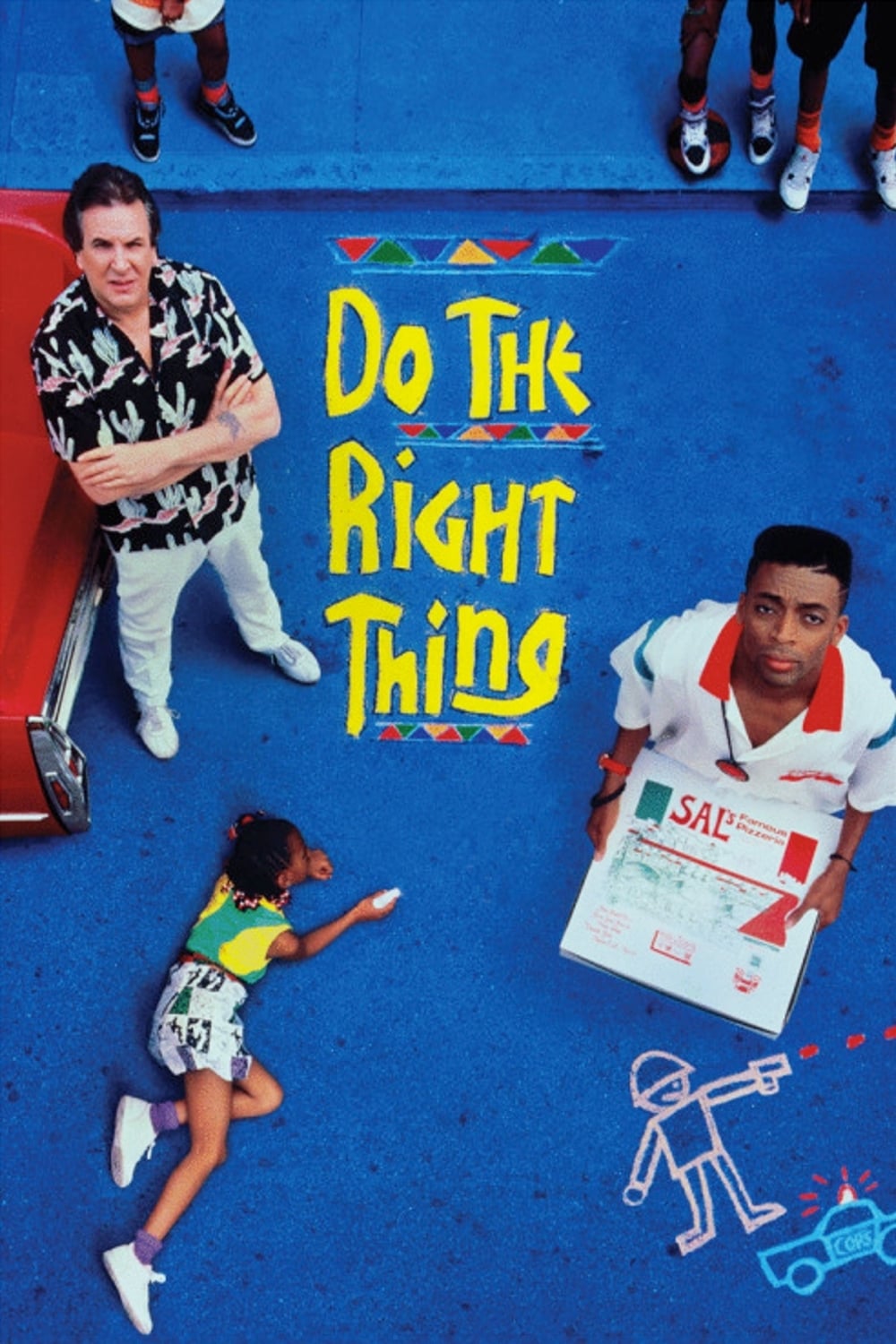
From the first time I watched Spike Lee’s “Do the Right Thing,” I was immediately swept into an environment that felt alive—boiling, bursting, and never apathetic. What resonated most for me wasn’t a singular narrative arc, but that oppressive feeling of a long-simmering summer day in Brooklyn where everyone’s nerves crackle and every interaction seems to carry the weight of years. The film, for me, is less a story in the conventional sense and more a living snapshot of a neighborhood caught at the intersection of hope, history, and unavoidable tension. At its core, I found myself pulled into the emotional journey of a community tightly coiled, forced to face the repercussions of pain, pride, and misunderstanding as the day heats up to a fever pitch.
I remember leaving my first screening of “Do the Right Thing” emotionally exhausted, not because the film provided easy answers but because it insisted I wrestle with discomfort. The central conflict, as I interpret it, isn’t between good and evil, but between conflicting truths: the desire for respect, the hunger for justice, the anger over systemic neglect, and the impulse toward both connection and retaliation. Lee doesn’t chart a straightforward path; instead, he invites me and every viewer into a chorus of voices—all insisting, all justified, none easily dismissed. The direction the film takes is more cyclical than linear, asking over and over, “What is the right thing?” and refusing to hand out a single answer.
Core Themes
To me, the beating heart of “Do the Right Thing” is its merciless engagement with the realities of race, power, and community in America. Watching it, I found myself reckoning with deeply entrenched systems of inequality not as vague social commentary, but as lived experience—raw and immediate. The film’s exploration of racial tension isn’t just a backdrop; it’s the entire emotional canvas. Each character stands as an avatar for ideas that refuse to be abstract, whether it’s assimilation, resistance, generational divide, or longing for dignity. The intensity with which each character holds onto their sense of self feels, to me, like a defense against an ever-hostile world.
What shakes me most is how the film interrogates notions of morality and violence. For a film titled “Do the Right Thing,” I’m constantly reminded how few answers there are when the rubber meets the road. People are pushed—sometimes inch by inch, sometimes in a sudden eruption—toward choices where the “right” thing is ambiguous, painful, or impossible. Spike Lee draws out the complexity of loyalty to family, to culture, to self, versus a loyalty to justice or peace. He also does something I find remarkable: despite the heavy subject matter, he suffuses the neighborhood with joy, humor, and small kindnesses. Those lighter moments don’t dilute the pain; instead, they bring out the persistence of humanity in impossible circumstances.
Looking back at the era when the film premiered, I can only imagine the jolt it delivered. Released at the tail end of the 1980s—against a backdrop of rising racial tension, urban disinvestment, and a contentious dialogue about law enforcement—Lee’s critique landed with the force of undeniable truth. Yet, watching it today, I’m struck by how little some things have changed. The themes of institutional racism, gentrification, and community violence still remain at the center of our own conversations. To me, the film feels both of its time and heartbreakingly present.
Symbolism & Motifs
While reflecting on “Do the Right Thing,” I’ve always been fascinated by the way Lee speaks through the world itself—the colors, sounds, and everyday objects that populate the block. The relentless heat isn’t just meteorology; it’s a symbol of rising tension. I felt its presence in every bead of sweat on Mookie’s face, every glistening wall, every argument that accidentally turns incendiary. The weather, in Lee’s hands, becomes a character—reminding me how environmental pressure can spark both compassion and catastrophe.
I find the most powerful visual motif in the film’s use of red, orange, and gold—the palette of summer, but also the palette of fire. This isn’t just set dressing: it’s a signal flare, emphasizing how close everyone is to burning through old wounds and long-held resentments. Another motif that always strikes me is the recurring images of faces—walls covered in proud African-American leaders, the photographs of Italian-American pop icons behind Sal’s counter, the omnipresent gaze of elders and ancestors. The walls speak; they proclaim belonging even as they draw boundaries between “us” and “them.” Watching the interplay of these images, I’m reminded of how culture and memory can be both anchors and battlegrounds.
Music pulses through the film too, acting as a kind of communal lifeblood. Public Enemy’s “Fight the Power” isn’t just a soundtrack; it’s a repeated rallying cry that echoes through every scene. I’m struck by how the song’s repetition becomes both call and warning, foreshadowing the eventual explosion. Even objects as mundane as a boom box or a trash can become invested with meaning—tools of self-expression, symbols of rage, or instruments of change, depending on who wields them and why. What really leaves a mark is how Lee refuses to settle for clear symbolism. The film’s world is messy, layered, and alive, just as the questions it raises have no neat answers.
Key Scenes
Key Scene 1
There’s a moment early in the film that has always left me unsettled, for reasons that become clearer with every rewatch. I’m thinking of the rapid-fire montage where characters break the fourth wall to unleash torrents of racial slurs and stereotypes—directed straight into the camera, and by extension, at me. The anger is electric, almost destabilizing. What I find so significant here is how Lee refuses to let me observe from a safe distance. In these moments, he exposes the undercurrents of prejudice that are usually hidden beneath daily civility. The emotional power of the scene comes from its bluntness—there’s no way to turn away or escape. The characters’ words function as confession, accusation, and challenge; I feel indicted and implicated. For me, this scene crystallizes the film’s refusal to let racism remain a polite, background issue; it yanks it into the light, raw and unfiltered.
Key Scene 2
The scene that always leaves me wrestling with my own beliefs features Mookie, Sal, and Radio Raheem—that triangulation of anger, defiance, and paternalism that explodes behind the pizzeria counter. I’m haunted by the way the conversation shifts from small grievances into existential, generational anger. The destruction of Radio Raheem’s boom box, and his tragic fate at the hands of the police, for me is where the film’s core themes—power, identity, the permanence of injustice—are pulled taut. What makes it so challenging is that I can see how every character has legitimate wounds. Yet, it’s precisely at this flashpoint that I find Lee pressing me to acknowledge the cost of systemic brutality, and the way individual actions both transcend and are trapped within wider histories. The scene isn’t about “who is right”; it’s about what happens when no one, finally, is allowed a dignified voice.
Key Scene 3
That final moment—the question of whether Mookie “did the right thing” by throwing the trash can—lingers in my mind long after the credits roll. This act, impulsive yet deeply charged, is the film’s crucible. I see it as a gesture balanced precariously between destruction and protest, personal vengeance and communal justice. The aftermath is even more unsettling; I’m left with images of smoldering ruins and a community grieving, but also with the realization that the act was both too much and not enough. What gives the scene its staying power for me is its refusal to resolve—peace does not miraculously descend, nor does catharsis wash away the day. Instead, I’m left to wrestle with the power and limitation of action when justice seems unattainable. The dual quotes from Martin Luther King, Jr. and Malcolm X in the film’s final frames felt, as I watched, like a tacit admission that the “right” thing is complicated, contested, and often out of reach. Yet, the mere act of asking the question changes everything.
Common Interpretations
Whenever I talk to others about “Do the Right Thing,” I’m always intrigued by how polarized—and yet how deeply thoughtful—the responses often are. Many critics see the film as an indictment of American racial dynamics, a work that exposes how history, prejudice, and economic struggle shape every moment of community life. This interpretation resonates with me most days: I see Spike Lee shining a harsh, necessary spotlight on the mechanisms that render violence nearly inevitable and understanding so difficult.
There’s another angle I often hear, and one that I sometimes find myself gravitating toward. Some viewers treat the film as a tragic meditation on moral ambiguity, rather than a call to action. For them, and sometimes for me, the message is less about finding “the right thing” and more about how impossible it is to define in a world tearing at the seams. Mookie’s final act provokes heated debate: is he a hero, a traitor, a pragmatist, or merely a product of his environment? I don’t think Lee ever lets the audience rest easily with a single answer. What strikes me as profound is that nearly everyone leaves feeling challenged, changed, and perhaps even accused.
Then there’s the undercurrent—increasingly present in modern readings—that sees “Do the Right Thing” as a confrontation with American mythmaking itself. By refusing tidy resolutions and giving space to a welter of contradictions, Lee sets the film apart from most mainstream narratives of race relations. In my view, it’s not about what ought to happen, but about staring directly at what does. The hope, sadness, isolation, and tenacity are all real. Whatever side one chooses, I’m hard-pressed to find a viewer who isn’t left with questions they can’t shake.
Films with Similar Themes
- Fruitvale Station (2013) – I see a deep connective thread in how both films pay witness to the daily realities and vulnerabilities of Black life in urban America. Like “Do the Right Thing,” “Fruitvale Station” transforms a single day into an examination of systemic injustice and the personal stakes of public violence.
- Crash (2004) – In my eyes, “Crash” bears a thematic kinship through its exploration of racial tension and interconnectedness. Both films use ensemble casts and urban landscapes to challenge the viewer’s assumptions about prejudice and empathy, though with very different tones and ambitions.
- La Haine (1995) – Watching “La Haine,” I’m always reminded of “Do the Right Thing”’s sensitivity to heat, tension, and community. Both tangle with the anger and frustration of marginalized communities, set over a compressed time frame, and convey a relentless sense of pressure building toward violence.
- Boyz n the Hood (1991) – I connect John Singleton’s debut to Lee’s film for its unflinching confrontation with race, youth, and environment. Both films insist on the humanity and complexity of their characters, refusing narratives of victimhood or villainy alone, and demand the audience engage with a society in crisis.
What I take away, every time I revisit “Do the Right Thing,” is not a message of despair, nor an easy call to arms, but something more honest. It communicates—through its exquisite balance of anger, joy, loss, and hope—that human beings are always caught between violent history and everyday acts of kindness. The film confronts me with the cyclical nature of injustice, but also with the relentless persistence of ordinary people intent on being seen, heard, and respected. For me, it’s not just a story about one day in Brooklyn, but a challenge to see—and question—what “doing the right thing” really means in a world riven by fear, love, loyalty, and memory.
After learning the historical background, you may also want to explore how this film was received and remembered.