
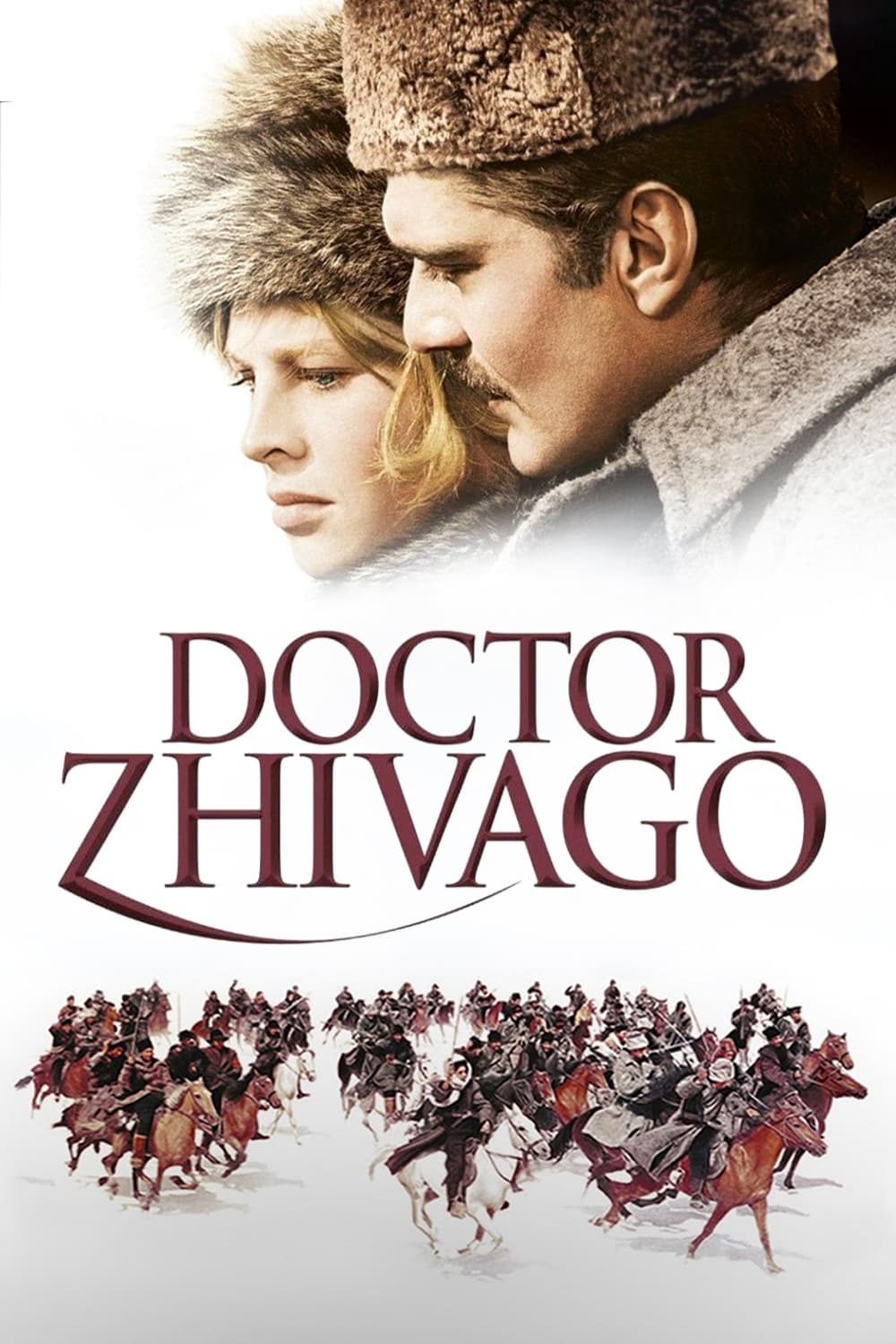
What the Film Is About
When I reflect on “Doctor Zhivago,” I don’t see it primarily as a sweeping narrative of war and revolution. For me, it’s about the turbulence of the human heart set against historical upheaval—how personal longing collides with the blunt force of social change. The film follows the quiet but relentless emotional journey of a single man, Yuri Zhivago, as he searches for poetic meaning in a world that has become unrecognizable. I always sense that the central conflict is less about which side will triumph politically and more about whether it’s possible for fragile individual passion to survive the storm of collective ideology.
What strikes me most is how the story isn’t just propelled by the events that surround its characters; it’s shaped by the aching desire to hold onto beauty, intimacy, and creative expression as everything familiar gets swept away. Watching Zhivago’s journey, I’m pulled into a world where love isn’t just a single relationship—it’s a symbol of devotion, sacrifice, and the dangers of hope in times that seem built to crush hope. Every emotional beat feels heightened against the backdrop of revolution, making every loss and every quiet moment of connection pulse with significance.
Core Themes
What continues to captivate me about “Doctor Zhivago” more than half a century after its release is its unflinching look at the battle between the personal and the political. The core theme, as I see it, revolves around the irrepressible force of individual feeling in the face of historical inevitability. I find the film’s exploration of love—not simply romantic, but also artistic, familial, and philosophical—to be its most resonant motif. Every time I return to this film, I’m reminded just how fragile personal happiness is when the world is remaking itself through violence and ideology.
The idea of loyalty fascinates me here, not just to people but to ideals, art, memory, and self. Doctor Zhivago’s desire to remain true to his deepest convictions is under constant threat by shifting political winds that demand conformity. That constant tug-of-war between loyalty to one’s own truth and the ever-changing external reality is, to my mind, what gives the film its enduring power. At the time it was released, during the Cold War, I imagine that tension felt especially urgent: the film asks what it costs to resist ideological purity in favor of nuanced, complicated feeling.
I also read the film as a meditation on fate and the randomness of survival. The Bolshevik Revolution, the civil war, and the changing social order are ever-present, sometimes feeling almost like natural disasters. As I watch Zhivago and those around him, it seems clear that big history devours individual intentions—the randomness of who survives, who finds love, who loses everything, is presented not as justice but as a harsh fact of existence. Yet the film never slips into nihilism because it keeps returning to moments of beauty and poetry, as if insisting those things are also facts of life, however fleeting.
When I think about why these themes retain their relevance today, I’m always struck by how they echo in modern questions of identity and resistance—whether in politics, art, or simply the act of carving out a private space in a public world. The film pushes me to ask: In a time of upheaval, what remains of our inner lives? How much of ourselves are we allowed to keep, and what do we risk to preserve it?
Symbolism & Motifs
“Doctor Zhivago,” through my eyes, is a tapestry woven with recurring images that do more than illustrate—they illuminate. The Russian winter stands out the most. Snow, ice, and endless steppes create not just scenic grandeur but a sense of emotional desolation and endurance. Every time Zhivago and Lara are framed by the snowscape, I sense that the cold represents both the chilling effect of historical forces and, paradoxically, the purity and stillness that allows love and art to glisten all the more. The winter here seems to freeze time, giving precious moments of intimacy a crystalline, almost sacred quality.
Another motif that always resonates with me is the repeated imagery of doors and windows. I notice characters constantly gazing through glass, stepping across thresholds, or lingering in passageways. This isn’t accidental—these physical boundaries speak to the impossibility of ever fully entering another person’s life or truly escaping one’s circumstances. Doors become gates to memory, longing, and sometimes exile. I find these moments visually reinforce the characters’ sense of separation from their own past or from the people they love.
The balalaika, too, functions as more than a prop. It becomes, in my mind, a symbol of cultural memory and personal loss. The haunting music recurs whenever Zhivago thinks of his mother or his lost home. It’s as if the instrument contains not just melody but spirit—the echo of homeland, of innocence, and the ache of everything that history devours. It reminds me how art and music linger even when lives and places disappear.
Poetry emerges as a living thread, literal and figurative, throughout. Zhivago’s writing is more than an occupation; it’s his last stand against mechanization and brutality. I always see his poems as a form of quiet rebellion—they are small acts of witness in a world grown hostile to private beauty. The very act of writing becomes an assertion that, no matter what storms rage outside, the individual consciousness can still find, and create, meaning.
Key Scenes
Key Scene 1
One scene that always lingers in my mind is the moment Zhivago and Lara first connect meaningfully, alone in a candlelit room, while the rest of the world exists in darkness or chaos elsewhere. I’ve never seen this just as another romantic encounter. For me, it encapsulates the film’s central argument: that love, whether fleeting or impossible, exists as a sanctuary against the destruction outside. The way the camera lingers on their faces, the hush between them, feels almost sacred—as if the film wants to slow time, defy mortality, and carve out a space where human connection matters more than ideology or violence. In this quiet, I sense the rebellion of tenderness against a world gone cold.
Key Scene 2
I often return to the harrowing journey across the frozen countryside. The family’s makeshift sledge trek through the winter landscape, heading toward the abandoned dacha, isn’t just memorable for its visual sweep. For me, it distills the theme of survival—not just physically, but emotionally and spiritually. Each character is burdened by what they’ve lost, yet they drag themselves onward, sustained by a hope that feels both fragile and defiant. It crystallizes the constant negotiation between resignation, hope, and memory that saturates the film. This journey becomes, for me, a symbol of every attempt to rescue what’s human from the engulfing tide of history.
Key Scene 3
The final, silent reunion on a crowded Moscow street—where Zhivago, frail and overwhelmed, catches a glimpse of Lara but is unable to reach her—strikes me as the film’s ultimate statement. I can never watch that moment without feeling the full weight of separation and the bitter cost of history. There’s agony in knowing that even when both love and the beloved still exist, the world may conspire to keep them apart. This scene, more than any monologue, reveals that history doesn’t just shape our destinies; it often renders our personal desires irrelevant, leaving us with the ache of what might have been. To me, the film’s message crystallizes here: real lives are lived in the spaces between history’s march, and most of all, in the missed chances and persistent longing that define our humanity.
Common Interpretations
From my years of reading and teaching about “Doctor Zhivago,” I’ve discovered that its meaning remains fertile ground for debate. Many critics and viewers see the film primarily as a denunciation of totalitarianism—an elegy for individualism suffocating under the weight of the collective state. I understand why this is compelling: every frame seems to underscore the price paid when human lives become unmoored from their traditions and loves to serve ideologies. The romantic longing is, for these viewers, an allegory for all the private joys suppressed by autocratic rule.
Others, though, focus on the film not as anti-Soviet propaganda, but as a universal meditation on loss. For them, its message isn’t so much about one nation or regime as it is about what’s lost whenever societies go through convulsive change—families unravel, artists are silenced, the cost of ‘progress’ is counted in shattered lives. I’ve met viewers who read it much less politically, seeing it as a lush, melancholy investigation into the impossibility of reconciling personal happiness with moral duty.
There’s also a passionate camp that interprets the film as a celebration of endurance. I’ve spoken to people who find inspiration in the way Zhivago, and those around him, continue to seek beauty, connection, and meaning even when everything else has been stripped away. For them, the film’s sadness is laced with hope: while revolutions inevitably destroy so much, there is a stubborn insistence on surviving, adapting, and remembering.
For me, the most powerful interpretations weave together all of these threads, refusing easy answers. “Doctor Zhivago” invites me to mourn, yes, but also to cherish the moments—however brief—when what’s most human manages to break through even the harshest winter.
Films with Similar Themes
- Reds – I see strong parallels as Warren Beatty’s film navigates both epic political upheaval and the intimate turmoil of lovers caught in its current. The confrontation between personal conviction and sweeping history feels just as urgent.
- The English Patient – Here, too, the collisions between emotion and war, between memory and loss, mirror “Zhivago’s” core themes. Love must endure—or fail—across landscapes ravaged by violence.
- War and Peace (1966, Bondarchuk) – I’m always struck by how this adaptation, like “Zhivago,” sets private drama against epochal historical change, underscoring the relentless push-and-pull between fate and agency.
- Cold War (2018) – Paweł Pawlikowski’s black-and-white masterpiece condenses decades of political upheaval and impossible romance into a distilled, haunting meditation on memory, exile, and longing, much as I find in “Zhivago.”
My lasting impression of “Doctor Zhivago” is that it’s less concerned with teaching a single moral and more interested in posing a painful question: How do we keep the flame of individuality alive when all the winds of history try to extinguish it? I’ve come back to its quiet heartbreak again and again, always finding new reflections on the battle between outer chaos and inner peace. For me, the film ultimately suggests that to be human is to persist in loving, creating, and remembering—even, and especially, when the world is at its most indifferent.
To explore how this film has been judged over time, consider these additional viewpoints.