
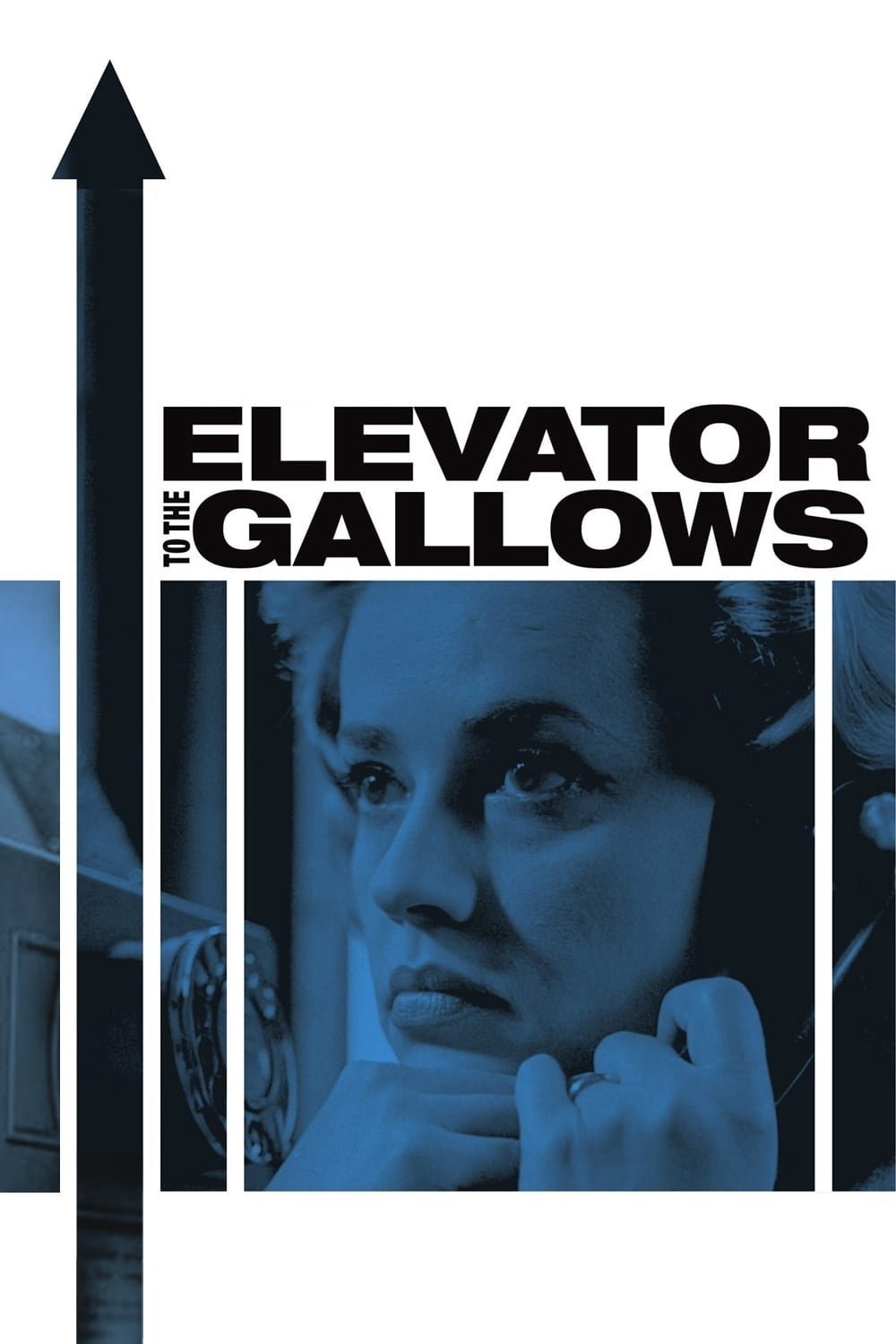
What the Film Is About
Sometimes when I think back on watching “Elevator to the Gallows,” I’m struck first by the peculiar, tightening sense of suspense that doesn’t come from the plot machinery alone, but from the quiet existential anxiety that sets in right from the first moments. I found myself less preoccupied with who would get away with what, and more absorbed by the spiraling emotional vortex at the film’s center—lovers trapped by their desire and the sudden aftermath of their actions. The narrative, for me, became less a linear chain of crime and consequence, and more an immersion in the emotional fragmentation of postwar France, with characters chasing after an elusive redemption as darkness slowly closes in.
At its heart, my experience with “Elevator to the Gallows” wasn’t about elaborate heists or intricate alibis. It was about the isolation that creeps in after a split-second decision—the cold distance between people in the same city, the desperate attempts to clutch at romance or fate, and that disquieting ache for meaning when the world suddenly feels unanchored. I felt the film’s real narrative pulsing beneath its jazz-infused surface: the inexorable collapse of plans, the unattainable longing behind every calculated move, and the quiet devastation of hope.
Core Themes
The themes that wound through this film have always resonated with me far deeper than its story mechanics. The most powerful for me is the meditation on fate and contingency. Watching events unfold, I couldn’t escape the suffocating sense of how one moment—a stolen glance, a forgotten rope, an impulsive choice—could ripple out and doom or redefine destiny. “Elevator to the Gallows” is saturated with a fatalism, a belief in life’s unpredictability that slices straight through the optimism of the era’s more conventional crime stories.
What I find especially poignant is the film’s tangled treatment of love and alienation. The relationship at its core—haunted, urgent, fraying under pressure—reflects a postwar disillusionment I recognize from so much late 1950s French cinema. There’s a yearning for connection that just keeps slipping through the characters’ fingers, as if love itself is imprisoned by circumstance and poor choices. I sense the film is meditating on how easily desire curdles into despair when the world is unmoored.
Morality, too, refuses easy categorization. I’ve always been drawn to how the film eschews clear heroes or villains. Its characters aren’t just victims of fate, but also of their own blurred ethical lines—every action seems weighed down by regret, every small betrayal echoing the larger moral confusion of the age. Watching, I was reminded of the way postwar France was grappling with shame, complicity, and a newly fractured sense of personal responsibility. That search—often futile—for redemption feels as vital now as it must have in 1958.
Another layer that I find inescapable is the film’s implicit critique of modernity itself—the relentless pace, the alienation in city streets, the mechanical spaces that swallow people whole. The elevator, of course, becomes more than a plot device: I see it as a symbol of technological advancement that promises ease but delivers entrapment, mirroring the contradictory promises of postwar progress. Even beyond the specifics of its time, this anxiety about the cost of modernization—personal, emotional, ethical—remains fiercely relevant to today’s world.
Symbolism & Motifs
One of the reasons I keep returning to “Elevator to the Gallows” is the dense network of visual and narrative motifs that shape its meaning. The elevator itself haunts me; it’s a space of forced stillness, a mechanical purgatory that encapsulates the consequences of rash decisions. To me, it’s the ultimate symbol of being suspended between past and future, action and consequence, unable to escape the gravity of one’s own choices.
The motif of nocturnal wandering pulses through the film. Long stretches of characters roaming dim, rain-streaked Parisian streets signal more than just the settings for plot advancement. I felt these journeys encapsulated a profound spiritual lostness—a city full of possibility, but emptied of certainty, awash with existential dread. The darkness externalizes the characters’ internal confusion and longing, mirroring the opaque moral world they inhabit.
Jazz, too, feeds the film’s emotional palette in a way I find inescapably compelling. Miles Davis’s score, with its plaintive trumpet and improvisational bends, acts both as a heartbeat and an exhalation—a soundscape for the characters’ loneliness. The music seems to highlight not just tension, but yearning and regret, amplifying the larger theme of individuals improvising their way through the chaos of modern life.
Photographs and surveillance subtly recur as well—reminders of how easily one can be misperceived, misunderstood, or transformed into a mere image. For me, this speaks to the era’s anxieties about visibility and the claustrophobia of modern existence, where privacy has become yet another casualty of progress. Each snapshot or fleeting reflection drives home the fragility of reputation, and the unsettling impossibility of ever fully knowing another person.
Key Scenes
Key Scene 1
One scene I keep playing back in my mind is the climactic entrapment of the protagonist in the elevator. There’s so much more at stake here than plot—or even suspense. To me, the elevator becomes a confessional, a crucible where the reality of consequences finally burns through the haze of anxiety and resolve. In this stilled, mechanical cage, he’s forced to confront himself: every calculated move unraveled by a simple oversight, every illusion of control exposed as just that—a fiction. Emotionally, the hush and darkness of that enclosure reflect the isolation and paralysis I associate with remorse, the realization that the future has already started to close in around you.
Key Scene 2
Another sequence that stands out for me is the nocturnal wanderings of Florence through the Paris streets. She searches desperately for her lover, passing strangers, soaking in the bleak night—yet always just missing connection, always just out of step with the world around her. There is something haunting in the way these scenes are shot: neon-soaked loneliness punctuated by fragments of music and sidelong glances. Here, the themes of longing and alienation come into sharpest focus for me. Florence’s aimless, anguished walk becomes a visual echo of the wider existential despair the film portrays. It isn’t just about lost love; it’s about being unmoored, about searching for meaning in a world resistant to comfort or clarity.
Key Scene 3
I find the final confrontation to be a devastating punctuation mark—more than just a narrative resolution. In this moment, the characters must finally face the cumulative weight of their choices. For me, it’s neither overtly tragic nor conventionally redemptive, but instead reveals the deep irony at the heart of the film: that intent and consequence rarely align, that the machinery of fate is pitiless in how it grinds up human hopes. The emotional resonance comes from the exhausted recognition in the characters’ faces that escape—literal, romantic, or existential—remains tantalizing, yet forever out of reach. I see this scene as an existential verdict: not so much a judgment as a weary acceptance of the modern world’s ambiguities.
Common Interpretations
Over years of reading and reflecting, I’ve noticed that many critics and cinephiles treat “Elevator to the Gallows” as a prime example of French fatalism—where characters are doomed less by malice and more by the indifferent architecture of chance. I tend to agree, although I also see something even darker: a portrait of a society that’s lost faith in both progress and personal agency. Some argue that the film operates primarily as a highly stylized film noir, with all the genre’s attendant atmosphere and moral complexity; I find it stretches past that, touching on the existential dread and blurred ethics of the postwar condition in ways that American noir usually avoids.
There are those who see it as a critique of postwar French society’s obsession with image and reputation—a France eager to appear modern, but deeply haunted by guilt and broken connections beneath the surface. I’m drawn to this interpretation, as throughout the film every character is watched, photographed, or observed in ways that feel invasive and anxiety-inducing. Others focus more on the film’s romantic fatalism, seeing it as the tragic story of lovers torn apart less by external forces than by the cumulative effect of small moral lapses and bad timing. For me, all these readings overlap and reinforce each other; what matters most is how the film refuses to render clear verdicts, instead leaving us tangled up with the same ambiguities and regrets as its characters.
Whether viewers approach the film as a straight thriller, a noir romance, or a mood piece about existential inertia, I sense a core through-line: it’s an elegy for the illusions of control and the comforting fictions that modern urban life tries to sell us. Each interpretation circles back to that deeply human predicament—how to live meaningfully in a world where causality is slippery and destiny is so often just a function of luck, inattention, or automated machinery.
Films with Similar Themes
- “Double Indemnity” (1944) – Every time I revisit “Double Indemnity,” I’m struck by its shared anxiety around fate and the unintended consequences of passionate decisions. Like “Elevator to the Gallows,” it places flawed lovers in a web of causality that neither can fully control, emphasizing the capriciousness of luck and the impossibility of escaping guilt.
- “The Third Man” (1949) – I find in “The Third Man” a similarly haunting portrait of postwar Europe: moral ambiguity, urban alienation, and the sense that the landscape itself conspires to confound certainty. Both films root their suspense in the emotional and ethical confusion of society rebuilding itself from ruin.
- “Breathless” (1960) – What fascinates me is how “Breathless” takes up the thread of existential drift and moral recklessness, infusing it with even greater stylistic verve. Both films confront the dislocation and improvisational survival that typified a generation adrift after war, loss, and rapid social change.
- “The Killers” (1946) – Every time I watch “The Killers,” I sense a shared melancholy about doomed plans and the inability to outrun one’s past. Its tight focus on character psychology and the slow unfurling of fate chimes well with the fatalistic spirit of “Elevator to the Gallows.”
For me, “Elevator to the Gallows” endures not because it provides answers, but because it so deftly articulates the questions that remain at the heart of the human condition. With every rewatch, I come away feeling that the film’s real statement is an interrogation of agency in the modern world. I feel the cold weight of how easily we’re trapped—by ambition, love, or chance—and how, despite our best-laid plans, we are often left circling the corridors of our own indecision.
Contemplating the film, I sense it’s as compelling now as it ever was. Anxieties about surveillance, rapid technological change, and the search for meaning persist into our own era. The film doesn’t offer the solace of certainty or justice, but instead asks us to find empathy, humility, and maybe even a dark sort of grace amidst the labyrinths of our own making. That’s what ultimately moves me: “Elevator to the Gallows” is less an ode to crime than a meditation on how, in the face of an indifferent city and indifferent fate, our small choices and regrets call out for understanding.
After learning the historical background, you may also want to explore how this film was received and remembered.