
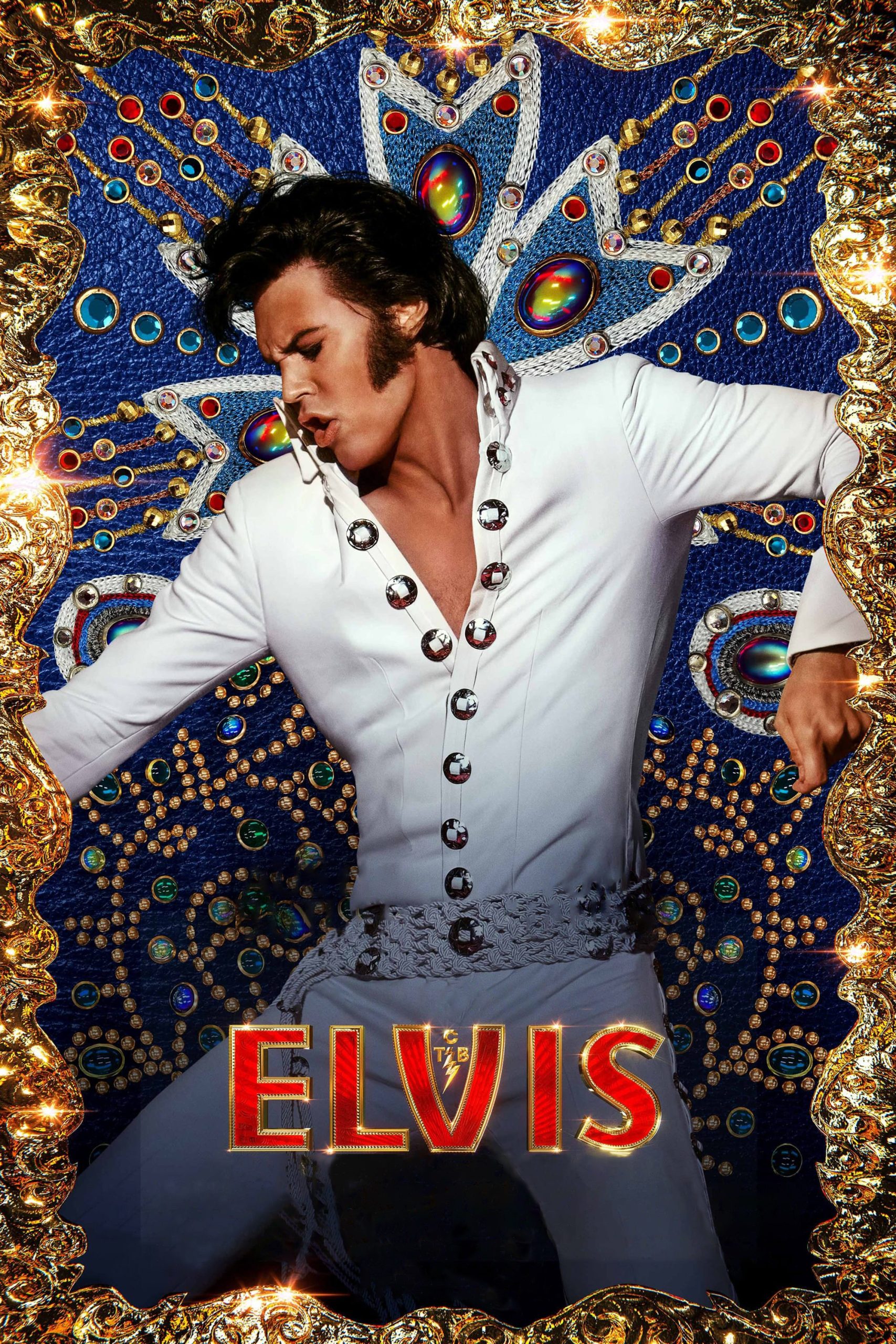
What the Film Is About
If I’m honest, watching Baz Luhrmann’s Elvis (2022) felt like getting swept into a dazzling, feverish current—part nostalgia, part lament, part cautionary tale about celebrity and power. Rather than a straightforward biopic about Elvis Presley’s life, I experienced it as a hyper-charged odyssey through the complexities of stardom, manipulation, and cultural transformation. The emotional crux for me lies in the collision between creative spirit and ruthless commerce, embodied in the volatile relationship between Elvis and his manager, Colonel Tom Parker. The film becomes much less about the chronology of a superstar’s life and much more about the struggle for agency, authenticity, and love in the face of relentless exploitation and public scrutiny.
Throughout, I found myself absorbed by the tension: I was rooting for Elvis’s soaring artistry and personal liberation, only to feel repeatedly jolted by the forces—both internal and external—that ultimately circumscribe his fate. The journey isn’t just about personal rise and fall, but about the price paid for fame, and the enduring sacrifices made behind the spectacle.
Core Themes
For me, one of the film’s central questions is: What does it cost to become a legend, and who truly pays that price? The theme of power—its seduction, abuse, and elusiveness—runs throughout every chapter of Elvis’s story as Luhrmann tells it. I saw the film wrestle constantly with the imbalance between art and authority. Every time Elvis appears to grab control of his own narrative, the counterforce of Colonel Parker, as a symbol of show business, capitalism, and even paternalistic exploitation, pushes back. This power dynamic isn’t just economic—it’s emotional, personal, and, at times, national. Parker isn’t just a manager; to me, he’s a specter of America’s commodification of genius, especially genius that springs from the intersections of race, poverty, and Southern culture.
Another theme that struck me is identity—the lifelong battle against being packaged, sold, and misunderstood. The film’s kaleidoscopic style reflects the chaos of living under relentless public scrutiny, but it also feels, to me, like an act of resistance: a reminder that no cultural figure, no matter how iconic, can be contained by a single narrative. The calls for authenticity are echoed in Elvis’s deep personal relationships and creative yearnings, but the machinery of fame distorts and contorts those desires. Especially powerful is the film’s engagement with cultural appropriation and musical cross-pollination. I was reminded time and again how deeply rooted Elvis’s sound is in Black music and experience, and the film both honors and problematizes that legacy. The ongoing relevance here is profound: we’re still grappling, as a society, with who gets credit, who gets erased, and how narratives shift depending on those in control.
Ultimately, I feel Elvis is about the struggle for selfhood in a world that chews up individuality for mass consumption. In a time still obsessed with reality television, influencer branding, and viral celebrity, these concerns are as urgent now as they were in mid-century America, perhaps even more so.
Symbolism & Motifs
Luhrmann packs his film with symbols and motifs that, for me, transform the biography into something mythic. The recurring imagery of the carnival—the Ferris wheel, the lights, the sideshow barker—casts Colonel Parker as a ringmaster and the entertainment industry as a seductive, inescapable maze. I recognized these carnivalesque elements as metaphors for the allure and danger of spectacle. Whenever the camera centers on Parker amidst spinning lights or hustling crowds, I felt an unease about who truly directs the show, and at what cost to those within it.
Another potent motif is the recurring presence of mirrors and reflections. Elvis, constantly surrounded by images of himself—either projected on screens or glimpsed in backstage make-up mirrors—embodies the duality of persona versus person. I read these visual cues as questions about the price of living in perpetual self-performance. Every time Elvis gazes at his own reflection, I sensed both longing and alienation, as if he’s both captivated by, and estranged from, the persona he’s been compelled to inhabit.
There’s also the thunderbolt logo—Elvis’s signature emblem, which the film uses as a symbol of both electrifying power and impending doom. The lightning bolt, emblazoned on costumes and stage sets, stands out to me as a metaphor for unpredictability and self-immolation: dazzling brightness that burns fast and risks total annihilation. Its repetition throughout the film isn’t just kitsch, but a prescient reminder of what happens to a man, or a myth, at the center of the universe’s storm.
The motif of musical improvisation—moments when Elvis bends rules in a live performance, or absorbs the rhythms of Black gospel and blues—emerges as a living metaphor for American cultural hybridity and tension. These musical interludes, often shot with kinetic energy, resist easy categorization. For me, they become symbols of creative longing and transgressive potential, often fiercely contested by those invested in “order” and “tradition.”
Key Scenes
Key Scene 1
The scene that haunts me most is an early performance, where Elvis sets aside the expectations of the white, conservative audience and launches into an ecstatic, gospel-infused version of a song. It ignites the crowd into pandemonium and, crucially, draws the wrath of the authorities and Parker’s anxious concern over Elvis’s “controversial” movements. For me, this scene isn’t just a recreation of a historic performance; it’s the film’s thesis statement on race, sexuality, and artistry. Watching Elvis channel the energy of Black gospel and blues, I viscerally felt the risks he took—knowingly or otherwise—in challenging the nation’s segregated, moralistic cultural order. The backlash from the establishment, as framed by Luhrmann, underscores how revolutionary (and dangerous) it was to disrupt the expected boundaries of music and propriety, and how fragile true artistic freedom can be.
Key Scene 2
Midway through the film, there’s a moment when Elvis, emotionally drained and on the cusp of complete personal breakdown, confronts Parker about creative control and the ceaseless demands of his career. I found this confrontation painfully revealing—it’s the showdown where the glamorous veneer is stripped away, exposing Parker’s mercenary nature and Elvis’s desperate longing for autonomy. Here, the film lays bare its core tension: Can a gifted individual ever reclaim agency from those who treat him as a commodity? Watching this scene, I was struck by how heartbreakingly common this dynamic is, not just in show business, but in any profession or relationship where one side holds economic or psychological leverage over the other. I saw, in Elvis’s inability to fully break away, a broader meditation on dependency, manipulation, and the limits of rebellion against systemic power.
Key Scene 3
Toward the end, the film juxtaposes real footage and dramatized performance as an older Elvis, battered by years of exploitation, pours his soul into an incendiary stage rendition of “Unchained Melody.” Despite his failing health and personal anguish, his voice—and, briefly, his spirit—soar with undiminished passion. I cannot watch this scene without feeling the full weight of what’s been lost and what endures; it distills the movie’s central meaning into one elegiac crescendo. For me, this performance isn’t just about artistry overcoming adversity—it’s about how, even at the point of destruction, a great performer can momentarily transcend the machinery that destroys him. Elvis becomes both a casualty and an immortal—broken yet still shining, for at least one last, devastating moment. This, to me, is Luhrmann’s final word: that the human spark, though easily ravaged, is never quite extinguished.
Common Interpretations
In many of the conversations I’ve had—and in the critical essays I’ve pored over—Elvis is seen as a meditation on the corrosive side of fame and the ways in which visionary artists are often undone by those meant to protect them. Some critics interpret the film as a scathing indictment of the entertainment industry, with Colonel Parker standing in for the greed and duplicity that hide behind the mask of mentorship. I completely relate to readings that see the film as a tragedy of trust: every promise of protection or success ultimately becomes a trap, tightening with every year that passes.
I’ve also seen viewers focus on the film’s treatment of cultural appropriation—some praising the honest acknowledgment of Black musical influence, others wishing the script went further in exploring the consequences of that appropriation. To me, the film’s approach is both ambitious and ambivalent; it foregrounds the debt owed to Black innovators, but still makes Elvis the central protagonist of the narrative. These threads leave me reflecting on the complexities of artistic legacy and the stubborn persistence of erasure, even in attempts to “correct” the historical record.
There’s another interpretation, more personal and psychological, that resonates deeply for me: the notion of Elvis as a symbol of fractured American identity. Luhrmann’s whirlwind editing, genre mashups, and colorful anachronisms place the story out of time, making it feel both retro and immediate. For those I’ve spoken with, and for myself, this technique suggests that Elvis isn’t just a man, but an emblem of the country’s best and worst impulses—creativity, ambition, excess, naïveté, and, ultimately, loss.
Films with Similar Themes
- Walk the Line – This story of Johnny Cash’s meteoric rise and inner turmoil offers a similarly incisive look at the perils of fame, the struggle for artistic authenticity, and the ways personal demons collide with public adoration. I find both films steeped in the high-stakes gamble of self-discovery against the backdrop of a ruthless industry.
- Amadeus – In Milos Forman’s classic, creative genius is both wondrous and isolating. The tension between Mozart and Salieri mirrors, for me, the relationship between Elvis and Parker: admiration giving way to manipulation and jealousy. Both films ask what happens to genius in the hands of mediocrity or malice.
- Rocketman – This dazzling retelling of Elton John’s life pairs musical innovation with struggles around selfhood, addiction, and control. As with Elvis, I see an exuberant visual style used to probe the hidden costs of stardom and the search for liberation through art.
- Ray – The biopic of Ray Charles shares with Elvis a focus on the intersections of musical innovation, race, exploitation, and the yearning for personal freedom. Both films challenge viewers to reckon with the forces that built—and nearly destroyed—national icons.
What ultimately stays with me after Elvis is the sense that our brightest stars are made and unmade at the intersection of innovation and exploitation, love and manipulation, celebration and sacrifice. The film, in my eyes, isn’t just about one man’s journey—it’s a bracing, often unsettling reflection on how society builds myths out of troubled, complicated people and then consumes them. The contradictions at the heart of Elvis’s story—his debt to Black music, his longing for personal freedom, his seduction by power and spectacle—are, I think, American contradictions. And if the film is sometimes messy, excessive, or overwrought, that too feels fitting: it matches the tempest at the center of its subject and the era he both shaped and was undone by. Watching Elvis, I never stopped feeling the ache of lost innocence and the dangerous thrill of creative rebellion—a combination that, for me, is what keeps the film relevant long after the credits roll.
To explore how this film has been judged over time, consider these additional viewpoints.