
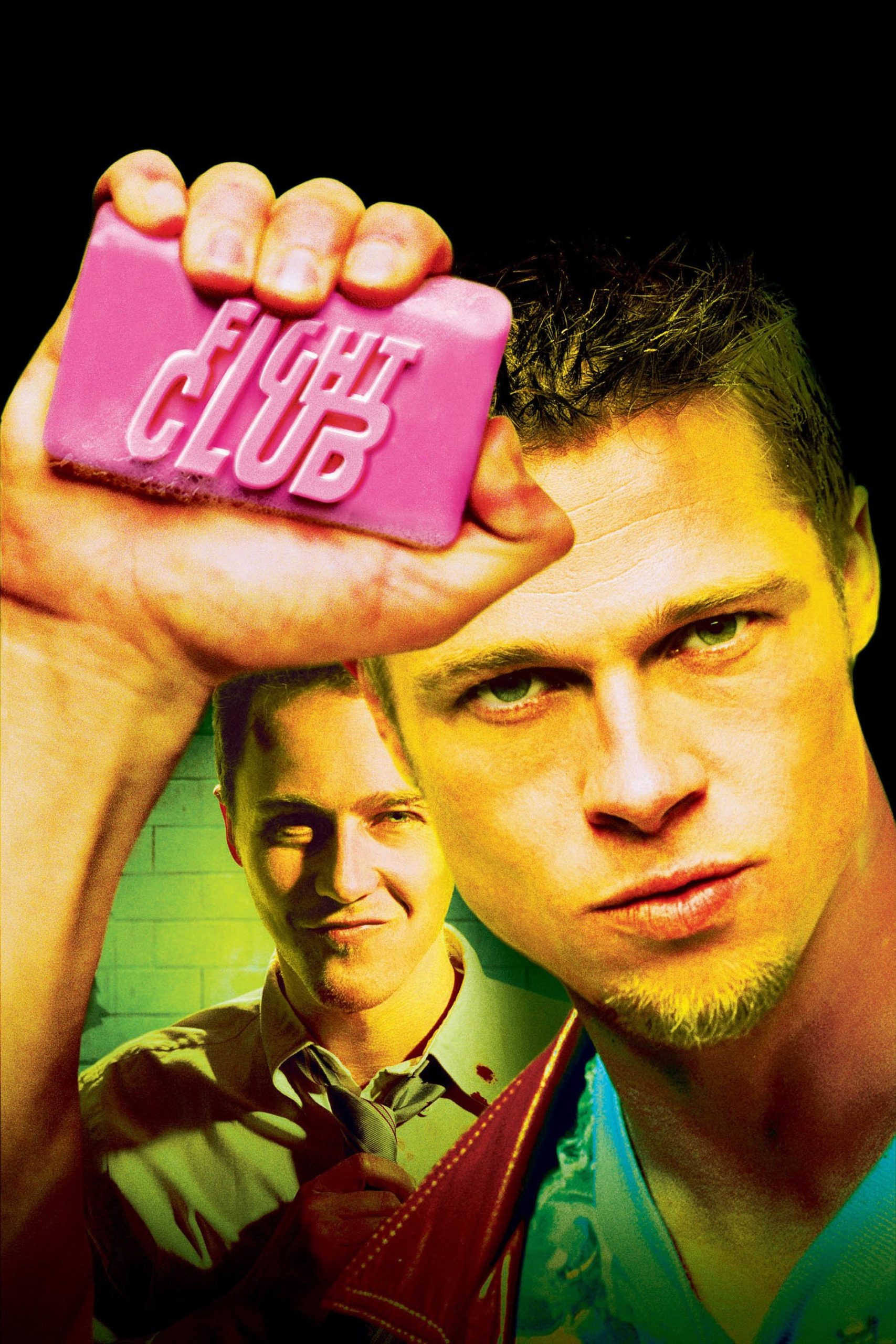
What the Film Is About
The first time I watched “Fight Club,” I felt a lingering sense of unease that lingered long after the credits rolled—a restlessness that seemed more emotional than intellectual. For me, the film is less about underground brawling or anarchic spectacle and more a descent into the hollowness lurking behind modern life. At its core, I believe the story probes the tension between the facades we construct and the primitive drives that simmer beneath, all told through a character’s feverish search for meaning in an era stripped of clear purpose.
What makes the emotional journey so resonant, in my experience, is how the film takes a nameless protagonist—desperate, fractured, and numb—and pushes him through a world where rules and routines have replaced genuine feeling. The central conflict isn’t just an external struggle against society or authority, but an internal war over who we are allowed—or forced—to become. By weaving together themes of identity and violence within the sterile confines of consumerist America, “Fight Club” challenges me to face my own complicity in patterns of inertia and suppressed rage.
Core Themes
Every time I revisit “Fight Club,” I find myself re-evaluating its layered themes, especially those concerning identity, alienation, and the dangers of unchecked desire for freedom. What stands out to me most is the film’s dissection of masculinity in crisis—a form of masculinity lost in the noise of late twentieth-century materialism, seeking authenticity amidst a landscape of IKEA catalogs and empty mantras. The anger here doesn’t materialize from nowhere; it seeps in from years of quiet desperation, from workplaces that treat people as interchangeable cogs and cultural scripts that demand relentless self-improvement.
Underneath the stylized violence and dark comedy, I see the film grappling with a collective hunger for belonging, connection, and significance. The formation of Fight Club is, to my eyes, a misguided search for community—a kind of primal fellowship forged in bruises and blood, all acting as an antidote to emotional disconnection. It’s no accident that the club is built on secrecy and pain; pain, in the film’s logic, becomes proof of existence in a world determined to numb everything else.
At the same time, I interpret the story as a biting critique of consumer culture. The relentless pursuit of brands, possessions, and lifestyles is portrayed as a spiritual dead end—a distraction from real life, real struggle, and real connection. This theme struck a particular chord at the end of the 1990s, when economic optimism was masking profound uncertainties about self-definition, purpose, and the limits of late capitalist society. Even now, more than two decades later, I see these anxieties echoing ever louder, making the film’s examination of modern malaise disturbingly prescient.
But even more, “Fight Club” raises deeper questions about the self—about the masks we wear, the split between our public and private selves, and the terrifying power of repressed wishes. The duality of the film’s central character is, for me, both a literal twist and an existential one: What if the version of ourselves we long for is also the force that could destroy us? That question haunts every frame, inviting me to consider where authenticity ends and self-destruction begins.
Symbolism & Motifs
When I dissect the recurring motifs in “Fight Club,” what jumps out most forcefully is the pervasive use of space—the sterile, over-designed apartments contrast with the decaying, chaotic house where Fight Club truly flourishes. This juxtaposition signals a flight from order into chaos, comfort into discomfort, suggesting that growth and truth are often found in destruction rather than safety. The transformation of physical spaces mirrors the protagonist’s internal collapse and awakening, a parallel I find intimately tied to the film’s psychological underpinnings.
Soap, a seemingly mundane object, stuck with me as a layered symbol threaded throughout the narrative. On one level, it’s a basic tool of cleanliness and purification—a motif of renewal. But in the film, soap is literally made from the fat of the social elite, converted into both an explosive ingredient and a cleansing product. For me, this is more than a narrative twist—it’s a metaphor for the grotesque cycle of consumption, where even the powerful are unwittingly complicit in their own undoing. There’s a sick sort of purity in the way the characters remake the world from what society has discarded.
The recurring motif of support groups—places where participants seek authenticity and vulnerability—has always struck me as ironic. The protagonist initially joins them not out of genuine need but to chase a feeling of release. These groups, full of tears and confession, contrast sharply with the later violence of Fight Club, yet both settings ultimately serve as makeshift communities for the emotionally abandoned. To me, they highlight the yearning for connection at the heart of our most self-destructive impulses.
Project Mayhem, with its ominous rules and escalating tactics, functions in my analysis as a dark parody of militarism and revolution. The group’s deliberate erasure of individual identity in favor of anonymous collective action turns the protagonist’s initial search for meaning into a descent into zealotry. This transformation is chilling—a reminder of how easily fervor can swap places with fanaticism, and how rebellion without reflection can breed new chains rather than liberation.
Of course, the omnipresent bruises—bodies marked and broken—are less about fighting than about proof: physical marks that counteract the emotional invisibility the characters feel in their daily lives. The battered faces are, in my reading, desperate attempts at reasserting existence in a society that tries relentlessly to scrub out evidence of real human struggle.
Key Scenes
Key Scene 1
For me, the support group scene early in the film, where the protagonist collapses into tears in Bob’s arms, is foundational. This is not a moment of action or bravado; it is a rare, almost involuntary surrender to authentic feeling. The catharsis that follows is messy and uncomfortable—the protagonist isn’t healed, but briefly, he is real. I find this scene crucial because it exposes the gaping void at the center of modern masculinity—a hunger for comfort and vulnerability that the world has rendered taboo. The irony is that real healing comes only in disguise, through masquerade, and this signals the tragic pattern that propels the rest of the story.
Key Scene 2
When Tyler brutally instructs the protagonist to let go during the chemical burn scene—pressing lye into his hand—I’m confronted by the film’s assertion that pain is truth’s crucible. This sequence always unsettles me: the rejection of transcendental, pain-numbing platitudes in favor of raw sensation. Tyler forces the protagonist to “stay with the pain,” to experience his suffering as proof of life. I interpret this scene as a microcosm of the film’s philosophy, exposing the danger in both retreating from adversity and fetishizing suffering as a badge of authenticity. It’s a potent symbol for the double-edged sword of awakening: becoming real can mean being burned.
Key Scene 3
The final rooftop confrontation—played out as the city’s skyline explodes behind the main characters—serves, to my mind, as the locus where every theme collides. The protagonist, physically and mentally exhausted, finally separates from his alter ego in a moment of perilous clarity. In facing down Tyler, he steps out of the shadow of anarchic freedom and claims responsibility for his own existence. The recurring refrain, “You met me at a very strange time in my life,” paired with Marla’s presence, doubles as an acknowledgment of failure and hope. This doesn’t feel like a traditional victory to me, but a surrender to messy humanity, accepting imperfection as the only viable form of freedom. The city’s destruction, set to an ironically jubilant soundtrack, reads as both an ending and the birth of a possibility more genuine than anything Fight Club delivered.
Common Interpretations
Over the years, I’ve encountered countless interpretations of “Fight Club,” and it’s striking how the film divides opinion across generational lines and cultural backgrounds. Many critics, in my experience, read the film as a lacerating satire of consumer society—a wake-up call for a culture hypnotized by advertising and empty acquisition. In these readings, Fight Club itself is an expression of pent-up frustration, not a literal prescription, but an exaggerated mirror held up to a society that has traded real connection for transactional relationships.
Then there’s an equally prominent strand of interpretation focused on the crisis of masculinity—how the film exposes and critiques the confusion, rage, and anxiety bred by shifting gender roles and obsolete cultural scripts. Some see Fight Club as a dangerous glamorization of violence and extremism; others argue that it ultimately destabilizes and critiques those instincts by showing their inherent destructiveness. I’ve always been struck by this dichotomy: Is the film a call to arms or a cautionary tale? My own reading leans toward the latter, recognizing the seductive allure of rebellion while warning of its costs.
Another widely discussed interpretation, one that resonates with me, centers on the fragmentation of self in the modern era. The unnamed protagonist and Tyler Durden, as polar extremes of the same psyche, represent the conflict between conformity and chaos, safety and risk, reason and desire. The film’s climactic revelation isn’t just a plot trick—it’s a metaphor for the fractured nature of modern identity, with audiences encouraged to examine the parts of themselves that are suppressed in the name of social survival.
Finally, I can’t ignore the layers of dark humor and irony saturating the film; taken on this level, “Fight Club” becomes a savage comedy about how seriously we take the games we play, whether in the boardroom or the back alley. The story picks apart the utter absurdity of searching for meaning in possessions or organizations—only to find emptiness mirrored back. Yet, the satire is so sharp that misunderstandings often arise, with some viewers taking Tyler’s anti-establishment rhetoric as gospel rather than farce.
Films with Similar Themes
- American Beauty – I see strong parallels in its critique of suburban malaise and the search for authenticity beneath the veneer of middle-class success; both films probe how disillusionment with social roles sparks dangerous rebellion.
- A Clockwork Orange – Much like “Fight Club,” this film interrogates the relationship between violence and social conditioning, using shock and satire to question the foundations of morality and autonomy.
- The Machinist – Here, the protagonist’s battle with fractured identity and guilt echoes the psychological disintegration at the heart of “Fight Club.” The film employs haunting visual motifs to underline alienation and self-destruction.
- Taxi Driver – I often think of Travis Bickle as a spiritual predecessor to the Narrator. Both protagonists spiral into chaos, seeking order and meaning in a world they perceive as sick, using extremes when mainstream paths fail.
Ultimately, I find “Fight Club” both a diagnosis and a provocation—a confrontational work that refuses neat answers. Its imagery, characters, and biting humor linger because they refuse to flatter or console. To me, the film’s ultimate message is a warning wrapped inside an invitation: If we don’t create authentic meaning for ourselves, we might fall for illusions that tear us—and the world—apart. Its allure lies not in the blueprint it offers, but in the hard questions it refuses to let us ignore, questions about freedom, identity, and the hunger for connection in a world that profits from our isolation.
After learning the historical background, you may also want to explore how this film was received and remembered.