
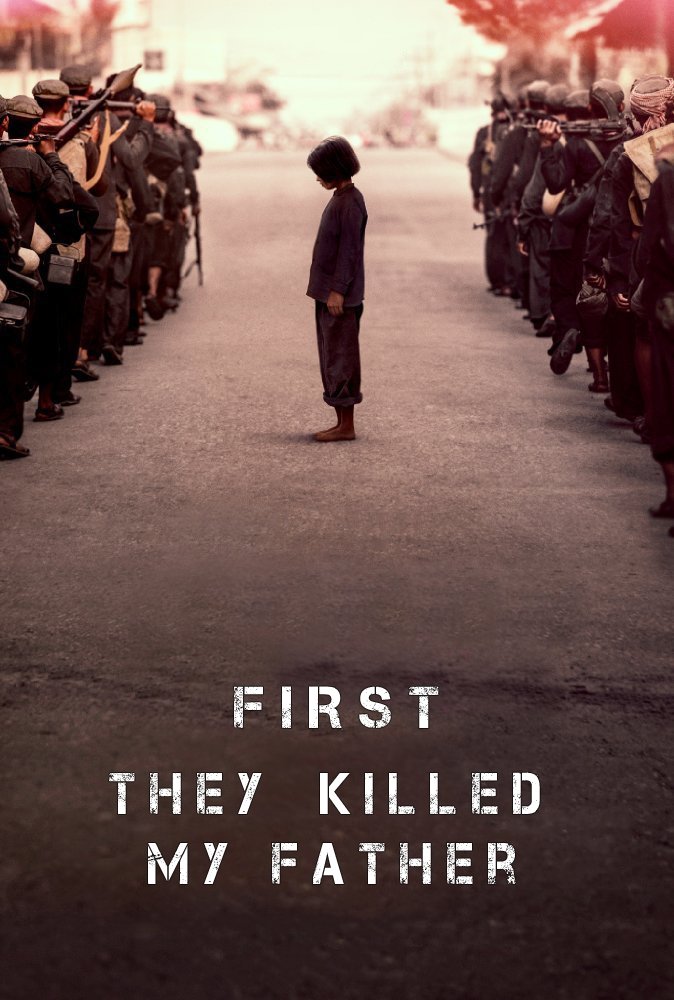
What the Film Is About
The first time I watched “First They Killed My Father,” I was overwhelmed by a sense of loss that rippled far deeper than the surface horrors of war. This film, guided by Angelina Jolie’s direction and Loung Ung’s original memoir, invites me not only to witness trauma through a child’s eyes but also to experience the emotional chasms created by the violent collapse of home and identity. While the journey follows Loung, a young girl swept up in Cambodia’s Khmer Rouge nightmare, what really struck me was the way the film immerses viewers in the process of losing, redefining, and ultimately surviving oneself. The real story isn’t a recounting of suffering; it’s a relentless struggle to preserve a sense of self and meaning when the world dissolves into chaos.
Emotionally, I feel the film navigates the tightrope between innocence and survival. Loung’s journey is not just about physical endurance but about the near-impossible act of holding on to childhood under the weight of unspeakable brutality. Every step seems imbued with silent questions—about right and wrong, clinging to hope, and the cost of becoming someone new in order to survive. The emotional core, for me, is the tension between remembering who you were and adapting into someone who can live through what you were never meant to face. The movie doesn’t just demand empathy; it insists on immersion, making the viewer a silent companion to Loung’s fear, confusion, and fragile resilience.
Core Themes
What resonates most with me in “First They Killed My Father” is its complicated meditation on survival and identity. At every turn, I find the film probing the idea that identity can be torn apart by violence, yet remains a quietly rebellious act: the will to continue remembering, to refuse erasure. For me, the film is grappling with the capacity of memory—how it haunts, preserves, and sometimes betrays those who wield it. Loss is not just individual but collective, a rupturing of family, culture, and the innocence of an entire generation. Through Loung’s perspective, I see the story as asking what is worth remembering and what must be let go just to keep living.
I’m especially struck by the film’s approach to the morality of survival. Unlike so many stories that turn trauma into spectacle or neat moral lessons, I believe this film is almost unsentimental, refusing to offer easy heroes or answers. Surviving in such an environment requires choices that often blur lines between right and wrong. As the world around Loung fractures into “us” and “them,” I see the film wrestling with the corrosive effects of dehumanization, both for those who wield violence and those forced to endure it. I can’t help but relate this to today’s world, where conflict still drives communities to vilification and exclusion, and where memory itself can be weaponized or sanitized for political ends.
Released in 2017, the film struck a deep chord with contemporary audiences—including myself—reminding us of the urgent need to listen to the voices of trauma survivors. The themes of displacement, endurance, and the fragility of childhood innocence are far from historical relics; they echo in every current refugee crisis, in every society wrestling with the aftermath of war, and in the ways we choose to remember or erase inconvenient histories. The film’s insistence on a child’s perspective feels especially powerful today, demanding that I look at global conflict without the filter of adult rationalization.
Symbolism & Motifs
When I reflect on the film’s visual world, I keep returning to recurring images that transform ordinary objects and moments into vessels of memory. The rice fields, for instance, rarely register as just pastoral landscapes—they become vast, indifferent expanses that alternately nurture and threaten to swallow whole. To me, these fields symbolize the precariousness of existence, the blurred lines between life and death, sustenance and starvation. There’s a haunting poetry in how daily life continues amid horror, the meaningful rendered menacing.
Uniforms also take on symbolic weight; they are more than fabric, they become markers of forced complicity and erasure. As Loung slips into and out of different roles—child, laborer, soldier—I find myself attuned to how these changes in attire reflect deeper transformations and fractures in identity. Uniforms become a shorthand for lost individuality, a sign of survival bought at the expense of the self.
Another motif I can’t shake from my mind is the repeated use of childhood objects, particularly the recurring glimpses of Loung’s family’s possessions. These fragments—a spoon, a photograph—become precious precisely because they are the first to be stripped away. The gradual disappearance of these items mirrors the erosion of past self and safe belonging, each loss sharpening the ache of memory. In these moments I’m reminded how memory clings to the smallest details, and how trauma is often stitched together from shards of the once-familiar.
Dream sequences operate as visual motifs as well, providing fleeting sanctuary from the relentless brutality of camp life. To me, these surreal interludes are not just escapism; they function as battlegrounds between memory and oblivion, between who Loung was and who she is being forced to become. These dreams echo after the film ends, challenging me as a viewer to honor, rather than gloss over, the messy psychological realities of survival.
Key Scenes
Key Scene 1
There’s a scene that has haunted me ever since I first saw it—the moment when Loung’s father is taken away by Khmer Rouge soldiers. Watching through her eyes, I felt the world suddenly shrink into a pinhole of panic and grief. For me, this isn’t just the moment the family fractures; it’s when the entire illusion of safety and normality finally shatters. The camera lingers on the emotional void left behind, forcing me to experience the paralyzing helplessness of children robbed of agency. I found this scene to be the film’s way of encapsulating a larger truth about systemic violence: that its first and deepest wound is to tear apart the very bonds of family and belonging that give life meaning.
Key Scene 2
Later in the film, when Loung is separated from her remaining siblings and forced into grueling labor, I saw a new boundary being drawn—not just around her physical self but around who she is allowed to be. The scene’s focus on her silent endurance, her attempts to hide both her suffering and her knowledge, made me acutely aware of the psychological violence exacted by totalitarian regimes. This is where the film’s deeper questions around memory and transformation are most visible: what parts of oneself can be preserved in order to survive, and which must be suppressed or denied? I saw in Loung’s face the tension between longing for lost innocence and the imperative to become “useful” to survive. The muted, almost wordless register of this scene felt like a direct challenge to any viewer searching for easy catharsis.
Key Scene 3
The film’s final scenes—a return to the old family home and a brief ritual for those lost—have lingered with me as a kind of muted, painful exhale. In this turning point, Loung is finally allowed to mourn and remember, if only for a moment. What struck me hardest was that the film never implies healing erases pain or that reconciliation with the past is straightforward. Instead, I see this scene as an assertion of endurance: despite attempts to destroy memory, survivors are still capable of bearing witness, however imperfectly. For me, this ending doesn’t offer closure in the traditional sense; rather, it emphasizes that survival and remembrance are acts of quiet, ongoing resistance against historical erasure.
Common Interpretations
Whenever I’ve discussed this film with others—critics, friends, viewers who know little of Cambodia—the interpretations tend to fall into a few clear streams. The most common understanding, which deeply resonates with me, sees the film as a searing indictment of the personal and cultural devastation wrought by the Khmer Rouge, with an emphasis on the loss of innocence and the resilience of children in war zones. For many, this is fundamentally a film about the persistence of identity confronted with the machinery of forced forgetting.
Others have highlighted the film’s unique perspective—a child’s point of view stripped of exposition or commentary. I agree that this is crucial: the refusal to filter experiences through adult analysis means the viewer is confronted with the raw immediacy of trauma and confusion. Some see this as a limitation, but for me, it’s the very source of the film’s affective power, a refusal to distance the audience from the horror at hand.
There’s also a reading, one that increasingly shapes my own interpretation, which sees “First They Killed My Father” as a meditation not just on violence, but on the ongoing process of healing and testimony. Many critics, especially those with personal or familial experience of genocide, have noted that the film’s greatest strength lies in its ambiguity around what “survival” really costs. Survival isn’t triumph; it’s adaptation. Memory doesn’t always liberate—sometimes it wounds anew—but it keeps the possibility of justice, however fragile, alive.
Films with Similar Themes
- The Killing Fields – For me, this film is inextricably linked by its focus on the Cambodian genocide, but it approaches trauma through the lens of adult journalists. Both films evoke the loss of nation and self, but “First They Killed My Father” strikes me as more intimate and subjective.
- Grave of the Fireflies – I’m always reminded of this gut-wrenching Japanese animated film about siblings’ survival during World War II. It shares the motif of children forced into premature adulthood and the loss of familial security amid war’s devastation.
- Come and See – This Russian masterpiece offers, like Jolie’s film, an unflinching child’s-eye view of conflict. While the contexts differ, the relentless depiction of innocence destroyed by state violence and the use of subjective cinematography creates a chilling parallel.
- Hotel Rwanda – Though set during a different genocide, the film explores similar questions around collective memory, the morality of survival, and the indelible mark violence leaves on identity and community. Watching both, I’m struck by how personal stories carve spaces for remembrance within overwhelming historical events.
In watching “First They Killed My Father,” I come away with a sharply personal sense of what it means to survive—not as neat narrative closure, but as an ongoing, daily labor of remembering and enduring. I think the film’s ultimate message is fiercely relevant not just to Cambodia’s past, but to any era or place where trauma threatens to erase individual and collective identity. The story insists memory matters—not as a static monument, but as a living, sometimes painful act of testimony. What moves me most is the film’s reminder that, even when history conspires to silence the powerless, survival and remembrance together can carry forward meaning for another generation.
To explore how this film has been judged over time, consider these additional viewpoints.