
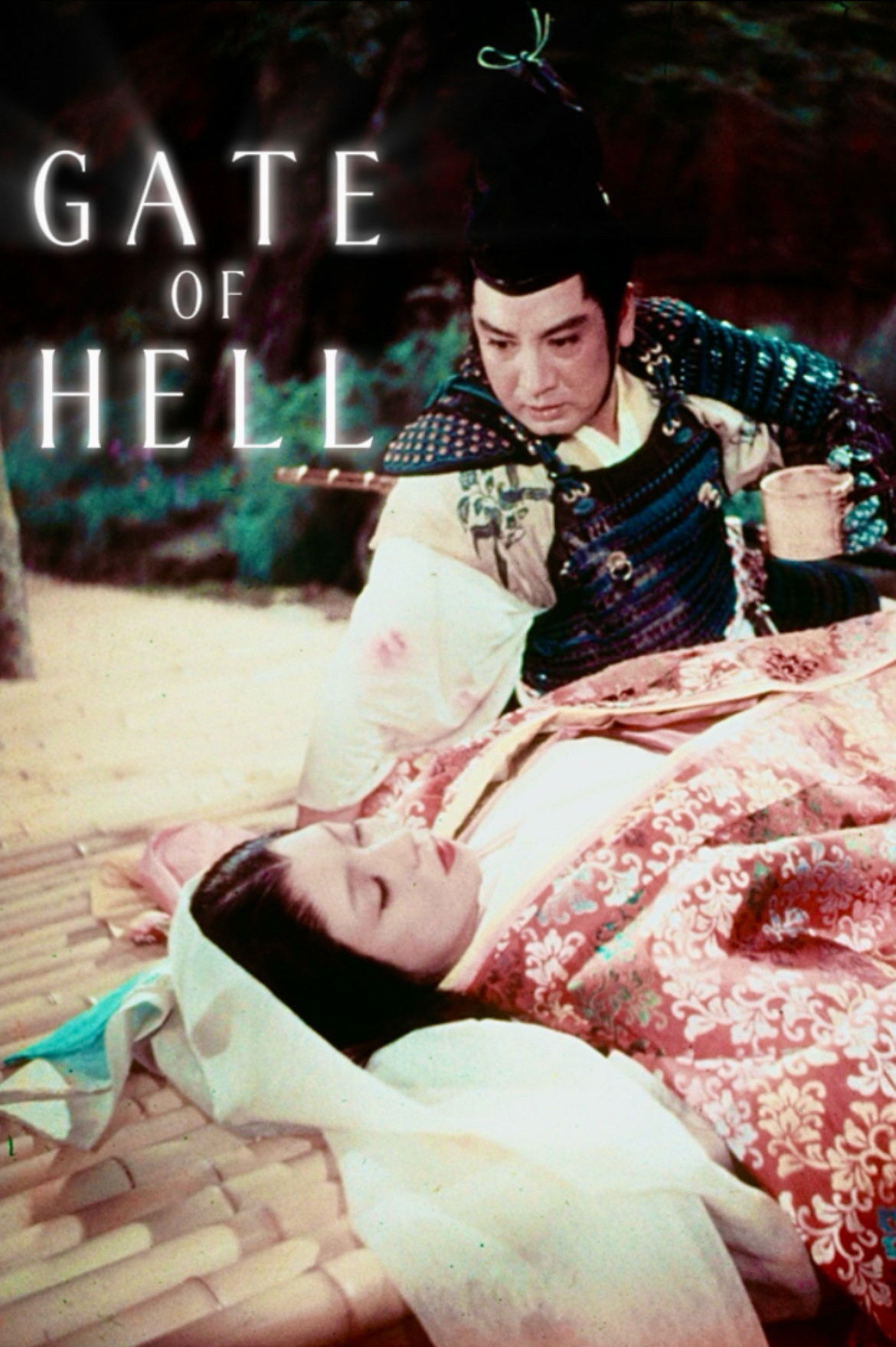
What the Film Is About
If I were to trace my personal entry point into Gate of Hell, it would begin not with war or spectacle, but rather with obsession and the consequences of unchecked desire. Watching this film, I was struck not by shifts of power or the larger machinations of history, but by the visceral, suffocating journey of characters whose private needs press up relentlessly against the boundaries of duty and honor. At its core, I see Gate of Hell as a richly colored struggle between the luminous promise of love and the shadow it casts when twisted by self-interest and social rigidity. The emotional center—where yearning collides with resolute restraint—provides the film’s chief tension, challenging me to consider what is lost when devotion is transformed into possession.
What continually draws me back is the film’s ability to distill a national trauma—the cost of violence, the fragility of peace—into a highly charged, personal dilemma. Within the palace walls and sunlit gardens, characters are forced to choose between what their hearts demand and what the world will permit. The result, for me, is not simply a melodrama of doomed love, but a haunting meditation on where true loyalty lies: with another soul or with an ideal of honor that may ultimately betray both.
Core Themes
Diving into the heart of Gate of Hell, I am compelled by its meditation on the destructive potential of desire. The film’s most persistent question—what happens when longing overrides moral principle—feels as urgent to me today as it must have in postwar Japan. I see Sadao, the samurai protagonist, as both a product and a casualty of an honor-bound society that leaves little room for individual happiness, turning him into an emblem for anyone torn between social expectation and inner need.
Another theme that resonates deeply is the film’s interrogation of sacrifice. For me, every action, every gesture, seems to weigh the cost of personal happiness against greater communal or ethical demands. Sadao’s fixation on Kesa is less about mutual connection and more about how devotion can, under pressure, curdle into dangerous entitlement. Watching this unfold, I find myself thinking about the intersections of love, duty, and violence—not just as concepts, but as living forces that shape (and sometimes destroy) individual lives.
The film also provokes reflection on the implications of agency and constraint—especially when I consider the choices (or lack thereof) left to Kesa. Her situation as both venerated ideal and endangered object tells me much about gender and autonomy, not merely in 12th-century Japan, but in any society that prizes appearance above genuine autonomy. What surfaces for me is the acute sorrow born of living a life dictated by the needs and claims of others, a sorrow intensified by the film’s sumptuous, painterly visuals that only serve to highlight the distance between surface beauty and private pain.
Ultimately, I think the film interrogates the dangers of idealization itself: when we pursue perfection—be it romantic, social, or moral—we may sow the very seeds of tragedy. The tightrope between individual longing and the strictures of communal order is one that, in my view, the film walks with heartbreaking clarity. Revisiting these themes today, I can see how the consequences of this struggle—failed communication, objectification of the beloved, moral blindness in the face of desire—remain deeply relevant in any era grappling with the limits of love and loyalty.
Symbolism & Motifs
The color palette of Gate of Hell is impossible for me to ignore. The vivid oranges and blues, the golden glow of costumes and setting, aren’t simply decorative. To my eyes, they operate as visual cues for desire, violence, and forbidden longing. The gateway itself—the fortress threshold drenched in feverish light—serves as both literal and figurative boundary: a transition from order to chaos, from social harmony to personal agony. Every time the camera lingers on these passageways and boundaries, I’m reminded how easily the promise of a new era can tip into turmoil if private longings are left unchecked.
The motif of the kimono emerges, for me, as a potent shorthand for both status and sacrifice. Kesa’s garments in particular are fraught with meaning: each carefully layered robe signifying purity, self-restraint, and ultimate tragedy. When Sadao gazes upon her, fetishizing her beauty and virtue, I feel the tension between public reverence and private objectification—a tension heightened by the constant interplay of armor and silk, suggesting the incompatibility between martial ideals and the vulnerability of love.
Another striking motif is the use of thresholds and doors, which continually frame the characters. Through these recurring visuals, I sense a world obsessed with demarcation—us and them, proper and improper, sacred and forbidden. The very architecture seems complicit in reinforcing the impossibility of authentic connection; I can almost feel the weight of tradition pressing down on every intimate moment, making rebellion (or even honest emotion) nearly impossible. Invariably, whenever the film returns to its titular gate—wreathed in shadow or radiant light—I’m reminded of the price one pays for crossing from duty into desire, from sanctioned belonging into exile, both emotional and social.
Key Scenes
Key Scene 1
For me, the scene where Sadao first confronts his feelings for Kesa is absolutely pivotal—not just for its character revelation, but for the emotional temperature it sets for the entire film. Watching Sadao confess his devotion, I felt both the intoxicating power of obsession and its chilling one-sidedness. This moment encapsulates, in my mind, the film’s message about unchecked desire and how easily admiration can blur into possession. The sense of inevitability, the way duty crumbles under the force of longing, makes this scene a touchstone for understanding why the ensuing tragedy feels both shocking and, sadly, preordained.
Key Scene 2
Kesa’s private moments of reflection—in particular, the subtle, wordless scenes where she weighs her options—continue to haunt me. These interludes stand in stark contrast to the outwardly ceremonial world she inhabits. I am always struck by the film’s restraint here: rather than spelling out her thoughts, it trusts us to witness her isolation and the impossibility of a solution that honors both her marriage and her own safety. In these sequences, the motif of the closed door recurs—Kesa, separated from both Sadao’s longing and her husband’s trust, trapped in a space where every “choice” is shaped by the expectations of others. This, for me, lays bare the film’s bleak but honest insight into the limited agency afforded to women in a society intent on controlling both their bodies and their fates.
Key Scene 3
The climax—arguably the film’s most famous scene—isn’t just a dramatic crescendo; for me, it acts as the film’s final, indelible statement on the dangers of idealization. Here, sacrifice becomes ultimate: a voluntary, devastating act that reveals not only the poison of unchecked desire, but also the absolute cost of upholding an honor code that has lost all moral bearing. Watching this unfold, I was left with a gut-wrenching sense of waste: love transformed into destruction, loyalty twisted into violence, and the ultimate inability of any system—no matter how beautifully ornamented—to protect the vulnerable from the consequences of obsession. This moment reverberates for me as a warning about what happens when society refuses to reckon with the dark side of its own ideals.
Common Interpretations
When I listen to other critics and browse the rich history of responses to Gate of Hell, I see a striking convergence on certain key interpretations, as well as a few diverging paths. Many regard the film primarily as a critique of feudal honor culture, focusing on how rigid codes of loyalty and service create conditions ripe for tragedy. I share this view, but I also notice how often critics point to the ways the film exposes the failings of samurai masculinity—how Sadao, envisioned as a romantic hero, is in fact undone by his inability to see Kesa as a full, autonomous being. For some, the film functions as a cautionary tale about where infatuation morphs into obsession, and the way “love” can mask fundamentally selfish motives.
Others, particularly within feminist criticism, have argued that Kesa’s sacrifice is less a heroic gesture than a deeply troubling reflection of a system that denies her real agency. I find this reading especially persuasive—the idea that Kesa’s silence and composure are less about inner strength than a last resort in a world that has always consigned her to suffering in dignified isolation. Additionally, there’s a persistent conversation around the film’s visual style: for many, the lush colors and painterly staging are both seductive and ironic, a deliberate contrast between surface beauty and the ugliness of what unfolds within that beauty.
I’ve also encountered interpretations that emphasize the historical context—the film’s 1953 release, just years after the devastation of World War II. For these viewers, Gate of Hell is a national morality tale, reflecting anxieties about reconstruction, collective trauma, and the dangers of clinging to outdated forms of identity. It fascinates me how these layers of meaning, while emerging from a premodern narrative, still speak to contemporary questions about love, power, and the cost of refusing change.
Films with Similar Themes
- Rashomon (1950) – I see Kurosawa’s classic as a kindred spirit in its rigorous exploration of truth, subjectivity, and moral ambiguity, using a historical setting to probe the limits of honor and self-deception.
- Ugetsu (1953) – This film, for me, carries the same sense of poignancy about love, sacrifice, and the spectral costs of war, offering a parallel meditation on how private desires are often inextricably linked to collective suffering.
- The Life of Oharu (1952) – I find a thematic kinship here in the tragic consequences faced by women trapped by patriarchal expectations, where dignity is maintained in the face of relentless personal loss.
- Samurai Rebellion (1967) – Both films share a passionate critique of the constraints of duty and the tension between individual conscience and social order, with personal tragedy used as a lens to examine systemic injustice.
What, then, do I ultimately take away from Gate of Hell? I’m left with a sobering reflection on how human nature—capable of both devotion and destruction—so often falters in the face of temptation and rigidity. The film strips bare the cost of idealizing others, demonstrating how even the highest virtues can serve as pretexts for domination or violence if not grounded in mutual recognition and genuine empathy. Set against a society in flux, where old codes can no longer carry the weight of real human need, I find Gate of Hell to be a devastating portrait of love’s perils, the limits of honor, and the enduring tragedy of sacrificing autonomy in pursuit of impossible ideals.
To explore how this film has been judged over time, consider these additional viewpoints.