
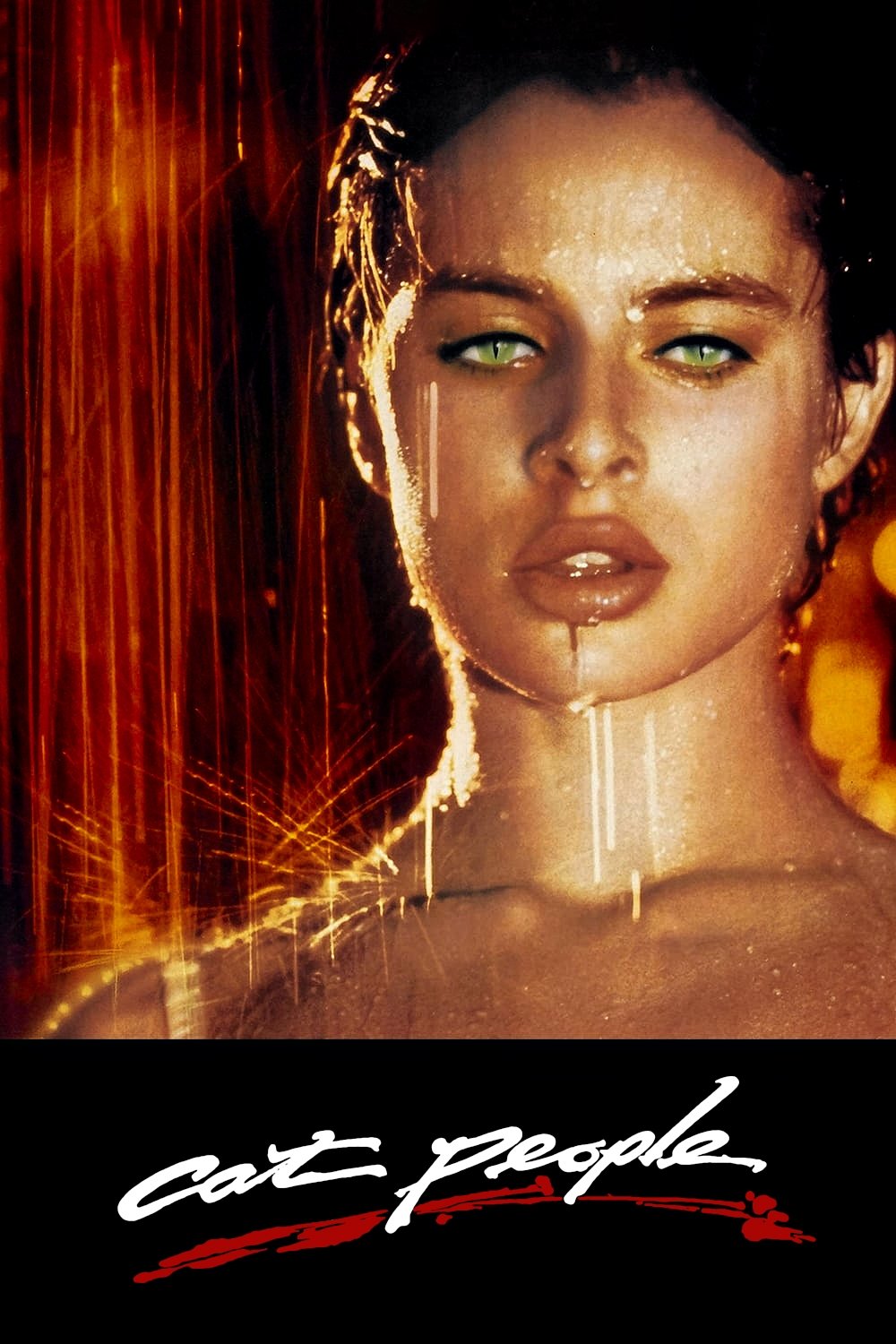
What the Film Is About
My initial encounter with “Cat People” left me with a lingering unease—a subtle, creeping sense of being watched from the shadows of my own mind. For me, this film isn’t just a story about cursed transformation; it’s a profoundly intimate portrait of alienation and buried longings. The narrative follows Irena, a Serbian immigrant, whose inexplicable sense of otherness marks her as a perpetual outsider, caught between desire and fear. The emotional journey at the heart of the film is the battle between self-acceptance and self-denial, where the true terror is not the supernatural, but the struggle to be understood without being destroyed in the process.
Rather than presenting good and evil in tidy opposition, I see the film as an exploration of internal war—one where a character’s sense of identity becomes their most dangerous foe. The central conflict pulses through loneliness, repression, and sexual anxiety. Watching Irena, I’m reminded that what we most fear isn’t always what lurks outside, but what quietly churns within us. “Cat People” wields its supernatural elements not as fantasy, but as metaphors for psychological distress, longing, and the limits of empathy in relationships, making it all the more haunting.
Core Themes
Every time I revisit “Cat People,” I’m struck by how deftly it weaves themes of sexual repression, cultural dislocation, and the monstrous feminine into a tight, evocative package. The film’s main preoccupation, as I interpret it, is the deeply human fear of our own desires—especially when those desires threaten to upend our stability or defy social norms. Irena’s inability to consummate her marriage isn’t just a horror trope; to me, it’s a chilling meditation on the costs of denying one’s authentic self.
I also view the film as a study of identity and otherness. Irena’s foreignness—her accent, her superstitions—sets her apart in her adopted world, making her an object simultaneously of fascination and suspicion. Her struggle echoes immigrant anxieties about assimilation and the loss of cultural identity, issues that would have resonated in 1942’s wartime climate, when fears about “the outsider” were especially pronounced. Yet these themes remain painfully relevant today, as societies continue to police difference and treat unfamiliar identities as dangerous or problematic.
To me, “Cat People” profoundly questions the boundaries between love and fear. The romance at the film’s core is less about attraction and more about the impossible task of loving someone who cannot—dare not—let themselves be fully known. In this sense, the film weighs the risks of intimacy against the risks of self-destruction. Watching Irena attempt to both trust her husband and protect him from herself, I’m left contemplating the tension between vulnerability and self-preservation—a tension as old as romance itself.
Symbolism & Motifs
Whenever I analyze “Cat People,” I find myself fascinated by its visual vocabulary. The panther—caged and ominous, ever-present even when unseen—serves as a literal and metaphorical double for Irena. To me, the panther represents more than the threat of transformation; it becomes a symbol of repressed sexuality, uncontrollable urges, and the lurking danger beneath outward gentleness. There is a sense that the true horror is not the beast itself, but the fear of “letting it loose,” of breaching boundaries that have been set for one’s own control and society’s comfort.
Shadows and darkness are constant motifs, with director Jacques Tourneur and cinematographer Nicholas Musuraca using low-key lighting to fashion a world where reality and fantasy merge. I experience these shadows as expressions of Irena’s own uncertainty about whether her fears are real or imagined, internal or external. The interplay of light and dark, concealment and revelation, mirrors the film’s core preoccupation with what we choose to hide from others—and ourselves.
Water, too, recurs as a silent motif. Whenever characters gather beside the ornamental pool or Irena walks along rain-soaked streets, I sense an undercurrent of reflection—a literal and symbolic attempt to see oneself clearly. Water both reveals and distorts, suggesting that identity is as slippery and uncertain as our reflection in the surface.
Key Scenes
Key Scene 1
One sequence that echoes in my memory is Irena’s first, hesitant confession to Oliver about her fears. Rather than play out as melodrama, this scene is almost painfully restrained. Irena, desperate to be believed, tries to voice the curse she believes lies within her. For me, this conversation is the emotional crux of the film—not because of what is said, but because of what remains unspoken. The inability to articulate one’s trauma and the risk that honesty will breed rejection is a universal anxiety, rendered here with aching specificity. Watching this unfold, I recognize the film’s true monster may be the silence that grows between people who cannot—or will not—listen to one another’s pain.
Key Scene 2
Another scene that haunts me is the famous swimming pool sequence. Alice, feeling menaced, finds herself surrounded by shifting shadows and disquieting sounds, her fear reaching its peak with each echoing footstep. This isn’t just a masterclass in atmospheric horror; it’s a microcosm of the film’s interrogation of female danger and sexual threat. I see Alice’s terror as an extension of Irena’s own fear—the fear that her identity might erupt and harm those around her. This scene amplifies the sexual anxieties at the heart of the narrative, shifting the focus from external monsters to internalized, socially constructed ones.
Key Scene 3
For me, the final confrontation in the museum—where Irena confronts both the literal and symbolic panthers—delivers the clearest statement about the impossibility of coexistence between self-acceptance and denial. The museum, a place for preserving and displaying what is wild or “exotic,” becomes a stage where repression takes its final toll. Here, I sense the film suggesting that when we lock away what we fear in ourselves, we risk catastrophe. As I watch Irena make her decision, I’m struck by the deep sorrow layered beneath the horror, a mourning for the lives and loves that must be sacrificed at the altar of “normality.”
Common Interpretations
In conversations with other film lovers and critics, I find that interpretations of “Cat People” tend to cluster around a few broad readings. One of the most widely held views, and the one I often return to myself, is that the film operates as a parable of sexual repression. Irena’s curse is understood as a metaphor for the dangers of unchecked desire—the belief, prevalent in 1940s America, that female sexuality is suspect, dangerous, and in need of control. Through this lens, “Cat People” becomes a cautionary tale about what happens when natural instincts are suppressed for the sake of social conformity.
Others, particularly in more recent criticism, have approached the film through the lens of cultural identity and xenophobia. I’m sympathetic to this view, since Irena’s foreign status and her inability to “fit in” parallel the immigrant experience and the sometimes-hostile assimilation demanded by host societies. The curse, in this context, becomes a metaphor for unassimilable difference—a trait that must be controlled, hidden, or destroyed for the sake of societal harmony.
Some interpretations, particularly from feminist critics, highlight how the film stages anxieties about female agency. I find it compelling to read “Cat People” not simply as a story about monstrous women, but as a critique of the way society constructs and punishes female power, especially when it manifests outside of prescribed roles (as lover, wife, or mother). For many viewers and scholars, the film remains a bracing indictment of a society determined to “tame” what it cannot understand.
To explore how this film has been judged over time, consider these additional viewpoints.
Films with Similar Themes
- “The Innocents” (1961) – I find this film fascinating in how it engages with repression and the blurring of psychological and supernatural horror, much like “Cat People’s” use of ambiguity to express inner turmoil.
- “Repulsion” (1965) – Roman Polanski’s psychological drama explores the terror that can emerge from sexual repression and mental illness. I see clear parallels with “Cat People” in the way both films portray collapsing identities and the dangers of unchecked desire.
- “Let the Right One In” (2008) – While this Swedish film centers on vampires, its themes of outsider status, forbidden longing, and the dangers inherent in intimacy echo what I find most haunting in “Cat People.”
- “The Haunting” (1963) – I’m always reminded of this classic for its approach to ambiguity and suggested horror, where the psychological state of the protagonist shapes the reality of supernatural threats—mirroring how Irena’s mind drives the terror in “Cat People.”
When I try to distill what “Cat People” ultimately communicates, I keep returning to the idea that our greatest fears often spring from the parts of ourselves most in need of compassion. The film’s enduring power, in my view, lies in its refusal to resolve the boundaries between desire and danger, self and society, love and destruction. By making horror out of everyday emotions—jealousy, longing, shame—it reminds me that monstrosity is not defined by fangs or claws, but by the refusal to accept our vulnerability and the vulnerability of others. Through its shadows and silences, “Cat People” speaks poignantly about what it means to be different, to be feared, and above all, to yearn for understanding in a world that prefers its horrors clearly labeled and safely locked away.