
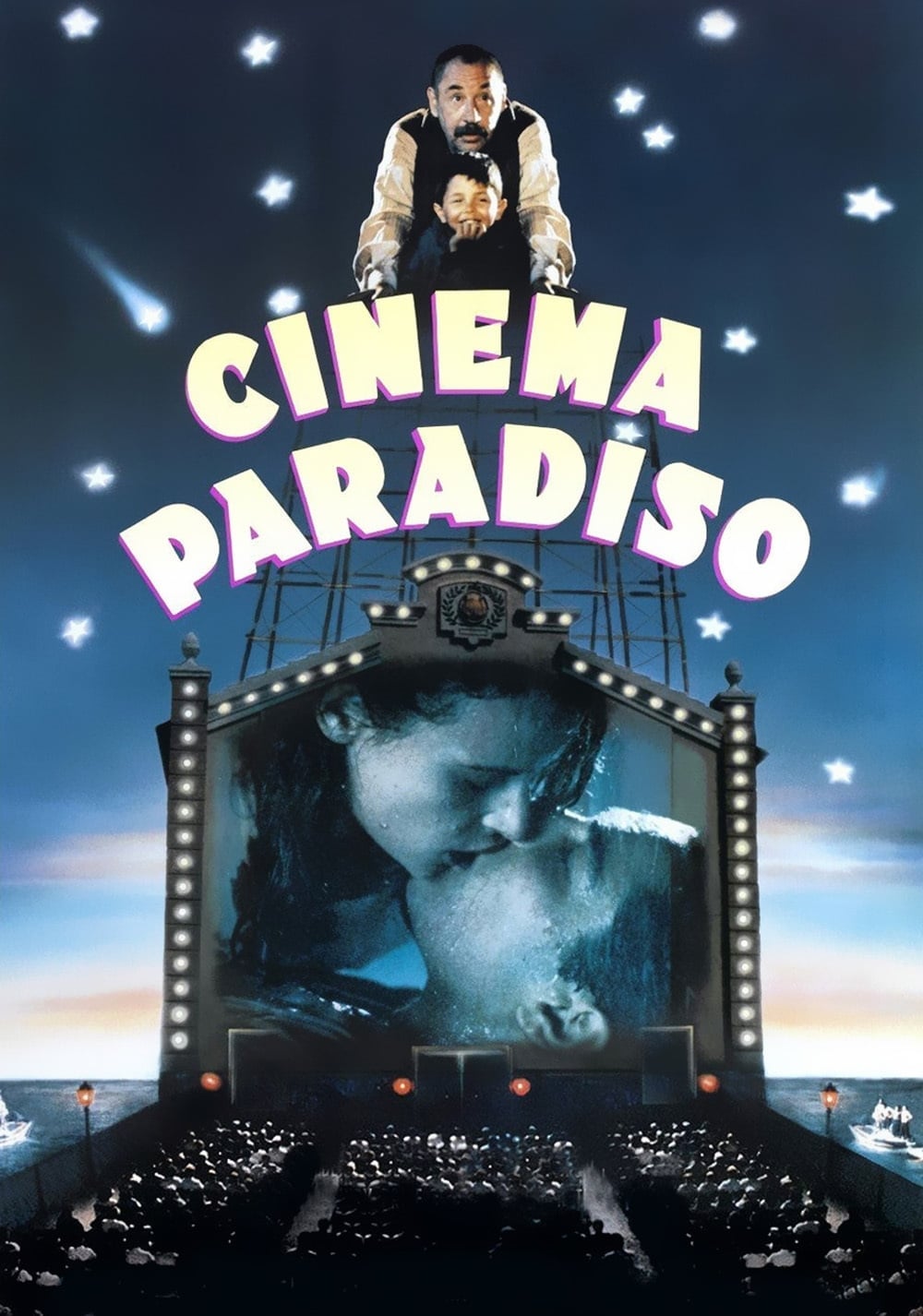
What the Film Is About
There are movies that pass through me like a fleeting dream, and then there are films—rare and resonant—that grip something deep in my own sense of nostalgia. Cinema Paradiso is one of those. I don’t simply watch it; I feel it at a level so personal it almost aches. To me, the film’s essence isn’t about who does what or how events unfurl, but about how memory and longing shape a life. Every frame seems to pulse with a longing for the vanished world of youth and the magnetic power of places and people that define us, only to recede, leaving us altered and searching. It’s a story of coming to terms with what time takes away, and how cinema itself becomes both a sanctuary and a confessional for lost hopes.
At its heart, I’ve always interpreted Cinema Paradiso as a meditation on artistic awakening and the burdens of transition. The tension between staying anchored to one’s roots and daring to leave for the sake of one’s own voice becomes, in my experience, the emotional and philosophical core of the movie. I’m drawn into its universe not because of the particulars of postwar Sicily, but because it confronts that universal hunger to return to a place and a self that no longer exist—except in flickering shadows on the wall. The emotional journey isn’t just the protagonist’s; it becomes my own, as I wrestle with what I have left behind and what I’ve carried forward.
Core Themes
What stays with me long after the credits roll is the way the film weaves together the concepts of memory, loss, and the act of looking back. I find the primary theme to be the complicated, sometimes painful relationship we each have with our own past. Watching the protagonist navigate the intersection between childhood innocence and adult disillusionment, I’m reminded just how rarely movies treat nostalgia with both affection and skepticism. The film’s portrait of love—whether romantic, paternal, or for cinema itself—avoids sentimentality. Instead, it asks: What do we actually owe to the places and people that shaped us, and what does it cost to move beyond them?
Another theme that resonates for me is the transformative power of art. Cinema isn’t just depicted as a source of escape or entertainment; it’s a communal ritual, one that binds together lonely souls in a defiant act of joy and rebellion against their circumstances. I see the theater itself as a living organism, as sacred as any church. The community in the film learns from these projected stories, loves and laughs together, and suffers their shared disappointments. The role of the projectionist as mentor and surrogate father figure is, for me, a meditation on how older generations pass on hope and craft to the next.
Looking at when the film was made, I understand why these themes would resonate. The late 1980s in Italy saw major cultural and economic upheavals—old ways giving way to new realities. I sense in the film both a lament for vanishing local traditions and a knowledge that change is inevitable. This is still relevant: as digital life replaces the communal rituals of art and gathering, the longing for lost spaces and shared experiences takes on new urgency, and I find myself thinking about what we lose when cultural rituals disappear.
Symbolism & Motifs
From the very first scene, Cinema Paradiso drenches itself in the language of symbols. What captures my attention most is how the film projects memory itself as unreliable, subjective, always tinged with longing or regret. I notice the recurring motif of the projection beam slicing through dust and darkness—a literal representation of looking backward, revealing images otherwise hidden. The cinema becomes a kind of time machine, a vessel for the collective hopes and heartbreaks of its audience, and for the protagonist’s journey through his own fractured recollections.
Another potent symbol for me is the physical deterioration of both the theater and its original projectionist, Alfredo. As years pass, the cracks in the walls and the failing reel equipment are mirrored in the protagonist’s internal landscape—his faded childhood dreams and the scars of separation. Even the film reels take on metaphorical weight: spliced, censored, hidden, or reassembled, just as memory itself is unreliable, partial, sometimes sanitized and sometimes dangerously raw. When I see the scenes cut by church censors being rescued and stitched together, I can’t help but feel that this isn’t merely about forbidden kisses, but about reclaiming lost passion and vitality from the constraints of conformity.
Motifs of returning and leaving echo throughout. The repeated journeys away from and back to the village encapsulate the agony of those caught between where they began and who they’ve become. For me, light and shadow—whether in the flicker of a movie lamp or the shifting Sicilian sunlight—mirror the emotional chiaroscuro of memory: happiness always edged with melancholy.
Key Scenes
Key Scene 1
For me, the heart of the entire film pulses in the moment where Alfredo, after years of mentorship and fatherly guidance, urges the protagonist to leave his village and never look back. The emotional force of this scene lies in its mixture of love and renunciation. Alfredo is both pushing the younger man away and lovingly setting him free, understanding far better than the boy himself the cost of staying. To me, this encapsulates the parent-child dynamic of every generation: the pain of knowing that letting go is an act of deepest care, and that true legacy is measured not in what is held on to, but in what is released.
Key Scene 2
Equally unforgettable for me is the montage of censored kisses Alfredo bestows upon the now-adult protagonist—a literal reel of forbidden passion, spliced together as a final, silent confession. This moment stirs in me a torrent of thoughts about everything we aren’t allowed to express, all the love and longing deemed inappropriate or dangerous by society. Watching that battered strip of film play across the empty theater screen, I felt the cumulative weight of years, boundaries, and lost opportunities. It’s both a celebration of love in all its forms and a subtle indictment of the forces that try to constrain joy, art, and living fully. Here, the film’s central motifs—censorship, longing, and the power of art—fuse together with heartbreaking clarity.
Key Scene 3
What ultimately undoes me is the final, wordless journey through the ruined remains of the old cinema, when the protagonist—now a successful filmmaker—returns to witness its demolition. Standing amid those crumbling walls, he is both spectator and participant in his own eulogy. To walk through those memories, now reduced to dust, isn’t just about personal loss; it’s about how entire worlds vanish, leaving behind only what we choose to remember. This, for me, is no simple moment of closure, but a confrontation with mortality—of people, of places, of eras and experiences. The film’s thesis crystallizes here: all love, ambition, and creation are ultimately finite, and all we can do is carry forward the stories and lessons they’ve left us.
Common Interpretations
I’ve noticed that both critics and audiences gravitate toward interpreting Cinema Paradiso as a bittersweet homage to the transformative power of memory and art. Many see it as a love letter to moviegoing itself—a kind of requiem for the rituals and communal spaces that cinema once gave us. I find a lot of agreement on the notion that the film explores how nostalgia can both enrich and enslave us. The main character’s inability to fully reconnect with his past underscores a widespread belief that we are all haunted by what we’ve left behind.
Among writers and cinephiles, there are a few different threads of analysis. Some frame the film as a meditation on the necessity of leaving home—arguing that only by risking loss can we mature or realize our own creative voice. Others emphasize the cost of ambition and the persistence of regret. There’s also a strong thread that sees the film’s quieter moments—its silences, glances, and half-glimpsed personal histories—as a statement about how art and memory are inevitably imperfect, always shadowed by longing for what can never return.
I rarely encounter readings that reduce the story to simply being about “childhood” or “first love.” For most viewers, myself included, it’s the intertwining of personal and cultural transformation—how individuals are shaped and sometimes wounded by the changing tides of history—that gives the film its enduring resonance. The message isn’t just that nostalgia is sweet or bitter, but that our connections to the past are always complicated, and that beauty and pain are forever interwoven.
To explore how this film has been judged over time, consider these additional viewpoints.
Films with Similar Themes
- Amarcord (1973) – Like Cinema Paradiso, Fellini’s semi-autobiographical portrait of a small Italian town surrenders to the whims of memory, blending whimsy and melancholy to examine how environments shape our sense of self. I recognize in both films the tension between nostalgia and the passage of time.
- The Spirit of the Beehive (1973) – This Spanish film similarly centers the fantastical perceptions of childhood and how communal art (here, cinema) becomes a gateway to hidden emotional landscapes. When I watch it, I see parallels in the way memory distorts and sanctifies formative experiences.
- Hugo (2011) – Scorsese’s loving ode to cinema’s origins and lost magic taps into many of the same themes of reclamation and tribute. For me, it captures the same ache for worlds and mentors gone—filtered through the eyes of a lonely, imaginative youth seeking connection and meaning amid machinery and ghosts.
- The Last Picture Show (1971) – This American classic features another decaying small-town cinema, but what resonates for me is the way both films use the local movie house as a metaphor for community, change, and the inescapable march of time. Both mourn what has passed but remain ambivalent about the notion of “going back.”
What ultimately lingers with me is how Cinema Paradiso uses personal memory, collective experience, and the rituals of art to pose bigger questions about who we are when we let go of our beginnings. I am struck by how the film sidesteps the easy comforts of nostalgia in favor of something more powerful—a mature, complicated embrace of both what is lost and what survives. It reminds me, as few films do, that our deepest joys and wounds are braided together, and that meaning comes not from returning to our origins, but from carrying their lessons as we forge uncertain futures.